
Skylark (30.3.26, ~8am)
On this blue and hazy-horizoned morning, wind gusting the heat from my cheeks, geese honking across the sky, I hear the skylark’s fragile, full-bodied melody for the first time this year. Everything else quietens. It’s just me, the song. And, of course, the singer. A male, somewhere high, defending his territory: this particular stretch of sky and this particular stretch of land. Waiting for a female to come and say, yes, I choose you, I choose your sky, your land, your song.
Music is a borderless language. Just as humans are born with a sense of rhythm and a proclivity for song, songbirds hatch with the blueprint of what they will one day sing. And all of us, when we are new to the world (brand new: in the womb, in the egg), turn our ear to the sound of song, let it build musical maps in the networks of our neurons, let it guide us towards a more melodic sort of life.
Mammalian, avian; larynx, syrinx—it does not matter, the music calls us home.
0:00
-0:07
Raven (30.3.26, ~2pm)
A pair of ravens on a fence on the clifftop, the rioting Atlantic below. One of the pair is timid, the other is curious. The timid one flies as soon as I make eye contact but the curious one stays, watches me, and as I get closer it swoops off its perch and circles high before slicing back down, right past my head. Our eyes meet, a foot apart. Two questioning gazes. The feather of wing-blown air grazing my cheek. And then back it flies to its timid mate.
This is another universal: personality. The shy, the bold. Not so long ago, when western science thought of animals as automatons, the idea of animal personality was considered unscientific. But we now know that personality is everywhere. There are shy, tentative individuals and bold, brave individuals across the tree of life: mammals, birds, reptiles, amphibians, invertebrates. And not just the ‘clever’ invertebrates like octopuses, but also the ones we might not expect—snails and woodlice (roly-polies) and spiders1.
I am the shy spider, I am the tentative snail, and while I love the curious raven, my heart is with the one watching from the distance, the one who demands its own space.
0:00
-0:30
Eurasian oystercatcher (30.3.26, ~3pm)
A ruckus! A madness! Low tide, and the oystercatchers have come to feed. They are such peculiar birds: round-bellied and yet somehow all angles. The bay becomes their playground—just as frantic and loud and rife with politics. Two birds begin to argue over a Good Bit of Beach. Wings out, shouting. One wins, stays; one saunters off to find a Better Bit of Beach.
Further down the shore, a pair have taken a break from their foraging in order to court. They walk in parallel on their long pink stilts, heads forward, orange beaks down, squawking. Who an oystercatcher chooses to partner up with has important consequences. Pairs stay together for years, sometimes decades. If the ‘marriage’ breaks down, the oystercatcher who was abandoned loses social status, and has a higher risk of dying. The one who did the abandoning, on the other hand, tends to move on to better things2. So, best to choose a partner who won’t leave (or be the one who does the leaving). Oh, it’s a complicated business, being an oystercatcher. Relationships aren’t easy. But they are another universality, aren’t they—the joys, the complexities, the stresses of needing one another, of relying on one another.
We once thought ourselves exceptional here, too; thought that only we formed complex relationships. But of course, we were wrong. The more we look, the more we understand that pair-bonds, friendships, alliances, complicated hierarchies, complicated politics, are all over the animal kingdom.
Year by year we chip away at the false god we have made of ourselves.
0:00
-0:11
Black guillemot (30.3.26, ~4pm)
It is difficult to get a sense of scale when looking at the ocean, and so I have no idea how huge the swell is until I see the small black speck of a guillemot on the side of one of those wild Atlantic waves. The wave turns to mountain, the ocean to a Himalayan vista, the guillemot to a climber on a slope that rises, rises, steepens, steepens, until the bird summits, the most unlikely of adventurers, this little one-pound, hollow-boned body. And yet there it is, that little body, summiting a sixteen-foot swell.
These small adventurers survive what seems impossible. They battle through wild Atlantic storms, summit swells that could swallow them whole, navigate gales that would knock a human being over. Another universal. Each of us an unlikely adventurer, surviving, summiting our own swells.
0:00
-0:09
Great black-backed gull (30.3.26, ~4 30pm)
On the beach, the first black-backed gull I have ever seen dead. Enormous, beautiful, but ragged with the salt and wet and churn of the ocean. Its eyes are gone, probably a snack for another gull, or a hoodie, or a raven. Death makes meals of us all, returns us to that which keeps other hearts beating. Worm, raven, crab, root, beetle, eagle, otter, the body becomes an offering to those that need its nutrients. No borders anymore. No lines, no skin, no shell. All of us becoming one.
0:00
-0:05
Recording credits - Skylark: David Darrell-Lambert, XC1082398; raven: Lars Edenius, XC1082755; oystercatcher: David Darrell-Lambert, XC1089409; guillemot: Anthony McGeehan, XC1023555; black-backed gull: Roland Arnison, XC1087699. All sourced from xeno-canto.
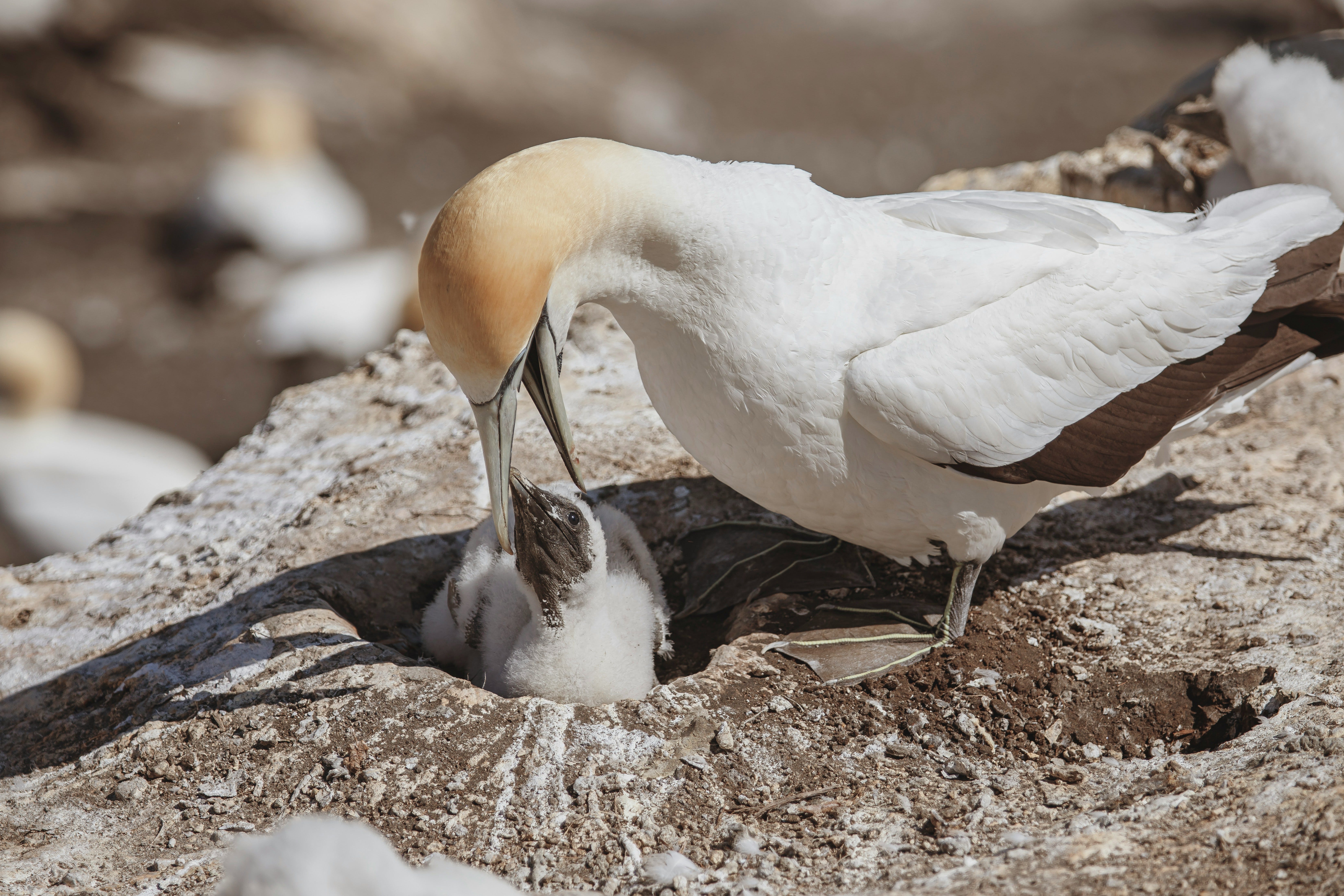
On the topic of our avian cousins and how much we share with them, I’d like to tell you about the guga hunt.
Every summer, a group of men go to the remote Scottish island of Sula Sgeir and butcher gannet chicks (guga) in the name of tradition. They catch these chicks (who are almost fully-grown but who cannot yet fly) with a noose on the end of a pole, and then kill them by bashing their heads.
Once, the guga hunt was necessary for survival. It is not anymore, but the hunt is legally permitted because it is traditional.
We need to start respecting and protecting non-human lives above outdated traditions. If you’d like to add your voice to the thousands of people already standing up against the guga hunt, you can sign the petition here.
Every voice counts. Please consider signing and sharing.
If you enjoy my work, you might like to pre-order my debut novel, These Glass Bodies.
‘An absorbing, unmissable and moving debut novel of love, disconnected people and our fragile relationship with the natural world’
You can also support my work by becoming a free or paid subscriber, or leaving a tip. All my posts are free, and paid subscribers (thank you thank you!) allow me to keep it this way.
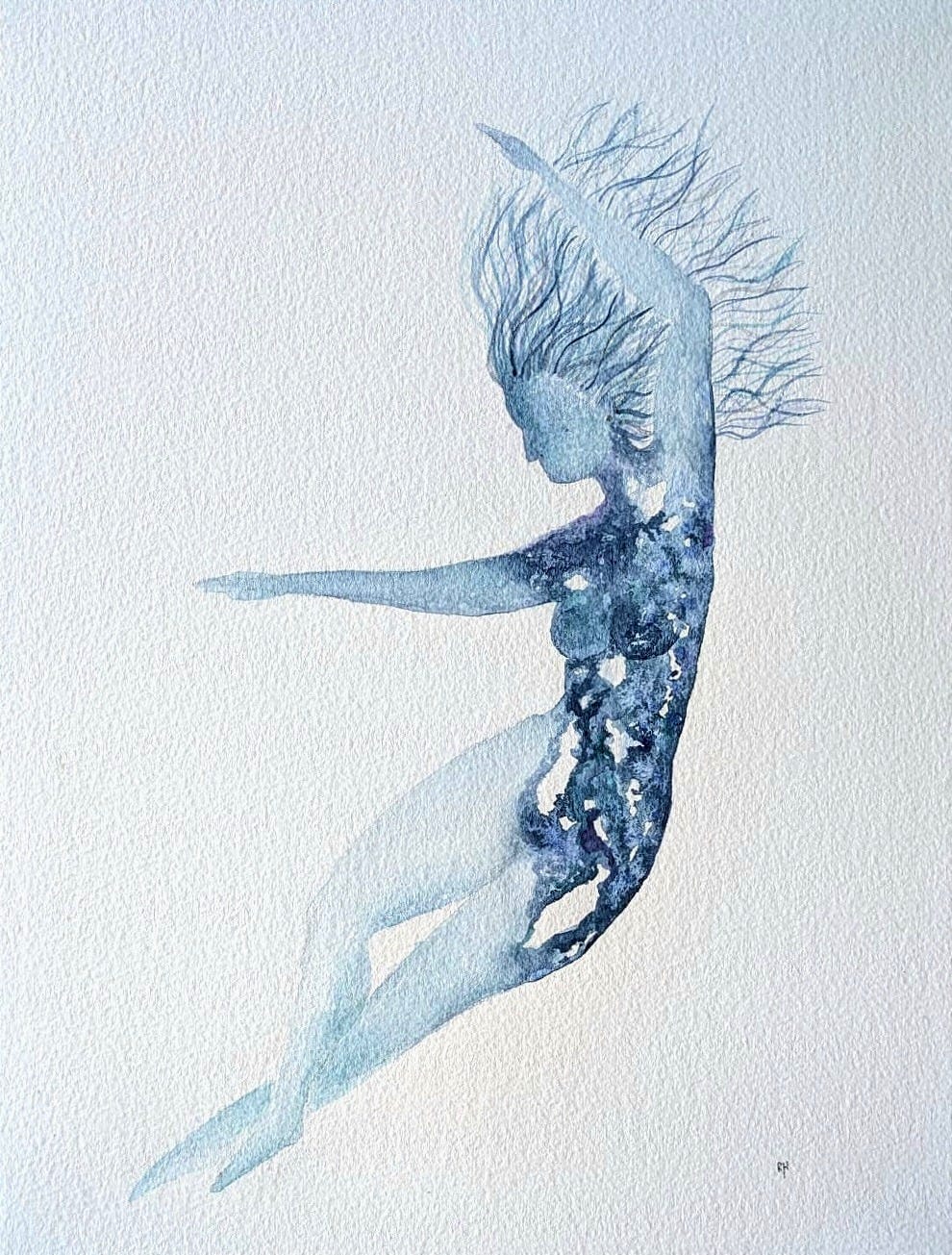
If you’d like to become a founding member, you’ll receive an original watercolour painting. Currently I’m working on sea-swimming selkie women, but the odd whale is springing into life, too.
You can read a paper on woodlouse personality here, on snail personality here, and on spider personality here. For a summary of the study of animal personality, this paper is a good place to start (although it is five years old now, so not entirely up-to-date).
Comments
Nothing yet. Say the first thing.
Sign in to join the conversation.