
Inspiration comes from all sorts of places.
From the stories behind the creation of game music, I get the sense that cultural influence is connected. I think the modern day artist/composer/game developers are aware of this, and perhaps may place focus in creative direction they feel are ‘optimal’, when in fact they may be being misled.
I’d like to put forward the idea that clarity of identity may be a better goal than unconditional originality when it comes to creating, curating or partnering music inside game adjacent spaces…by using PS1-era jungle and drum & bass menu music as my proof of concept, obviously.
The TikTok Trigger
Ape Escape’s general vibe
Trends aren’t that random really
Clarity > Originality
Notable Mention
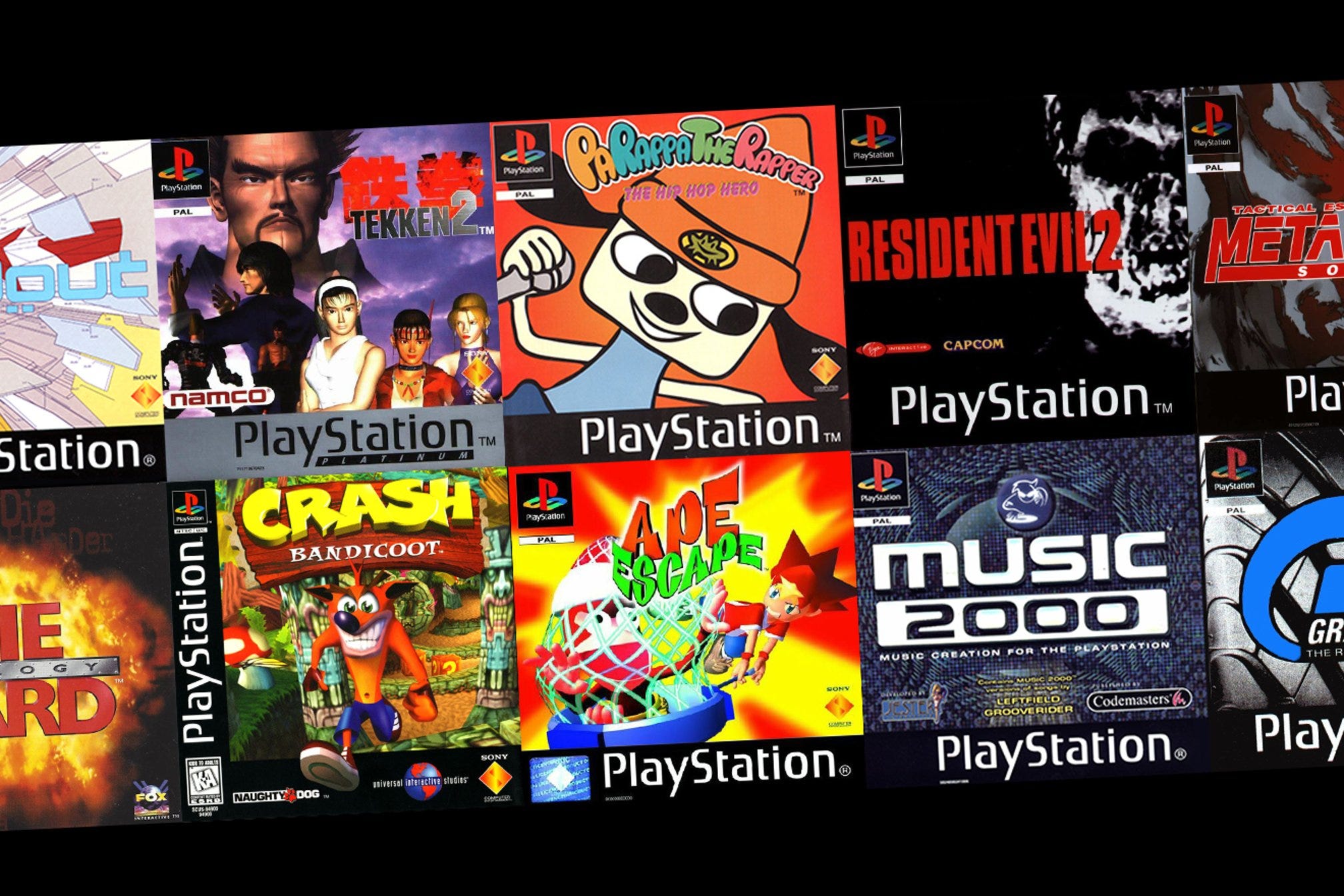
I’m having a pleasant scroll through TikTok trying to turn my brain off for a bit where I come across this video:
I politely commented saying ‘this is the start of an incredible series’ because it damn well is. This person has identified the fact that PS1 jungle menu music standards and taste palate was just so recognisable, iconic and defining across the entire gaming genre and yet still has its standouts.
The fact that so many games have this similar musical aesthetic that is definitive of its era rather than a handful of games suggests to me there was a cultural trend influencing many of the games at the time.
There were hardly any tracks that didn’t slap. Here’s a killer mix with some absolute chewns for you. Don’t say I don’t think about you!
One of the most defining OSTs of this time, and the example for what I’m getting at is the backstory behind the music for Ape Escape.
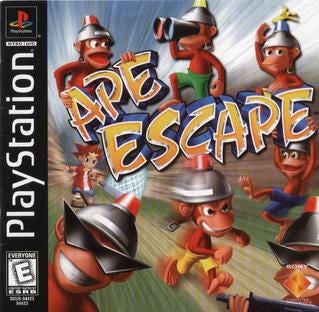
The music has been sampled amongst many breakbeat PS1 mixes , and I can confirm this with anecdotal experience of far too many hours hyper fixating to these playlists.
Some would say this was just right place, right time, but there were multiple things happening at once which pushed lots of people towards a similar aesthetic. The PS1 sound chip gave developers far more room to experiment musically through CD quality audio and more complex samples, just as house was mutating into breakbeat, jungle and drum & bass across the early 90s.
At the same time, UK drum & bass artists were touring Japan more regularly, club culture was spreading, and Japanese electronic artists were being exposed to these sounds firsthand.
Soichi Terada was one of them. After spending the late 80s and early 90s making house music and co-founding Far East Recording, he became fascinated by jungle and drum & bass and ended up making the iconic ‘Sumo Jungle’ EP in 1995. According to Terada, the director of Ape Escape heard Sumo Jungle and offered him the soundtrack job because of it (Soichi was also a Playstation player already).
I’d say this story behind Ape Escape is not so isolated, and suggests you don’t need to buck a trend to stand out, but you can still have a strong identity amongst a cultural audio aesthetic.
You know I love a comment section dive. I see that discovery is two way. Ape Escape opening the door to DnB for a whole generation. Many examples of two-way discovery exist:

I quite like this existential realisation below as well. Are music discovery platforms like YouTube connecting the dots between music or gaming pipeline discovery?
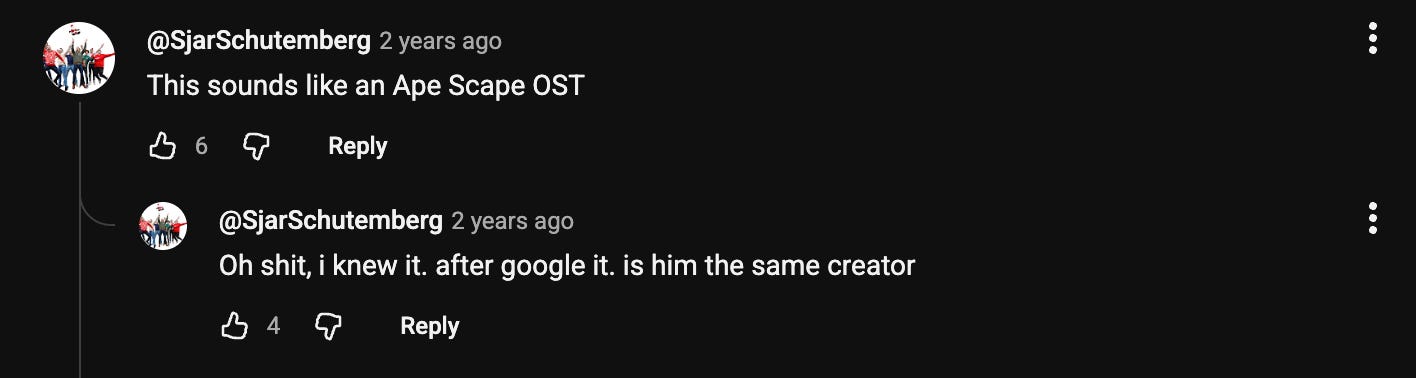
I suppose my point across this Substack is the idea that everything is connected. In order for this wave of PS1 music to exist - culture, technology and authentic movements of music arrived at a point which everyone was exposed to.
What is interesting is that both Soichi Terada and the Ape Escape team had been influenced by the same wider cultural movement independently. It was two different industries arriving at a similar vision through the same influences, made available by technology arriving at this point too. That is very much the power of cultural trends, and Ape Escape is revered for its soundtrack despite it not being the first to champion this audio aesthetic (look at Wipeout and Ridge Racer for earlier examples).
There are broader theories that cultural trends move in cycles rather than appearing randomly. Guy Zapoleon’s Music Cycle theory argues that music swings between more mainstream, accessible phases and more niche or extreme phases roughly every decade. When one sound becomes too dominant, audiences eventually look for something more authentic, or fresher. This supports the idea that certain periods in games feel so musically distinct.
PS1-era jungle and drum & bass was part of a wider cultural movement where that sound was already growing in clubs, radio, touring circuits and youth culture. Games simply became one of the places where that movement found another home.
Today’s decision makers across games and music are much more familiar with how trends in culture exist, and this puts them under pressure to deliver one of two things: Something fiercely original, or something truly outstanding in a popular space. First or best. (Book recommendation of ‘The Song Machine’ for further reading here)
If there is any takeaway from this Substack, is that following the wave is not a bad thing, and neither is going against it - I think these are the wrong questions to ask. Instead, it’s much better to focus on choosing to commit fully to your idea regardless of how much it swings into or away from cultural trends, even if they are modern or nostalgic. Originality is best seen as a ‘byproduct’ of a firm direction rather than a ‘goal’.
If your music direction feels more closely aligned to a trend of music, you get the benefits of being associated and recognised amongst the aesthetic. PS1-era aesthetic has multiple associations that can drive attention back. A decent playlist will have diverse curation within the aesthetic. Anyone looking to discover you can start with opening the door to the PS1-era menu music, for example. Even if you don’t stand out, you stand a higher chance of being heard inside these search terms. I’d call this sideways networking, as you rely on your peers to interact alongside your work.
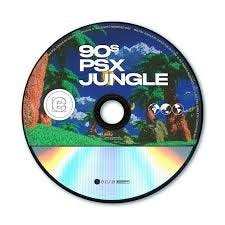
However, if your music direction aspiration requires you to walk into the fog of war and do what no other music director has done - that is also exciting and great! If that is the very intention of the game and fits the narrative, it is definitely the right thing to do. You wouldn’t want to lose the striking identity of your game by kneeling to a trend, and you therefore won’t care about the perks of being associated or found amongst that aesthetic and the products within it. The biggest perk of original music styles, like Jet Set Radio and Hotline Miami, is the potential for them to influence many derivative aesthetics that point back to you. I’d call this innovation networking, or at least a derivative of Fan Refraction, as you rely on others referencing your work as time goes on. This is harder to successfully achieve, but you get to be forever known as ‘first’ to do it.
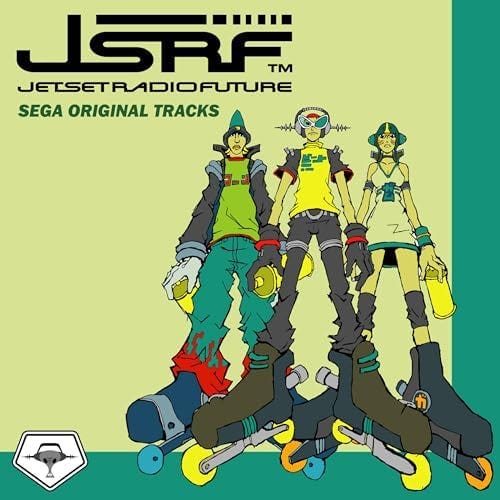
The best case, is that you ignore both ends and focus on how to harness your identity, and use a collection of the above methodologies to guide how you showcase the music beyond the game. Excellence here, even amongst abundance, is about having the highest musical clarity for the message and values of your game.
One troubleshooting note - trend chasing? No. Cultural alignment? Yes. Ape Escape’s OST was a shiny fish in a recognisable pond. a shiny fish without a pond is a rare phenomenon, as you benefit from the ponds water to show off your shine. That’s an odd metaphor, but one that encourages people to not feel they need to be unique for the sake of it, long term game music direction prowess appears to consistently come from being clear.
In the TikTok video I posted at the start of this Substack, I saw many people referencing Buck Bumble. It had absolutely no business going this hard.
The person that made Ape Escape’s legendary soundtrack, as well as the person that chose who would make it, both were separately influenced by the same early 90s culture. The soundtrack stood out because of its strong identity and commitment within a recognisable trend.
Today, music and game teams often feel pressure to be completely original or technically the best. A clearer approach is to focus on musical identity first, then decide whether that identity sits inside a trend or outside of it and the benefits of its position.

Comments
Nothing yet. Say the first thing.
Sign in to join the conversation.