
Without a doubt, I am the target demographic for this game. It gives me the late 80s aesthetic, has a load of Pokémon-style creatures to collect and fight, and it’s filled with bangers that change when you use your ultimate ability. Need I say more?
By the way, totally aware of Cassette Beasts 2002 dropping last night during PC Gaming Show, but this Substack is about the original Cassette Beasts game.
What Is Cassette Beasts?
Music Mechanics
Fusion: Boss Music On Demand
Scaling the ‘Full Mix Payoff’
Honourable Mention
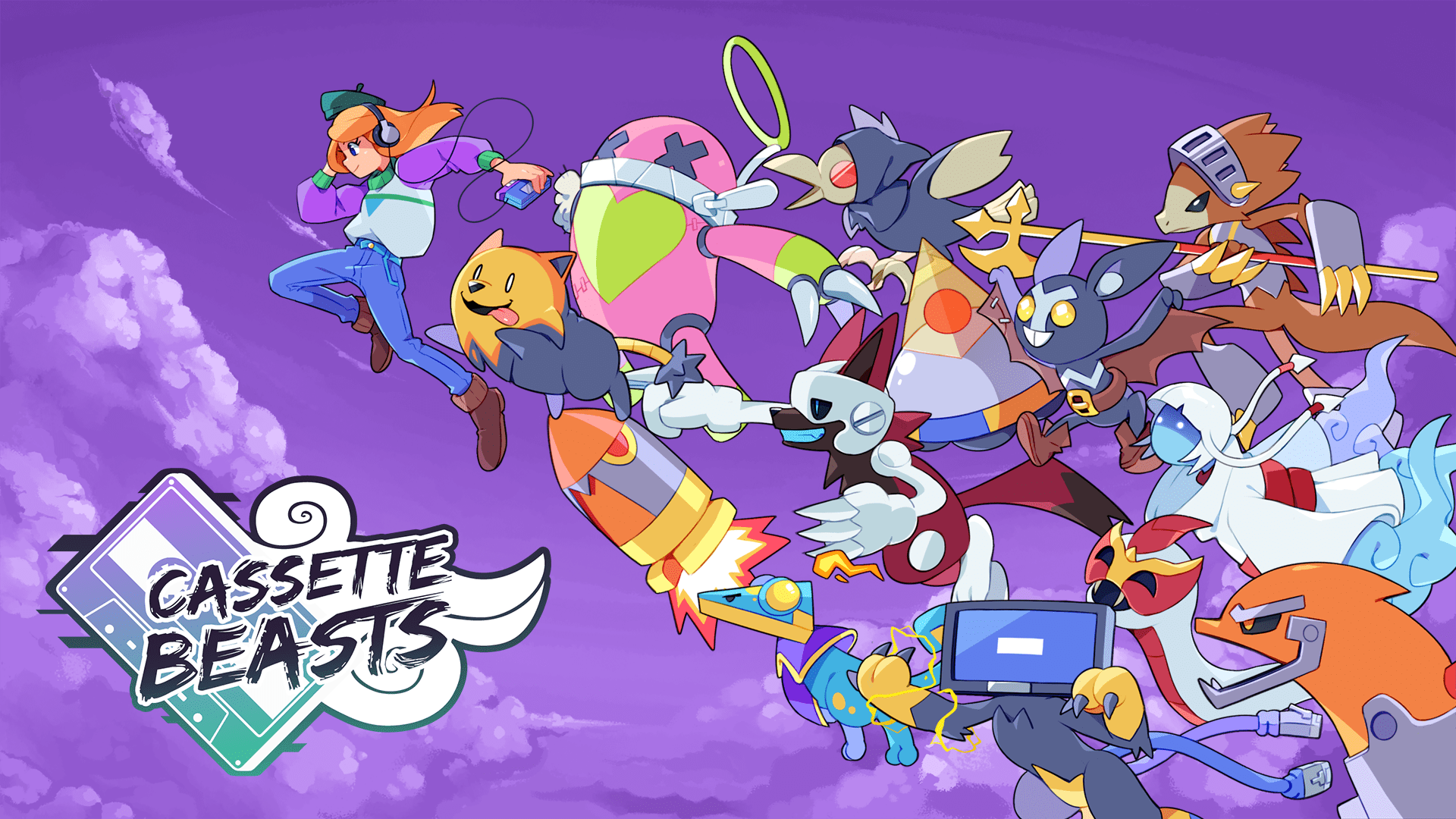
Cassette Beasts is a 2023 indie monster-collecting role playing game (RPG) set on the seemingly normal island of New Wirral, where players use cassette tapes to transform into creatures and battle other monsters. Clearly inspired by classic Pokémon games, it takes the primary gameplay mechanics and boasts some serious quality of life features that I only wished we had back in the days of me pulling a sicky to binge complete Pokémon Yellow.
The game initially stands out for its stylish late 80s aesthetic and open-world exploration, but gradually draws you in further with its deep, impactful story. You uncover the secrets of the island while finding a way home…and make a few helpful friends along the way.
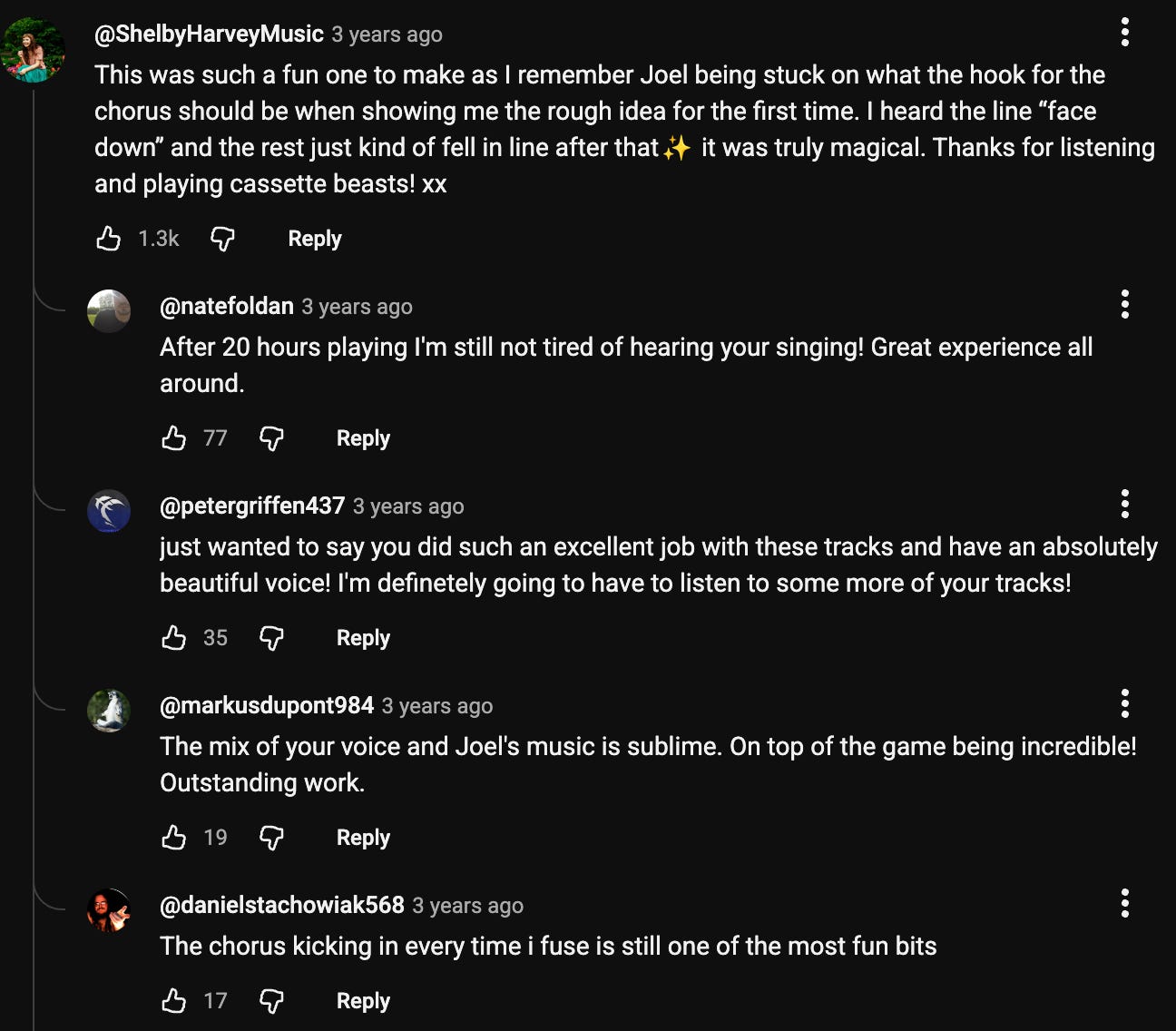
Of course, I’m here writing about its strong emphasis on music, featuring a killer indie-rock inspired soundtrack created by Joel Baylis and vocalist Shelby Harvey. Music is a strong sonic detailer of the environment here, deep enough that each character has their own aesthetic & creative preferences reflected in the theme of their song when they are featured in their story arc.
Cassette Beasts has sold over 1.1 million units, boasts an Overwhelmingly Positive Review (95%) on Steam and has been put forward for a number of awards, notably nominated for 2024’s Best British Game and the Steam’s Labour Of Love Award. I believe the considered standout features of this game have been pivotal to bringing Cassette Beasts to this level of pedigree, in particular its use of music.
So, how did they do it?
Music is detailed in the very fabric of the game, from the names of the stickers (a ‘move’) that you can put on your cassette (your ‘creature’ you summon during battles) making any creature have a hugely varied moveset that you can change anytime. Yes that’s right - Screw you TMs and HMs.
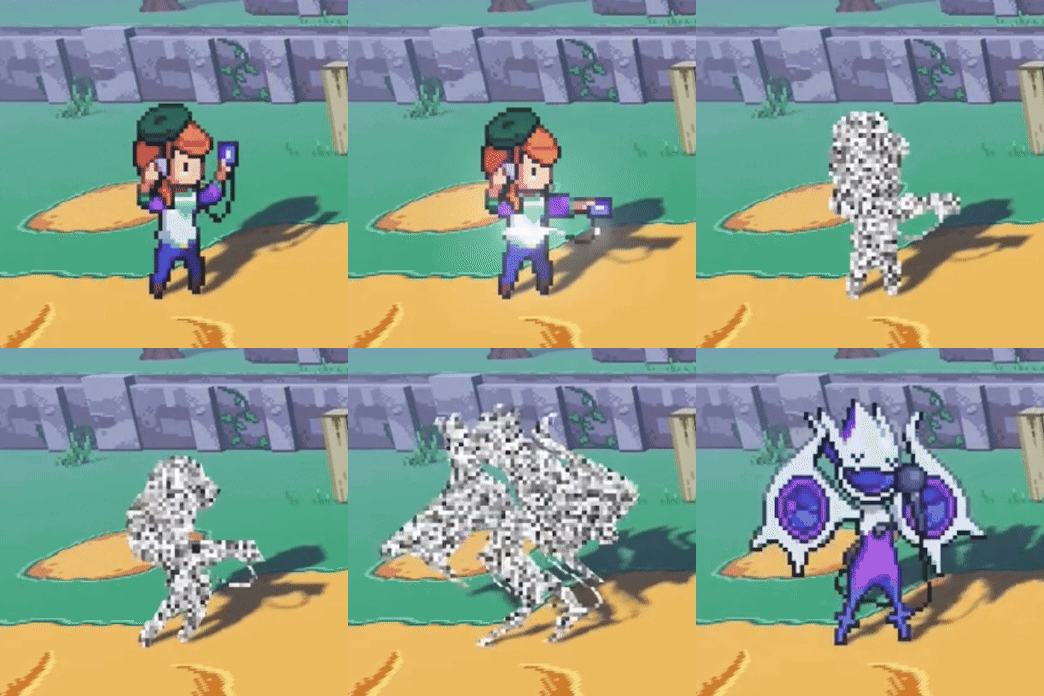
The dynamic music mechanic behind this is so simple but something that I thought was very cool.
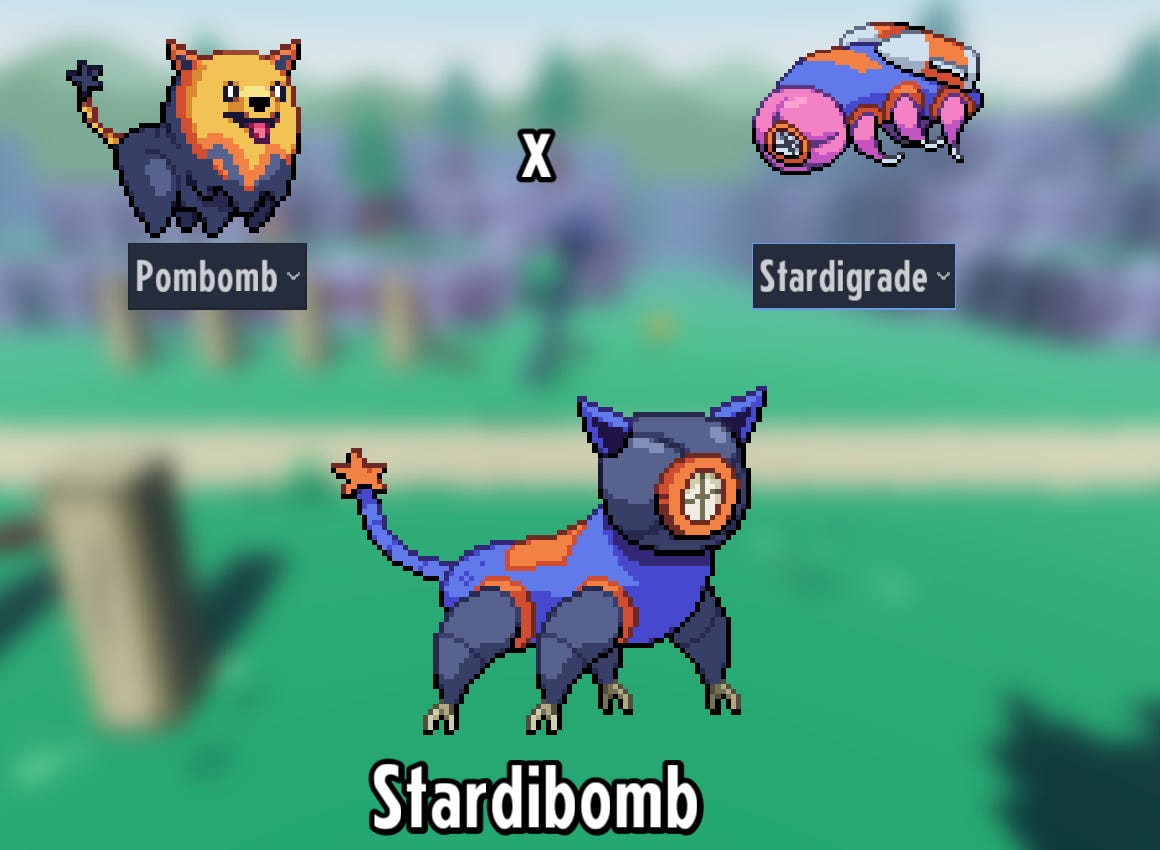
You always battle in pairs, one creature is yours, while another is assigned to your partner (you have a handful of friends to choose from that all have their different storylines too). However, there is an ability to use ‘Fusion’ where both of your tapes merge to create a new combined beast, with both sets of abilities but a unique design. The base game has 120 original creatures, and therefore over 14,000 possible fusion combinations! Anyway, back to the music.
Also when you fuse, the music changes. There are a handful of songs that play during combat depending on the location or what type of combat it is, and these are always instrumentals. But when you fuse, the vocal stems enter the mix, amplifying the impact of the track. And it seriously slaps. You know full well that when things are getting heated you’ll keep the fusion ability in your back pocket - for all you ULT hoarders out there. You’re rewarded by turning the tide in combat with an extra powerful beast with the music coming in full force.
That type of experience is a surprisingly simple way of picking up energy by mapping a vocal stem to a situation in combat, but given the context it works incredibly well and turns any battle into your own adrenaline-filled story.
I’m going to name this technique (the reservation and use of the complete version of a track for maximal effect) the ‘Full Mix Payoff’. I think this technique has played a key part in the commercial streaming success of the music , with the combat tracks appearing to outperform much of the wider OST. More importantly, it demonstrates how music can contribute to the wider success of a game. By tying memorable moments to memorable songs, Cassette Beasts strengthens both the gameplay experience and the soundtrack's ability to live beyond the game itself.
Boss music is one of gaming’s most reliable tools for creating significance, and Cassette Beasts gives players access to that significance whenever they choose to escalate a fight using fusion, where music is leading that feeling.
The best boss themes are contextually memorable and deliver the feeling they were designed to. Without giving too many of my aspirational future substacks away, one example is (Spoiler Warning) Sonic Adventure 2 Battle with Crush40’s Live & Learn. They did a very similar thing where the main song was used as the menu music and across some scenes, but the lyrical version of this song was exclusively reserved for the final battle only. When that moment happened, I remember being on my feet, ready to throw hands IRL immediately - and it was because of exactly this technique.
Ultimately, we know when a moment requires a different shape of music. And where Pokémon did it well with their selective themes, Cassette Beasts enables you to summon that feeling whenever you need it.
For a lean development team of 3, with one man running the audio show, finding a simple way to scale features like this is important. There are two factors that affect music feature scalability in Cassette Beasts: The Full Mix Payoff, and the amount of tracks per type of encounter.
Cassette Beasts OST looks, feels and runs like an album. This means they had to find a way to use the tracks to their advantage, rather than the naturally highly customisable adaptive music that would have not done this justice. In a way, the early Pokémon games had such strong sonic identities for each area and battle type that it also felt like it was a giant OST.
Bear in mind, they didn’t use any AI to create the 14,000 fusion designs. So how could the music be scaled sustainably for other games wanting to do something similar?
As with Type of encounter, this gets slightly more complicated as you would need to have more original tracks per type of encounter. Tracks can be written to detail more nuanced locations, moments in the story like a cutscene-style fight or types of relationships you have with certain encounters.
However, the easiest solution is to expand how the Full Mix Payoff triggers. Instead of just using vocals, you could use other elements of stems to describe more factors such as how low your HP is, combo accelerators or even additional stems for element types. It’s likely this has been done in many ways before, so if you've seen this technique somewhere else, I'd love to hear about more Full Mix Payoffs.
This Substack was very nearly in my ‘Needledrop’ series but there are way too many bangers to choose just one. I do, however, want to point to one piece of interesting Cassette Beasts Lore - Meredith’s lost vinyl. This is a Smiths-style secret track you unlock if you spend more time with one of the characters. You KNOW I love secret achievable music like this.
Cassette Beasts is the millennial Pokémon-style game we all wish we had. During combat, a technique called ‘Fusion’ unlocks the vocal layer of the soundtrack, amplifying the impact of the battle theme. I call this the Full Mix Payoff - saving the complete version of a track until the moment it matters most. It's a small detail, but one that demonstrates how carefully music was considered as part of the experience, and why the game's critical success feels thoroughly earned.
Roll on Cassette Beasts 2002!

Comments
Nothing yet. Say the first thing.
Sign in to join the conversation.