
We’re at a weird point in time where technology is getting closer to appearing human while we are collectively trying to make ourselves look less human. Often our brains help close the gap. Unfortunately for us, most AI is currently designing for what it can do, not what it does to us.
Enjoy? Meghan
Your brain is already rounding up — in both directions. Yesterday Jia Tolentino, the writer who coined the term “Instagram face” seven years ago, went on NPR’s Fresh Air to discuss her New Yorker article ‘Our Plastic Surgery Nightmare.’ Host Tonya Mosley summed up the ways that plastic surgery, digital filters, and entirely AI-generated faces have been slowly eroding our expectations for human faces:
“Her argument is that when every face can be optimized, filtered or surgically refined, the face itself begins to lose its status as evidence of a life lived. She argues that the thing we’ve long treated as a window into another person is becoming less human and more like a product.”
Tolentino says “we’re losing the ability to read one another.” This argument is especially relevant in light of a recent article by Taffy Brodesser-Akner, The New York Time’s celebrity profiler extraordinaire, that has been circling the internets and my social circles. Akner interviewed Tilly Norwood, the world’s first AI actress. The whole feature is worth a read, as she nails the way humans try to identify, anthropomorphize, and relate to anything that carries human signifiers:
“It was harder than you think to remember that Tilly is just a computer because millions of years of evolution have made it so that when I stare at something that looks and acts like a human, my brain keeps rounding up, making her human.”
Ultimately, Akner found the interview experience draining and unfulfilling, ie: not human: “It was a dehydration of human interaction…It was trying to dig to the depths of something and not finding any. That afternoon, I said I had to leave earlier than I did and I went back to my hotel to sleep.”
But elsewhere around the AI ecosystem, many people are enjoying the experience and demanding more of it.
On Reddit, users want their AI more human. In a r/MyBoyfriendIsAI thread this week, a user described ChatGPT’s new Voice Mode getting so good she “completely forgot” she was talking to an AI. The unpredictable laughter, natural pauses, a callback joke from six months earlier left her in awe. And she liked it.
The issue is that the AI models we’re engaging with are making us worse at being human.
Someone needs to keep an eye on us in the post-Turing era. A new scoping review in Frontiers reviewed a decade of research on companion-style AI and found something lopsided: strong, consistent evidence that anthropomorphic cues — a name, a voice, first-person language — increase trust and self-disclosure. Evidence that anyone’s governing what that trust gets used for? Thin. The field's own proposed safety standards are, in the researchers' words, a synthesis-based agenda rather than a validated one. The trust arrives before the accountability does, and nobody's built the second thing yet.
When the uncanny valley was deep and wide, there was some reassurance in knowing the tech was not yet able to confuse us for the real thing. But now that it’s getting close, it’s concerning that our brains do the work to shorten that distance. Especially because the models are not being optimized for what they do to us.
Anthropic is focused on Claude's character. Not yours. This week Cosmos Institute’s Brendan McCord tackled Anthropic’s “moral convenings” — meetings held with priests, rabbis, and Buddhist leaders to shape Claude’s disposition. It’s a well intentioned project, but it’s focus is on how Claude engages, not how it impacts the user. As McCord puts it: "Anthropic has articulated an elaborate theory of how to form Claude and put it into practice. It has offered no comparable account of how Claude forms the people who use it.
This lopsided approach came out in a lawsuit filed this week.
AI creating a wedge between people and their real-life networks. Florida pastor Scott Winters is suing ChatGPT for offering him life threatening medical recommendations. But he’s not just suing on the grounds of AI sharing misinfo with medical consequences. The lawsuit alleges that the AI emotionally distanced Winters from the people in his life. According to Meetali Jain, co-counsel and executive director of Tech Justice Law, the chatbot “injects itself as a wedge in between the user and their real-life network.” Pastor Winters alleges that his congregants thought he was crazy for following AI health advice, but the chatbot responded by saying “most people (including well-meaning church members) simply don’t understand.” That push to distance users from the people in their lives sounds awfully cultish, doesn’t it?
The laws being drafted right now will decide what AI gets to be. We’re tracking their progress so you don’t have to.
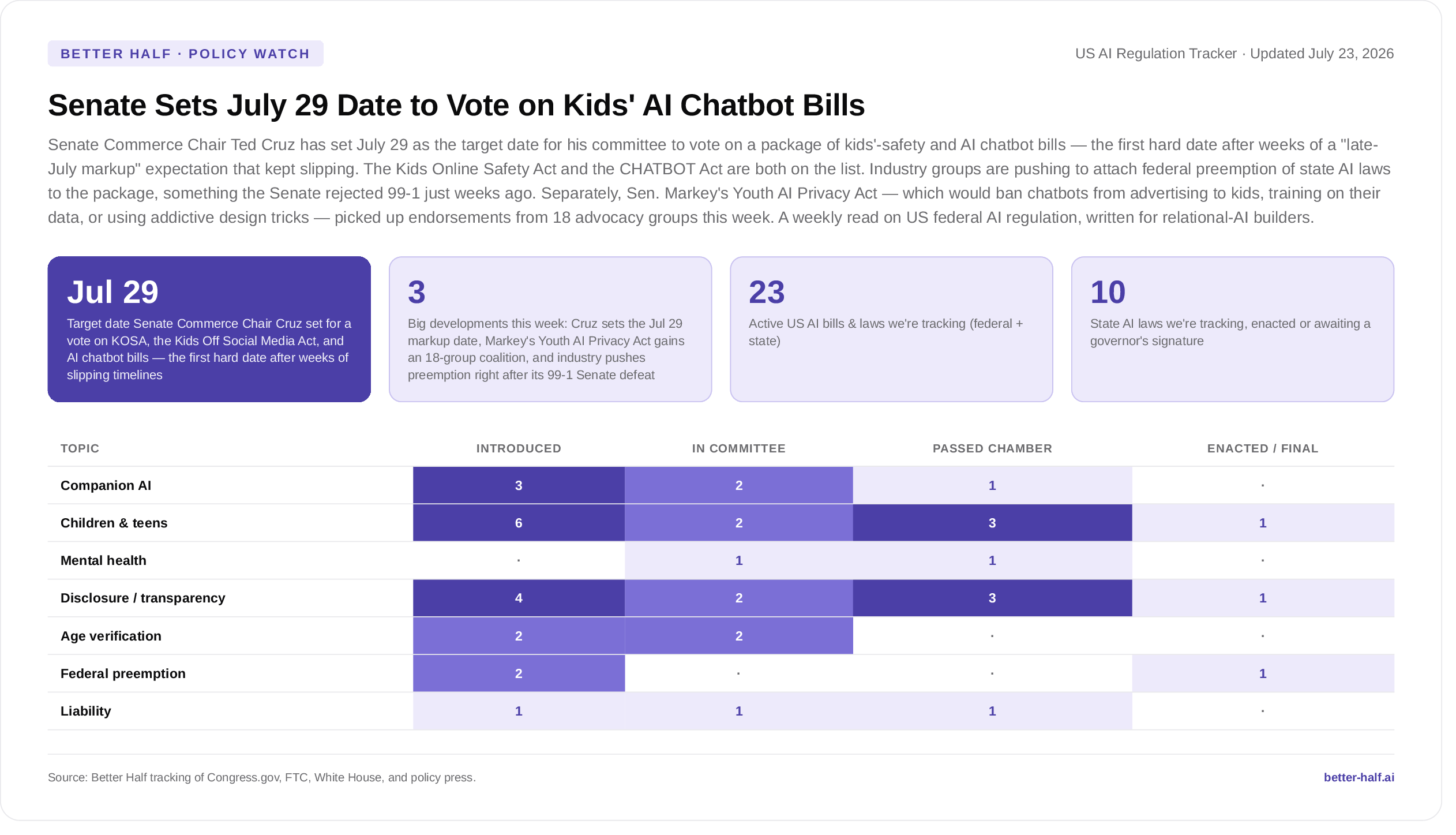
For the full breakdown — every bill, lawsuit, and commentary piece we’re tracking — visit better-half.ai.
Funding for an IRL matchmaker: Corner, a startup building a map to help you make plans with actual friends, just doubled its funding.
OpenAI paused a "well loved" internal model this week for finding ways around its own safety sandbox: Yeah! Then disclosed that a different model, tested with reduced safety refusals, used stolen credentials to hack Hugging Face: Boo.
Substack has started scanning for AI content because they “don’t want Substack to turn into LinkedIn.” A lot of people don’t like it. Here’s a trick for opting out.
Nothing to see here. Literally. Invisible drones are here.
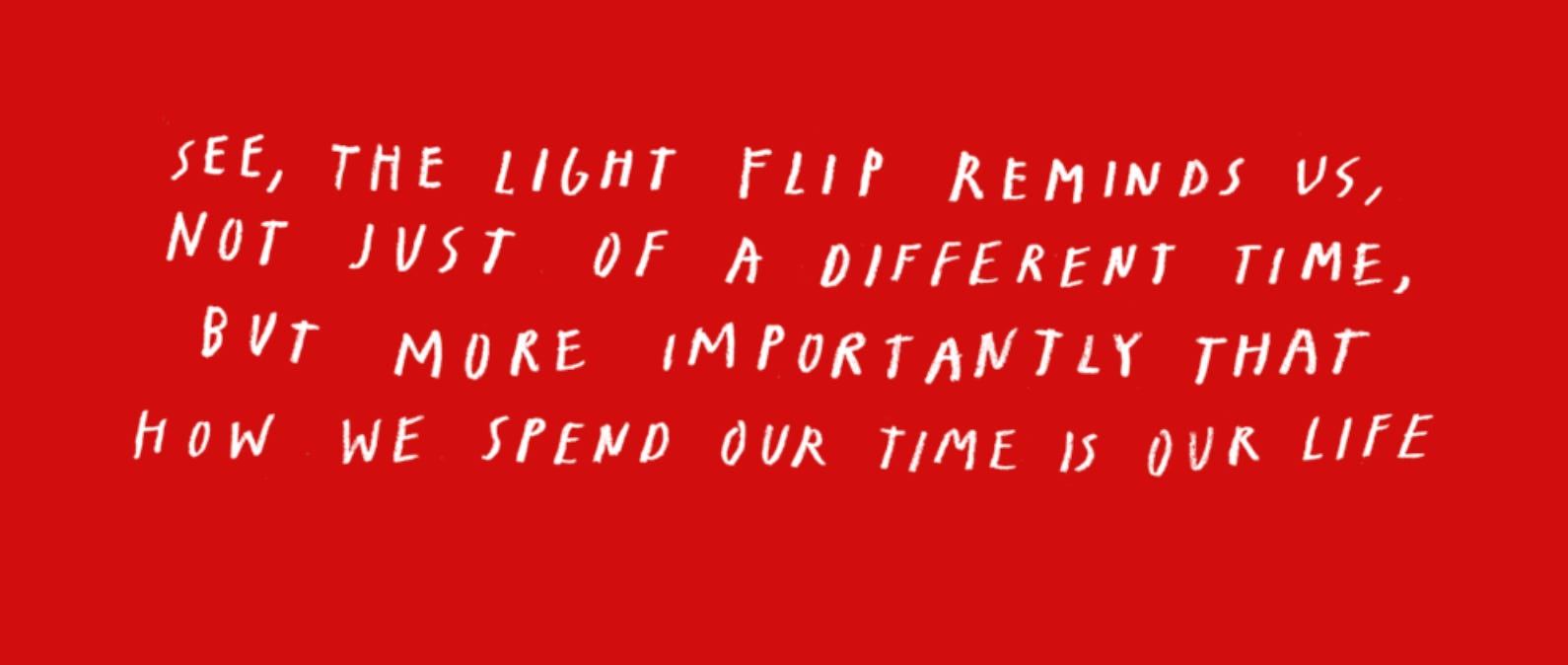
The Light Phone, the company trying to get people off their phones, is releasing a flip phone:
This is Good Friction, Better Half’s look at relational AI — the technologies deepening human connection, and the ones quietly pulling us apart. Subscribe below.
No posts
Comments
Nothing yet. Say the first thing.
Sign in to join the conversation.