
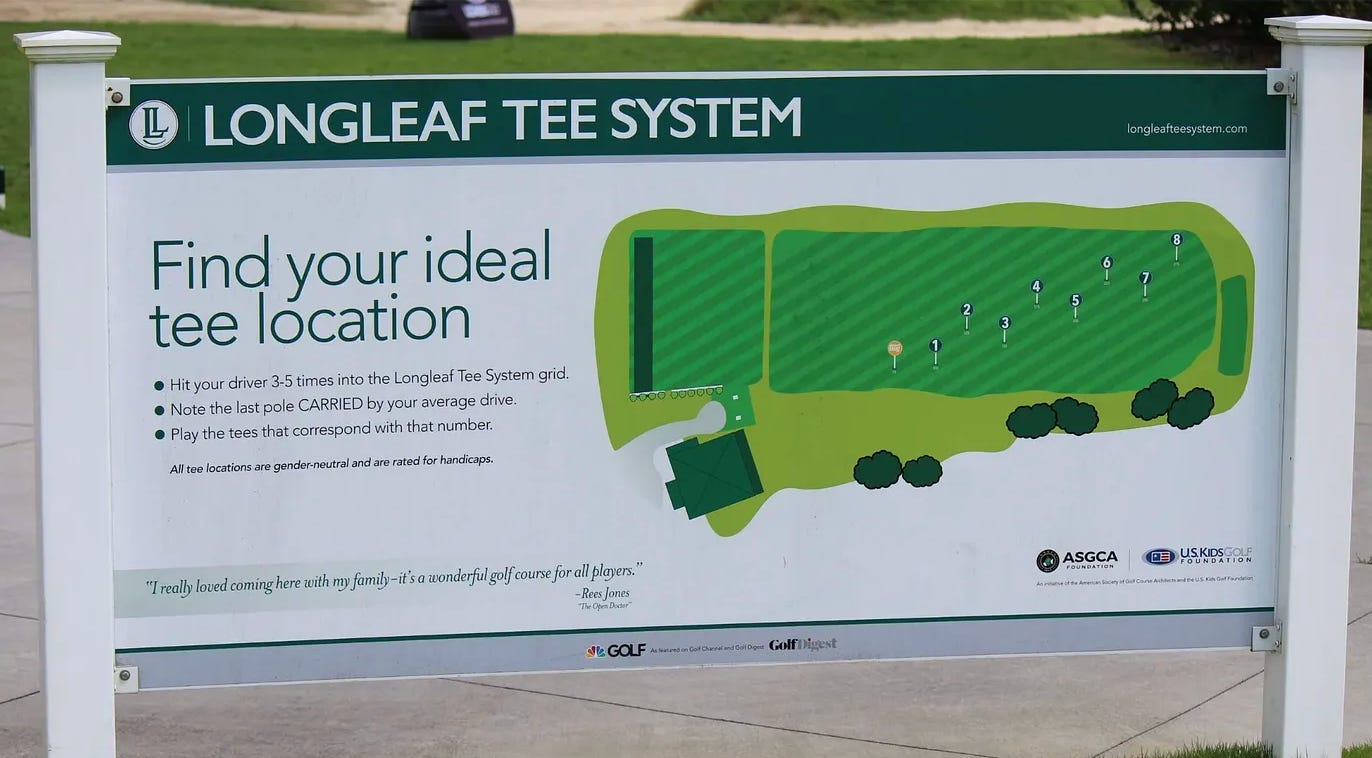
Last week I shared how my recent work at the U.S. Kids Golf Academy changed how I think about accountability conversations. In Part 1 we talked about the Longleaf Tee System, and below is Part 2 with accountability skills for tees 5-8.
During an accountability conversation take ownership for something you did (or didn’t do) that has contributed to the issue existing in the way it currently does.
This could sound like:
“Yesterday when I felt hurt by what you said I chose to give you the silent treatment instead of being honest about my feelings, and that’s on me.”
“Sometimes I get so competitive that I don’t think about how my frustration impacts other people, and that’s something I want to work on.”
Accountability isn’t about assigning blame or inducing shame - It’s about owning our part.
To practice this skill:
Identify what you said/did - or didn’t say/didn’t do - in various conversations. Write down as many elements as you can to practice building ownership awareness.
Take ownership for something in a low-stakes conversation with someone you trust where ownership isn’t necessary.
We can’t expect what we don’t express, and yet as people we unintentionally do it all the time. When accountability is involved, make sure to clearly state (and if necessary, level-set) expectations with others as early as possible.
What do you expect of someone?
What can someone expect of you?
Remember that the gap between expectation and reality is fertile ground for frustration, disappointment, resentment, and fractured relationships.
To practice this skill:
If you’re currently frustrated with someone, ask yourself, “What expectations do I have or hold that I’ve yet to clearly communicate?” Write down your answers and plan a follow up conversation where you take ownership (Tee 5) for the previous lack of clarity.
When someone asks you to be accountable for something, be proactive in asking about their expectations so you give yourself the best chance to meet or exceed their expectations.
Historically, accountability conversations have two unique identifiers,
One person does most of the talking and it sounds like, “Since you failed to do X, you’d better do Y, or else Z.”
These conversations happen AFTER something has already gone wrong.
If we’re going to change the way people experience accountability conversations we need to,
Ask instead of tell.
Have the conversation BEFORE something goes wrong.
To practice this skill:
After clarifying expectations (Tee 6), ask some version of the following questions to increase the chance that someone will stay accountable. Note: For each questions, invite the other person to get as specific as possible in their response.
What needs to happen?
What’s your plan for [insert their answer to question 1]?
What might get in the way or prevent you from executing that plan?
What’s your plan for [insert their answers from question 3]?
How can I help/support?
Following this conversation, what’s your next step?
Tee 3 in Part 1 highlighted questions for “listening to understand”, and that curiosity is critical when a failure of accountability occurs. Commit to working collaboratively with someone to learn from the past and plan for future success.
This could sound like:
When did you first notice things falling off track?
Reflectively, what kind of support would have been helpful?
What did you learn about yourself in this process?
What needs to be true to be more accountable moving forward?
What can I/you/we do differently next time?
Debriefing without blame or shame is foundational for trusting relationships, and the learnings inherent in failure are useful for future collaborations.
To practice this skill:
Start to notice where you, personally, begin to fall short when it comes to accountability.
Example: I’ve noticed that I’m consistently much more accountable to others than I am to myself.
Make a list of tools that can support your “problem areas”. These may include a calendar or planner, scheduling time for tasks, setting reminders in your phone, or an accountability buddy.
Example: Since I’m more accountable to others, having an accountability buddy can help me follow through on commitments I make to myself.
Part 1 talked about how golfers start by hitting their driver 3-5 times on the Longleaf Tee Grid System to determine which tee to play from.
For the AccountabiliTees, you can begin anywhere, or start from a tee that you know will challenge you to grow your conversational game.
When it comes to accountability conversations, remember that people are all starting from different places.
Some people are just learning to speak up.
Others are learning to stay calm under pressure.
Others are learning to hear feedback without becoming defensive.
Each person deserves a starting point that matches their current skill - not because standards are lower, but because from that starting point growth becomes possible.
Like golf, communication is a skill, and I hope the AccountabiliTees help improve your accountability conversations whether you’re new to this game or an old pro.
With gratitude,
Betsy
(Thanks for being a subscriber! Please share this with anyone you feel may benefit from reading it.)
Comments
Nothing yet. Say the first thing.
Sign in to join the conversation.