
After a high-profile loss to South Carolina in the semifinals of the women’s basketball national championship, Geno Auriemma stole the spotlight in a heated exchange with Dawn Staley. If you missed it, click the image below for a 10-second replay…
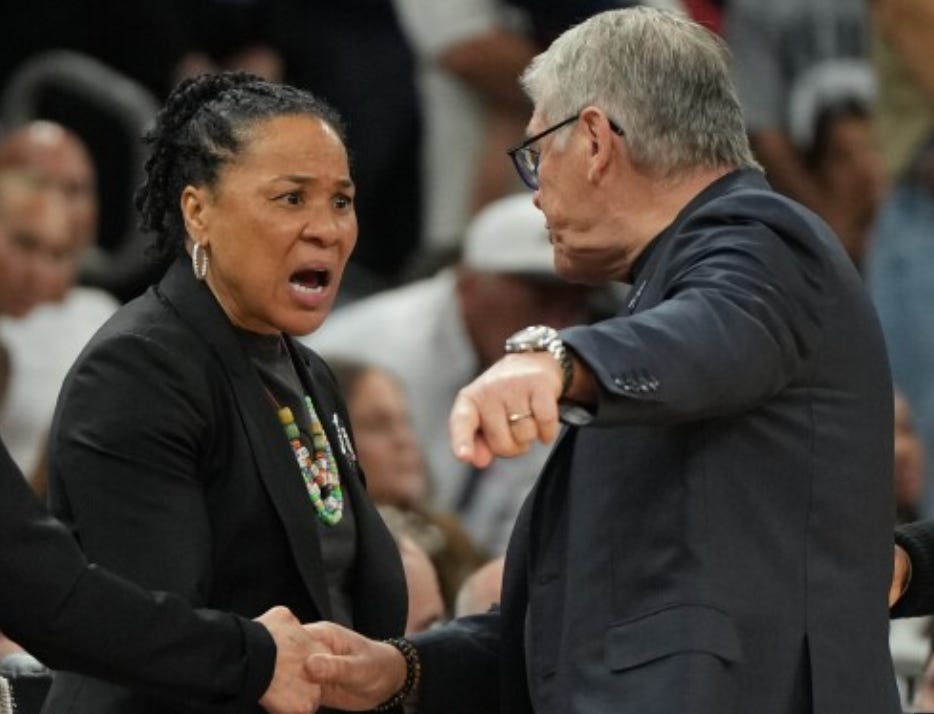
Geno later issued not one—but two apologies.
Here’s the first,
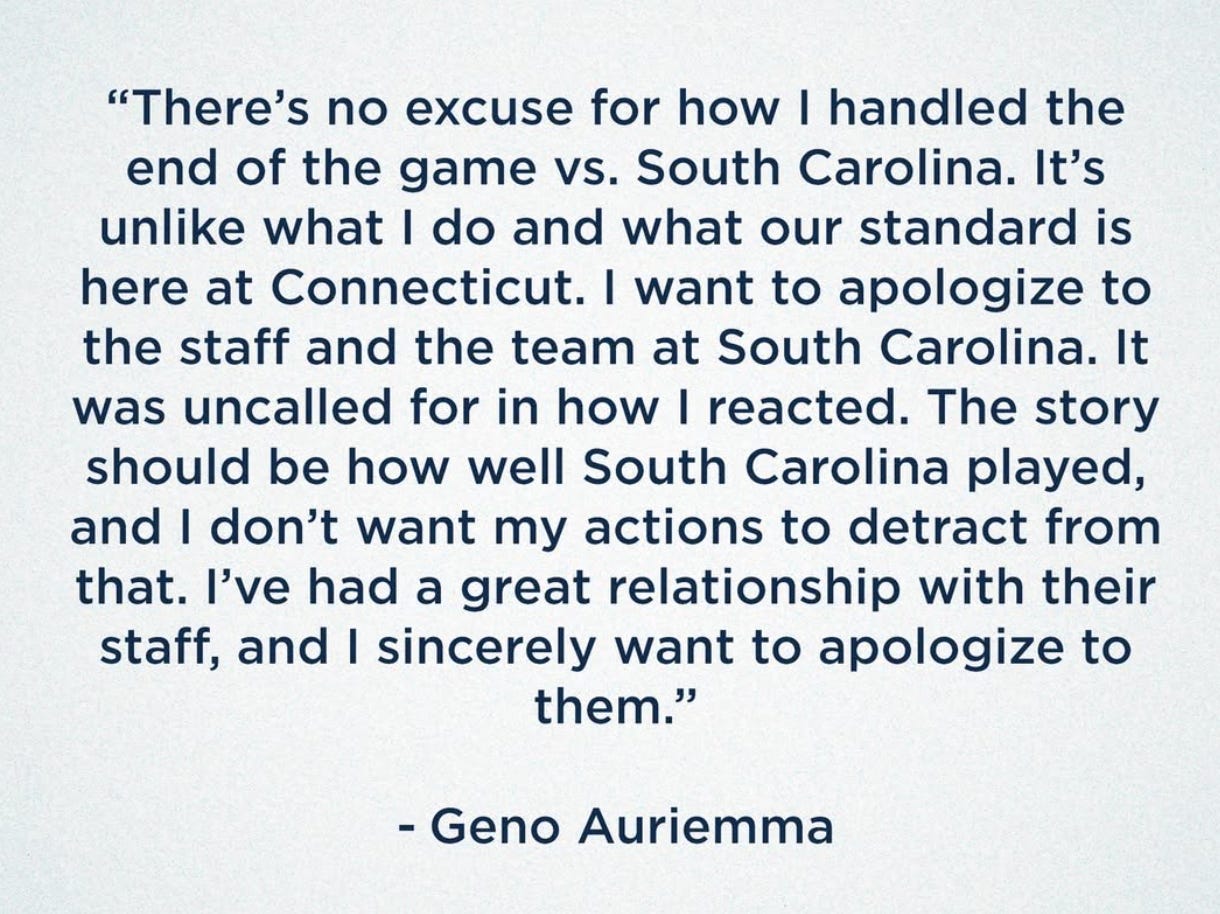
And here’s the second,
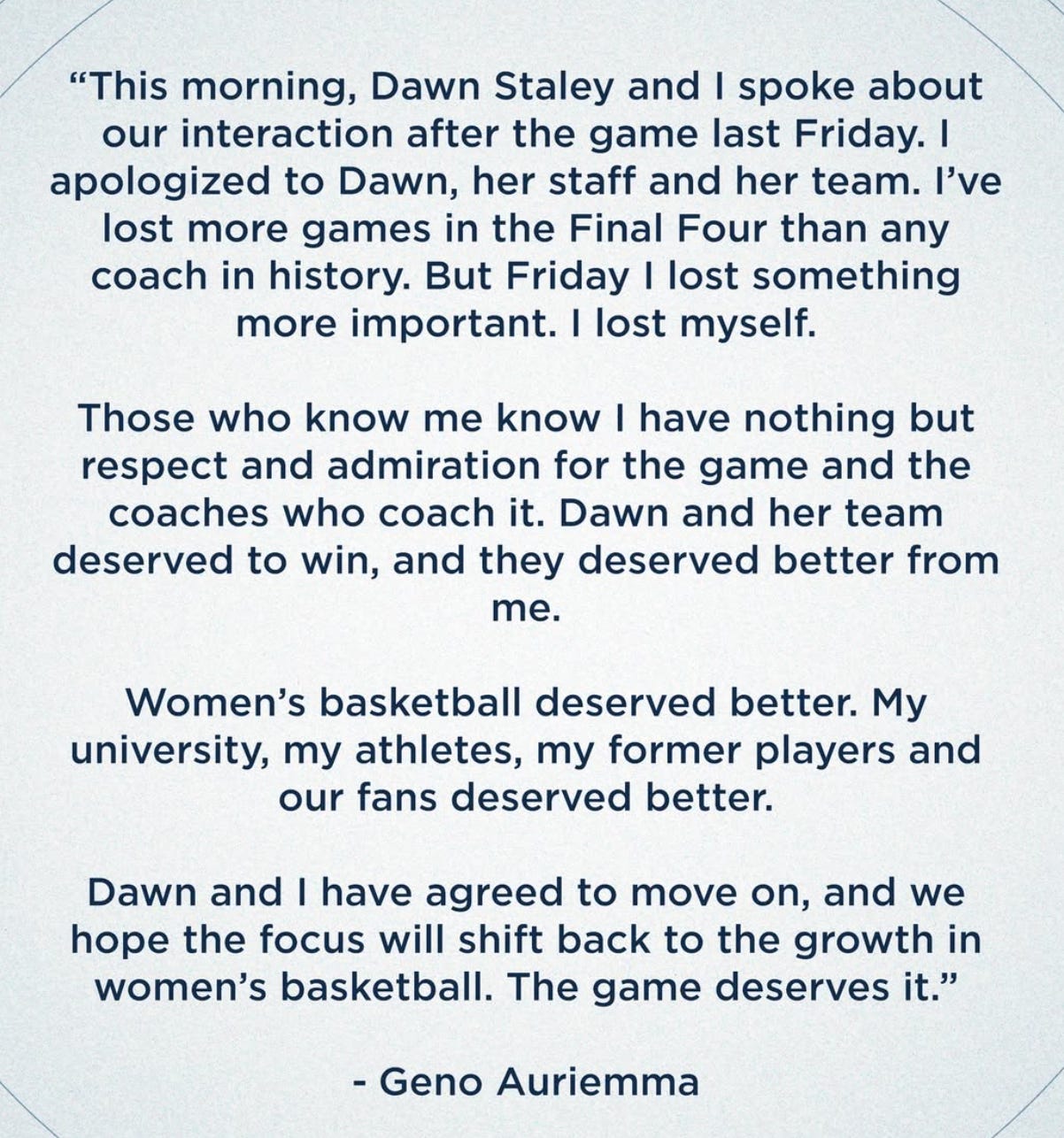
At first glance, both say the “right” things. Both include accountability. Both acknowledge wrongdoing.
And yet… they land very differently.
The second apology feels more human. More grounded. More real.
So what changed?
Let’s look at both apologies through a communication lens.
The first apology checks a lot of important boxes:
Takes responsibility (“There’s no excuse…”)
Names the behavior as below a standard
Apologizes to the opposing team
Attempts to redirect attention back to the game
This is what I’d call a structurally sound apology.
It’s measured. It’s appropriate. It’s controlled.
But it’s also… a bit distant.
Why?
Because it lives primarily in performance and perception:
“That’s not our standard”
“I don’t want to detract from their performance”
“I’ve had a great relationship with their staff”
All valid. All appropriate.
But notice what’s missing: him.
There’s very little insight into his internal experience. There’s no vulnerability. No emotional ownership beyond behavior.
It reads like a blanket "appropriate” statement per HR or legal guidance.
The second apology is where everything shifts.
Early on, he says:
“Friday I lost something more important. I lost myself.”
That one line changes the entire conversation!
Now we’re no longer talking about:
Standards
Optics
Relationships
We’re talking about identity. We’re talking about the experience of being human. There has undoubtedly been a time where we’ve all lost ourselves and so we can relate.
This is the moment where the apology moves from:
External → Internal
Controlled → Revealed
Polished → Personal
He also does something else that matters:
He names a direct conversation with Dawn Staley.
This admission signals:
This wasn’t just a public statement
There was private accountability
Repair happened relationally, not just rhetorically
The first apology avoids excuses—but still keeps things somewhat general.
The second gets specific:
“I lost myself.”
That’s not just behavior. That’s ownership of who he was in that moment.
The first apology protects credibility.
The second risks it.
And paradoxically—that risk is what builds credibility.
When someone makes the choice to reveal rather than manage, we feel it.
In the second apology, he widens the lens:
“Women’s basketball deserved better.”
“My university, my athletes… deserved better.”
Now the apology isn’t just about one interaction—it’s about responsibility to something bigger and to the people impacted by his actions.
This communicates awareness, not just regret.
The mention of speaking directly with Dawn Staley matters.
Because here’s the truth:
Apologies that only live in public are often incomplete.
Connection is repaired through conversation, not through statements.
The first apology says:
“I did something wrong.”
The second says:
“That wasn’t who I want to be.”
That shift—from action to identity—is everything.
Because when we communicate at the level of identity:
People understand us more deeply
Trust has a chance to rebuild
The relationship—not just the moment—can begin to heal
This isn’t just about one coach or one moment.
It’s about how all of us navigate mistakes.
A few takeaways:
You can say the right thing and still not connect
Authenticity requires risk, and risk requires vulnerability
Ownership resonates when it includes self-awareness
Repair is relational, not performative
And perhaps most importantly:
The goal of a true a apology isn’t to protect your image.
It’s to restore connection.
With gratitude,
Betsy
(Thanks for being a subscriber! Please share this with anyone you feel may benefit from reading it.)
Comments
Nothing yet. Say the first thing.
Sign in to join the conversation.