

“Being in tune is way overrated. Out of tune is where it’s at.” (Jacob Collier)
Recently, I showed a college basketball team a video of Jacob Collier performing live with the National Symphony Orchestra at the Kennedy Center.
If you haven’t seen it, here’s the setup: a generational musical mind stands in front of world-class musicians. The sound is gorgeous, the pitch is perfect, and the improvisation is technically masterful.
And then Jacob does something unexpected.
He invites them to intentionally play out of tune.
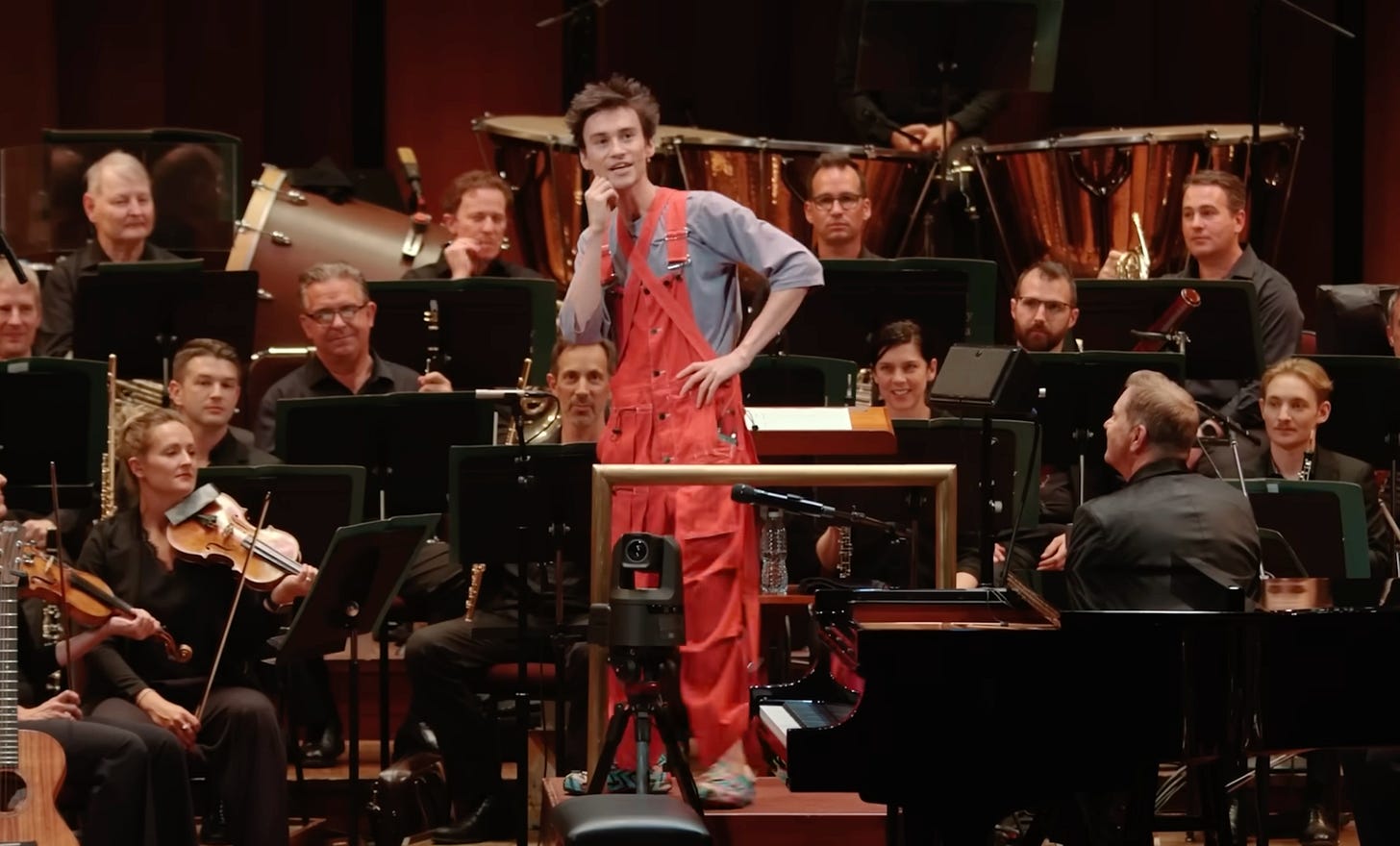
Now, these are elite performers. They’ve trained their entire lives for precision, for blend, for harmony. Playing “wrong” is the very thing they’ve disciplined themselves to avoid.
But they trust him. And they do it.
The sound gets uncomfortable. Dissonant. Messy. Cringeworthy.
But as world-class musicians they adjust. They respond. They stay in it. And together, they find their way back to harmony.
Harmony is Emphasized, But Recovery is Elite.
In sport we train athletes to execute with precision and minimize mistakes so as to optimize performance. That formula sounds wise, until athletes encounter adversity and realize that in preparing to succeed they’ve missed valuable reps in failure recovery.
Today’s athletes largely prefer coaches to quietly address a mistake that they’ve made vs. “calling them out” in front of their teammates.
Every moment that we prioritize preferences to keep the harmony (aka “keep athletes happy”) we see their resilience and accountability fall out of tune - and team performance suffers.
Normalize Discord to Support Success.
If a “mistake” equals “failure,” players tighten.
If a “breakdown” equals “bench,” risk disappears.
If “discord” equals a “bad performance,” confidence becomes fragile.
If we hope to have competitive composure, we need to practice being out of tune.
What if:
You start a scrimmage down 15.
Run offense with a constraint that intentionally disrupts rhythm.
Practice late-game scenarios where something unfair happens.
Not to frustrate. But to normalize.
Because when discord is expected, it stops feeling catastrophic.
Redefining a “Good Performance”
Too often we define success as smooth.
But smooth is situational.
Resilience is transferable.
Just like a great story, a memorable performance isn’t one without tension.
It’s one that moves through tension.
Your players don’t need to fear or avoid falling out of tune. They need reps at finding their way back. Because in sport — and in life — the magic isn’t in constant harmony. It’s in the choice to keep playing when the music gets messy.
And sometimes, that’s exactly what makes the performance unforgettable.
A few days later the team I showed this to was down 19 on the road to a Top 10 team and came back to win - a record tying comeback performance in program history. While the performance was full of discord, they didn’t let falling out of tune stop them from playing.
With gratitude,
Betsy
(Thanks for being a subscriber! Please share this with anyone you feel may benefit from reading it.)
This Substack is reader-supported. To receive new posts and support my work, please consider becoming a free or paid subscriber.
Comments
Nothing yet. Say the first thing.
Sign in to join the conversation.