

On Monday, the Stanley Black & Decker factory in New Britain, Conn., won’t be making tape measures any longer. It won’t be making them any shorter either.
Production is ending at the plant, leaving 300 people out of work. The reason for the closure, according to a Wall Street Journal article (gift link), is that the U.S. plant can only print measurements on one side of the metal tape, and retooling the machinery to print on both sides wouldn’t be cost effective. The company’s factory in Thailand, however, prints measurements on both sides, making the tape easier to read from any angle.
Displaced employees and woodworking enthusiasts suspect the “two-sided measurements” rationale is just an excuse for the company to export jobs to an overseas factory.
Maybe, maybe not. Perhaps the real culprits are the ones who, waaaaaay back when, actually invented New Britain’s machines that manufacture tape measures.
First, a little background. Alvin J. Fellows of New Haven, Conn., developed a tape measure with a locking mechanism to prevent it from automatically retracting, a tool he patented in 1868, according to Smithsonian magazine. It was an immeasurable improvement to the reel-retractable model invented in Britain by James Chesterman in 1829.
The Smithsonian article notes that even after the introduction of the locking retractable tape measure in the late 1800s, sales of the tool in the U.S. did not overtake those of the folding carpenter’s ruler until the 1940s. Price is probably one reason, but I’m wondering if it’s also because folding rulers had numbers printed on both sides.
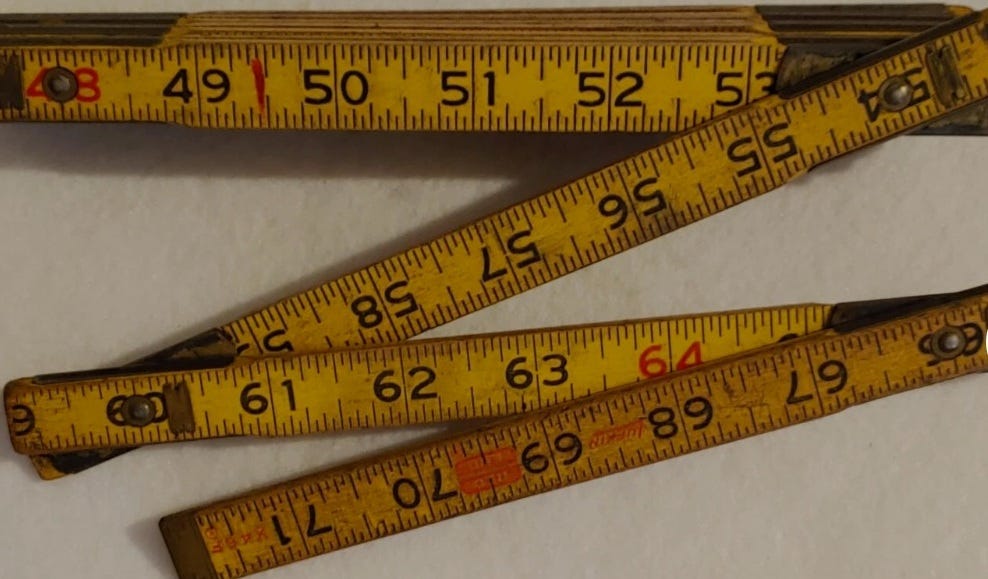
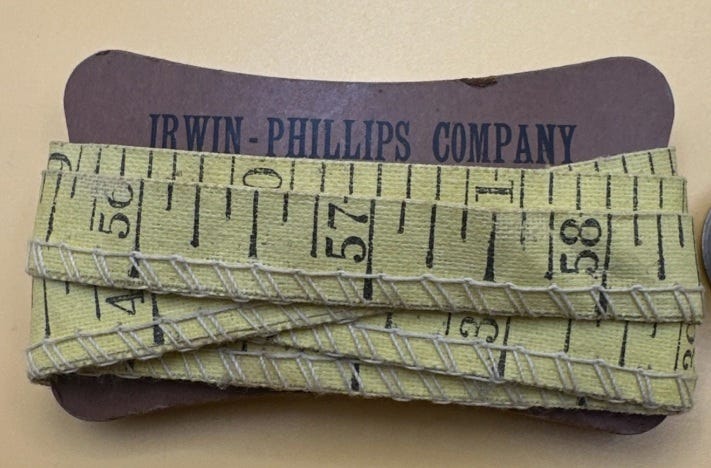
In fact, back in the day, a lot of measuring tools had numbers printed on both sides. Tailors and dressmakers typically used fabric measuring tapes that were reversible.
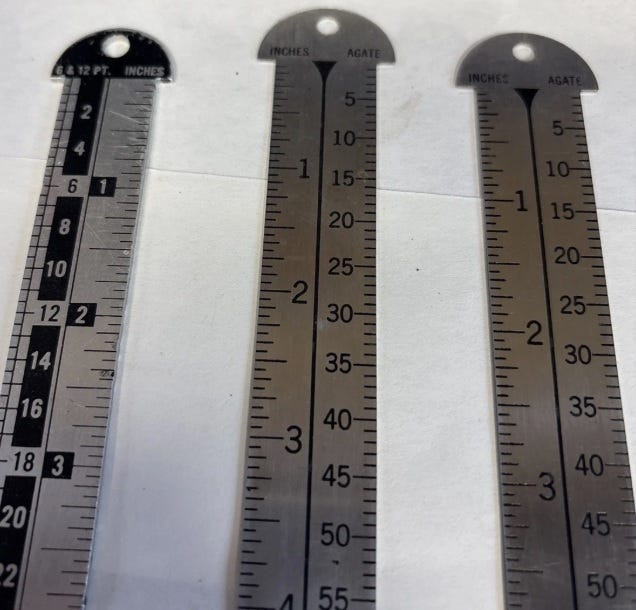
Printers and typographers used metal measuring sticks that were often reversible and included different units of measure, such as picas.
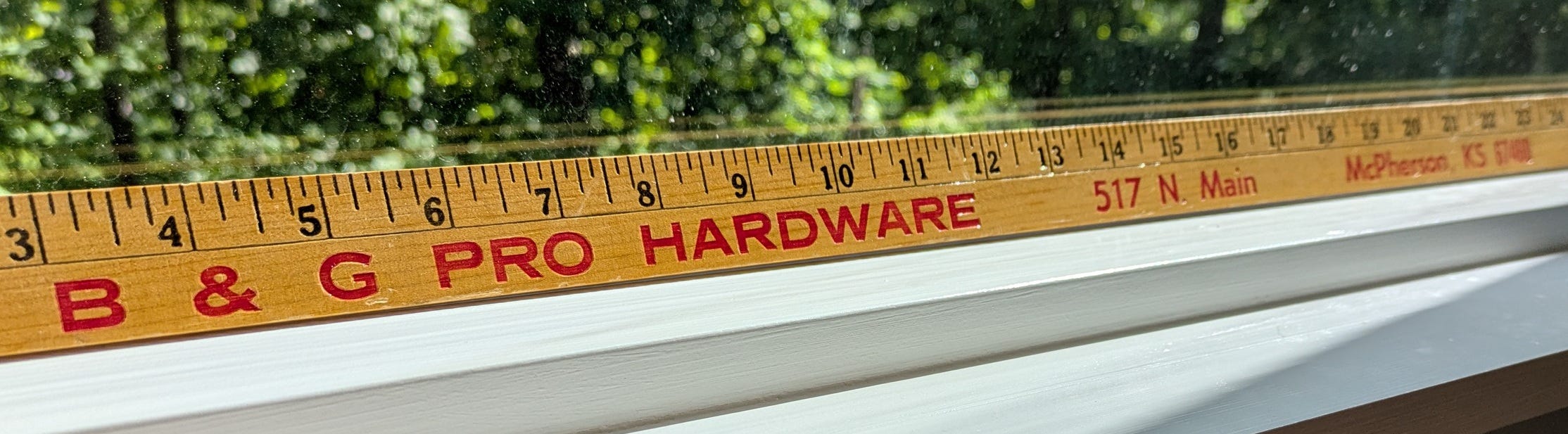
And even humble yardsticks — like the ones my mother gave out at her hardware store—were printed on both sides. (The reverse side also advertised “Your Handy Helpful Hardware MAN,” which infuriated my mother.)

Couldn’t the oh-so-smart engineers at Stanley (what the company was called before it merged with Black & Decker) have just built machines that could print measurements on both sides of the tape — what other toolmakers in the field WERE ALREADY DOING?
It is bittersweet that New Britain, the city where the beloved tape measure is dying, is located a mere 37 miles from New Haven, the city where the modern tape measure was born.
No posts
Comments
Nothing yet. Say the first thing.
Sign in to join the conversation.