
A recent family reunion took me to western Pennsylvania, where my Italian cousins-in-laws served up spaghetti with meatballs and sausage and peppers. Later, my Polish cousins-in-laws dished out stuffed cabbage and kielbasa with rye bread.
Traversing rolling country roads in a rental car with a faulty transmission, I noticed two things: First, the cornstalks looked too short for July, so it must have been a chilly or wet (or both) spring there. Second, there were lots of signs for Amish-made furniture and other products on the side of the road.
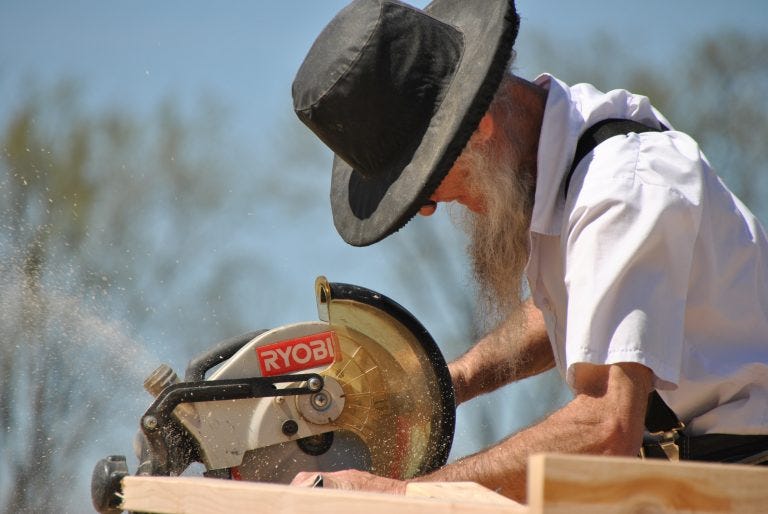
One thing the Amish have going for them: They don’t have to worry about AI stealing their jobs. Their work is still done by hand, and people are willing to pay a premium for old-fashioned craftsmanship.
But one thing has long puzzled me: If the Amish insist on living off the grid, why are they allowed to use electric power tools to make their furniture? Let’s assess some of the tools operated in “A Look Inside an Amish Furniture Factory” in Mount Hope, Ohio:
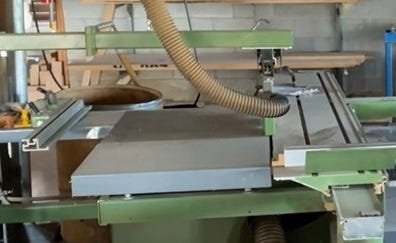
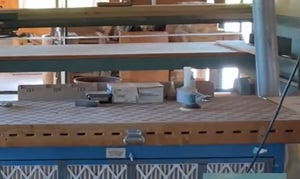
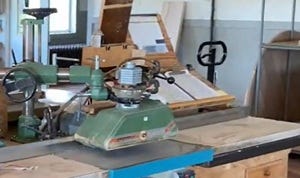
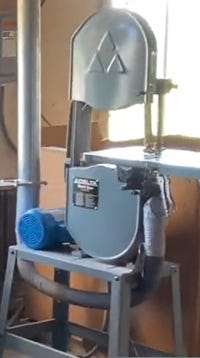
This factory employs four to five Amish craftsmen, and they only make tables. Since each table is made by hand, the output is roughly eight tables per day. Without power tools, the output would be far less, making it incredibly difficult for these craftsmen to make a livelihood.
So I totally understand why the Amish need power tools to help put food on their tables. But how do they justify using a band saw, for example, to their church elders? The answer: While the Amish forbid connecting to public utilities, they’re allowed to generate electricity on their own.
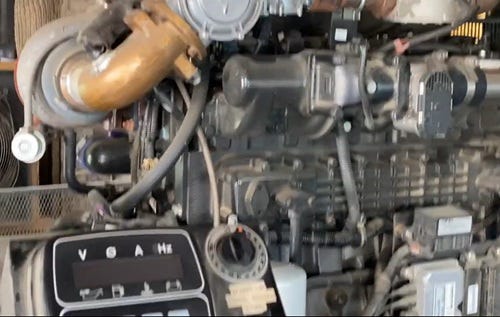
The Mount Hope table factory in Ohio uses a generator powered by natural gas. Because of that energy source, the craftsmen are able to operate commercial-grade power tools outfitted with a sawdust-collection system in a shop illuminated by electric light fixtures.
Elsewhere, Amish power tools are modified to run on alternative energy sources, such as compressed air (pneumatics), hydraulic pumps, or small standalone diesel or gasoline engines. Tools and appliances that use solar power and batteries are also permitted, but they can’t be providing juice to, say, a PlayStation.
To me, it seems like the Amish are splitting hairs. Regardless whether the electricity comes from a public utility or a diesel generator, it’s still electricity. But all religions—and denominations within those religions—have their peculiarities. In the Amish world, each community creates its own rules—called Ordnung—about technology, clothing, buggies, farming and household matters. So clearly, less-strict orders of the Amish developed workarounds for electricity.
That leaves me with just one nagging question: I have seen Amish farmers working their crops with motorized tractors. So why do these same farmers have to drive a horse and buggy on the road?
No posts
Comments
Nothing yet. Say the first thing.
Sign in to join the conversation.