
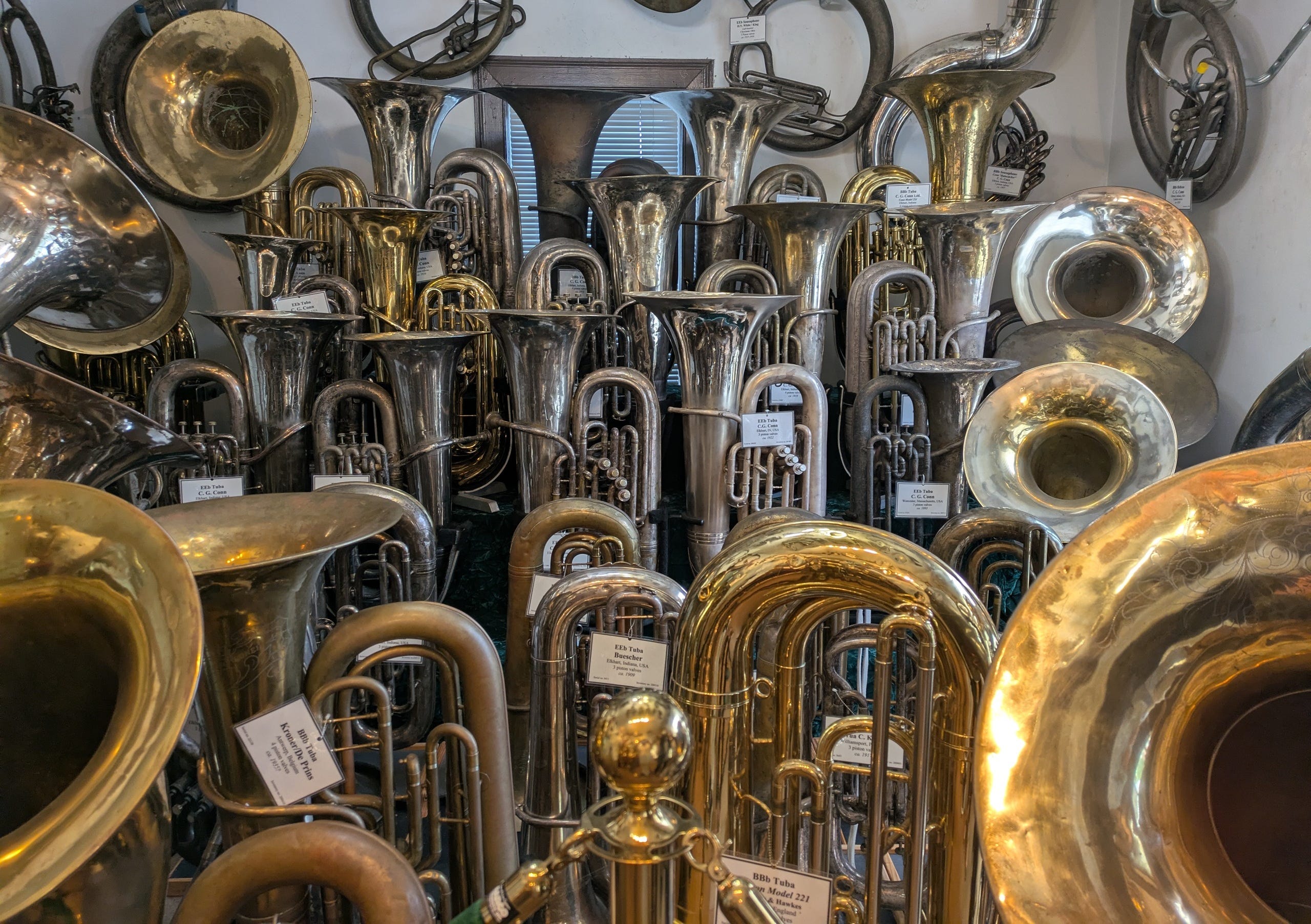
With my husband Chuck—a pseudonym to protect his privacy—I recently visited the V & E Simonetti Historic Tuba Collection in Durham, N.C. In over 60 years, Vince Simonetti, once a professional tuba player, has amassed 300-plus instruments from the tuba family, which includes the bass tuba, contrabass tuba, euphonium, helicon, and sousaphone.
Somewhat of a wind instrument himself, Vince went into exhaustive detail into the differences between rotary valves and piston valves, which control airflow through the tubing. Ironically, it all comes down to the bore.
At 83 years old, Vince exhibits impressive stamina in leading these tours—which are by appointment only and require visitors to wear face masks. A couple of members in my tour group had to sit down and rest their legs and backs. But Vince rarely paused to take a breath. Clearly, a career in orchestral tuba had maximized his lung capacity.
He admits to one lapse, however, and that is in the upkeep in some of the tubas. Because of their metallic composition and finish, tubas require regular buffing. “I used to pay a couple of high school kids $25 an hour to polish my instruments,” Vince said. “But nobody wants to do it anymore.” [Sadly, I was the only one who appreciated the junior-high humor in Vince’s quote.]
Tubas are generally made out of sheet brass that has been rolled, cut, formed, and brazed into its proper shape. The outer layer, or finish, varies by manufacturer. For example, it could feature lacquered brass, which has a shiny protective finish that requires less maintenance. Or it could have nickel or silver plating, which requires more maintenance. One tuba in Vince’s collection had a gold-plated inner bell.
The earliest tubas in the Simonetti collection date to the 1830s, and some of the instruments were used in military bands amid battlefield conditions. They are not perfect specimens with glossy finishes, and that’s what makes the collection beautiful. Not to mention, brass develops a natural patina over time that would be missed if it were polished away.
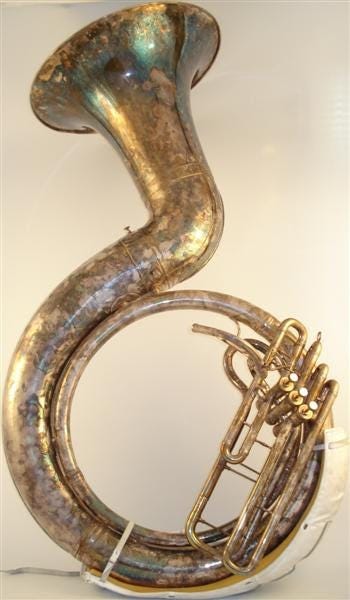
The finish on this C.G. Conn “Rain Catcher” BB♭ sousaphone, shown above, appears to be silver-plated brass. But it is extensively tarnished and patinated, with areas of exposed brass and multicolored oxidation.
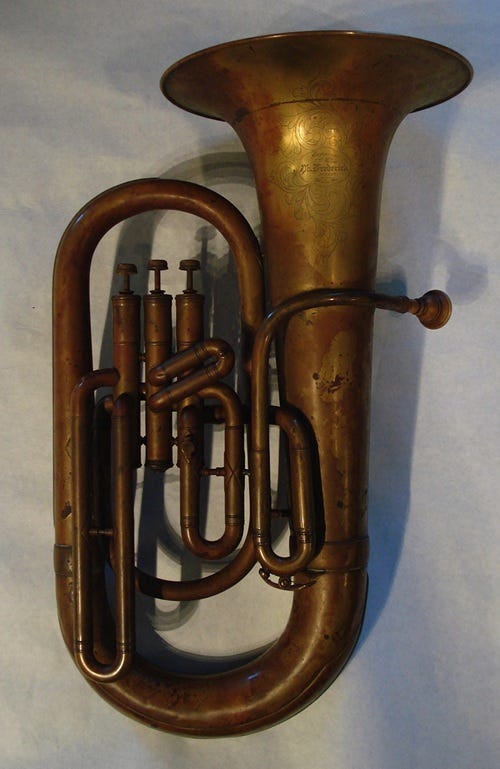
Above, a B-flat euphonium from about 1890 by the Frederick company in Philadelphia, appears to have its original, natural brass finish and shows a dark brown patina from oxidation.
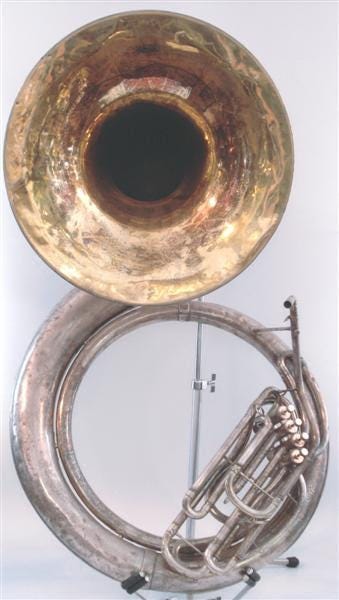
This Holton BB flat sousaphone from 1923, above, is also silver-plated brass, with signs of heavy tarnish and wear. The inside of the bell, however, is gold colored, which appears to be exposed brass.
Chances are, you have items that are made of brass or silver in your home. Do they need a little love? Your nearby independent hardware store likely stocks metal cleaners and polishes, microfiber cloths, and gloves, if necessary. (Brasso is a commonly used product.) But before making the trip, check your pantry for some common household cleaners.
To clean brass: Start with warm, soapy water and a microfiber cloth (and possibly a soft-bristle toothbrush for tight spots). It’s the least-aggressive approach, especially if you want to preserve the darkened patina of the metal. If there’s heavy tarnish, however, cover the item in ketchup and let it sit for 10-15 minutes; rinse and polish. For the nuclear option, some websites recommend making a paste of vinegar+salt+flour OR lemon juice+baking soda. But if the piece is an heirloom or particularly valuable, consider having it professionally cleaned instead.
To clean silver: This involves a little chemistry using aluminum foil, baking soda (not baking powder) and hot water. Line a heatproof casserole dish with aluminum foil and cover it with a generous layer of baking soda. Lay the silver pieces in the casserole dish so they’re touching the foil. In a separate pan or dish, bring water to a simmer, then pour it over the silver pieces in the casserole dish so that they’re completely submerged. Allow the water to cool. Remove items, buff and dry. Repeat this process, if necessary, until tarnish is removed.
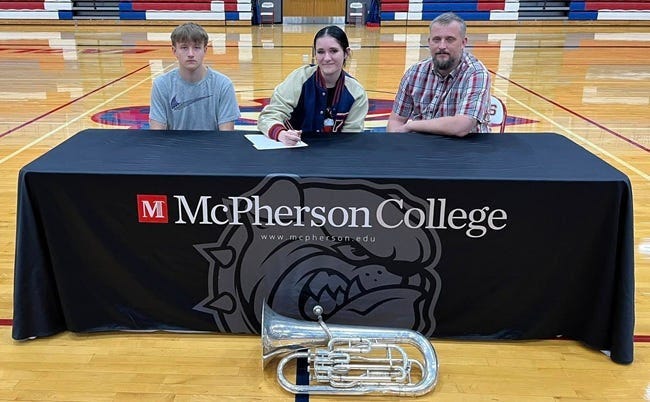
In May, I had the honor of watching my nephew’s daughter graduate from Canton-Galva High School in Central Kansas. In the fall, she’ll attend McPherson College, where she plans to major in music. She signed her letter of intent on May 7, which would have been Gene Copeland’s 100th birthday. I’m sure he and my mother were proudly watching their great-granddaughter from the heavens.
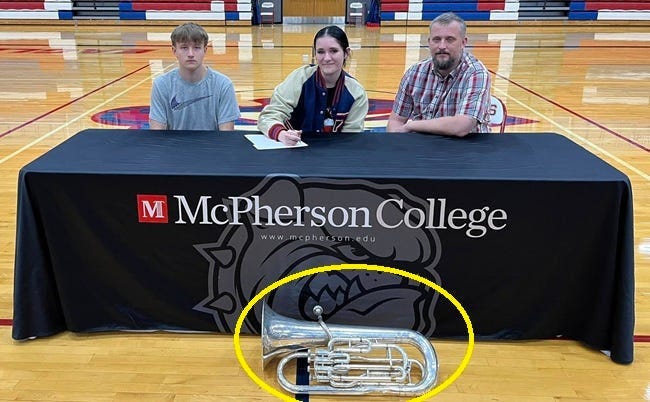
And what is that instrument shown in the picture? Why, it’s a euphonium, a member of the tuba family.
No posts
Comments
Nothing yet. Say the first thing.
Sign in to join the conversation.