
Strong verbs do heavy lifting in fiction: they shape energy, specificity, and character. They help your prose feel more alive—often with fewer words.

This lesson is best used in later drafts (around draft 3–4), once scene structure, emotional arc, and character motivations are mostly working. Then line-level choices can finally pay off.
Why verbs matter (3 core teaching points)
Verbs control energy + rhythm. The verb is where the sentence “moves.”
Verbs create specificity. A more precise verb can replace extra modifiers (especially adverbs).
Verbs reveal character. How your protagonist moves through the world—intent, motivation, physicality—shows up in verb choice.
The quick diagnostic (3 questions)
Where is this scene losing energy? (Often: generic verbs like went, got, turned, looked.)
What does the character want right now—and what verb matches that intent?
What’s the emotional subtext—and is the verb carrying it (without an adverb)?
Mini lesson: choose verbs that carry subtext (Gala)
The goal isn’t to sound fancy—the goal is precision. Different verbs create different emotional tones. There is not one right answer.
Exercise 1: “Walking”
Weak: She walked into the classroom.
Try alternatives (notice how mood changes instantly):
She stormed into the classroom.
She drifted into the classroom.
She dragged herself into the classroom.
She slipped into the classroom.
She marched into the classroom.
Exercise 2: “Looking”
Weak: He looked at her across the room.
Try:
He glanced at her.
He studied her.
He tracked her.
He watched her.
He lingered on her.
He sized her up.
He scanned the room until he found her.
Exercise 3: “Speaking” (remove the adverb)
Weak: “I’m fine,” she said angrily.
Try:
“I’m fine,” she snapped.
“I’m fine,” she bit out.
“I’m fine,” she hissed.
“I’m fine,” she barked.
“I’m fine,” she muttered.
Note: most of the time “said” disappears (good). Use stronger tags when you need emotional precision.
Beth’s revision lens: verbs that reflect character
When you revise, ask: Is this verb doing the job you want it to do?
Does it show the character’s intent?
Does it match their physicality in this moment (bounded vs climbed vs staggered vs crept)?
Does it fit the tone of the scene and the genre promise?
The high-frequency verb audit (Gala)
In later drafts, search for verbs you repeat a lot:
looked
walked
turned
went
got
put
felt
smiled
stared
saw
These words aren’t “bad,” but noticeable repetition can flatten the prose.
Example paragraph
Weak:
She walked to the window and looked outside. She saw the rain hitting the street and turned back toward him.
Revision:
She drifted to the window and watched rain hammer the street before facing him again.
What changed:
fewer words
more rhythm
more atmosphere
less repetition
stronger imagery
A simple tool you can use today (Beth)
Pick one paragraph and reduce each sentence to:
subject (POV character) + verb (specific + powerful) + object
Then upgrade the verb so it’s both specific and character-true.
Strong verbs are seasoning, not the whole meal (Gala)
If every character saunters, slinks, prowls, glowers, and bellows, the prose can feel overwritten.
Sometimes “walked” is invisible in the best possible way.
Aim for precision, not decoration.
Writer practice (do this in 10 minutes)
Open a chapter you’ve already revised structurally.
Search for: looked / walked / went / got / turned / felt
For each instance, ask:
Is this the most emotionally precise verb for this moment?
If I change nothing else but the verb, does the line get clearer, sharper, more character-specific?
Power Tip: How To Use MS Word to Highlight Your Overused Verb (Gala)
Gala’s Microsoft Word “highlight LOOK” method (from the transcript):
Open Find & Replace (Replace dialog).
In Find what, type the target word (e.g.,
looked).In Replace with, type the same word again (e.g.,
looked).Click the More button (bottom of the dialog) to expand options.
Choose a formatting option (Gala uses Font) and set a visible change (she uses Font color → Red).
Run Replace All.
Result: every instance of that word is now the same word, but formatted (e.g., red), so you can visually scan a chapter and instantly see overuse/repetition.
Resources and Upcoming Course by Gala Russ
Comp Titles Interview Recording + Workbook - $1.99
https://writingconversations.thrivecart.com/comp-titles/
Find the comparison titles for your book: how to choose strategic comps, where to research trending titles, what readers expect in your genre, how to analyze comp patterns, how to describe your book using other books
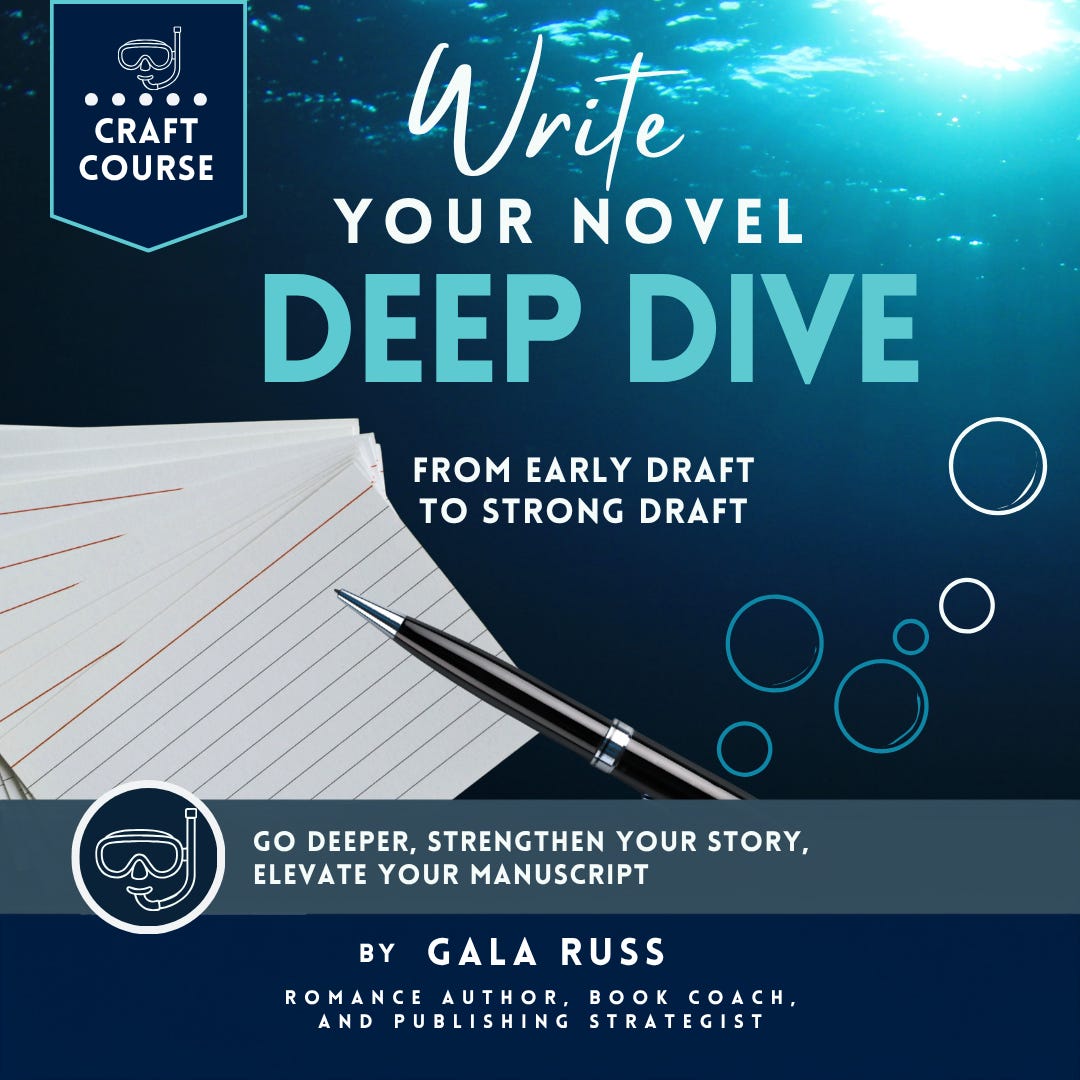
Write Your Novel Deep Dive class: 8 Thursdays, June 18-Aug. 27 - Registration deadline: June 17th $280
https://writingconversations.thrivecart.com/wyn-deep-dive/
Many people think once you’ve learned dialogue, story structure, and basic self-editing, the only way to “level up” is to keep writing more pages and hope it clicks, but actually the jump from beginner to confident storyteller comes from targeted, next-level craft practice with feedback and if you just show up to 8 focused deep-dive sessions and apply the guided exercises directly to your current WIP, then you’ll get clearer structure, stronger dialogue, more felt emotion, better pacing, and a cleaner draft you can actually move forward with.
This is a live online class, not a pre-recorded course.
Write Your Novel (Summer Edition) - Saturdays, June 6 - Aug. 29 (no July 4th), registration deadline: June 5 $250
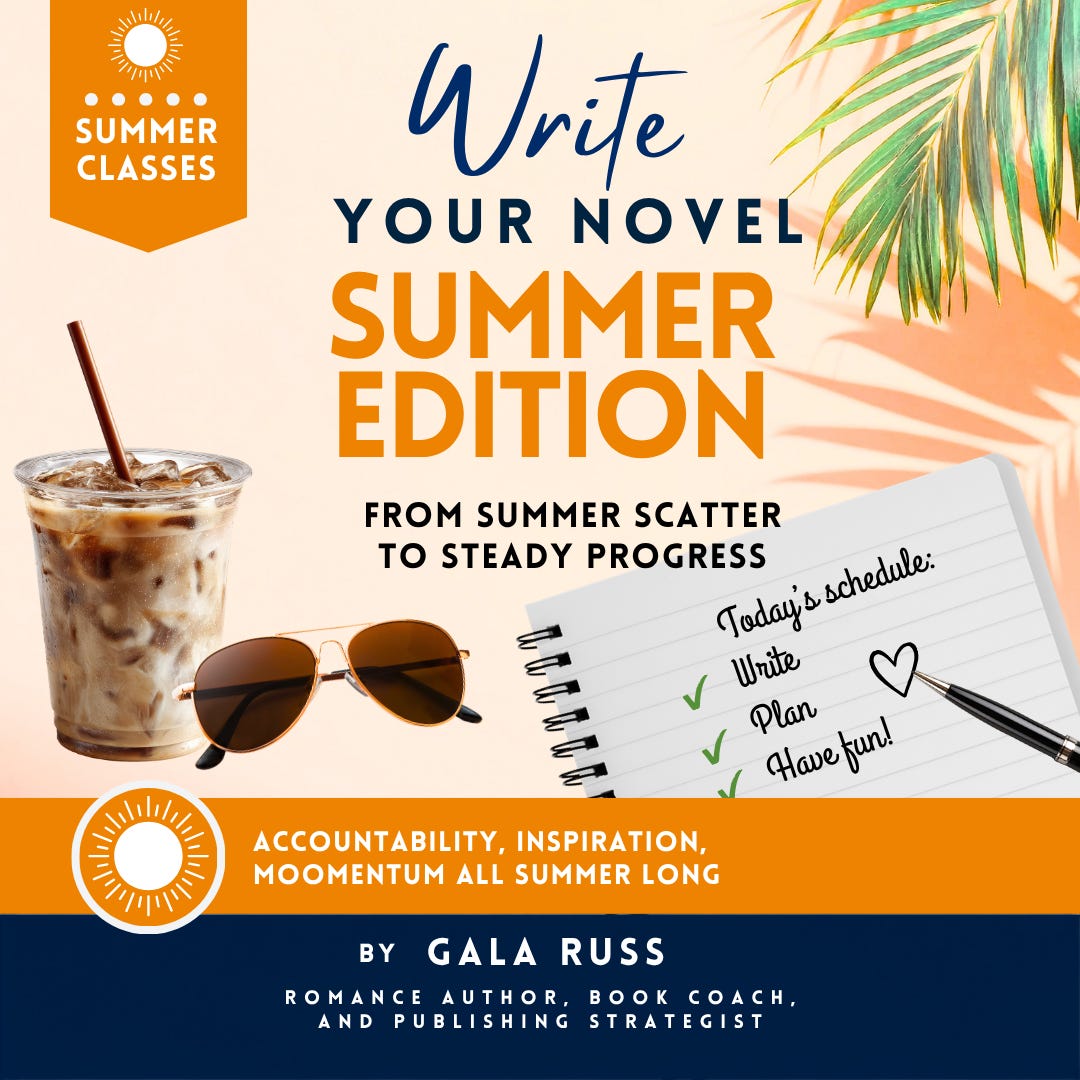
Many people think summer is the worst time to make real progress on a novel—too much travel, family, and life chaos—so it’s basically a “writing doesn’t happen” season, but actually you don’t need perfect conditions or huge blocks of time; you need a simple, steady rhythm that makes writing feel doable again and if you just commit to showing up for one small weekly session and taking one clear next step in your story each time, then you’ll get consistent forward motion (pages, direction, and momentum) so you hit September with visible progress instead of regret.
https://writingconversations.thrivecart.com/wyn-summer-2026/
This is a live online class, not a pre-recorded course.
Resources by Beth Barany
Edit Your Novel Checklist for genre fiction writers: https://bethbarany.thrivecart.com/edit-your-novel-checklist/
Join the Edit Your Future: Science Fiction/Fantasy Revision Lab membership: https://www.buzzsprout.com/2012061/subscribe
Comments
Nothing yet. Say the first thing.
Sign in to join the conversation.