
Once upon a time, not very long ago, I belonged to a different denomination.
The United Methodist Church was my home.
Within her, I was baptized, confirmed, called into ministry, married, and ordained. Years later, my own children were baptized in United Methodist churches. Some of the most sacred moments of my life unfolded within that communion.
To this day, I’m grateful for what I received there.
If I’m honest, I often felt a little out of place while in the UMC. But then again, so did almost everyone I knew. We disagreed about theology, wrestled with institutional challenges, and carried more questions than answers.
Yet through all of it, I clung to one certainty:
Jesus Christ was worth everything.
I wanted to know Him, love Him, and serve others the way He did.
For a long time, that conviction mattered more than our disagreements. It was the center that held everything else together.
The truth is, I never fit neatly into the categories people seemed to need.
Some assumed I belonged in the “evangelical” camp because of my convictions about Scripture and historic Christian doctrine. Yet I never felt comfortable wearing that label, especially as it became increasingly defined more by politics than by the person of Jesus.
I hold convictions that many would describe as conservative. But I have no interest in Christian nationalism, culture wars, or treating people made in the image of God as enemies. Some of my closest friends interpret certain passages of Scripture differently than I do. We have disagreed, prayed together, learned from one another, and served the same King. I believe many of them are bearing beautiful fruit for the Kingdom, even where we remain unconvinced by each other’s arguments.
Maybe that’s why tribalism grieves me.
I’ve seen what happens when our first instinct is to sort people into camps instead of seeing them as brothers and sisters in Christ. And lately, I’m saddened to see that instinct hardening once again.
So when I learned that Asbury Theological Seminary had been removed from the United Methodist Church’s list of approved seminaries for ordination, I wasn’t shocked.
I graduated from Asbury and served for years as a United Methodist pastor.
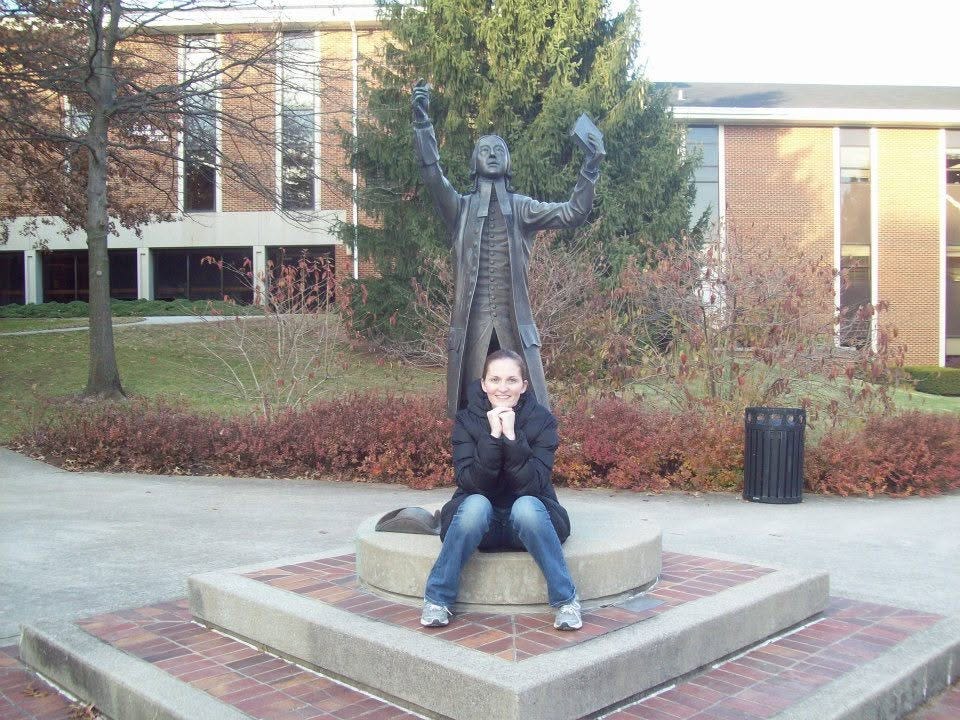
My first visit to Wilmore, circa 2012
In many ways, the decision simply made official something I had quietly experienced years earlier.
While I was a student, a conference leader visited campus and asked to see my transcripts. After looking over my grades, she smiled and said, “You’re an intelligent person. You need to consider transferring somewhere else.”
I remember wondering what exactly I was supposed to hear.
That my work was commendable, but my formation was suspect?
That my calling would somehow become more legitimate if a different institution’s name appeared on my diploma?
Thankfully, that isn’t the whole story.
A second conference leader who was present during that visit pulled me aside later. We didn’t agree on every theological issue. In fact, we came from very different places theologically. But this person wanted me to know that the previous conversation did not speak for everyone in my Annual Conference.
That simple act of kindness, making space for someone who wasn’t their theological mirror image, has stayed with me.
It’s one of the reasons I refuse to paint the United Methodist Church with a broad brush. Yes, there were people who made me feel unwelcome because I was an Asbury alum. But there were also many friends, colleagues, and laypeople who encouraged me, welcomed me, and reminded me there was still room in the family of God for people who didn’t agree on everything.
Which is why I don’t write this with bitterness.
I simply find the recent decision unsurprising.
The official delisting of Asbury feels less like a dramatic break and more like the culmination of a trajectory many of us experienced years ago.
Every denomination has the right to establish standards for ordination. Every church body has to decide what it expects from those it ordains. That isn’t my argument.
My question is whether we can be honest about what this moment represents.
The United Methodist Church has often described itself as an inclusive broad tent, a place where people with differing theological convictions could remain in fellowship and mission together.
If that is still the aspiration, then decisions like this deserve careful reflection.
Yet there’s one more temptation we should resist.
Over the past day or so, I’ve seen a few voices within the Global Methodist Church respond by saying, “Well, maybe we shouldn’t recognize pastors from United Methodist seminaries.”
I understand the impulse.
But I hope we resist it.
We shouldn’t mirror the very instincts we lament in others.
Yes, churches should examine doctrine. Yes, they should carefully discern the calling and character of those they ordain. But let’s be careful not to assume that God cannot faithfully form women and men simply because of the institution where they received their education.
I’ve known deeply faithful pastors who graduated from Asbury. I’ve known deeply faithful pastors who graduated from United Methodist seminaries. And I’ve known ineffective pastors from both.
A diploma has never been a substitute for character.
Nor has a seminary ever been the Holy Spirit.
To be sure, Asbury has formed pastors for generations who have faithfully served Christ in churches around the world. Removing it from an approved list doesn’t erase that history. It doesn’t diminish the ministry of its graduates. And it certainly doesn’t determine whether God continues to call women and men from its classrooms.
This whole delisting has had me reflecting on Gamaliel’s words in Acts 5. As the religious leaders debated how to silence the early church, he offered this remarkable counsel:
“If this plan or undertaking is of human origin, it will fail; but if it is of God, you will not be able to overthrow them.”
Gamaliel wasn’t endorsing the apostles’ message. He was simply acknowledging a truth that echoes throughout Scripture: no human institution has the final word over the purposes of God.
That has become a source of hope for me.
Looking back, I’m grateful for every place where God met me, the churches that nurtured me, the seminary that formed me, and even the people who challenged me. But none of those places owns God’s calling.
His voice has always been greater than institutional decrees.
If a ministry is merely sustained by human effort, time will reveal it. But if God is the One who has called, equipped, and sent someone, no vote, policy, or approved list can ultimately stand in His way.
Because the risen Christ is still calling ordinary women and men to follow Him. He is still forming apostles, prophets, evangelists, shepherds, and teachers. He is still building His Church.
Institutions organize.
God calls.
Institutions approve.
God sends.
Institutions make lists.
Jesus builds His Church.
And no list, or delist, has ever been able to stop Him.
Comments
Nothing yet. Say the first thing.
Sign in to join the conversation.