
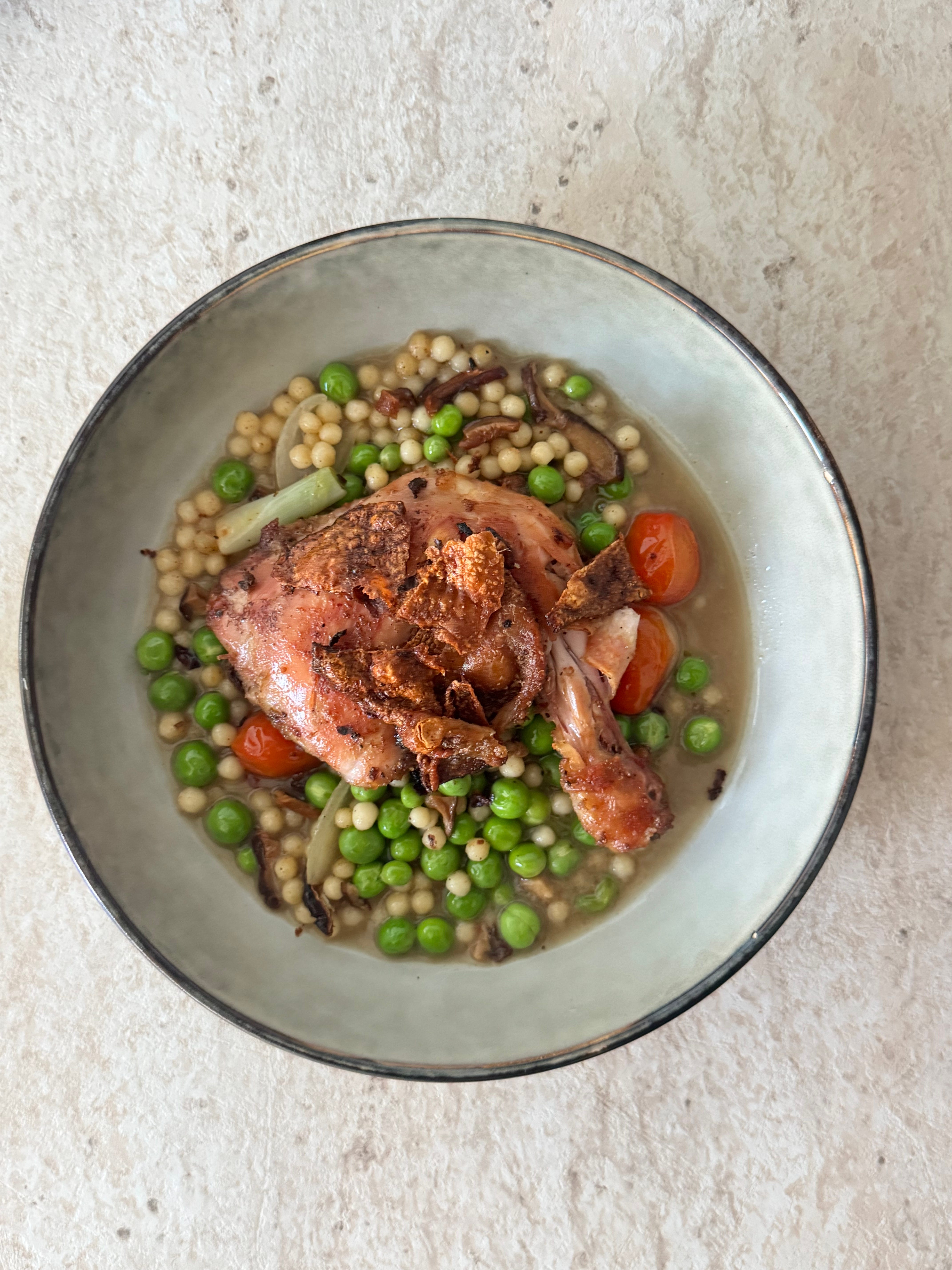
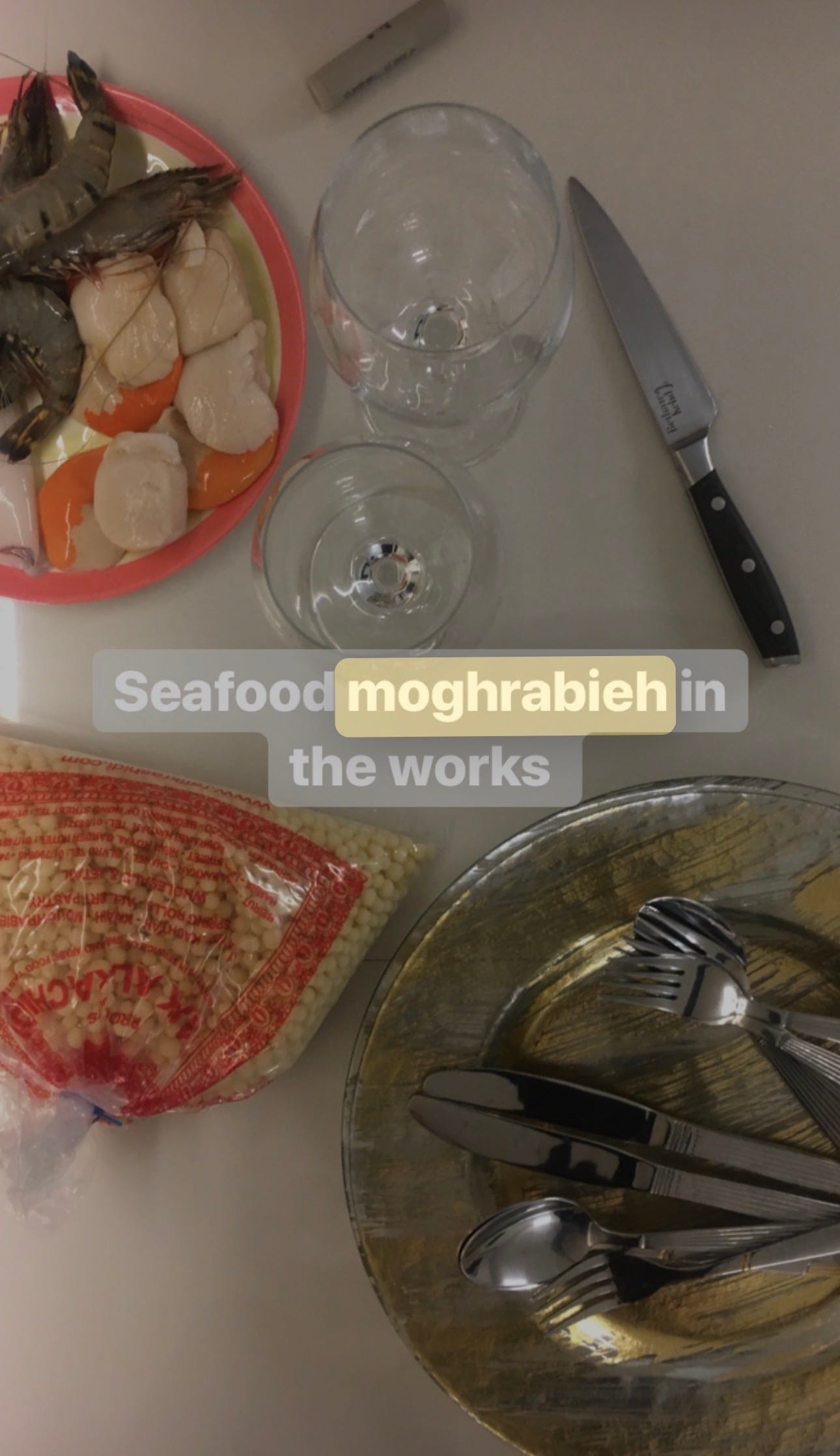
I once prepared a fisherman’s moghrabieh using a combination of local clams, calamari, and whatever else was in season. It was divine. Don’t take my word for it. Many at the table were transported, except, one person refused it entirely. But this isn’t mograbieh they proclaimed. They couldn’t reconcile it with the moghrabieh they had grown up eating. The standardised. The nationalised version. The “Lebanese” one.
For them, moghrabieh belongs to a fixed canon: pearl onions, chickpeas, chicken, cinnamon, caraway. Anything beyond that is deviation. Corruption. Sacrilegious improvisation. A betrayal of “authenticity”.
But the name tells us a very different story… If only we stop for a moment and lean in with curiosity.
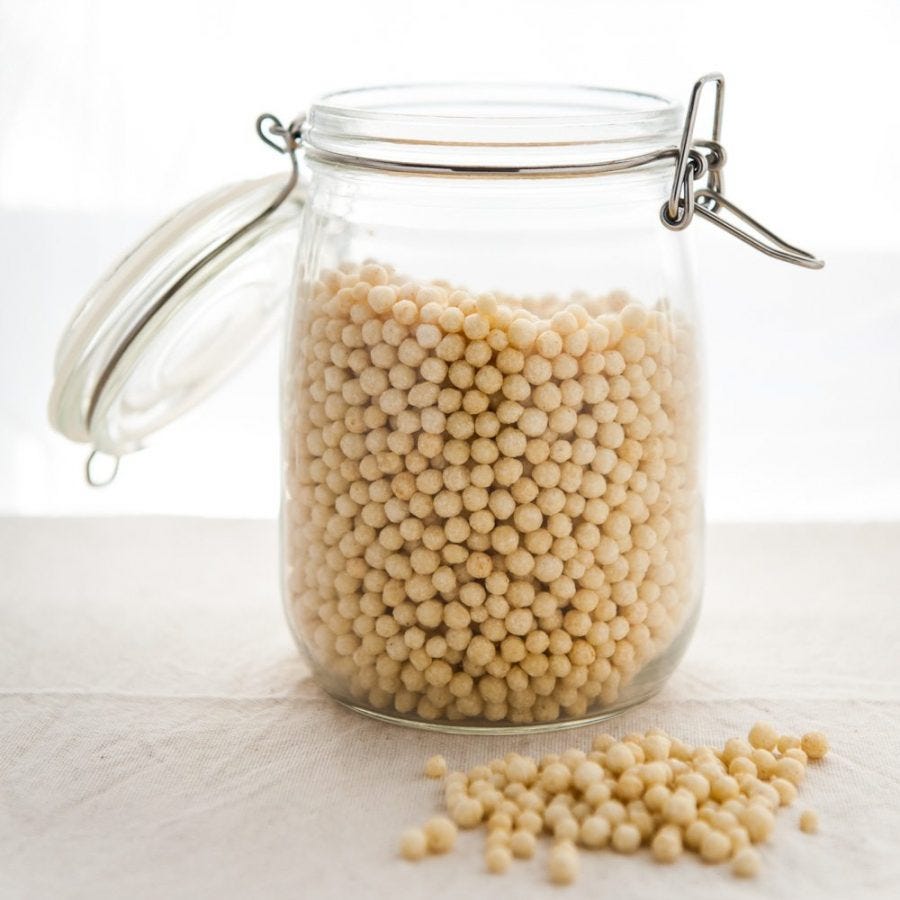
Moghrabieh. The larger, chewier cousin of couscous — both born from the same ancient instinct to roll grain into something shelf-stable, accessible and portable.
From Maghreb — the Arabic word for the place where the sun sets, but also for west, rooted in gharb, meaning foreign.
During the height of the Islamic Empire, this referred to the lands of the North African coast — Morocco, Algeria, Tunisia, Libya, Mauritania.
Exactly how these rolled semolina pearls travelled east is difficult to prove with certainty. But the routes themselves are not difficult to imagine.
For centuries, North African pilgrims crossed through Bilad al-Sham on their way to Mecca. Trade caravans stitched together deserts, ports and cities across the region. Techniques, ingredients and culinary knowledge always travelled with people — carried for survival, for sustenance, for trade. Food built for movement.
The invention of couscous is widely credited to the Berbers, an ethnic group indigenous to Northwest Africa — peoples stretching from Morocco south to Mauritania. The evidential trail is not without mystery, but it allows us to connect, if not always the grains themselves, then the techniques, the ideas, the intent.
Couscous- or kuskus- is a word born from labour and sound. It draws from an Arabic root meaning ‘to pound small,’ and Berber terms like seksu, meaning ‘well-rolled grains’. More than that, the name mimics the very acoustic signature of its making: the ‘skss, skss’ rustle of raw durum wheat semolina being worked through a sieve to create dainty granules destined to be steamed into something supernaturally light and delectable.
In the mid-14th century, the berber explorer, Ibn Battûta references a grain called fonio in his “Voyage to Sudan” (modern-day Mali). He specified that, in these lands, coscoçoû (couscous) is prepared with white foûni (fonio) which he described is “the smallest of all species of millet” and “like mustard seeds”. Fonio is likely Africa’s oldest cultivated cereal, with a history stretching back over five millennia, its traces found even in ancient Egyptian pyramids.
What this might tell us is not that fonio became couscous, nor that the rolling technique was universally applied to every grain. Rather, the common denominator was a shared culinary architecture: the method of steaming a microscopic grain over a simmering stew to serve as a porous base for a meal. While wheat couscous requires human hands to consciously roll and shape flour into a granule, fonio is a naturally-occurring tiny seed that demands rigorous husking and washing instead of rolling.
The historical confusion—such as Ibn Battûta's labeling of West African grains as couscous—stems from a traveler's tendency to conflate a shared steaming and serving presentation with an identical manufacturing process. And this exposes a persistent quirk of human nature: when faced with the fascinating and unfamiliar, we inevitably rewrite it to fit the boundaries of what we already know.
And here I'd like to push a little further off topic and add, sometimes, there is nothing malicious in this reflex; it is simply the default script behind how we process the world. Yet, it is a crucial truth to keep in mind today when we get bogged down in political rhetoric. If we can pause and realise that history is inherently complex and layered, we might see how frequently we are all guilty of flattening it. We could all benefit from a radical curiosity rather than an 'us against them' rigidity—a mindset that serves us universally, with the vital exception of when a people are facing genocide and active erasure, where boundaries and resistance are a matter of survival. Beyond those lines of existential crisis, if we can recognise our instinct to shrink the vast histories of others into a comforting template, we might finally learn to look closer and see the whole: the similarities, richness and differences rather than trying to make everything fit a neat and tight box
Whatever the grain — fonio, durum wheat semolina, bulgur — the concept, the intention and the ingenuity bind them together. The sun the common denominator.
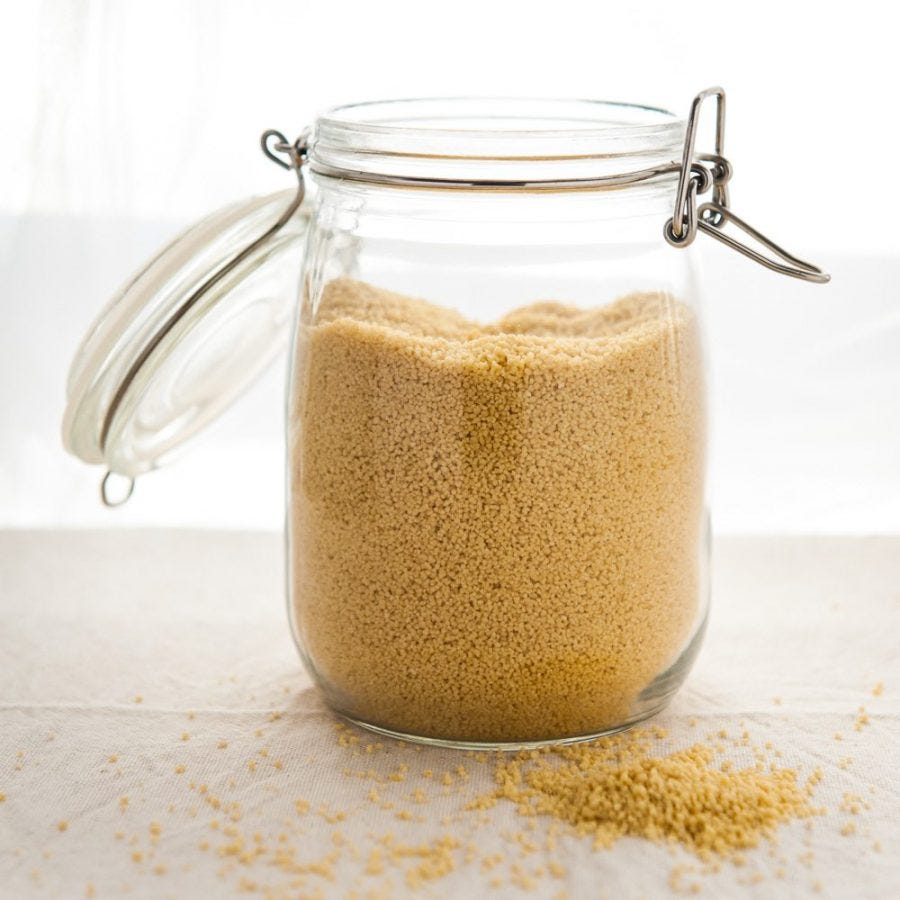
The technique of making couscous, mograbieh and maftoul itself is almost meditative.
You take semolina, or cracked wheat, or bulgur. You moisten it barely, a drizzle of water and oil — in a wide, shallow vessel. Then with your palm, with a circular, patient pressure, you roll. The friction and moisture cause the grains to aggregate, to stick to each other in small, imperfect spheres. You dust with flour. You roll again. The spheres grow. You repeat until you have a tray of pearls, each one slightly different, each one bearing the mark of a specific hand, specific human touch, the maker’s nafas.
Then you dry them. In the sun, historically. On a rooftop, on reed mats. And “suddenly” you have something that will last for months. Something you can cook in broth on a cold night in a village in Lebanon six weeks after making it. Something you can carry across a desert.
This is ancient technology. Human craft and dedication solving a fundamental problem- how do you make food that is both shelf-stable, fast-cooking, portable and delicious- long before industrial food systems imperfectly solved that problem for us.
And here the journey itself becomes obvious in the shape.
In North Africa, couscous is fine and delicate — rolled from durum wheat semolina into granules barely larger than a grain of sand, light enough to be steamed into something almost cloud-like. But as the technique moved east into West Asia, something shifted. The pearl grew. Moghrabieh is larger, chewier, more substantial — and often made not with semolina but with burghul wheat, known in parts of the Levant or Bilad al Sham as maftoul. A different grain, a different hand, a different landscape. A different nafas.
Perhaps because it arrived as an imported technique rather than an inherited one, it was never rolled quite as fine. Perhaps the available grain demanded a different touch. Perhaps the cooks who received it simply made it their own — adjusted it to what they knew, what they had, what felt right. Whatever the reason, the transformation is written into the pearl itself: you can see the journey in the size.
The rolling-and-drying of pasta — orzo, fregola sarda, pearl pasta — shares a conceptual DNA with North African grain rolling that is hard to ignore. Fregola, from Sardinia, is the most telling: hand-rolled semolina pearls, toasted, chewy, cooked in broth. It looks like large couscous. It eats like moghrabieh’s Italian cousin. Sardinia and North Africa are not far apart. The Arabs controlled Sicily and parts of Sardinia in the 9th and 10th centuries. The vectors of transmission existed.
Influence, of course, is not the same as origin.
And the Berbers, who deserve the credit for the rolling technique, tend to get written out of these conversations entirely. Absorbed into “Arab” or “Islamic” culinary history, their specific contribution dissolved or denied and erased altogether, casualties of a persistent reluctance to acknowledge Africa as a source of culinary innovation rather than merely a recipient of it.
The precise genealogy of these grains and techniques remains, and may always remain, debated. But perhaps that uncertainty is the point.
Modern borders tempt us into imagining cuisines as sealed national containers — fixed, bounded, exclusive. In reality they were shaped through movement: pilgrimage, trade, conquest, migration, scarcity, adaptation. The list of factors if we want to be honest is actually superbly long.
A dish does not need a passport to have a history. And history rarely moves in straight lines.
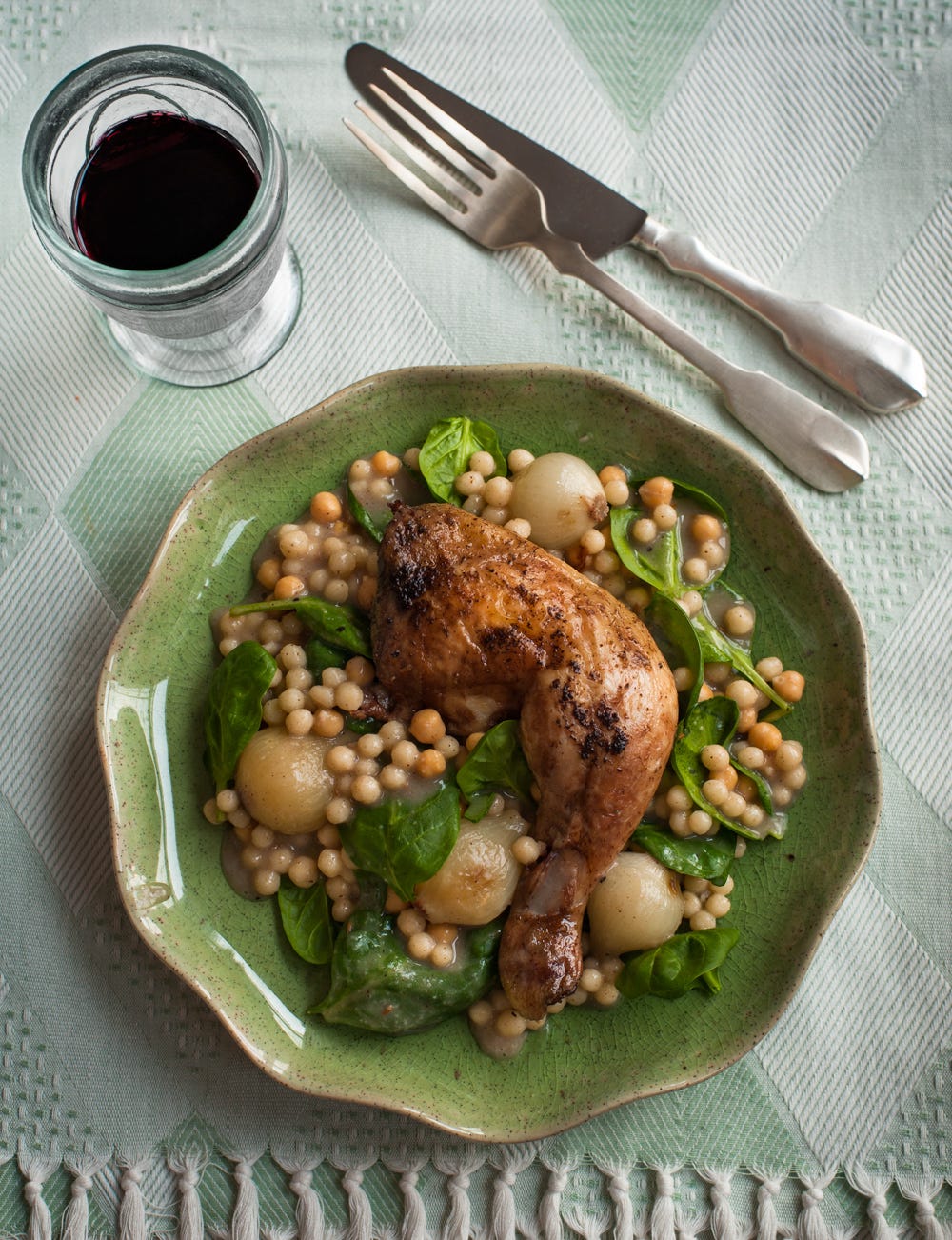
Which brings me to a fascination of mine — not so much where moghrabieh came from, but why people become unsettled when it changes.
As though somewhere there exists a singular, authorised version — descended from the gods, beyond question — against which all others must be judged and found wanting.
When the Shami people — the people of modern-day Syria, Lebanon, Palestine and the surrounding lands — gave this grain and its namesake dish the name moghrabieh, they were not being poetic or exotic. They were making a precise, declarative statement: this thing came from there. It is not native to us. Until, gradually, the lines blurred. It became native. And on one fine afternoon, it was declared authentic, after someone’s mom made it countless times. Parameters quietly redefined.
This is always how it happens.
The dishes we now call “traditional” were themselves products of adaptation — shifting according to harvests, climate, class, trade routes, economics and personal taste. A fisherman cooks differently from a shepherd. A mountain village cooks differently from a port city. What we call tradition is, at its core, repetition that hardened into habit, habit that began to feel sacred, until we could no longer distinguish familiarity from truth.
This is why the policing of food strikes me counterintuitive. Especially in a region shaped so profoundly by exchange.
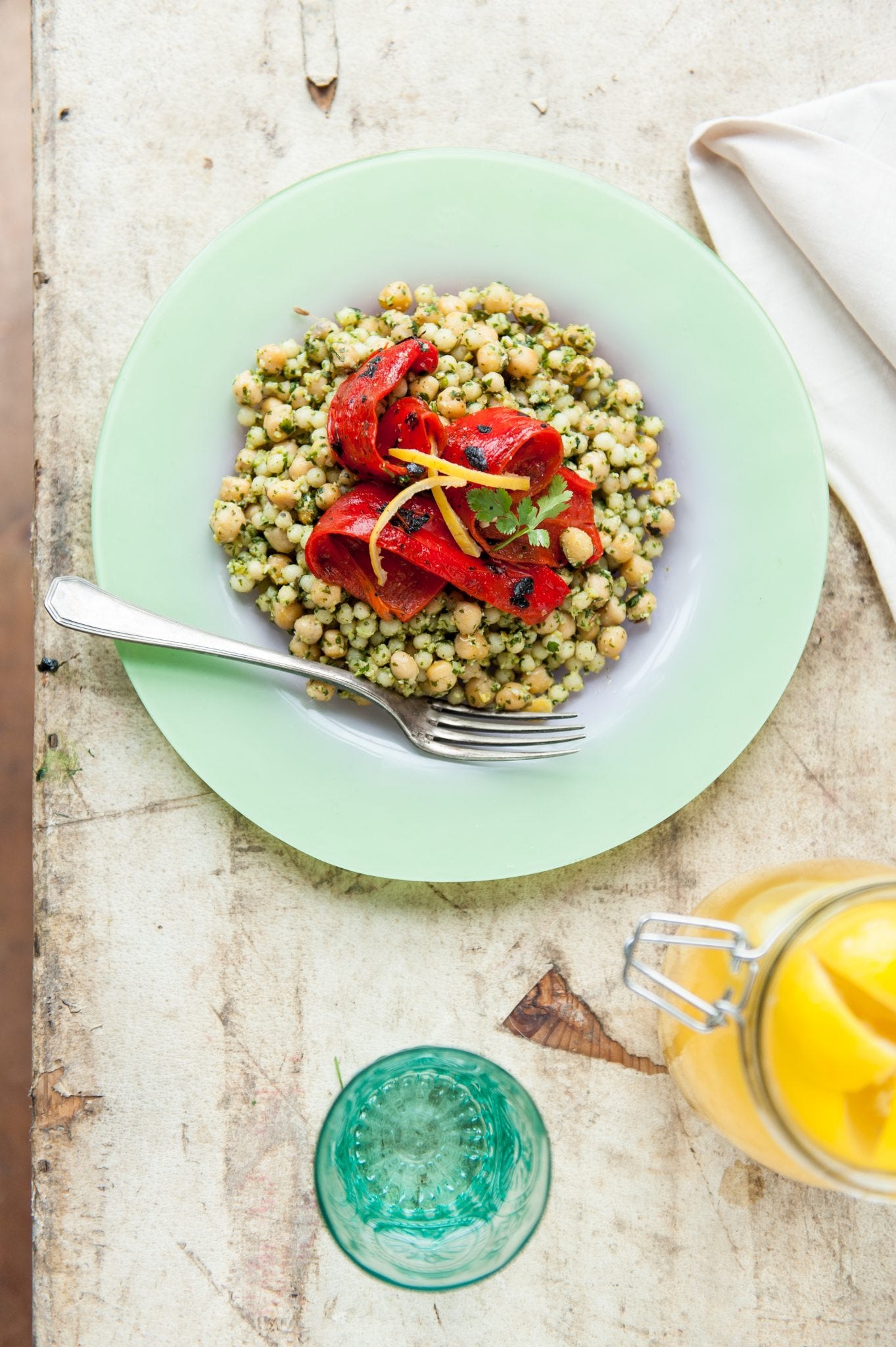
Moghrabieh with seafood is no less logical than moghrabieh with lamb, duck, quail or lobster. Tossed with za’atar pesto or muhamara. Peas or spinach in spring. Mushrooms in autumn. Dressed with browned butter and toasted pine nuts. Served as a stew or a salad or something in between. Each version an expression of landscape, season, and the nafas of the hands preparing it. The context of the experience. The grain itself already carries a story of migration, transmission and reinterpretation. It was never standing still to begin with.
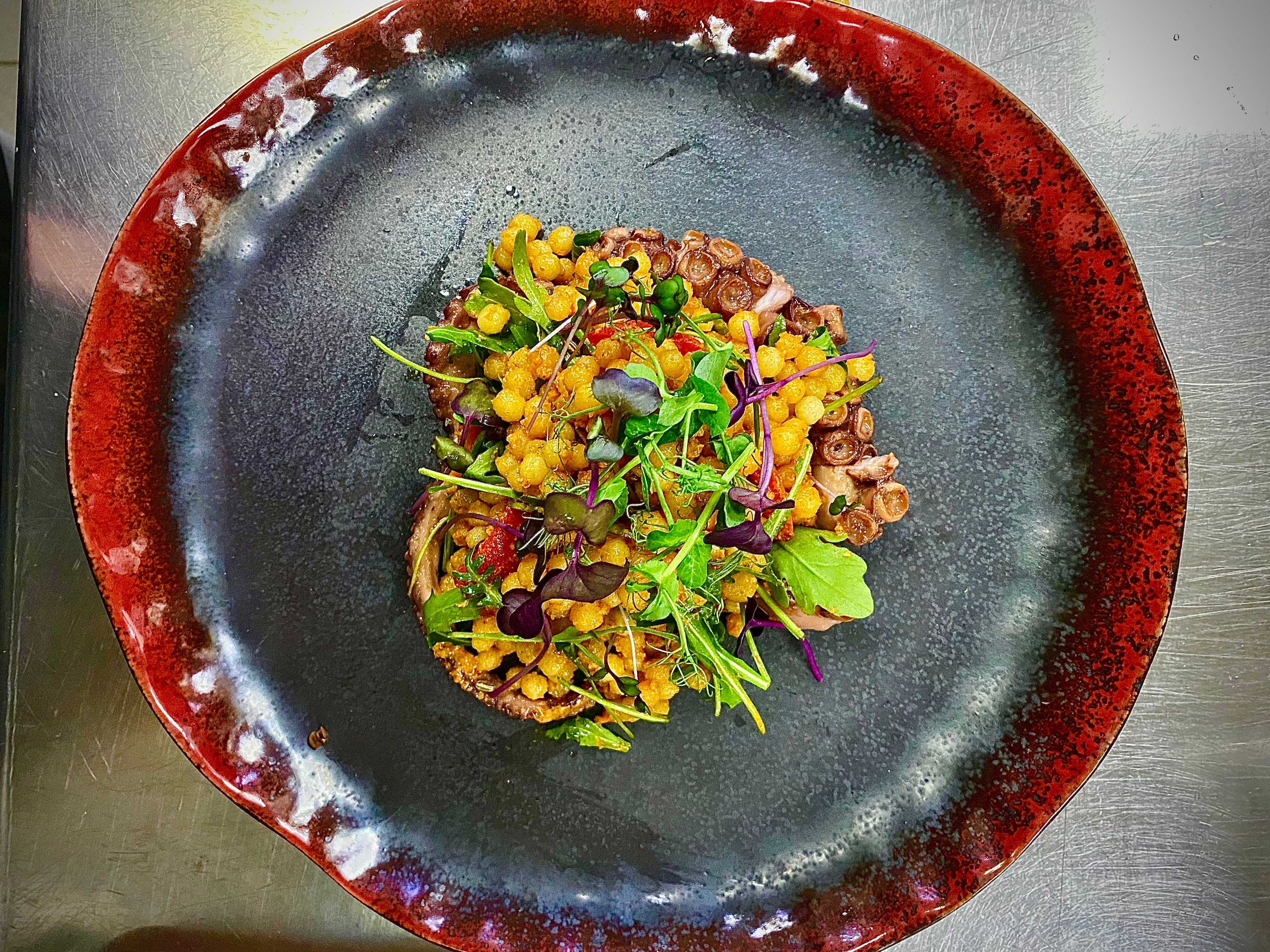
There is something quietly telling about the human psyche in all of this. That we can take grain, water, friction and sunlight — transform them through patience and touch into nourishment capable of crossing deserts and centuries, providing us with a versatile grain that is the perfect blank canvas of a vehicle for our heart’s and taste buds creative enjoyment — and still find ourselves arguing about whether any of it is “authentic”.
Food is a living archive. And every time we cook moghrabieh, we participate in a conversation far older than ourselves.
Couscous is born entirely from movement—the patient, passionate work of human hands. Its Shami evolution, moghrabieh, rolled forward like a scarab ball. Along the way, it gained mass, and absorbed the unique flavours of every landscape it crossed.
The least we can do now is keep it moving
Ma’ esalama (with peace) مَع السَلامة ,
Bethany x
No posts
Comments
Nothing yet. Say the first thing.
Sign in to join the conversation.