
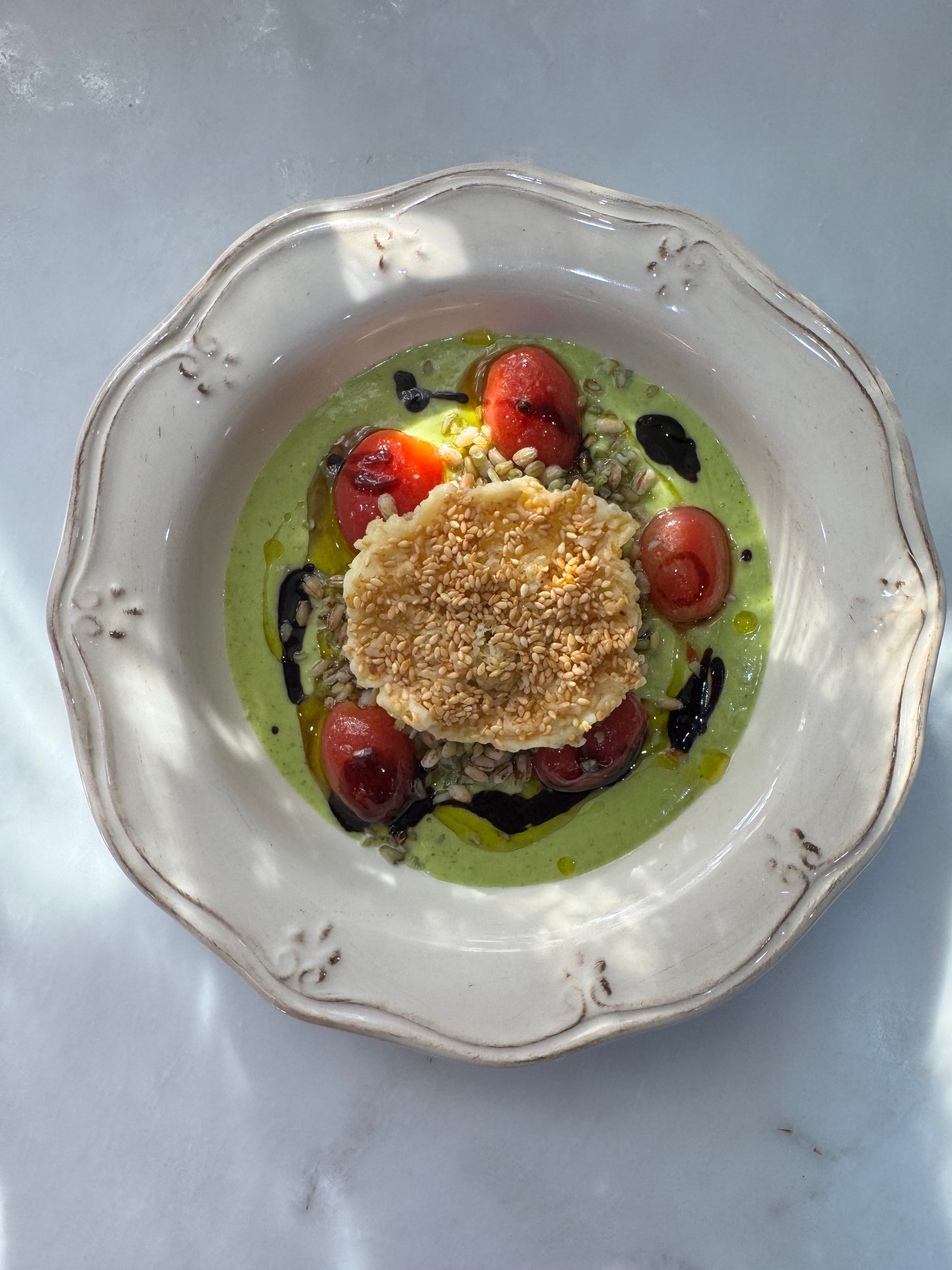
The city is where synthesis happens.
While cities are rarely the origin points of cuisine, they are the compression points.
Dense populations, trade, markets, migration, administration, pilgrimage, conquests, diplomacy, slavery, intermarriage, technological advancements, and more, force ideas, languages, and foods into inescapable entanglement and evolution. In that sense, the city is where food stops belonging to a single terroir. Instead, it begins to express diverse surrounding landscapes, the collective memory of its inhabitants, and the layered histories that have shaped it; what has been adapted, adopted, transmitted, and dispersed.
That is why the first course of my Meso-Mediterranean chapter, CITY, begins in Beirut, one of the world’s longest-inhabited cities, while reaching back to one of the earliest recorded urban civilisations: Mesopotamia.
The opening course? A contemporary synthesis of the earliest recorded tabīlu logic of seasoning and transformation, intertwined with the layered evolution of tabbouleh, the parsley and tomato-laden dish now so closely associated with the modern nation-state of Lebanon.
Comments
Nothing yet. Say the first thing.
Sign in to join the conversation.