
“Where is Edward? You are made of lead,
The man who made the castle so brilliantly.
Marginalia with Beth Allison Barr is a reader-supported publication. To receive new posts and support my work, consider becoming a free or paid subscriber.
His wonderful image, if they would look at it,
Is on the gate above our heads;
He himself is silent, away in his grave,
Lying beneath thick stone.”
Dafydd Trefor, Welsh rector and poet, elegy on Edward I, 16th century
We stepped off the bus Friday—seven students plus me. We turned left at the Costa Coffee, right at the town square, walking past the Saturday market and carnival rides and fish-in-chips restaurants, before stopping and looking up, into the face of Edward I, King of England, Hammer of the Scots, conqueror of Wales.
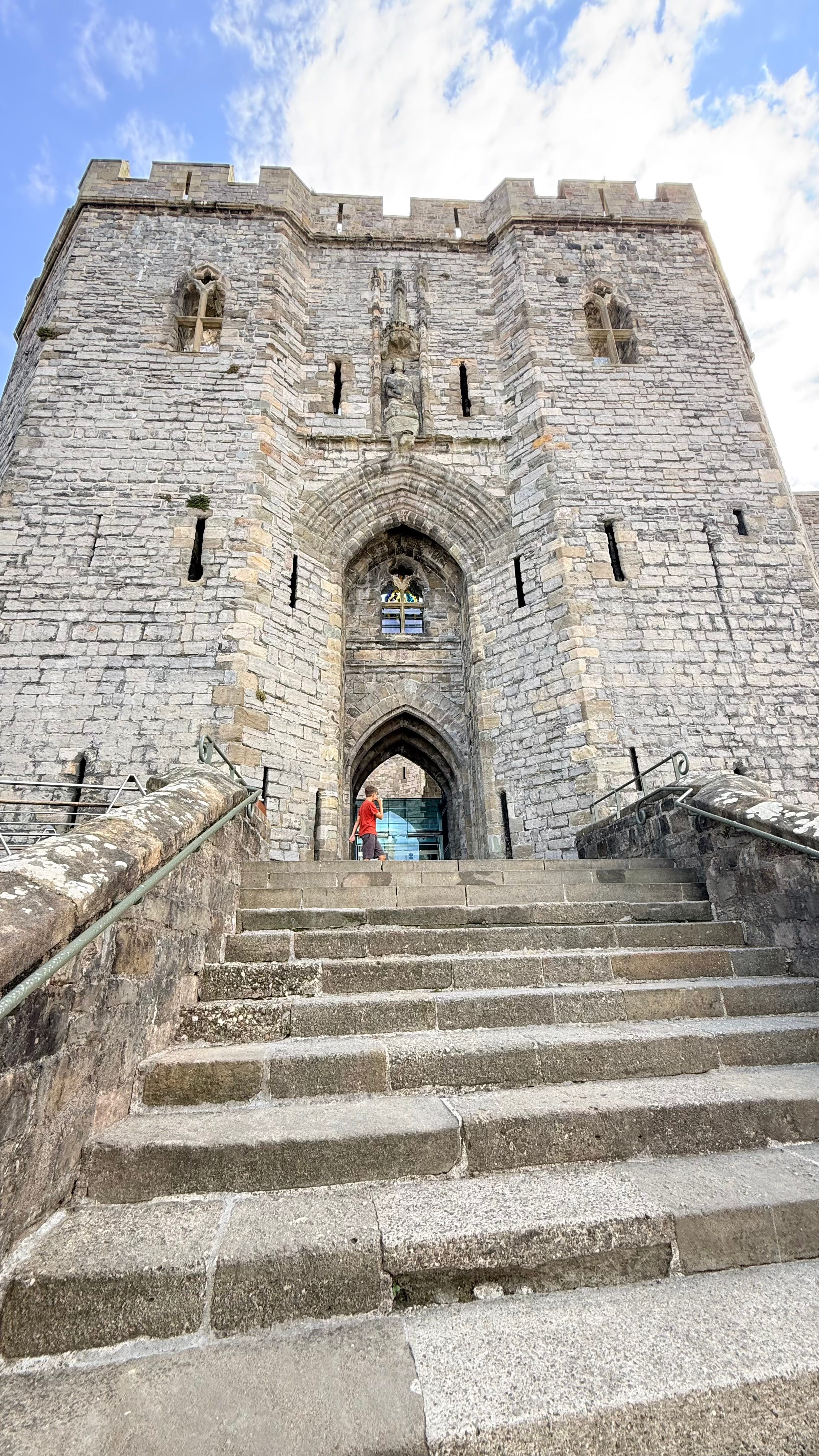
Or at least what is left of his statue carved in stone above the massive gate entrance to Caernarfon Castle. In 1283, one year after Edward’s army killed the first and only Welsh prince of Wales, Llywellyn ap Gruffud, the “great and terrible king” Edward Longshanks (of Braveheart fame, which is my least favorite medieval movie but that is another essay) declared a series of castles to be built: an iron ring forcing his subjugation on Wales.
A few years earlier, in 1278, Edward had paid handsomely for a master mason from Savoy to begin building castles in Wales. These represented the next-stage in castle evolution, concentric castles, and showcased the extraordinary skill of medieval engineers which included moving a river. Between 1278 and 1294, castles at Flint, Rhuddlan, Harlech, Conwy, Caenarfon, and Beaumaris were started and mostly completed.
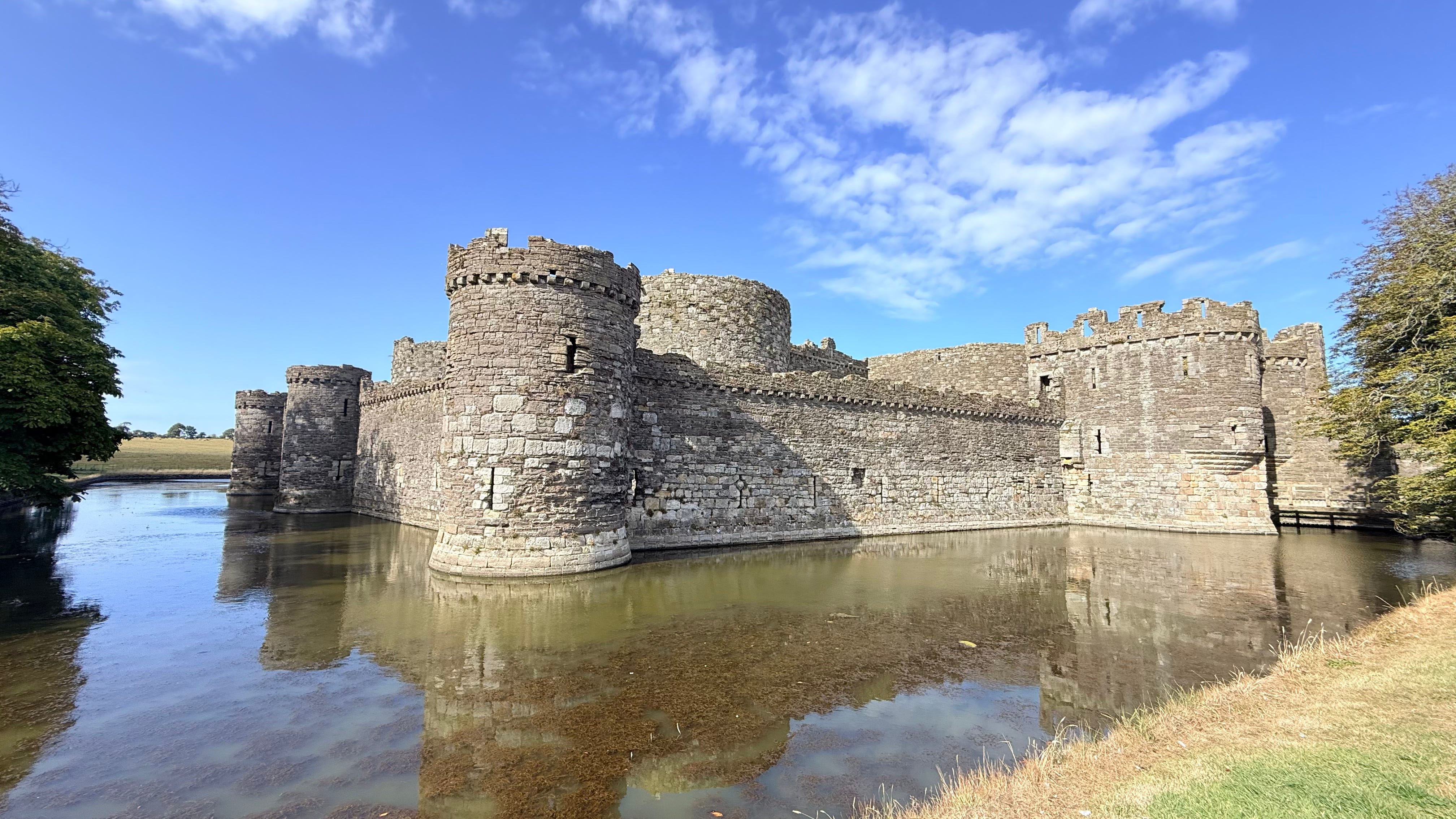
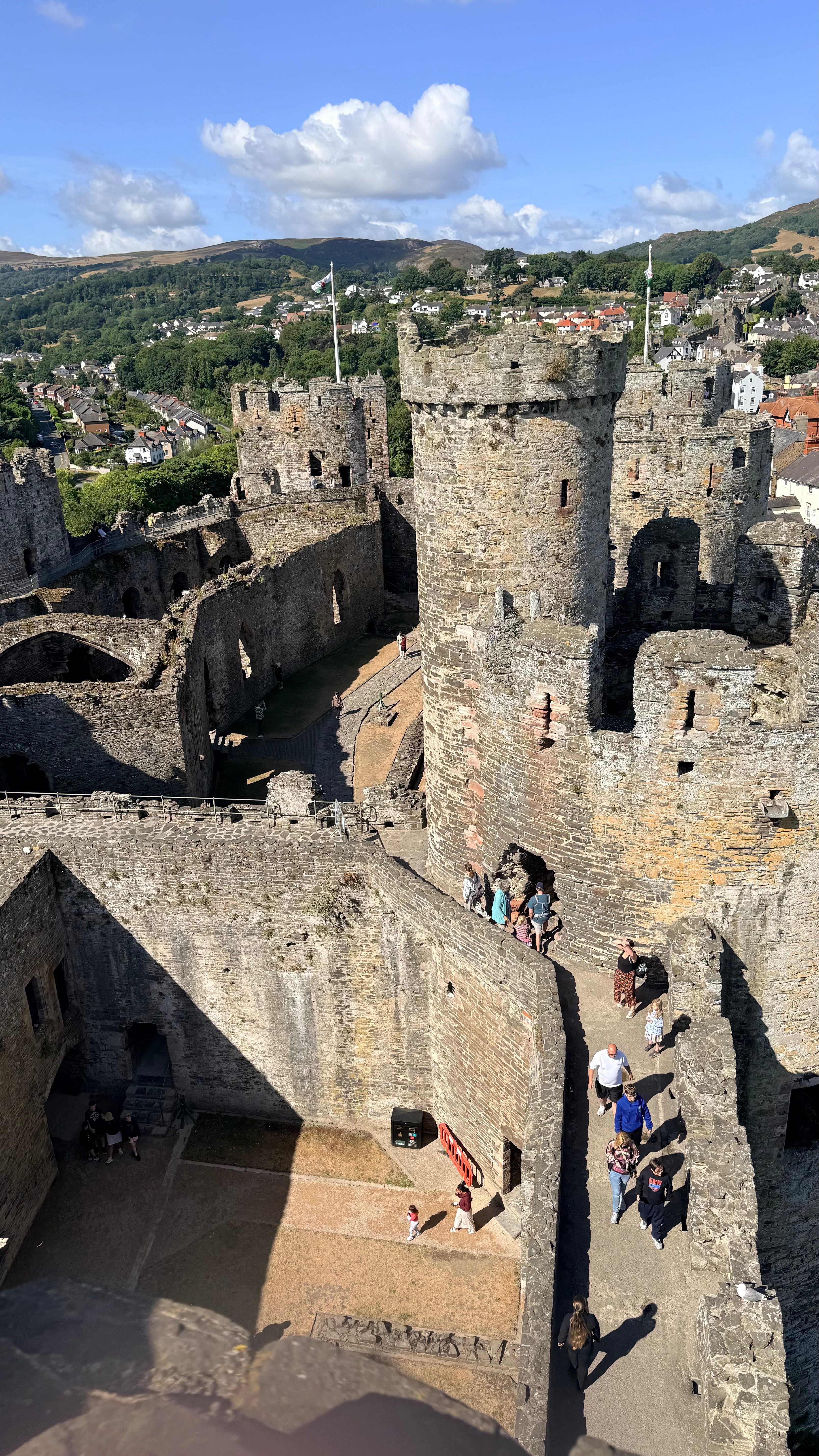
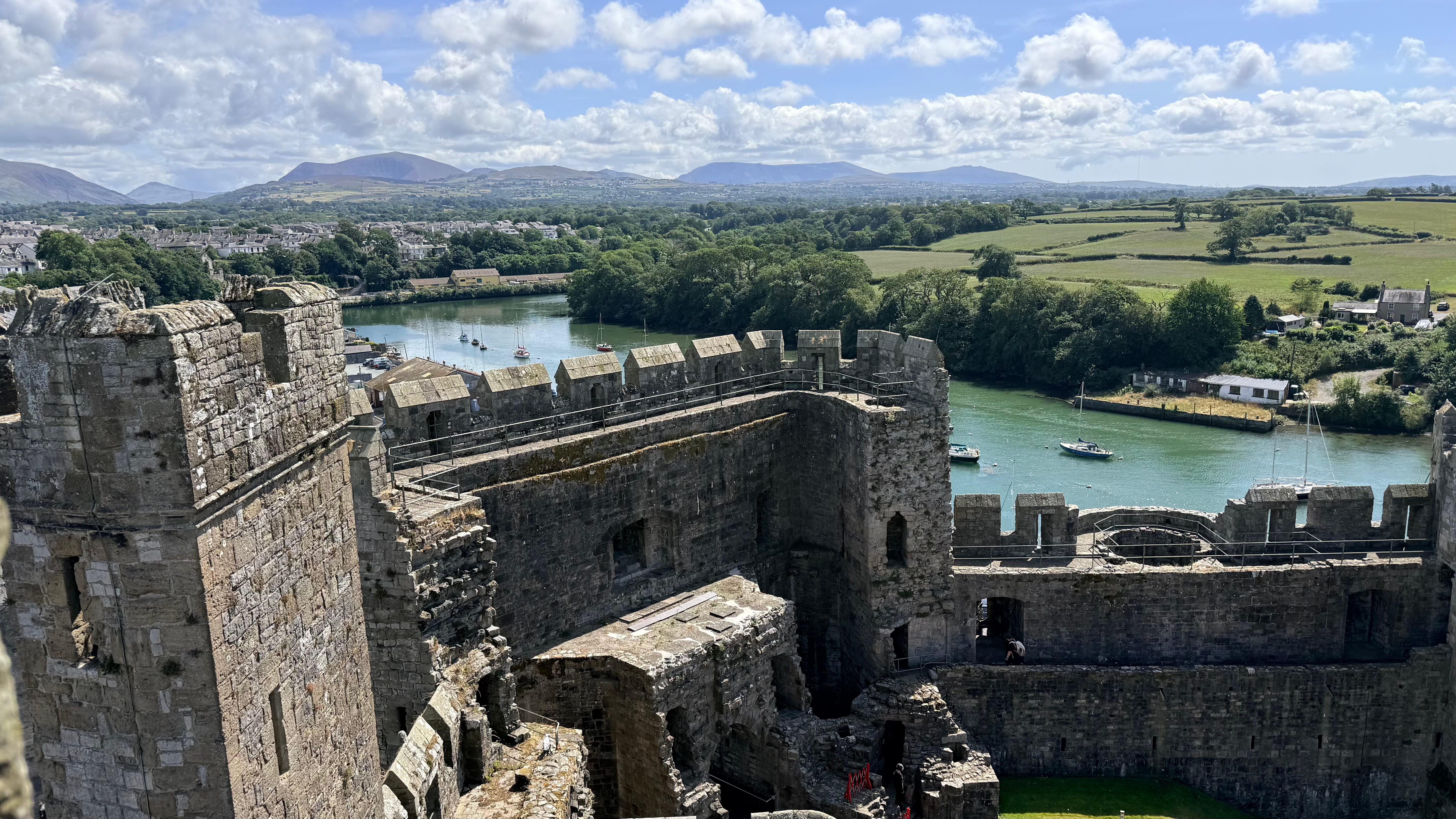
From elaborate round and polygonal towers, double curtain walls, deep moats, massive gatehouses with multiple portcullises, arrow loops, and murder holes, and enough crenellation and wall passages for hundreds of soldiers to provide effective defense, these are the medieval castles of your dreams. Every year students ask me which is my favorite. I still don’t have an answer. I love the beautiful landscape surrounding Beaumaris, the most perfect of concentric castles (despite the fact that it was never finished). I love walking the castle walls of Conwy, especially as they extend to surround the city, and viewing the luxurious rooms created for Edward and his bride Eleanor. I love standing on the Eagle Tower of Caenarfon, surveying the sea and the bustling market town below. I love the rugged ruins of Rhuddlan, standing above the rive Clwyd that Edward literally changed the course of to fit his needs.
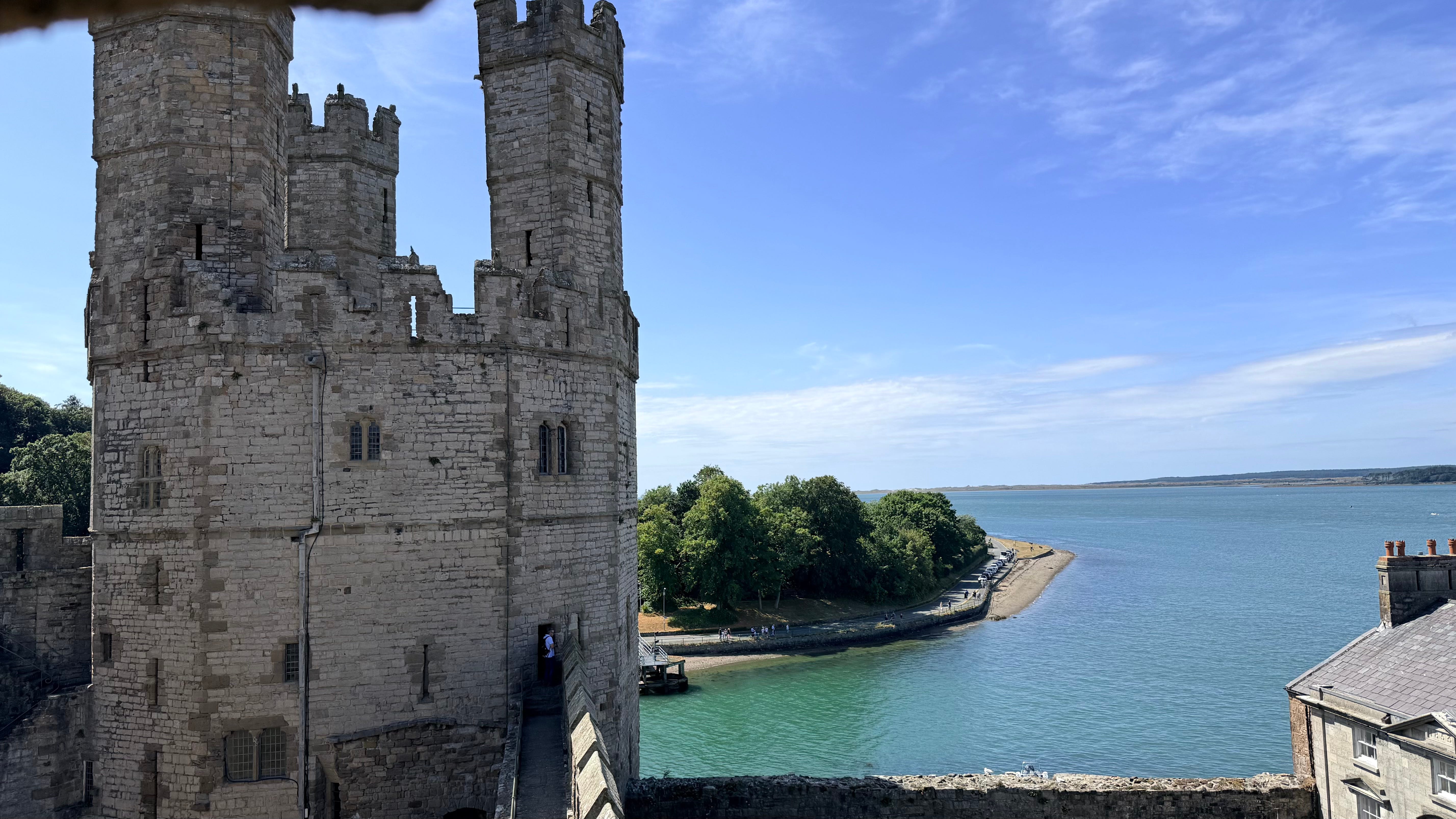
Unlike me, I don’t think Edward I would have hesitated in his choice: Caenarfon was the castle of his dreams. Welsh mythology infused the castle site, long before he began building his English walls. The story, the Mabinogion, told of a Roman emperor who dreamed of a magical land by the sea where he fell in love with a beautiful lady. “When he awoke he could no longer live or breathe or exist because of the maiden he had seen in his sleep. Not a bone-joint of his, not the root of a fingernail, let alone anything larger, was not full of love for the maiden,” the Dream of the Emperor Maxen reads. So he sent out messengers to quest until they found his dream land, and then he journeyed himself to marry his dream lady. They live happily together, building a magnicent castle in Caenarfon, the foundation covered with soil imported from Rome, and—when his empire was threatened—Maxen raised a mighty British army that helped him reclaim his imperial throne.
Can you see why this story might appeal to a king like Edward I? The story of a Roman emperor who ruled from a castle in Wales?
It did. The architecture of Caenarfon shows how much Edward wanted to embody this story—from the colored stone banding of the walls (reminiscent of Constantinople) to the imperial eagles framing the tower in which Edward’s beautiful wife, Eleanor of Castile, gave birth to his son and heir, Edward II. I can only imagine how Edward must have felt that April day in 1284, standing in the powerful castle he built in the land he had conquered with his newborn son in his arms and a wife he loved by his side. Invincible and proud enough to carve his visage over the main gatehouse, announcing the glory of the castle and the English kingdom he had built.
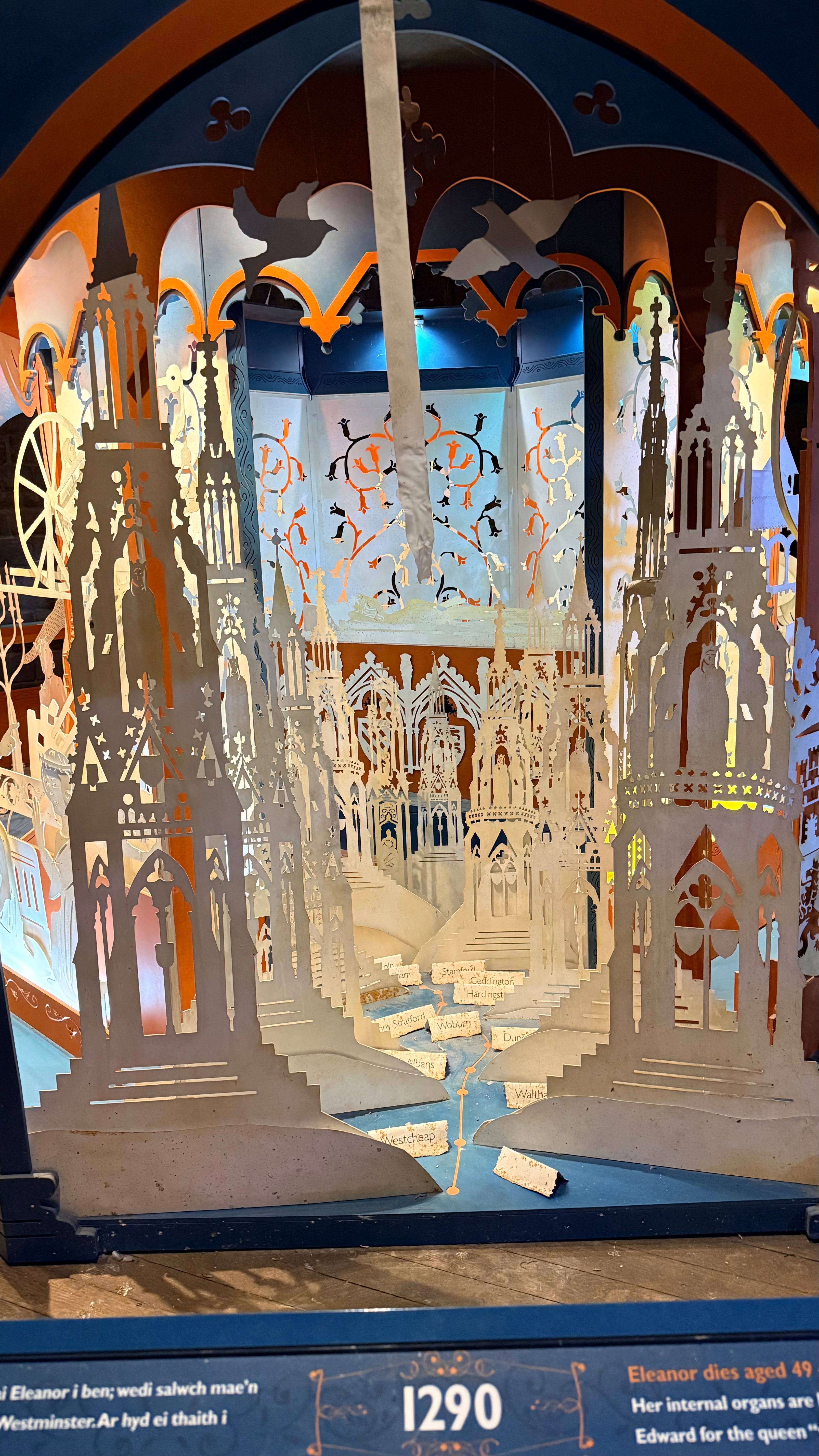
Except Edward’s story didn’t turn out the way he dreamed. His beloved wife died just a few short years later, in 1290, age 49. Grief-stricken, Edward built a cross in tribute to her at every place her funeral procession rested. Twelve Eleanor crosses marking the sorrowful journey from Lincoln to Westminster. His son, Edward II, did not meet the expectations of his father (nor of his country). He lost his father’s war with Scotland and his reign ended in a rebellion led by his own wife, resulting in his abdication and murder. History remembers Edward II as one of the worst kings in British history.
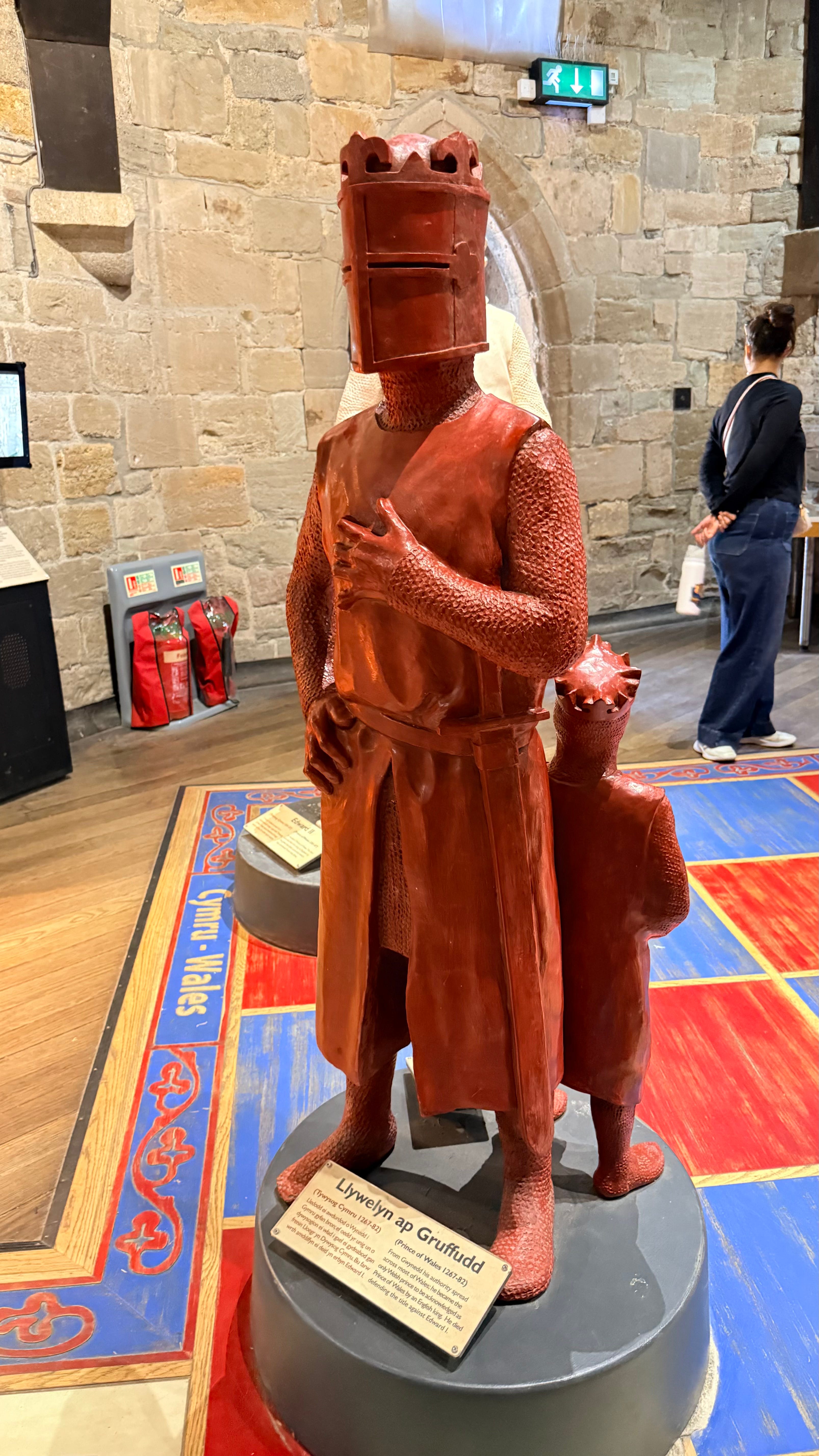
Despite the power of the iron ring castles, the Welsh continued to resist English rule. In the late thirteenth century and again in the fifteenth century, they attacked Edward’s castles, burned the imperial castle at Caernarfon, and even seized some castles for themselves (Conwy and Harlech in the fifteenth century). Today, the Welsh language and culture persists separate and distinct from the English who once tried to erase them. Welsh flags fly over Edward’s castles, and Welsh artists have filled the castle ruins with symbols of their resistance. Edward tried to erase the memory of Llywellyn ap Gruffud’s family by building Conwy castle over the monastery of his grandfather and burial ground of his family. Yet today a representation of Llywellyn ap Gruffud’s crown rises on the shields and swords of the Welsh from the floor of Conwy’s dungeon, testifying to the resilience and resistance of the Welsh people. Edward I tried to erase the legacy of the first and last king of Wales, but the Welsh remember Llywellyn ap Gruffud and continue to revere him.
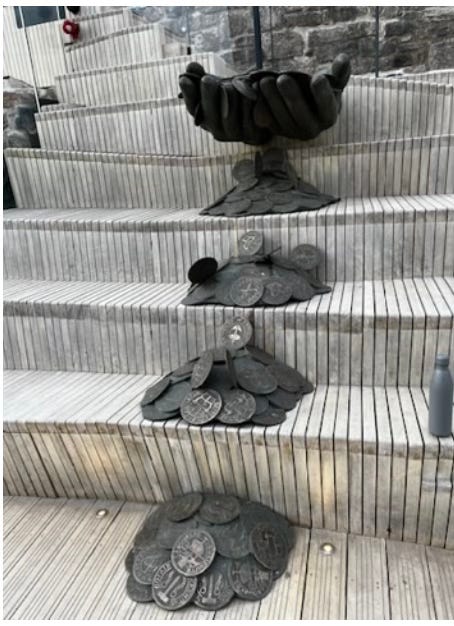
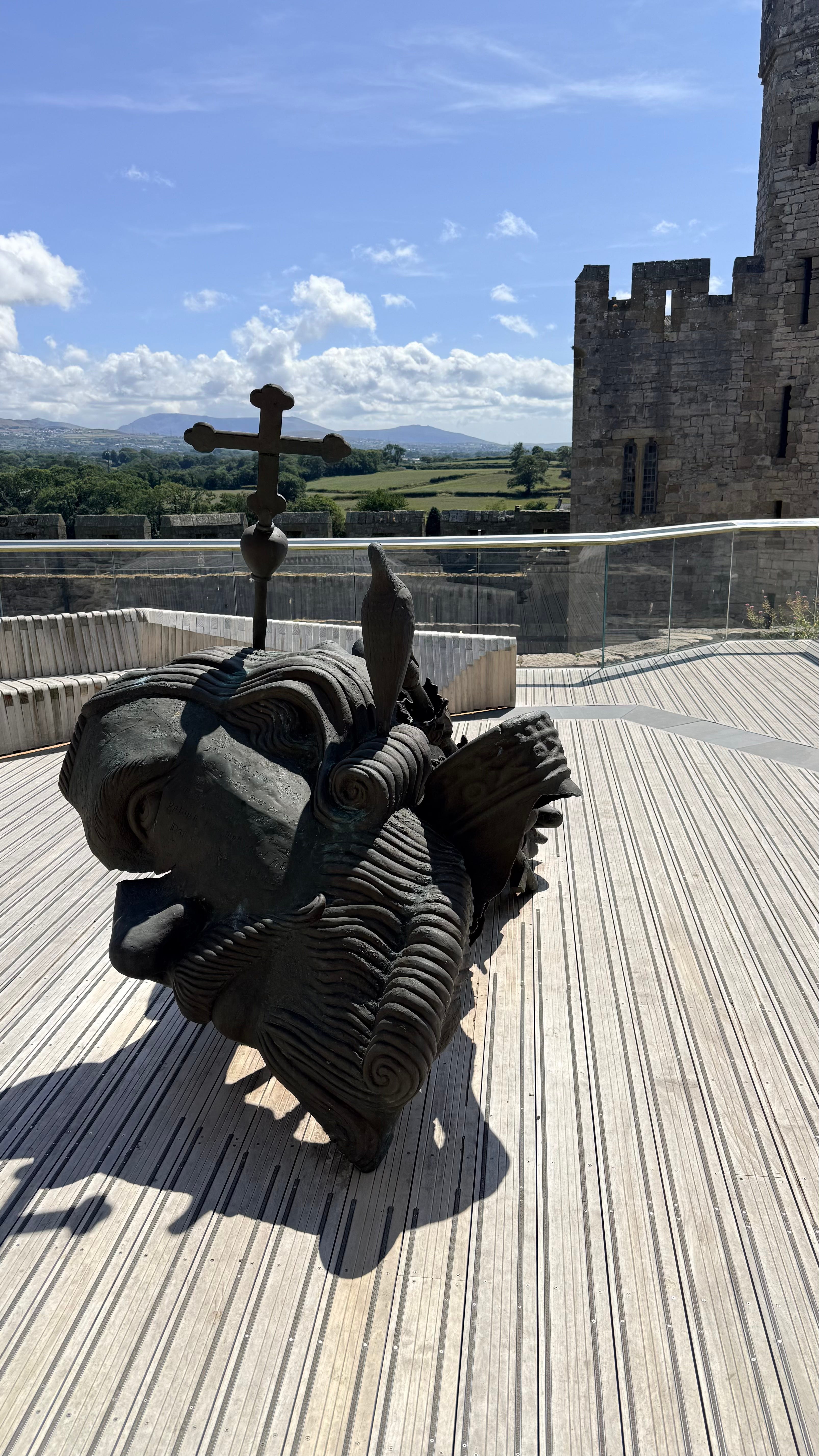
They remember Edward I, in contrast, as a tyrant who took what wasn’t his and tried to destroy their way of life. They remember him by a broken head in Caenarfon inscribed with the sixteenth-century words of Welsh poet Daffyd Trefor (which I used to start this post, too):
“Where is Edward?
You are made of lead,
The man who made the castle so brilliantly.
His wonderful image, if they would look at it,
Is on the gate above our heads;
He himself is silent, away in his grave,
Lying beneath thick stone.”
Edward I tried to create a kingdom that would endure like the Roman Empire. He tried to enshrine his power into the walls of mighty buildings and carve it into the faces of statues. He tried to show his power by conquering and killing his enemies, even spiking their heads for display on London Bridge. He tried to force his will on a people who refused him.
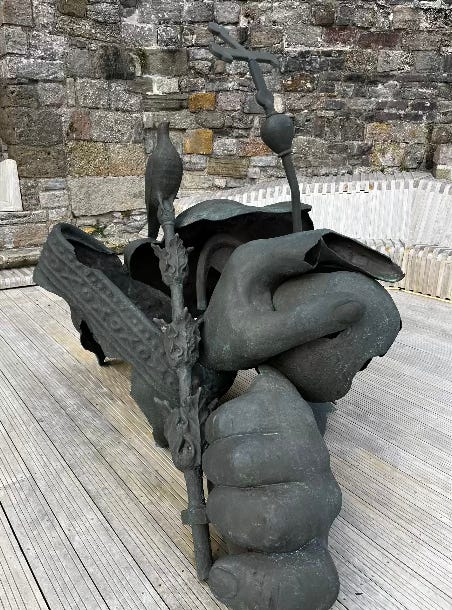
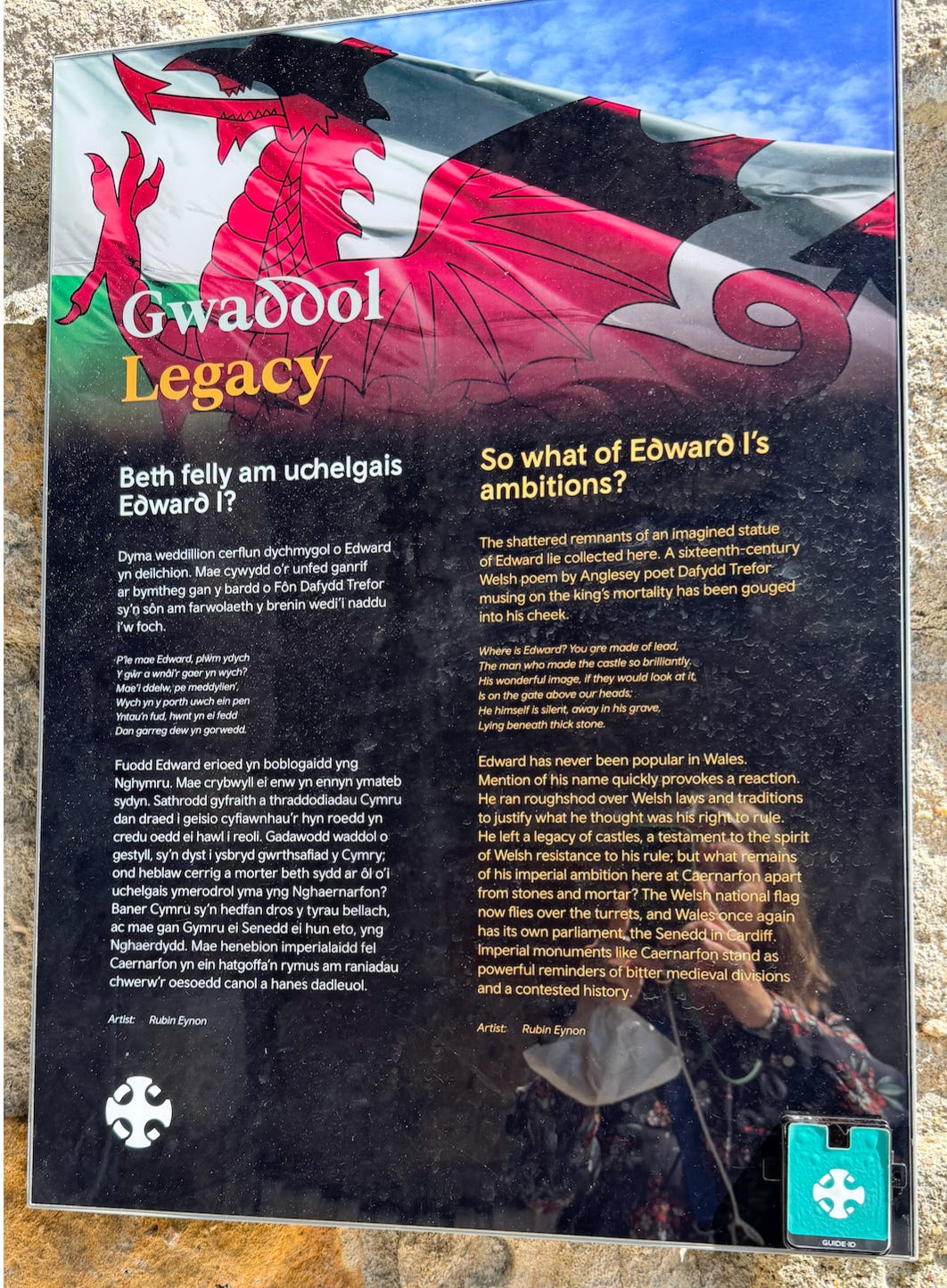
He did triumph. Llywellyn ap Gruffud was killed and his revolt crushed, along with the revolt of 1294 by Llywellyn’s distant relative, Madog ap Llywellyn. Edward invested his son Prince of Wales at Caernarfon Castle, setting the precedent of a ceremony that would continue into the twentieth century. But was it a triumph? Less than two decades after his death, his ambitions for a unified empire were crumbling, just like the walls of his castles would one day, too. A sign in Caernarfon Castle reads (both in Welsh and in English):
“So what of Edward I’s ambitions? The shattered remnants of an imagined statute of Edward lie collected here. A sixteenth-century Welsh poem by Anglesey poet Dafydd Trefor musing on the king’s mortality has been gouged into his cheek. Edward has never been popular in Wales. Mention of his name quickly provokes a reaction. He ran roughshod over Welsh laws and traditions to justify what he thought was his right to rule. He left a legacy of castles, a testament to the spirit of Welsh resistance to his rule; but what remains of his imperial ambition here at Caenarfon apart from stones and mortar? The Welsh national flag now flies over the turrets, and Wales once again has its own parliament, the Send in Cardiff. Imperial monuments like Caernarfon stand as powerful reminders of bitter medieval divisions and a contested history.”
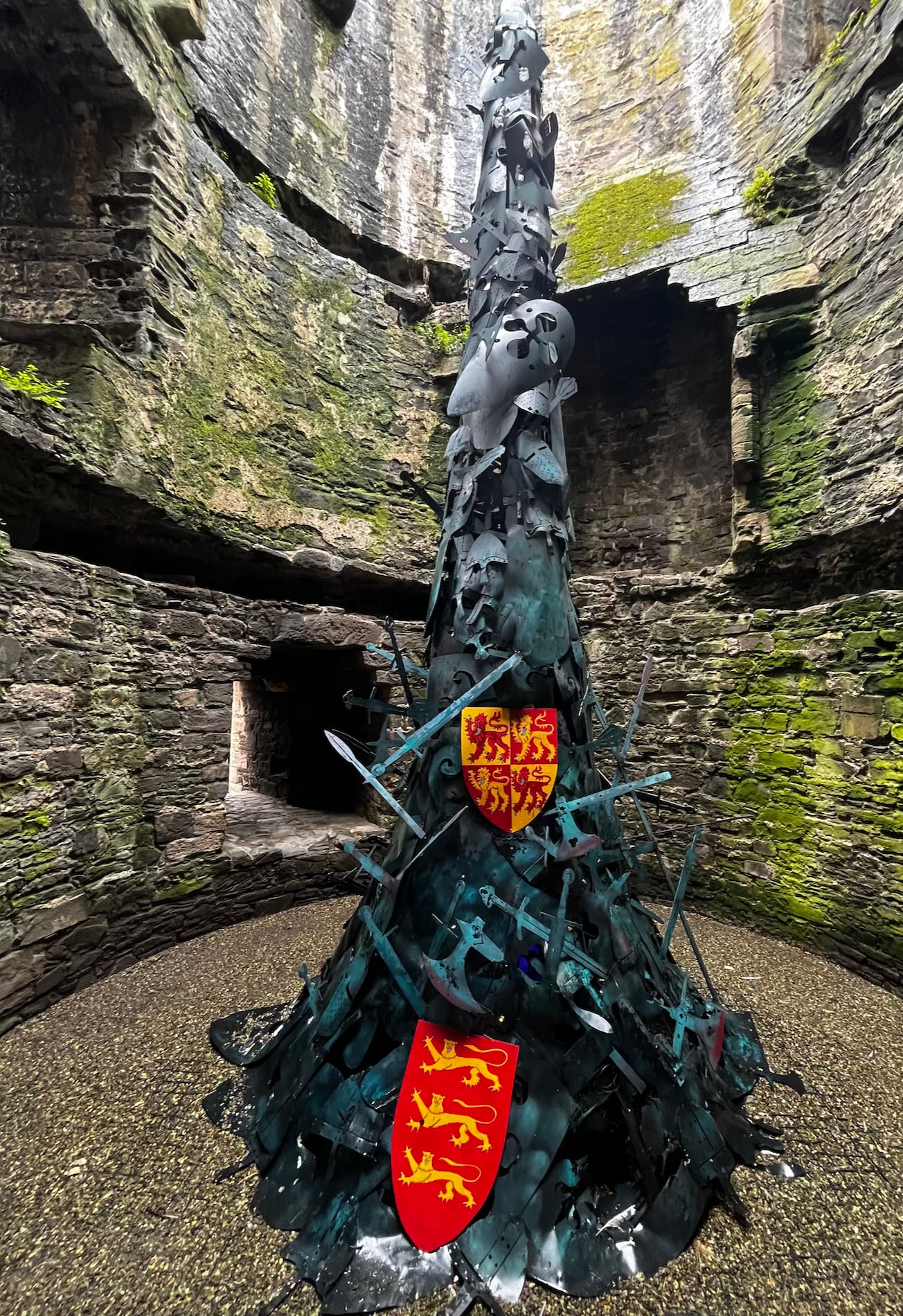
It seems to me that Edward I might serve as a warning to Trump and his Republican cronies, if they knew and/or cared about history. Maybe instead, for those of us who do know and care, Edward I’s shattered crown at Caernarfon can serve as a symbol of hope. It can remind us that resistance matters and what tyrants do can be undone.
Let me end with a medieval history lesson that my students learn. Castles testify to the power of kings, but they also testify to the power of the people who resist them.
Marginalia with Beth Allison Barr is a reader-supported publication. To receive new posts and support my work, consider becoming a free or paid subscriber.
Comments
Nothing yet. Say the first thing.
Sign in to join the conversation.