

I have mixed feelings about celebrating the Fourth of July.
I hate how my country is treating our neighbors (immigrants to the U.S. as well as fellow Americans to both the north and south).
I hate the blatant corruption we see in all three branches of our government—the White House, Congress, and SCOTUS.
I hate how a cultural understanding of “Christian values” is being used to support political and judicial candidates/nominees/officials who are (alleged and convicted) adulterers, rapists, pedophiles, bigots who express nostalgia towards slavery, insurrectionists, willing participants in malfeasance and kleptocracy, even advocates of voter suppression (from gerrymandering to gutting voting rights protections) to keep themselves in power.
I hate how many people think the shenanigans of Mike Johnson, Stephen Miller, Russell Vought, the rhetoric of those like the Heritage Foundation and TPUSA, and the men marching on the capitol today with covered faces and confederate flags embody the best of what it means to be an American rather than the worst.
I hate it. But that doesn’t mean I can distance myself from it. Oppression, cruelty, and corruption run throughout the course of U.S. history. From the moment independence was declared and a constitution written that left slavery intact and excluded the rights of women, men of color, and Native Americans, we have been a nation of oppression. 1619 is as much a part of our history as 1776.
We can’t undo it, either. Striking what we don’t like from history textbooks won’t erase what happened. It will just make us ignorant.
Thankfully, there is more to our story. The idea of freedom, a legacy of resistance against tyranny, and the power to make our government better are part of what it means to be an American, too.
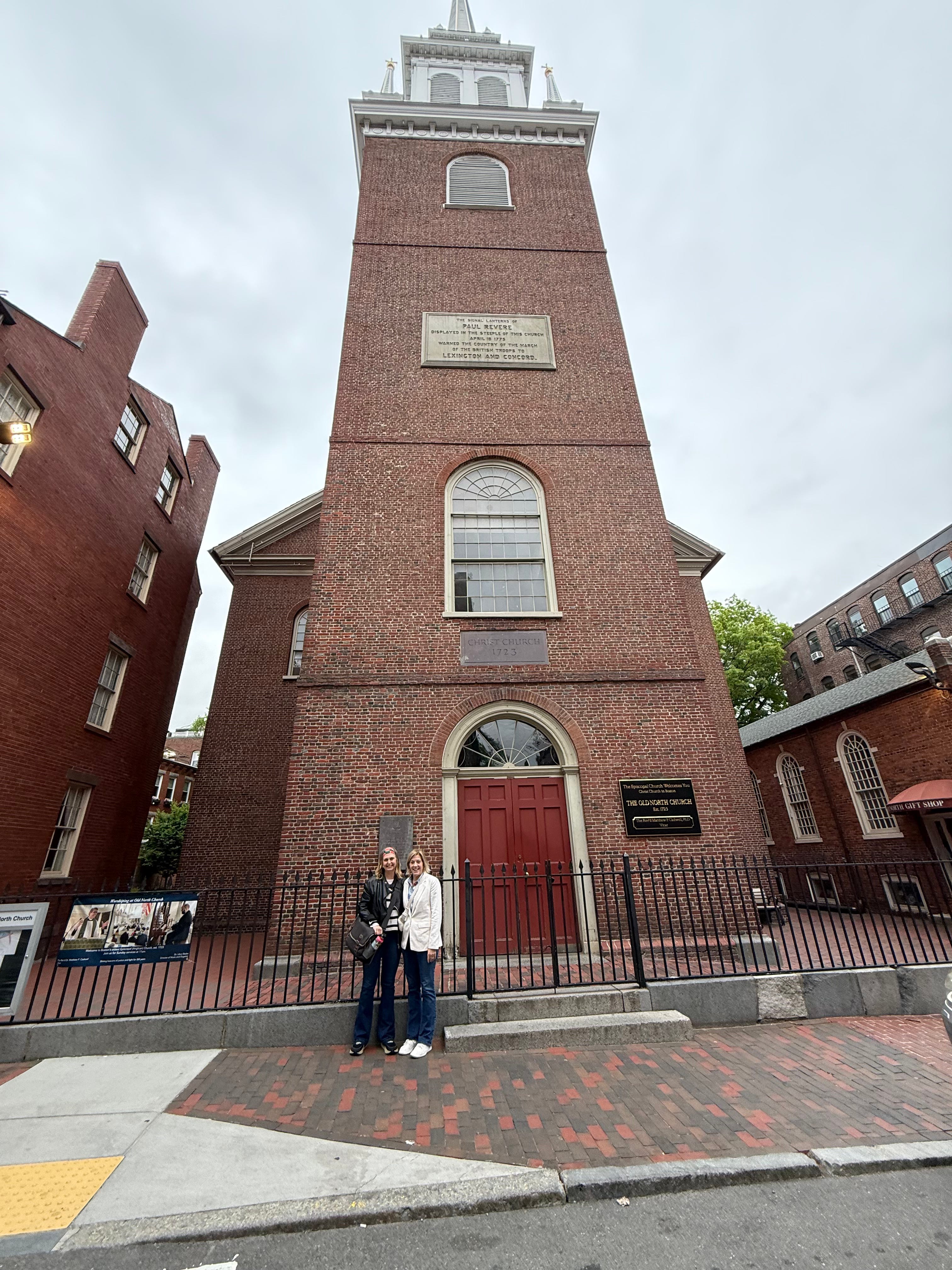
Two of my favorite U.S. history documents embody the latter part of our story. I thought today, the 250th anniversary of our country, would be a good day to share them.
The first is a speech given by a woman. Her name is Mary Church Terrell. She was fluent in at least five languages and asked to give the 1898 address to the National American Woman’s Suffrage Association. She was the daughter of formerly-enslaved parents, served as president of the National Association of Colored Women in 1896, and a charter member of the National Association for the Advancement of Colored People (NAACP).
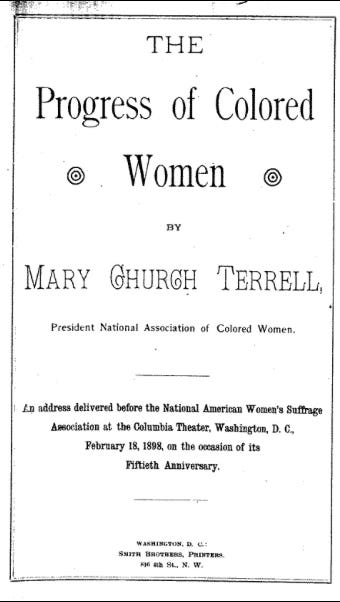
Mary Church Terrell was a Black woman, one generation away from the enslavement of her family. She lived at a time when White people actively fought to prevent Black men from voting and women did not yet have the vote. A time when Jim Crow laws segregated and discriminated against Black people and lynch mobs subjugated through violence and murder.
She could have despaired. I’m sure she did. She also hoped. Listen to her words. You can find the entire speech here (transcribed) or here at the Library of Congress.
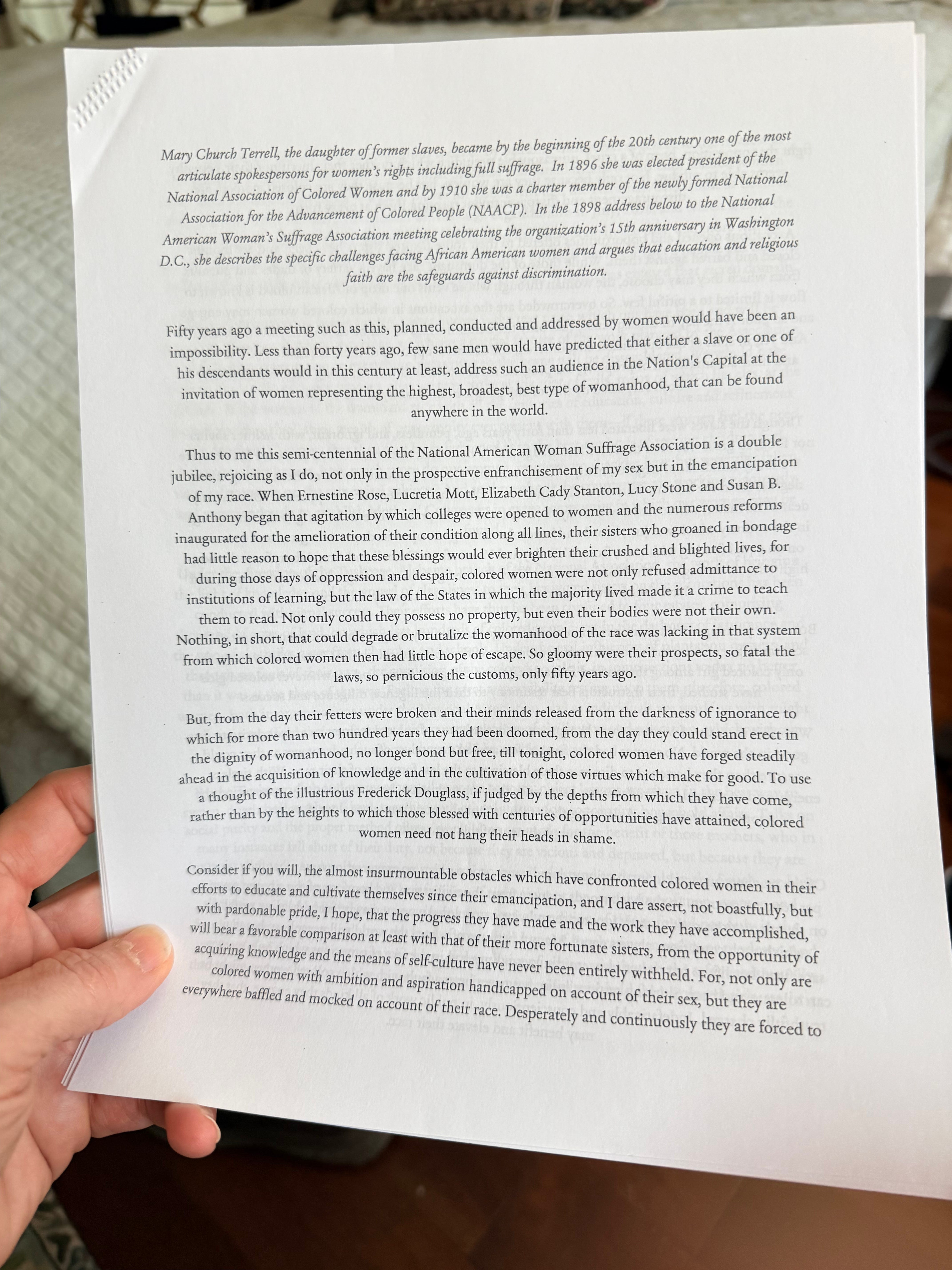
Fifty years ago a meeting such as this, planned, conducted and addressed by women would have been an impossibility. Less than forty years ago, few sane men would have predicted that either a slave or one of his descendants would in this century at least, address such an audience in the Nation’s Capital at the invitation of women representing the highest, broadest, best type of womanhood, that can be found anywhere in the world.
Thus to me this semi-centennial of the National American Woman Suffrage Association is a double jubilee, rejoicing as I do, not only in the prospective enfranchisement of my sex but in the emancipation of my race. When Ernestine Rose, Lucretia Mott, Elizabeth Cady Stanton, Lucy Stone and Susan B. Anthony began that agitation by which colleges were opened to women and the numerous reforms inaugurated for the amelioration of their condition along all lines, their sisters who groaned in bondage had little reason to hope that these blessings would ever brighten their crushed and blighted lives, for during those days of oppression and despair, colored women were not only refused admittance to institutions of learning, but the law of the States in which the majority lived made it a crime to teach them to read. Not only could they possess no property, but even their bodies were not their own. Nothing, in short, that could degrade or brutalize the womanhood of the race was lacking in that system from which colored women then had little hope of escape. So gloomy were their prospects, so fatal the laws, so pernicious the customs, only fifty years ago.
But, from the day their fetters were broken and their minds released from the darkness of ignorance to which for more than two hundred years they had been doomed, from the day they could stand erect in the dignity of womanhood, no longer bond but free, till tonight, colored women have forged steadily ahead in the acquisition of knowledge and in the cultivation of those virtues which make for good. To use a thought of the illustrious Frederick Douglass, if judged by the depths from which they have come, rather than by the heights to which those blessed with centuries of opportunities have attained, colored women need not hang their heads in shame.
Consider if you will, the almost insurmountable obstacles which have confronted colored women in their efforts to educate and cultivate themselves since their emancipation, and I dare assert, not boastfully, but with pardonable pride, I hope, that the progress they have made and the work they have accomplished, will bear a favorable comparison at least with that of their more fortunate sisters, from the opportunity of acquiring knowledge and the means of self-culture have never been entirely withheld. For, not only are colored women with ambition and aspiration handicapped on account of their sex, but they are everywhere baffled and mocked on account of their race. Desperately and continuously they are forced to fight that opposition, born of a cruel, unreasonable prejudice which neither their merit nor their necessity seems able to subdue. Not only because they are women, but because they are colored women, are discouragement and disappointment meeting them at every turn.
Avocations opened and opportunities offered to their more favored sisters have been and are tonight closed and barred against them. While those of the dominant race have a variety of trades and pursuits from which they may choose, the woman through whose veins one drop of African blood is known to flow is limited to a pitiful few. So overcrowded are the avocations in which colored women may engage and so poor is the pay in consequence, that only the barest livelihood can be eked out by the rank and file. And yet, in spite of the opposition encountered, the obstacles opposed to their acquisition of knowledge and their accumulation of property, the progress made by colored women along these lines has never been surpassed by that of any people in the history of the world.
Though the slaves were liberated less than forty years ago, penniless, and ignorant, with neither shelter nor food, so great was their thirst for knowledge and so herculean were their efforts to secure it, that there are today hundreds of negroes, many of them women, who are graduates, some of them having taken degrees from the best institutions of the land. From Oberlin, that friend of the oppressed, Oberlin, my dear alma mater, whose name will always be loved and whose praise will ever be sung as the first college in the country which was just, broad and benevolent enough to open its doors to negroes and to women on an equal footing with men; from Wellesley and Vassar, from Cornell and Ann Arbor, from the best high schools throughout the North, East and West, Colored girls have been graduated with honors, and have thus forever settled the question of their capacity and worth.
But a few years ago in an examination in which a large number of young women and men competed for a scholarship, entitling the successful competitor to an entire course through the Chicago University, the only colored girl among them stood first and captured this great prize. And so, wherever colored girls have studied, their instructors bear testimony to their intelligence, diligence and success.
With this increase of wisdom there has sprung up in the hearts of colored women an ardent desire to do good in the world. No sooner had the favored few availed themselves of such advantages as they could secure than they hastened to dispense these blessings to the less fortunate of their race. With tireless energy and eager zeal, colored women have, since their emancipation, been continuously prosecuting the work of educating and elevating their race, as though upon themselves alone devolved the accomplishment of this great task….
In New York City a mission has been established and is entirely supported by colored women under supervision of the New York City Board. It has in operation a kindergarten, classes in cooking and sewing, mothers’ meetings, mens’ meetings, a reading circle and a manual training school for boys. Much the same kind of work is done by the Colored Woman’s League and the Ladies Auxiliary of this city, the Kansas City League of Missouri, the Woman’s Era Club of Boston, the Woman’s Loyal Union of New York, and other organizations representing almost every State in the Union.
The Phyllis Wheatley Club of New Orleans, another daughter of the National Association, has in two short years succeeded in establishing a Sanatorium and a Training School for nurses. The conditions which caused the colored women of New Orleans to choose this special field in which to operate are such as exist in many other sections of our land. From the city hospitals colored doctors are excluded altogether, not even being allowed to practice in the colored wards and colored patients—no matter how wealthy they are—are not received at all, unless they are willing to go into the charity wards. Thus the establishment of a Sanatorium answers a variety of purposes. It affords colored medical students an opportunity of gaining a practical knowledge of their profession, and it furnishes a well-equipped establishment for colored patients who do not care to go into the charity wards of the public hospitals…
Dotted all over the country are charitable organizations for the aged, orphaned and poor, which have been established by colored women; just how many, it is difficult to state. Since there is such an imperative need of statistics, bearing on the progress, possessions, and prowess of colored women, the National Association has undertaken to secure this data of such value and importance to the race. Among the charitable institutions, either founded, conducted or supported by colored women, may be mentioned the Hale Infirmary of Montgomery, Alabama; the Carrie Steel Orphanage of Atlanta; the Reed Orphan Home of Covington; the Haines Industrial School of Augusta in the State of Georgia; a Home for the Aged of both races at New Bedford and St. Monica’s Home of Boston in Massachusetts; Old Folks’ Home of Memphis, Tenn; colored Orphan’s Home, Lexington, Ky., together with others of which time forbids me to speak….
Questions affecting or legal status as a race are also constantly agitated by our women. In Louisiana and Tennessee, colored women have several times petitioned the legislatures of their respective States to repeal the obnoxious “Jim Crow Car” laws, nor will any stone be left unturned until this iniquitous and unjust enactment against respectable American citizens be forever wiped from the statutes of the South. Against the barbarous Convict Lease System of Georgia, of which negroes, especially the female prisoners, are the principal victims, colored women are waging a ceaseless war. By two lecturers, each of whom, under the Woman’s Christian Temperance Union has been National Superintendent of work among colored people, the cause of temperance has for many years been eloquently espoused.
In business, colored women have had signal success. There is in Alabama a large milling and cotton business belonging to and controlled entirely by a colored woman who has sometimes as many as seventy-five men in her employ. In Halifax, Nova Scotia, the principal ice plant of the city is owned and managed by one of our women. In the professions we have dentists and doctors, whose practice is lucrative and large. Ever since the publication, in 1773, of a book entitled “Poems on Various Subjects, Religious and Moral,” by Phyllis Wheatley, negro servant of Mr John Wheatley of Boston, colored women have from time to time given abundant evidence of literary ability. In sculpture we are represented by a woman upon whose chisel Italy has set her seal of approval; in painting, by Bougerean’s [William-Adolphe Bouguereau] pupil, whose work was exhibited in the last Paris Salon, and in Music by young women holding diplomas from the first conservatories in the land….
And so, lifting as we climb, onward and upward we go, struggling and striving, and hoping that the buds and blossoms of our desires will burst into glorious fruition ere long. With courage, born of success achieved in the past, with a keen sense of the responsibility which we shall continue to assume, we look forward to a future large with promise and hope. Seeking no favors because of our color, nor patronage because of our needs, we knock at the bar of justice, asking an equal chance.
Mary Church Terrell found hope in women who worked together for the good of others, “lifting as we climb, onward and upward we go, struggling and striving, and hoping that the buds and blossoms of our desires will burst into glorious fruition.” Terrell did not live to see the Civil Rights era of the 1960s, but she witnessed the landmark Supreme Court case, Brown vs. Board of Education of Topeka, Kansas, which struck down segregation in 1954 as a violation of the 14th amendment. She experienced, during the last quarter of her life, the fruit of her labor as a suffragist even while having to continue the fight against voter suppression.
Mary Church Terrell experienced the worst of what the U.S. has to offer. But she believed a better U.S. was possible, and she fought to make that belief a reality.
Which brings me to the second document that gives me hope today. Here it is:
Sixty-sixth Congress of the United States of America; At the First Session,
Begun and held at the City of Washington on Monday, the nineteenth day of May, one thousand nine hundred and nineteen.
JOINT RESOLUTION
Proposing an amendment to the Constitution extending the right of suffrage to women.
Resolved by the Senate and House of Representatives of the United States of America in Congress assembled (two-thirds of each House concurring therein), That the following article is proposed as an amendment to the Constitution, which shall be valid to all intents and purposes as part of the Constitution when ratified by the legislature of three-fourths of the several States.
“ARTICLE ————.
“The right of citizens of the United States to vote shall not be denied or abridged by the United States or by any State on account of sex.
Congress shall have power to enforce this article by appropriate legislation.”
It is the 19th amendment of the U.S. Constitution which, after ratification in 1920, guaranteed women the right to vote as citizens of the United States. It is a testimony to how the U.S. course corrected to make a more just society. It is a testimony to how people came together, struggling across three generations, to make our future better.
The history of the U.S. isn’t about us being “great.” It is about us getting it wrong, a lot, and then (more of us than others at different times) realizing our error and working together to make it right.
Tonight when I watch the fireworks, I am not celebrating who we are at this moment as a nation. I am celebrating what Mary Church Terrell and the ratification of the 19th Amendment show me we have the capacity to be: a better nation “large with promise and hope.”
Happy 4th of July!
Comments
Nothing yet. Say the first thing.
Sign in to join the conversation.