
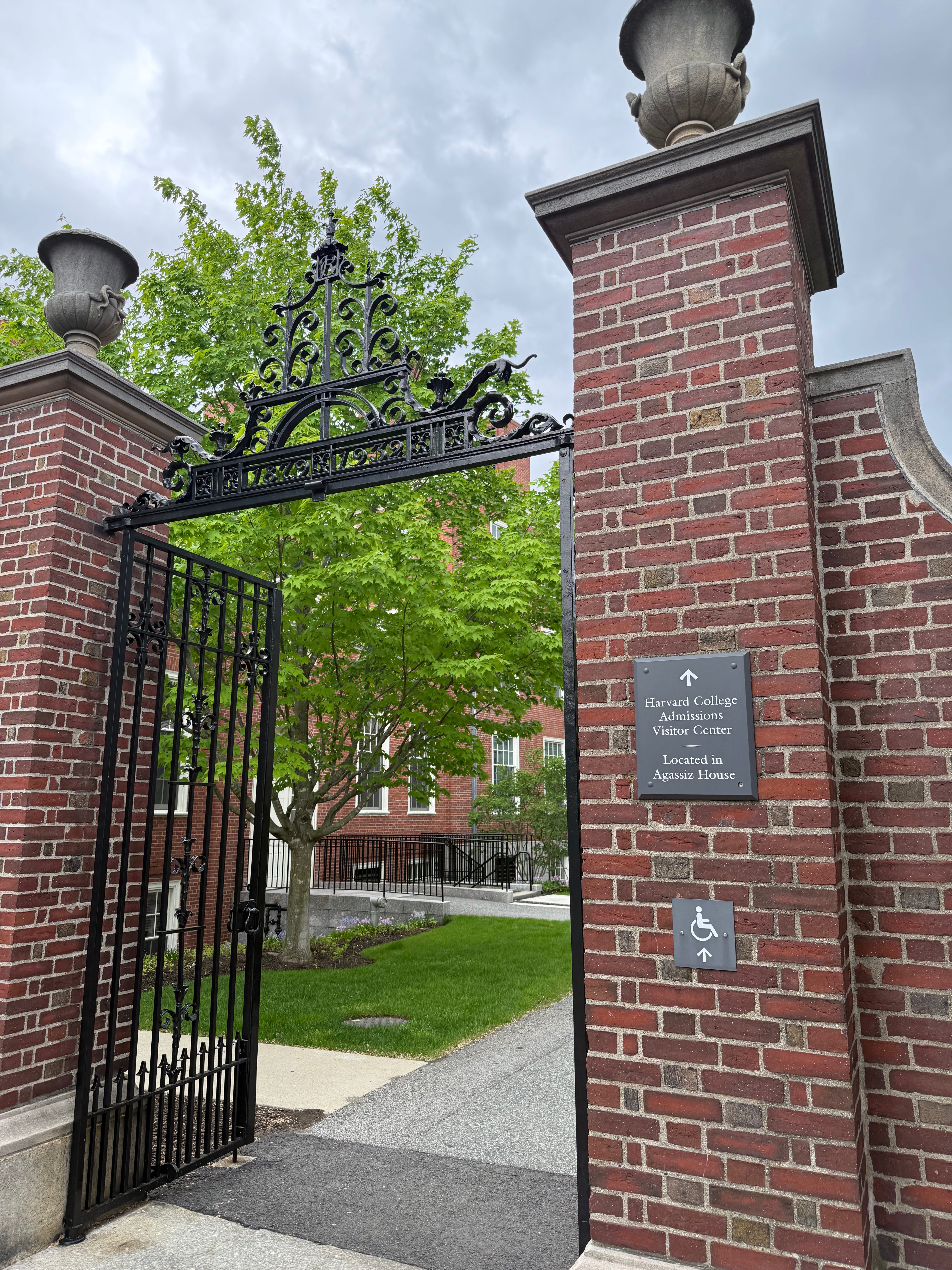
As a preface, this is a return to an off-and-on series I imagined when I first launched Marginalia—deconstructing how complementarian scholars and pastors have obscured the reality of women in church history. I still marvel at the title of the history article in Recovering Biblical Manhood and Womanhood—”Learned and Holy, but Not Pastors.” Also, I was reminded of this post sitting in my drafts because I have spent so much time in SBC seminary archives this past year as well as Dorothy K. Patterson’s papers at the Schlesinger Library at Harvard. It is one of the sections I cut from Becoming the Pastor’s Wife. I hope you find it interesting!

In December 2022, I was working in the archives at Southwestern Baptist Theological Seminary in Ft. Worth, Texas. I was beginning the research that would become my 2025 book, Becoming the Pastor’s Wife: How the Subjugation of Women Became Gospel Truth. During a lunch break one day I stopped by the campus bookstore. A title in the church history section caught my eye and, on impulse, I bought it.
Marginalia with Beth Allison Barr is a reader-supported publication. To receive new posts and support my work, consider becoming a free or paid subscriber.
What I found was interesting.
Whereas my first bestselling book, The Making of Biblical Womanhood, was panned by the Council for Biblical Manhood and Womanhood and The Gospel Coalition, this book, Feminine Threads: Women in the Tapestry of Christian History, was endorsed by members of the Council for Biblical Manhood and Womanhood (CBMW) and welcomed by The Gospel Coalition. “I recommend every woman read and study and keep [this book] within reach for reference and inspiration!” wrote Dorothy Kelley Patterson. Patterson, at the time, was professor of Theology in Women’s Studies at Southwestern Baptist Theological Seminary and served on the board for the CBMW.
Whereas I argue that history and scripture have been reframed to minimize what women were actually doing, Feminine Threads argues that women were not leading in the same ways as men. “Feminist scholars,” the author writes, have “re-written the history of the early church to fit their particular agenda, blatantly ‘reinventing,’ ‘re-imagining’ and ‘reconstructing’ (their terms!) a history which attacked the Church itself.” Feminine Threads is meant to equip the reader to “refute the distortions of women in Christian history which are often being made in academia and the wider culture.” (12)
Put another way, my presentation of women in church history is the exact opposite of what appears in Feminine Threads. Let me show you what I mean—using the example of Tabitha (Dorcas), the woman Peter raised back to life in Joppa (Acts 9). Let’s start with the biblical text. For fairness, let’s use three versions: the ESV, the NRSV, and the NIV.
Acts 9:36-42 (ESV)
“Now there was in Joppa a disciple named Tabitha, which, translated, means Dorcas. She was full of good works and acts of charity. In those days she became ill and died, and when they had washed her, they laid her in an upper room. Since Lydda was near Joppa, the disciples, hearing that Peter was there, sent two men to him, urging him, “Please come to us without delay.” So Peter rose and went with them. And when he arrived, they took him to the upper room. All the widows stood beside him weeping and showing tunics and other garments that Dorcas made while she was with them. But Peter put them all outside, and knelt down and prayed; and turning to the body he said, “Tabitha, arise.” And she opened her eyes, and when she saw Peter she sat up. And he gave her his hand and raised her up. Then, calling the saints and widows, he presented her alive. And it became known throughout all Joppa, and many believed in the Lord.”
Acts 9:36-42 (NIV)
“ In Joppa there was a disciple named Tabitha (in Greek her name is Dorcas); she was always doing good and helping the poor. About that time she became sick and died, and her body was washed and placed in an upstairs room. Lydda was near Joppa; so when the disciples heard that Peter was in Lydda, they sent two men to him and urged him, “Please come at once!” Peter went with them, and when he arrived he was taken upstairs to the room. All the widows stood around him, crying and showing him the robes and other clothing that Dorcas had made while she was still with them. Peter sent them all out of the room; then he got down on his knees and prayed. Turning toward the dead woman, he said, “Tabitha, get up.” She opened her eyes, and seeing Peter she sat up. He took her by the hand and helped her to her feet. Then he called for the believers, especially the widows, and presented her to them alive. This became known all over Joppa, and many people believed in the Lord.
Acts 9:36-42 (NRSV)
“Now in Joppa there was a disciple whose name was Tabitha which in Greek is Dorcas. She was devoted to good works and acts of charity. At that time she became ill and died. When they had washed her, they laid her in a room upstairs. Since Lydda was near Joppa, the disciples who heard that Peter was there, sent two men to him with the request, “Please come to us without delay.” So Peter got up and went with them; and when he arrived, they took him to the room upstairs. All the widows stood beside him, weeping and showing tunics and other clothing that Dorcas had made while she was with them. Peter put all of them outside, and then he knelt down and prayed. He turned to the body and said, ‘Tabitha, get up.’ Then she opened her eyes, and seeing Peter, she sat up. He gave her his hand and helped her up. Then calling the saints and widows, he showed her to be alive. This became known throughout Joppa, and many believed in the Lord.”
This is what I see in the biblical text:
Tabitha is named as a disciple whose death prompted immediate intervention from Peter, a disciple from the inner circle of Jesus.
Tabitha had an important ministry in the community that involved the production of textiles and caring for those in need; her ministry was also associated with widows.
This is what historical evidence suggests:
It is possible that Tabitha was simply a follower of Jesus who did good works (a generic disciple, in other words). It is also possible that Tabitha was in the inner circle of leading disciples like Peter. Tabitha “is the only woman given the grammatically feminine title of ‘disciple’ (mathetria) in the entire New Testament,” Christine Schenk explains in Crispina and Her Sisters. Because of this, “some commentators suggest Tabitha was one of the women in Jesus’s Galilean discipleship. The masculine form, mathetes, ‘is a term chosen by evangelists to describe followers of Jesus including the Twelve.’ Peter may have known her well.” (74) Given the reaction of the Joppa community to immediately call Peter for help, not to mention Peter’s rapidity in responding, there is a good chance Peter not only knew Tabitha’s reputation but had ministered alongside her.
It is possible that Tabitha is a widow herself and/or that her service-oriented ministry was not authoritative. It is also possible that Tabitha was serving as a ministry leader akin to that of deacon or elder. Tabitha clearly ministered to/with widows, but the text does not elucidate her marital status. “Tabitha stands out as neither wife nor widow nor mother,” writes Wil Gafney. “She is a disciple of Jesus Christ and named without regard to patriarchy or patrimony.” (A Women’s Lectionary for the Whole Church: A Multi-Gospel Single-Year Lectionary, Year W, 133) Given the similarity of Tabitha’s ministry to that described in 1 Timothy 5, Bonnie Bowman Thurstan has suggested that Tabitha is a forerunner to the order of widows that played a significant role in the early church through the third century. Women like Tabitha “served the early church as founders and sustainers of house churches, as deaconesses, and as assistants of Paul” (35). By the third century, the order of widows is “consistently listed with the clergy” and were even given instructions “similar to those in the pastoral epistles” by Clement of Alexandria and Origen (104). The later prohibitions against widows teaching and baptizing, Thurstan reminds, suggests that widows had taken on these clerical responsibilities.
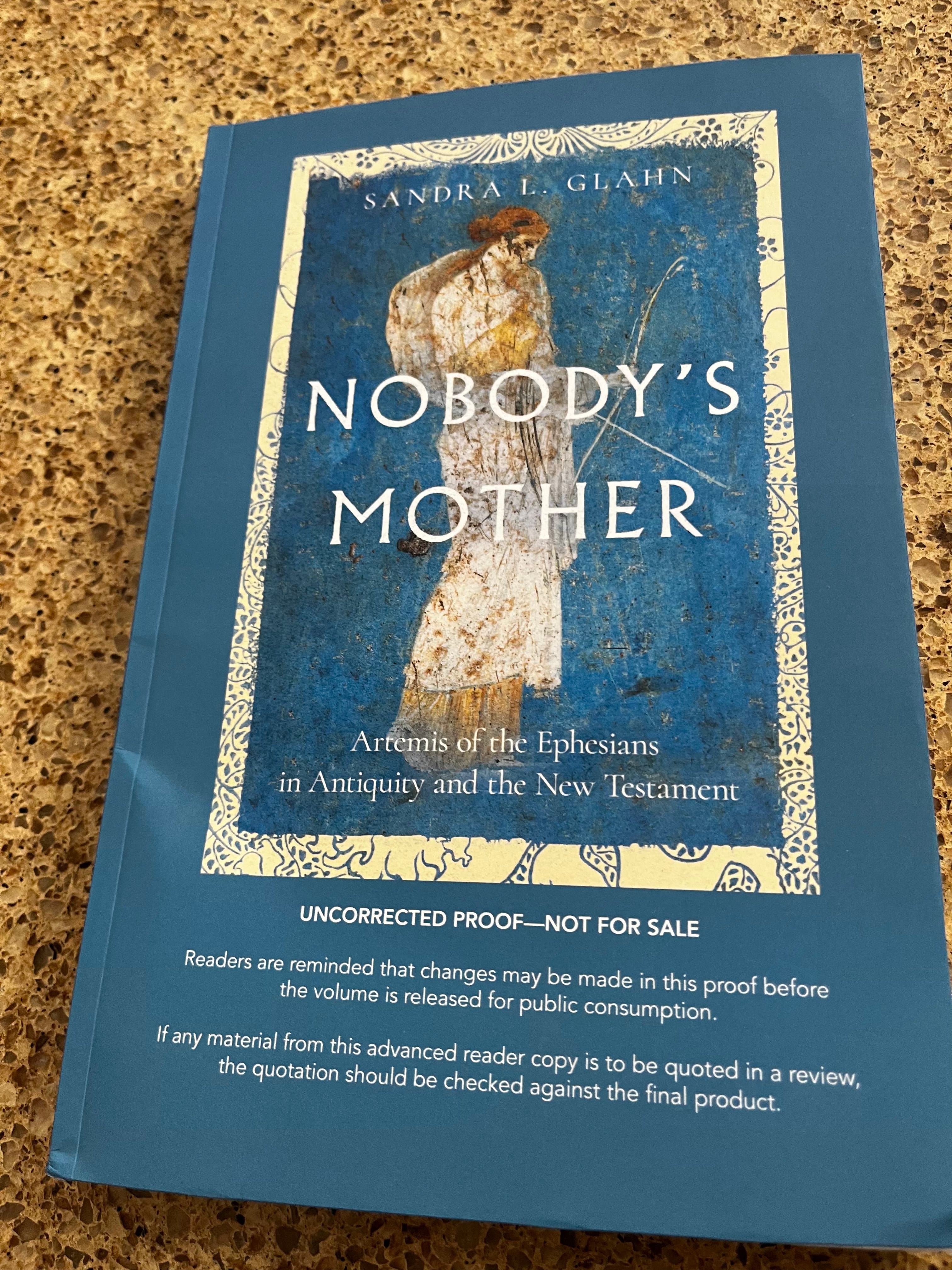
Both biblical and historical evidence leave open the possibility that Tabitha was a leader akin to Peter, serving in an authoritative ministry role. I love how Sandra Glahn contextualizes the position of “widow” within women’s historic church leadership in her book Nobody’s Mother: Artemis of the Ephesians in Antiquity and the New Testament. After examining both biblical and historical evidence through her doctoral studies, she writes,
“I found that the singular story I had been told about women (that is, “men have always held all the clergy roles”) was incorrect. I found the widows and women deacons referenced in the church fathers and ecumenical council records—not to mention the funerary inscriptions. I found the wives of male Reformers teaching, preaching, and burying the dead as expressions of the priesthood of all believers. I found Black women learning Greek and Hebrew alongside Black men in traditionally Black colleges—following in the tradition of Paula, Jerome’s translating partner—long before White seminaries opened their doors to female students. Betty Friedan, a feminist impulse, or capitulating to culture had not started this after all. It was rooted in the design for gender parity, in imaging God himself” (13).
Tabitha, like women throughout church history, plausibly represents a leader on par with her male counterparts.
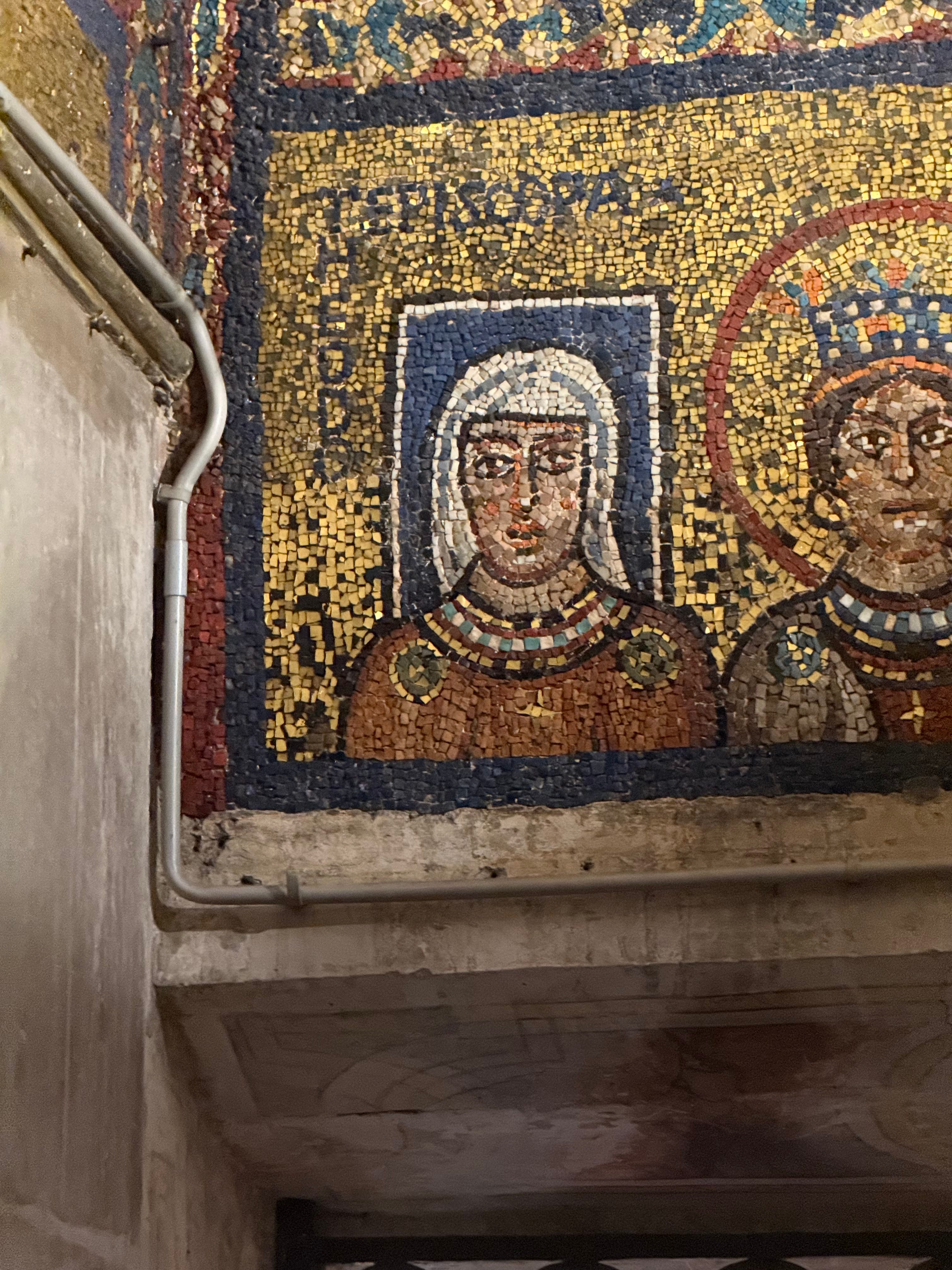
Let’s now turn to how Tabitha is present differently in Feminine Threads. Here is it what it states, first, about the possibility of women’s leadership and second, about Tabitha:
“In the New Testament, women were not shown to have had a position of authority and leadership in the Church. There were no women apostles or elders in the earliest church. No women wrote any book of Scripture.” Women who argue otherwise are “grasping at authority.” “As Eve in the Garden focused on the fruit of the one tree she was forbidden to eat, so many who claim women should be priests and ordained ministers focus on the Scripture’s prohibition of women assuming authority over men.” (34-36) Not only is it wrong to claim that women held leadership positions in the early church, it is tantamount to committing the original sin of Eve.
“Following Jesus’ command to be witnesses of Him ‘in Jerusalem, and in all Judea and Samaria, and to the ends of the earth,’ the church rapidly spread beyond Jerusalem, and women continued to have a part in the expansion. In the seacoast town of Joppa, Peter restored the beloved Tabitha, whose Greek name was Dorcas, to life and health. Tabitha was praised as a woman of ‘good works and acts of charity,’ who apparently used her sewing talents to minister to the widows and others in the community. Perhaps she was even a leader in one of the early widows’ associations of the Church.” (24-25)
Do you see the difference?
Tabitha is described as “beloved,” as a woman of “good works and acts of charity,” as using her “sewing talents” to minister to widows and her community, and possibly a leader in “one of the early widows’ associations.” This passage admits that Tabitha might be involved with a group of widows yet calls it an “association” rather than a role as authoritative as that of elder. While nothing is technically wrong with this description, when it follows the preface that women cannot be leaders in the same ways as men as well as the declaration that “the role of patroness of the Church and the grace of hospitality continued to be important for women in ensuing centuries," it makes no room for the possibility of Tabitha serving in a leadership role on par with men. Instead, she fits perfectly with how Feminine Threads portrays Paul’s description of widows to Timothy: as “a woman’s role in the Church—faithful wife, full of good works and hospitality, helping and serving others, raising children, involved in charity and helping those in need.”
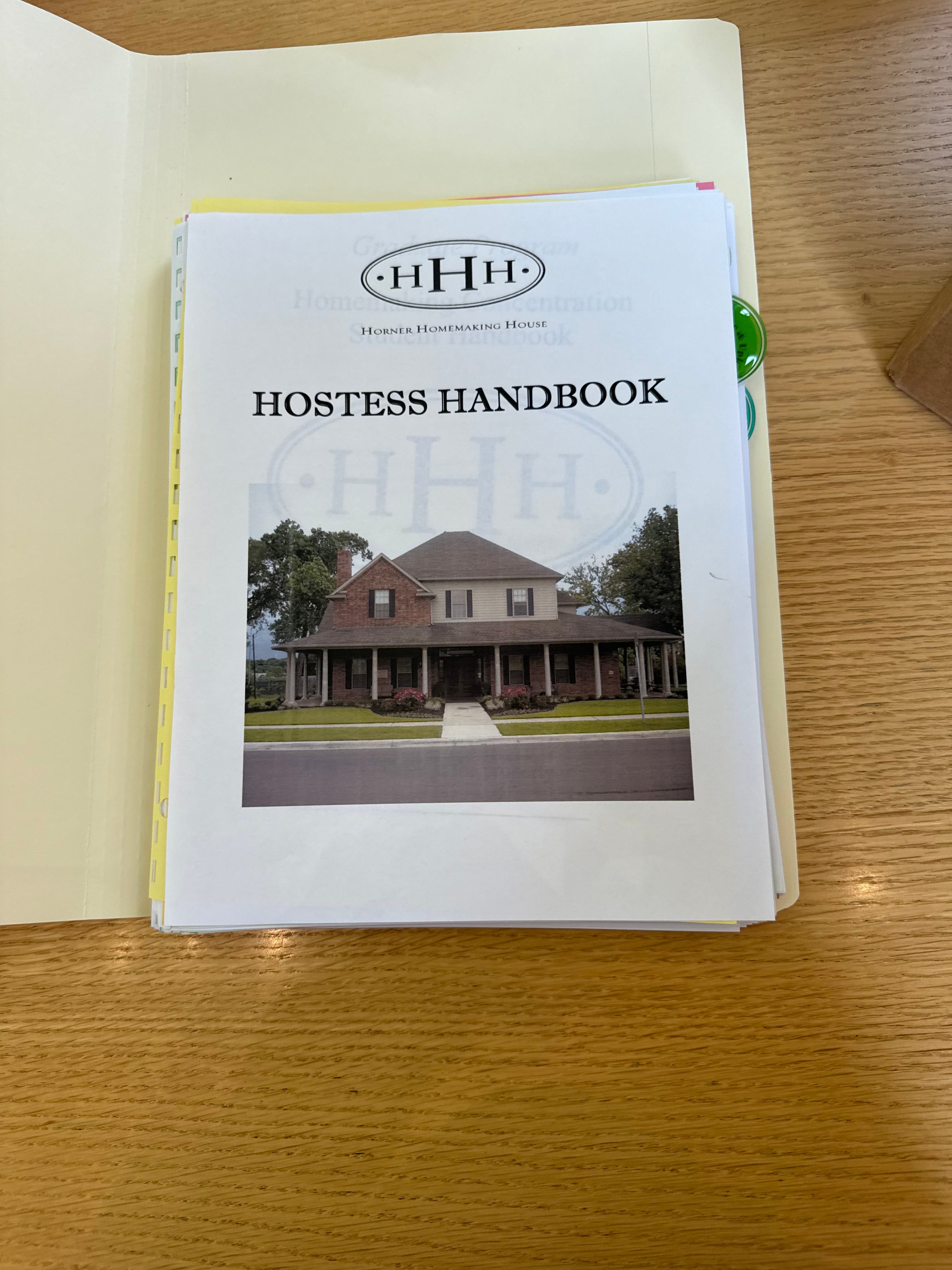
I think Dorothy Patterson would have welcomed this Tabitha as a teacher in her Horner House, the one-time Women’s Center at Southwestern Baptist Theological Seminary committed to training women ministry leaders as distinct from male leaders. Tabitha, a woman in the first century church, fits right in with twenty-first century conservative evangelical gender theology: a beloved wife (widow) who ministered to women through women’s work.
So which version of Tabitha is correct?
I’ll let you consider the evidence and decide for yourself.
As for me, I will continue to find it interesting how quickly we presume authority for men and so easily discount it for women.
BTW, this week marks the one year anniversary for both the launch of All The Buried Women podcast with and my New York Times bestseller Becoming the Pastor’s Wife. I’m sure I will have more to say about both soon.

Marginalia with Beth Allison Barr is a reader-supported publication. To receive new posts and support my work, consider becoming a free or paid subscriber.
Comments
Nothing yet. Say the first thing.
Sign in to join the conversation.