

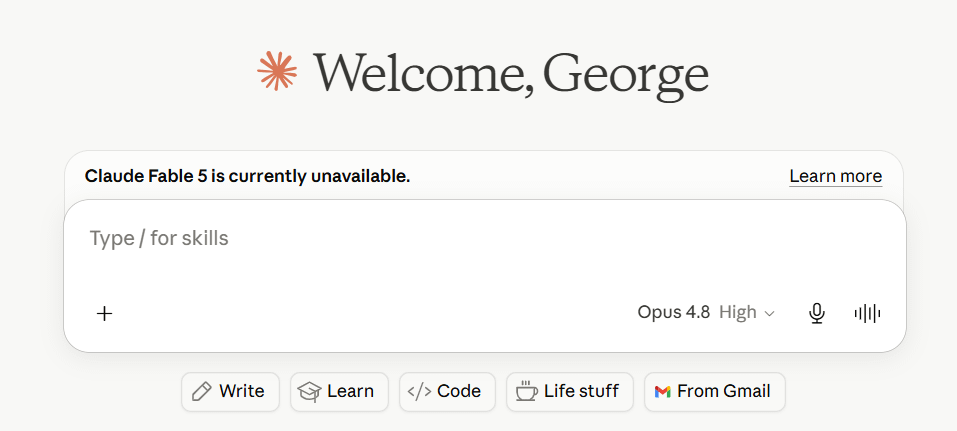
In an unprecedented intervention, the US government has abruptly halted production of Anthropic’s Fable 5 and its underlying Mythos 5 model. Despite being widely heralded as one of the most powerful, legal-grade reasoning tools ever engineered, Fable 5 was deactivated globally after the sweeping order barred non-US citizens - including Anthropic’s own international staff - from accessing it due to security concerns.
Even during its fleeting window of general availability, Fable 5 was already proving to be a highly restricted tool for the legal industry. While its reasoning capabilities promised a new frontier for contract analysis and litigation prep, a trifecta of commercial and infrastructural barriers kept most law firms from deploying it:
30-Day Retention. For safety and misuse monitoring, Anthropic mandated a strict 30-day data retention policy. This led to many law firms not even using it for the sake of their client data.
Only US data hosting. Fable 5 was hosted exclusively on US-based servers, meaning law firms in the UK, Europe, and Asia faced the compliance nightmare of routing sensitive, cross-border client data directly into US jurisdiction.
Sky High Token Prices. Launching at $10 per million input tokens and $50 per million output tokens, Fable 5 was very expensive and was effectively double the cost of its existing flagship models.
All of this serves as a stark reminder of a new reality for legal tech, the industry’s most powerful tool can disappear overnight, not because of a technical glitch, but by geopolitical decree.

We discussed:
→ Whether 200 billion proprietary documents are still a defining asset - or whether the nature of the moat has changed.
→ Why "probably right" is the standard for frontier models, and why that standard fails in law.
→ How their partnership with Harvey actually works.
→ Sean's thoughts on hallucinations in legal AI.
→ What happens to the junior lawyer apprenticeship model when the grunt work that builds judgment disappears.

AI moves into the Crown Court. The government will develop AI legal assistants to support routine casework in the UK Crown Court. The tools will be tested in controlled conditions before any wider use, with backlogs above 80,000 cases — more than double the 2019 figure.
Courtroom brings the jury room into the war room. A New York startup called Courtroom has just launched. With pre-seed backing led by Neo and Precursor Ventures, plus Relativity’s investment arm and a roster of angels including OpenAI staff. Its pitch is AI simulation of how jurors and judges will react to arguments, witnesses and damages theories, run continuously from pre-filing through trial rather than as a one-off mock exercise reserved for the biggest cases. Co-founded by ex-Kirkland associate Elizabeth Grabowski Parikh.
Spellbook funds the next generation of legal engineers. The contract-drafting firm has launched a $1m Legal Fellowship Fund, offering at least one law student per semester $25,000 to fix a single broken legal workflow, plus several years of free access.
Legora plants its flag across Europe. The Swedish challenger is opening offices in Madrid, Milan and Paris and building a London engineering hub, targeting 700 EMEA staff inside a year.

Billables AI has closed a $10.2m Series A. The San Francisco firm is pushing beyond AI-assisted timekeeping into broader ‘operational intelligence’ for law firms, capturing and analysing the work data that practices generate but rarely measure, including AI usage itself, via API integrations rather than screen monitoring.
Sandstone raised a $30m Series A, led by Lightspeed Venture Partners just six months after a $10m Sequoia-led seed. The New York company targets the in-house function rather than law firms. It reports a 40-fold revenue jump in 90 days and names Wayfair, Grindr, Mercury and ElevenLabs among customers.

Senior Legal Engineer @ BP
Senior Associate, AI Practitioner @ JP Morgan
Senior Legal Engineer @ Simmons
Share Best Practice so others can get the latest Legal AI jobs and news.

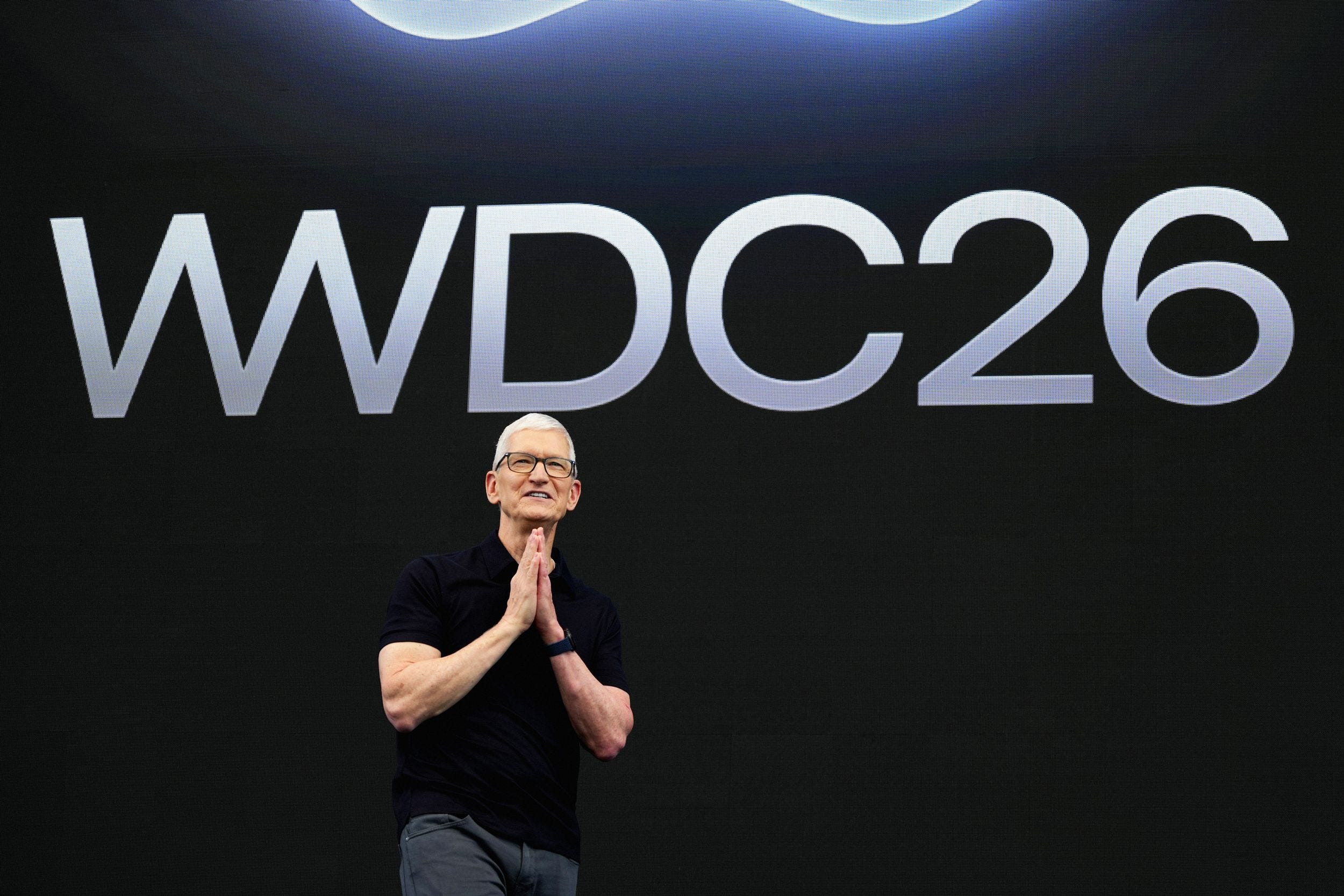
Instead of trying to out-train the frontier labs, Apple is positioning itself as the ultimate consumer interface layer at WWDC 2026 this year. Starting with iOS 27, Apple Intelligence will let users seamlessly toggle between Google Gemini (the default backend model), OpenAI’s GPT-5.5, and Anthropic’s Claude, effectively turning the operating system into a curated model marketplace.
The updates focus heavily on eliminating daily communication friction through deeply integrated system-wide writing tools. Rebuilt from the ground up, the new Siri architecture can ingest local personal context to actively analyze how you communicate with specific recipients, automatically adapting its drafts to match your exact formal or casual behavioral historical patterns.
Additionally, a new native “Visual Intelligence” feature allows users to instantly select and query any document, image, or complex data table directly on their screen.
To address corporate anxiety around data harvesting, Apple leaned heavily into its Private Cloud Compute (PCC) architecture. Promising that server-side processing isolates user data so it is inaccessible to anyone, including Apple itself, the company is opening its PCC source code to continuous, independent cryptographic audits.
Ultimately, Apple is making a strong case that convenience, deep operating system integration, and ironclad privacy architecture will trump the model itself.
If you have suggestions for improving this newsletter, or simply want to introduce yourself, then hit reply to this email.
- George, Editor of Best Practice
Comments
Nothing yet. Say the first thing.
Sign in to join the conversation.