
Hey, welcome back.
This week:
Kirkland & Ellis advances their AI initiative
OpenAI targets the legal sector
In-house legal tech secures major funding
5-min read.
This edition is brought to you by Aline.
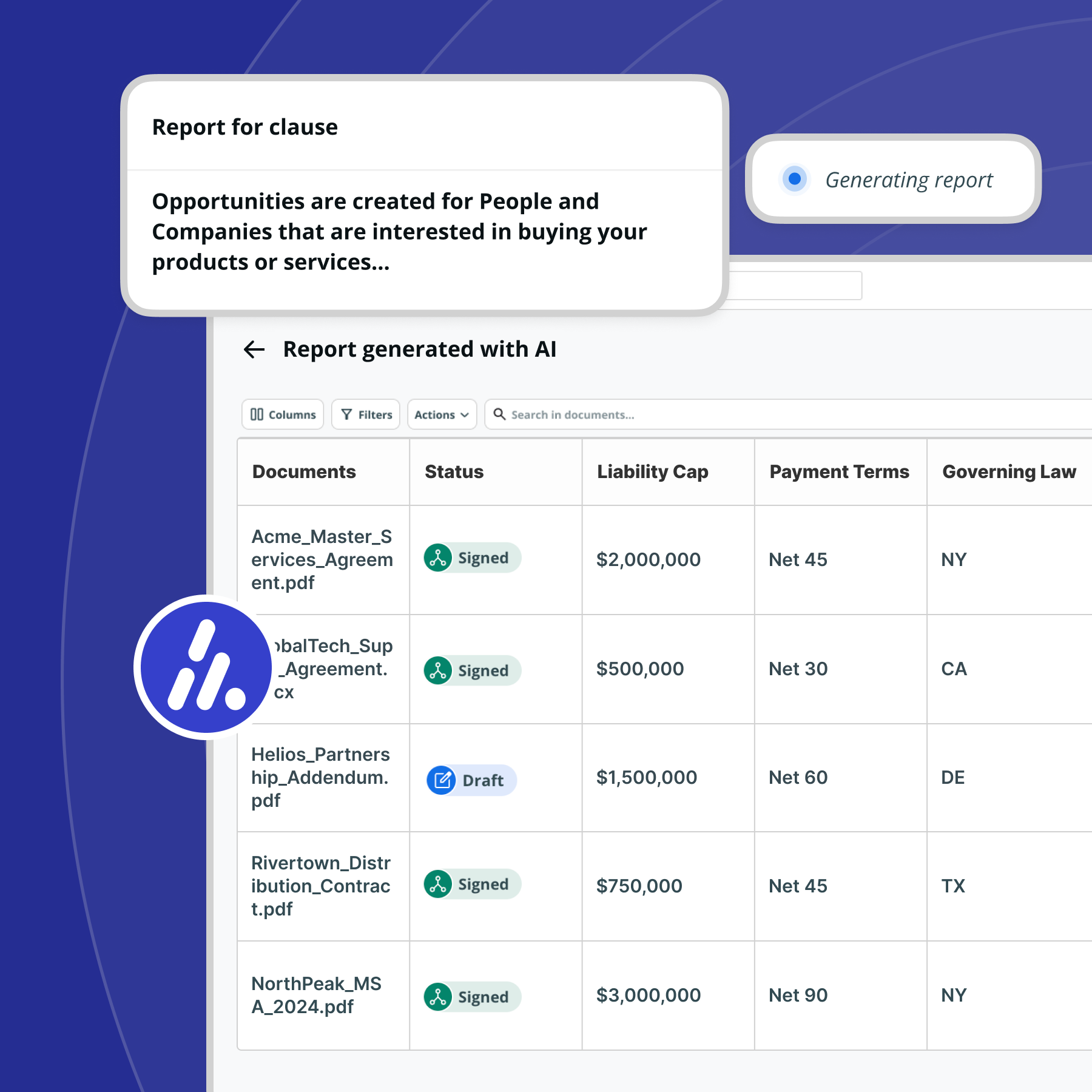
Know what’s in every contract without opening a single file. Aline scans your full portfolio and surfaces obligations, exposures, and risks, so when the CFO asks, “What are we exposed to?” you have the answer in seconds.
Book a demo to try Aline for free.
Explore our AI Contract Intelligence, plus 25% off your first year with code George.
Sponsor Best Practice and get seen by thousands of Legal Professionals every week.

Kirkland builds their own engine, with Palantir’s hands on the spanner
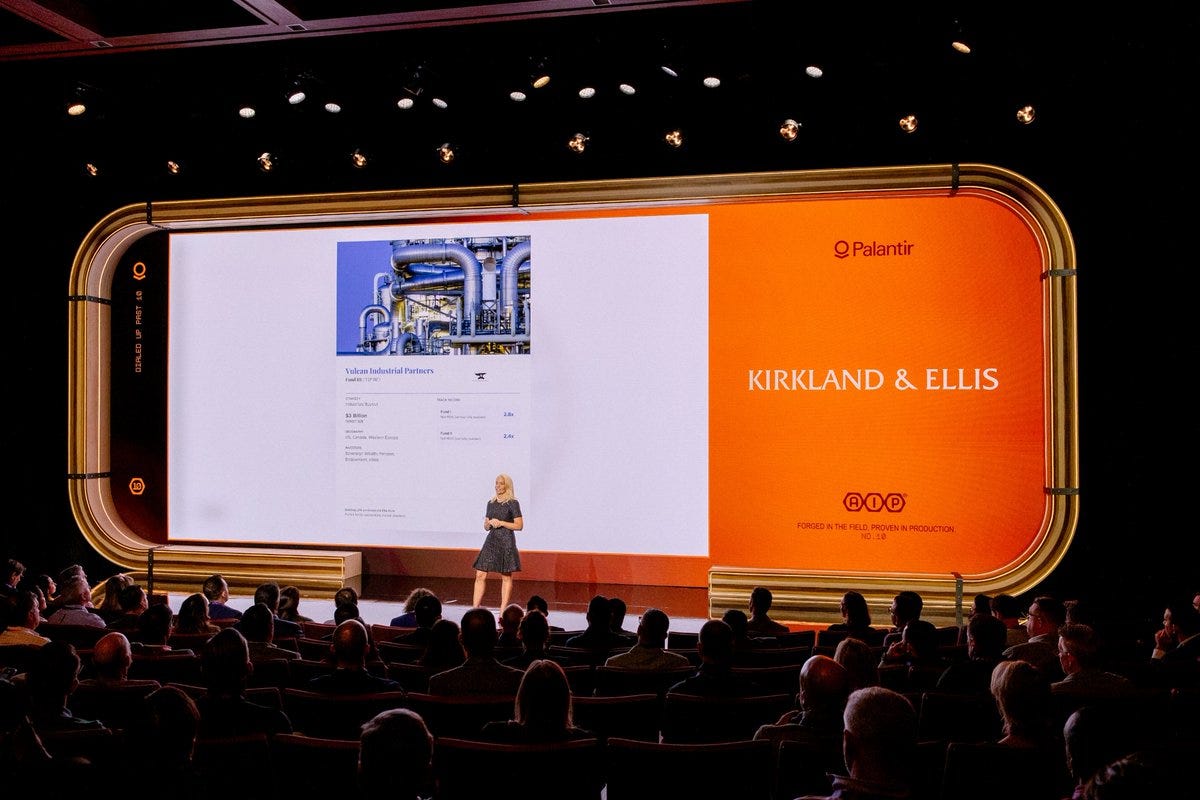
Just a week ago, Kirkland & Ellis told the Financial Times it would spend $500m building their own AI tools rather than renting them. But this week at Palantir’s developer conference in Miami, we found out what the first installment looks like.
The firm has launched a “fund formation engine” built on Palantir’s AI platform, aimed at one of Kirkland’s most lucrative franchises: advising private equity sponsors on raising capital. Palantir typically specializes in building massive data analytics platforms for large-scale operations, famously partnering with government bodies like the UK's National Health Service (NHS) to manage complex data networks. This new tool will reach more than 1,000 lawyers in Kirkland's investment funds group to start with.
The tool is designed to pull fund documents, side letters, investor agreements and compliance obligations into a single system, including the fiddlier structures such as continuation vehicles. Kirkland advised on close to $500bn of capital raised or targeted last year, and the pitch is that the engine encodes that institutional judgement so it can be deployed across the firm rather than living in a handful of senior partners’ heads. Palantir will build the technology but, the firm says, get no access to confidential client data, and Kirkland keeps ownership and bars anyone from reselling it.
Kirkland generated $10.6bn in revenue last year, and chairman Jon Ballis has talked about spending roughly 1% of revenue on big bets. Their competitors are doing similar things; Fried Frank has rolled out an internally built platform for its funds practice; Linklaters has stood up a data-science team to build bespoke workflows; Freshfields is working with Anthropic. The build-versus-buy question that has hung over legal AI for two years is being answered, at least at the top of the market, with “build”.
Why it matters
American firms cannot raise outside capital — so the only firms that can self-finance a nine-figure AI programme are the ones already sitting on enormous profits. Kirkland are fortunate to be in the position to write a $500m cheque from cash flow to fund their own AI products.
The likely outcome is a widening gap between a dozen mega-firms with their own proprietary stacks and everyone else paying paying for “off the shelf” Legal AI tools.

CEO of LexisNexis Legal speaking on Legal AI
It was awesome to speak to the boss of one of the largest legal data companies in the world.
We discussed:
Whether 200 billion proprietary documents are still a defining asset - or whether the nature of the moat has changed.
Why "probably right" is the standard for frontier models, and why that standard fails in law.
How their partnership with Harvey actually works.
Sean's thoughts on hallucinations in legal AI.
What happens to the junior lawyer apprenticeship model when the grunt work that builds judgment disappears.
Listen on Spotify
Listen on Apple Podcasts
Know anyone that may want to feature on the Best Practice Podcast? Email george@georgehannah.com

OpenAI finally enters the legal vertical. Sam Altman’s company has hired Jason Boehmig, co-founder of contract-management firm Ironclad, to lead product for a new legal vertical. Boehmig built Ironclad to a reported $3.2bn valuation before stepping down as chief executive last year, and his LinkedIn now reads simply “Building AGI for law”.
Legora keeps shopping. The legal-AI unicorn, valued at $5.6bn after its Series D, has acquired Cadastral, a roughly ten-person New York startup building AI agents for commercial real estate, with clients including JLL and Empire State Realty Trust. It is Legora’s fourth acquisition this year, after deals in Canada, Sweden and Australia, and it anchors the company’s first major US engineering hub in New York.
Enjoying Best Practice? Subscribe for free to receive the latest on Legal AI.

Wordsmith raised a $70m Series B led by Highland Europe and Index Ventures, taking total funding to $100m. The Edinburgh-based company builds for in-house teams rather than law firms, routing routine requests through AI agents and surfacing only the matters that need a lawyer’s judgement, with the explicit aim of cutting outside-counsel spend. Chief executive Ross McNairn describes the product as “the system Legal runs on”.

Legal Engineer @ Ivo
Lead Legal Engineer @ Legora
Legal Solutions Engineer @ Wordsmith AI
Legal Technologist @ Thomson Reuters


Researchers at Cambridge have produced have developed a vaccine designed by artificial intelligence. The team took genetic codes from a range of coronaviruses, gathered by surveillance programmes looking for emerging threats, and had a model analyse them and design a “super-antigen” — a single construct meant to train the immune system against a whole family of viruses, even as they mutate or jump from animals to people. It has been trialled in 39 people with no significant side effects, with a 200-person trial to follow. The same approach is now being pointed at seasonal flu, H5N1 bird flu, and haemorrhagic fevers such as Ebola.
I think what is interesting here is that most of the AI we cover, in law and elsewhere, is reactive — it reviews, summarises, and retrieves things that already exist. Here the model is generating something genuinely new, and the lead researcher frames the point as moving from chasing outbreaks to getting ahead of the curve.
That’s everything for this week.
If you have suggestions for improving this newsletter, or simply want to introduce yourself, then hit reply to this email.
Share Best Practice with a colleague.
I read every message!
- George, Editor of Best Practice
Comments
Nothing yet. Say the first thing.
Sign in to join the conversation.