
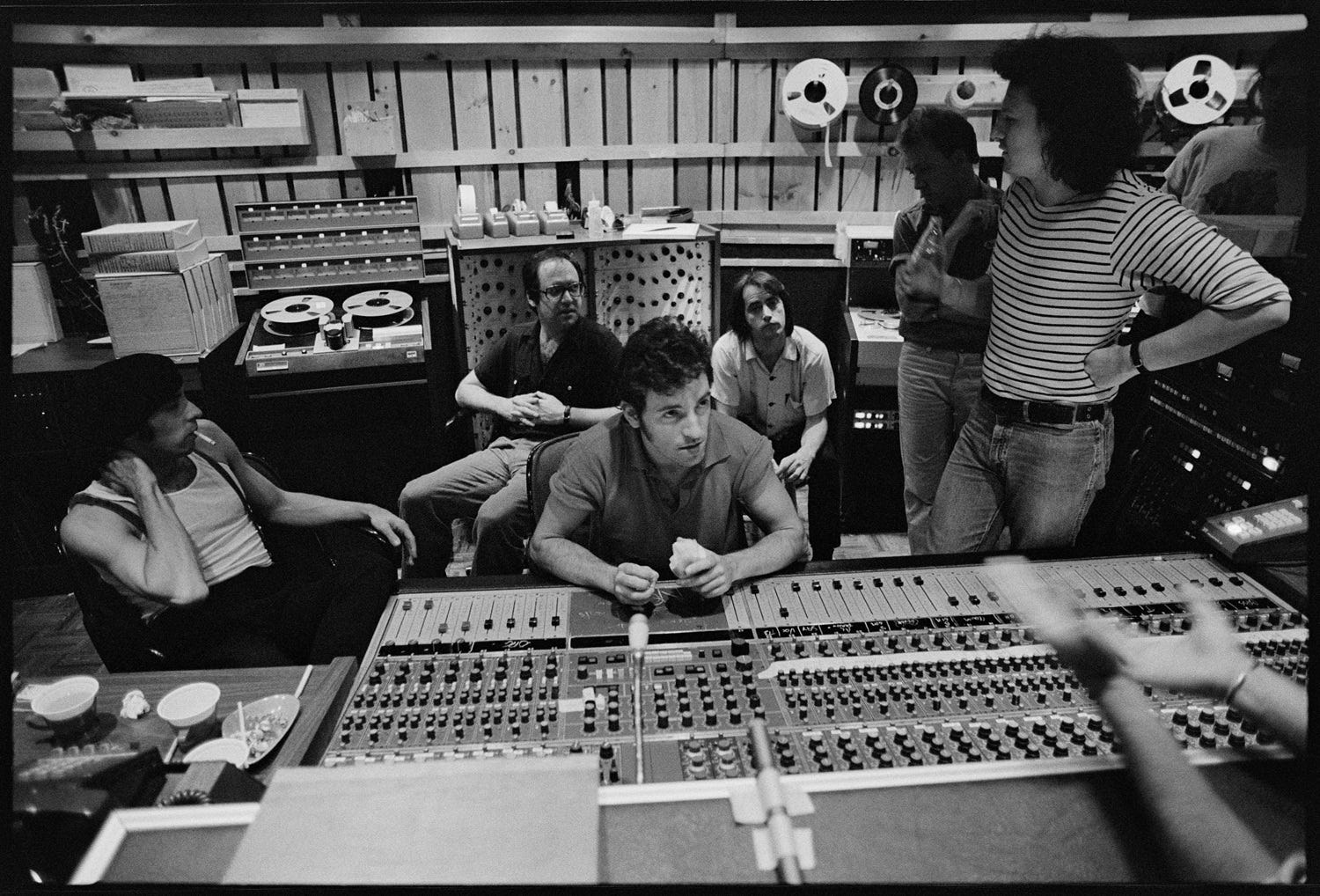
Bruce Springsteen is both consistent and persistent when it comes to telling his tale.
Of course, his songs often relate very personal experiences, but he’s also turned his life story into an acclaimed autobiography, a one-man Broadway show and Netflix special, and barely a new record or reissue goes by without an accompanying feature-length documentary that painstakingly details – and mythologises – every stage of its construction.
If you’ve even a passing knowledge of the guy, you probably know the basics: kid grows up poor in New Jersey, has a complicated relationship with his father, loves cars and guitars, becomes the world’s biggest rock star, hates it, eventually makes peace with the whole shebang and sells out stadiums the world over every couple of years. Thanks for coming out, we’ll be seein’ ya.
But there exist many other Bruce’s beside the one he wants to talk to you about. These Bruce’s live only in the records; the one based entirely around hip-hop drum loops, the album-length rumination on the plight of illegal immigrants and drug smugglers, the Pete Seeger sessions, the vast wealth of bootlegs many swear are better than anything he ever laid down in a studio, the split 10” he did with industrial punk pioneers Suicide... Perhaps thankfully, they don’t make biopics that focus on these aspects of his character, but they are equally important parts of the picture.
It would take me a while to discover these other sides to the artist, hiding though they were in plain sight. My own introduction to Bruce came as I was being driven home for the first time from the hospital I’d just been born in. My parents (like everybody else, it was 1985) had Born in the U.S.A. in the cassette deck, so that was the first record I ever heard. Of course, I don’t remember it happening, but I like having that knowledge. I would be exposed to his music a lot in my formative years – that tape, along with Nebraska, Tunnel of Love and a few others, didn’t leave the car until we had to sell it for scrap metal.
When I was old enough to start forming my own musical tastes, I didn’t much care for the Springsteen I was now being exposed to if I’m honest. Those classic records had made way in the car stereo for his new pair of underwhelming releases, Lucky Town and Human Touch, which no adolescent in the world cared for one bit. Bruce seemed old, my parents’ music, desperately uncool. So, I got a Walkman for long car journeys, turned it up and started listening to Blur on my own to drown him out.
It wasn’t really until I left for university that I started to appreciate him on my own terms. When I would call home, I realised that I had a lot to speak to my Dad about because we both liked football, but not so much in terms of shared interests with my Mum, who maintains a claim to being the biggest Boss fan in the family. I decided to listen to Bruce’s entire back catalogue so I could bring it up in conversation. It was an absolute revelation - I became, and remain, a superfan, and it led to many a good natter with my Ma.
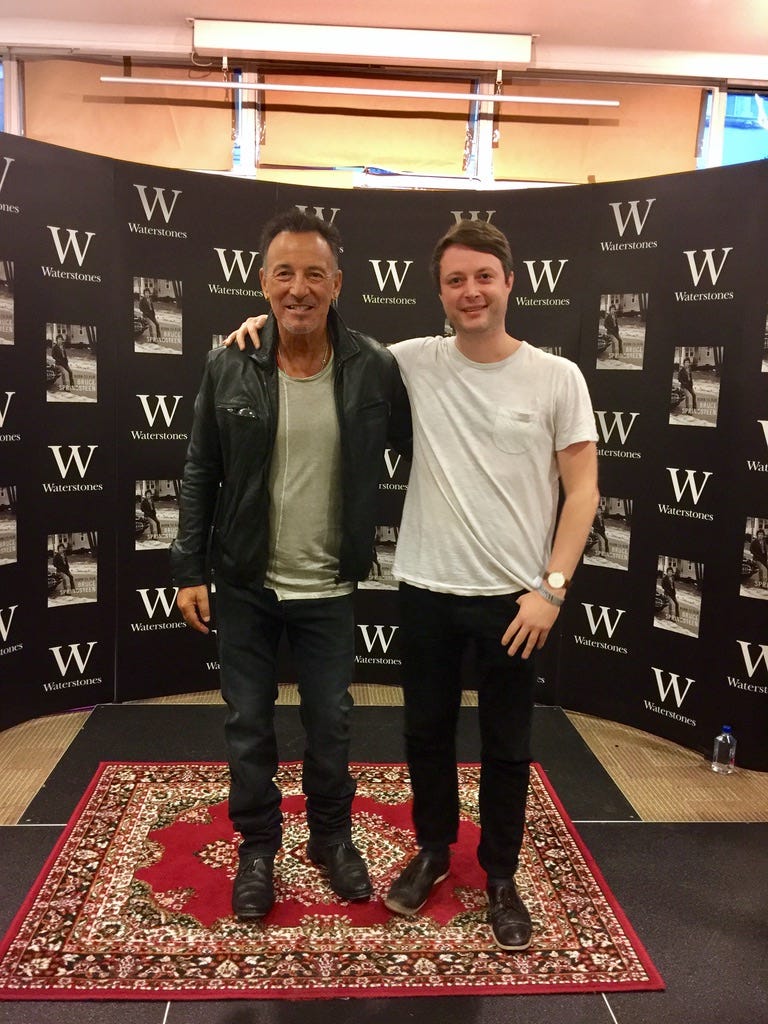
In the brief seconds I spent in Springsteen’s company when I met him at a book signing, I told him how we used to listen to his music in the car as kids, how my whole family now goes to his shows together, and how my Mum sends him her love. We hugged, and he told me to “send my love right back to her”. Nice guy.
I don’t love everything in his discography, but its brightest moments and darkest corners are extremely precious to me. This article is about where to start though, so we won’t stray too far from the well-trodden path. It does get interesting if you veer off a little though, trust me.
The worst song on Born in the U.S.A. is “I’m Going Down”, and “I’m Going Down” is an absolutely killer song. Recorded with the legendary E Street Band, this gazillion seller really does play like a Greatest Hits, but as ever with Bruce, there’s more going on than you might gather on first listen.
The title track retains an immense power despite the amount of times you’ve had some guy tell you that it’s actually not a patriotic anthem and is actually an anti-Vietnam war song actually, and yes the simple brilliance of “Dancing in the Dark” is eternal, but the emotional heart of the thing comes in songs like “My Hometown”, “Downbound Train” and “I’m on Fire”, which detail complicated upbringings, relationship anxieties and overwhelming desire with remarkable nuance, and “Bobby Jean”, perhaps the most moving treatise on male friendship in all of pop music.
I can sympathise with people who don’t warm to the more bombastic, chart-bothering side of Springsteen, but if you really can’t find anything to enjoy here, maybe music isn’t for you.
Cliché is never far away when talking about Springsteen, and the one you hear about Nebraska is that it’s the Springsteen album for people who hate Bruce Springsteen. There is some truth in that – it is a particularly singular, stark, devastating solo acoustic record made on a four track in his bedroom, and therefore unlike anything else in his entire catalogue.
But I like to think that every kind of Springsteen song is here in some sense, it’s just that on other albums they’re wearing bolo ties, or the drums are slathered in gated reverb, or look, here’s Clarence Clemons. This is the essence of the songwriter, one who empathises if only for a few minutes with serial killers, corrupt cops and those with lives utterly devoid of hope, and what a powerful, harrowing work of art it is.
I’ve listened to it so many times that it feels like a part of me, and if you told me I had to choose between losing a limb and not hearing Nebraska again, I’d need to spend a long time contemplating it (which limb, that is).
There are many Springsteen albums that are far from classics, but this is the only one I can think of (covers collections aside) which doesn’t have at least one track on it that I hold dear.
Written in a time of mild, misplaced euphoria after the election of his buddy Barack Obama to the office of the presidency, Working on a Dream misfires at nearly every attempt (the worse the president is, the better the Springsteen album, I find).
I’ve always found the sickly, optimistic gospel of the title track too saccharine to bear, but it’s far from the album’s nadir. Its most successful songs are merely forgettable, but there are also herein three of the worst Springsteen ever put to tape; the ‘happy birthday’-esque “Surprise, Surprise”, unforgivably flimsy character study “Queen of the Supermarket” and, in particular, “Outlaw Pete”, which is an eight-minute tale about a bank-robbing baby set to the melody of “I Was Made for Loving You” by Kiss.
It’s very telling that by the end of the tour promoting this record, the setlist contained none of the songs from it. Bruce knew this was a swing and a miss.
Thomas Hannan is occasionally the singer and guitarist in a Prince and Bruce Springsteen covers band.
No posts
Comments
Nothing yet. Say the first thing.
Sign in to join the conversation.