
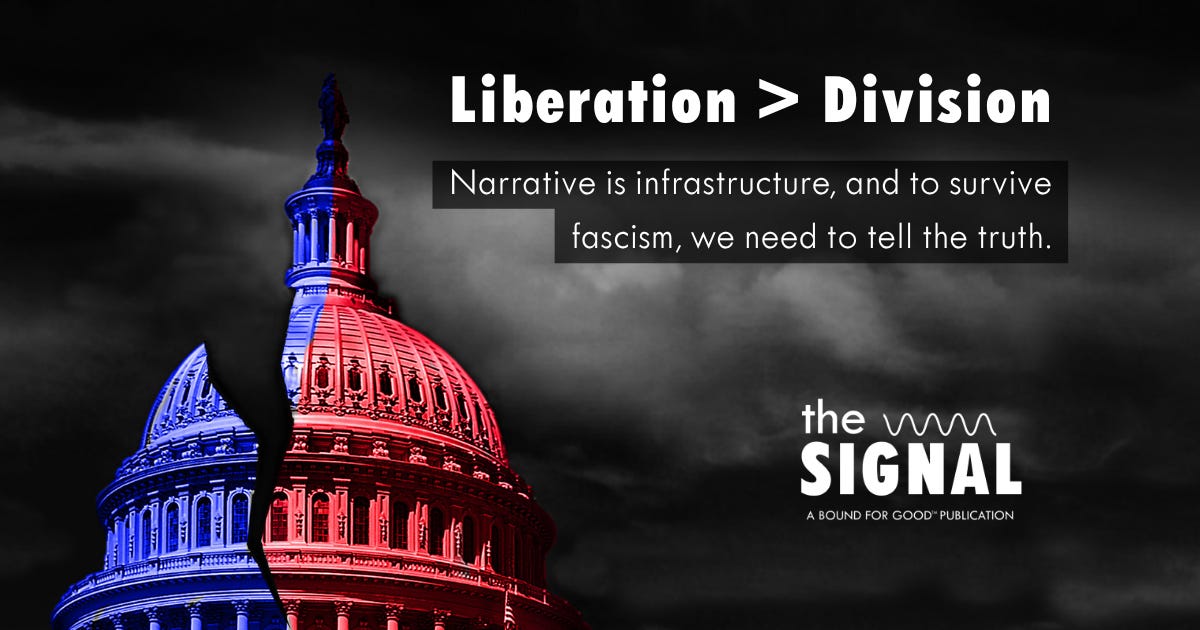
The idea that “Americans are more divided than ever” may feel like a hopeless reality, one that we’re all trapped in forever, no matter what anyone does. But once you start to scratch at that idea with data, the narrative completely unravels. What comes through is the massive investment in dividing Americans, keeping us in the dark, and silencing our voices.
Imagine with me for a moment that Americans have actually been getting too close to agreeing that society’s systems should work for everyone, that regardless of who a person is, they should have a fair shot. Imagine that, even despite the repeated attempts to keep us apart, a critical mass has been built, anyway?
This is exactly what the people at the University of Maryland set out to show in partnership with Voice of the People in their resource, showing 109 public policy proposals with bipartisan support. Taxing the rich, labor protections, abortion access, free wifi, affordable housing, police accountability, clearing marijuana charges–there’s far more consensus on topics than we are allowed to know. Turns out, when researchers do the polling, they find out we agree on a lot. Hence, the attack on data collection and the institutions that do it.
So if we agree, why are we losing things with majority support to…minority control?
I am obviously not saying that the U.S. doesn’t have deep, structural issues around identity that show up in people’s biases and frame how people give, vote, and take action, but those biases require fuel. We know it’s the billionaire influence keeping hate alive, a simple starting point that gets more complex the further back you go in time.
Starting point: They are heavily investing in divisive politics in local races that most people never hear about. (The Koch network raised and spent $548 million in the 2024 election cycle alone on these races.) The context goes back to how critical it is to crush labor and refuse to pay taxes to maintain an ultra-wealthy status. For a deep dive on this, read Nancy Maclean’s Democracy in Chains, declared 2017’s “Most Valuable Book” by The Nation. (The first five chapters alone are eye-opening and enraging.)
While “division” narratives carry the weight of an inescapable reality and are actually not as true as we think, “liberation” narratives are mind-blowingly closer to uniting us than we know, yet they are painted as idealistic and far off.
[Liberation = structural change that makes room for the full humanity of the people most excluded simultaneously across interlocking systems of race, gender, class, and sexuality.]
In fact, we’re even further along on agreeing that capitalism across the board isn’t working than we think because of the bipartisan support on housing policy that alleviates poverty (thank your nearest housing advocate for that).
Divisive language breeds despair that makes fighting back feel harder than it actually is.
So many doors to opportunity fling open when we know we already likely agree. Words matter, and their emotional weight is powerful. Divisive language breeds despair that makes fighting back feel harder than it actually is. As mission-driven communicators, how we present information, including our losses, is the difference between despair and determination. Not only are the numbers on our side, but we are actually more on each other’s side than we know.
Let’s remember that. This election season and beyond.
Discuss: Where have you seen a "division" frame make you or your audience feel more powerless than the facts warrant? Tell me in the comments. 👇🏾
Lauren is a liberation communications strategist and the founder of Bound for Good, a Research Triangle–rooted practice serving organizations in housing, education, and economic justice. Learn more.
No posts
Comments
Nothing yet. Say the first thing.
Sign in to join the conversation.