
Hi folks,
Welcome back to How I Cook+ and our second beer snacks edition. This week it’s chicken tsukune, a super popular Japanese chicken meatball served on a skewer. Typically they’re made from ground chicken mixed with finely chopped aromatics like spring onions, garlic and and ginger, shaped into little rugby ball-esque ovals, and grilled over hot charcoal. Tsukune are also commonly glazed with a sweet and savory soy-based sauce known as tare. We’ll be doing all of the above today, as well as grilling some padrons, for a very good heat wave weekend beer snack.
Thanks for reading,
B x
CHICKEN TSUKUNE
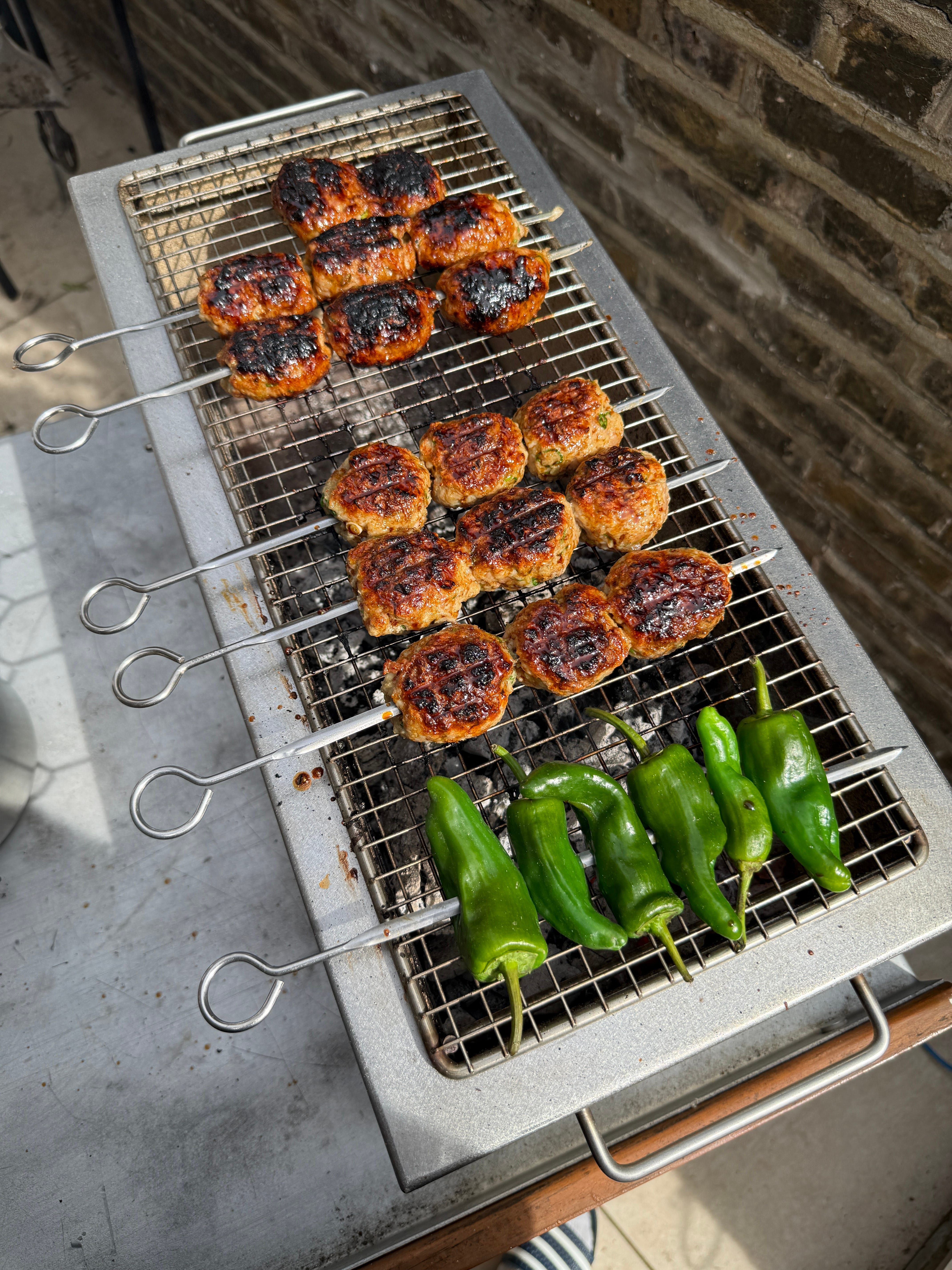
Right, tsukune may look like just humble little meatballs on a stick, but don’t let their modest appearance fool you, they’re the quiet overachievers of Japanese street food. These juicy, flavour-packed skewers are proof that simple ingredients, when treated with care, always win. A combination of minced chicken. spring onions, ginger, garlic, soy sauce, and a handful of other seasonings, tsukune are bouncy, juicy, sticky and sweet. As they cook, they’re repeatedly brushed with a glossy tare glaze, a teriyaki-adjacent, mouth-watering combination of soy sauce, mirin, sake, and rich dark brown sugar. Tsukune are so delicious thanks to the contrast of textures and flavours. The exterior develops a lightly charred, smoky crust from the grill, while the inside stays disarmingly soft, bouncy and juicy. It’s a texture not often associated with chicken, and it’s a complete joy. All of this keeps your hand reaching for “just one more” skewer.
CHICKEN MINCE
Your tsukune is only as good as the chicken you use, seriously. In the Beer Snacks video, I mince my own chicken legs, and if you can, you should too! I buy free range organic chickens and 99% of the time, I buy them whole. It’s cheaper overall and gives you so many options when thinking about a week’s worth of cooking. Failing that, head to your butcher and ask them for two chicken legs, deboned and coarsley minced. They’ll do this for you no problem. Why chicken legs? Well, the ratio of lean meat to fat in the leg is right where you want it, with plenty of intramuscular fat. I mince the skin through there aswell for extra chicken-y flavour and even more fat. Fat is your friend.
TEXTURE CHECK
The texture of your meatballs will be defined by how much breadcrumb you add to the mince and how much you work the meatball mix before forming the tsukune. The more you work the mixture, the more myosin is extracted from the meat. When salt is added to the minced chicken and the mixture is kneaded thoroughly, the salt helps dissolve and extract the myosin from the muscle fibers. As mixing continues, the extracted myosin coats the meat particles, making the mixture noticeably sticky and tacky. This sticky texture is an indication that enough myosin has been extracted to act as a natural binder. To test you’ve got your mix sticky enough, stick a little patty of meat to your palm and hold it upside down, if it stays, you’re golden, if it flops off, keep mixing.
But why is myosin helpful? During cooking, the myosin proteins denature and bond together, forming a gel-like network that holds the meat, fat, and moisture together. This protein network gives chicken tsukune its characteristic springy texture and helps it remain juicy without relying exclusively on added binders such as egg or breadcrumbs. Keeping the meat cold while mixing and using enough salt are important because these two facts maximize myosin extraction and produce a cohesive, well-textured tsukune. Delicious food science at play!

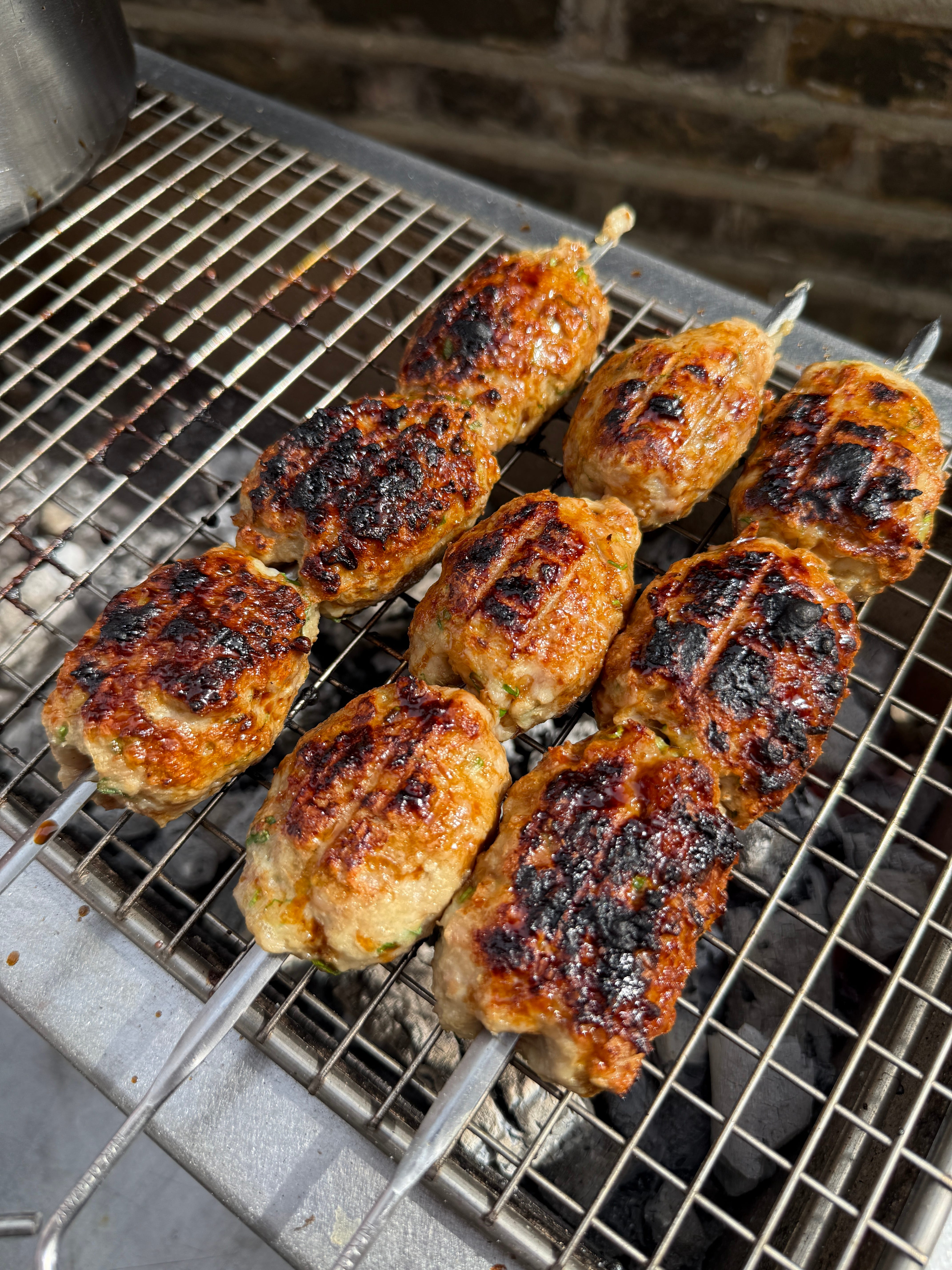
GRILLED CHICKEN TSUKUNE
Comments
Nothing yet. Say the first thing.
Sign in to join the conversation.