
Welcome to the continuation of my Guide to Photographing the Maine Coast. We kicked off this series back in 2024. If you haven’t read the introductory post, I’d recommend checking it out so that you can orient yourself with the structure of the guide. Each location is listed in geographic order from southwest to northeast along the coast.
For this post, we’re taking the ferry off the coast to Monhegan Island, a mecca for artists for more than 150 years. When I started coming out here in 2015, I knew Monhegan from paintings by the Wyeth’s and Edward Hopper, Rockwell Kent and Robert Henri. What I hadn’t seen were many photos that I thought captured the grandeur that these paintings evinced.
The reason for that quickly became evident after my first trip out here: Most photographers visit during the day, missing the golden hour light that helps elevate otherwise pretty scenes into something spectacular. So, I ponied up and booked a room at the Island Inn. I wanted to discover what made Monhegan such a special place through my own lens. In the process, I fell head-over-heels for the beauty of this unique destination, and started returning every year.
Let’s start with what is probably the most spectacular place to stand on the island, at the top.
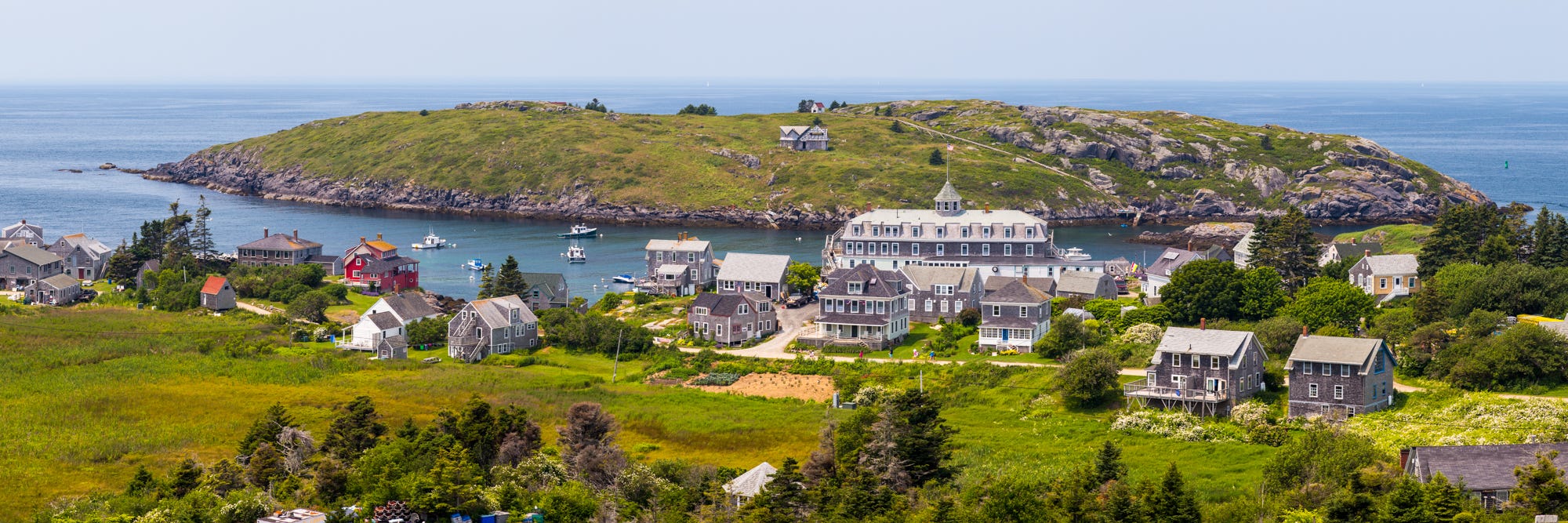
The view looking down from this vantage point is pretty special. The most striking and exotic feature has to be the hulking mass of Manana Island, devoid of trees after being used as a pasture for sheep for hundreds of years (you can still spot them if you zoom in real close). The distinctive mansard roof and turret atop the Island Inn dominates the village. It’s a classic turn-of-the-century hotel, surrounded by homes covered in cedar shingles, designed to withstand the harsh maritime environment. Manana and the village frame the small harbor, and a few boats can be seen at their moorings most of the time.
When you are standing here looking down, just behind you sits the lighthouse, now home of the Monhegan Museum. Architecturally, it’s squarely in the New England vernacular, with the keeper’s house connected to sheds, covered walkways, and of course, a lighthouse.
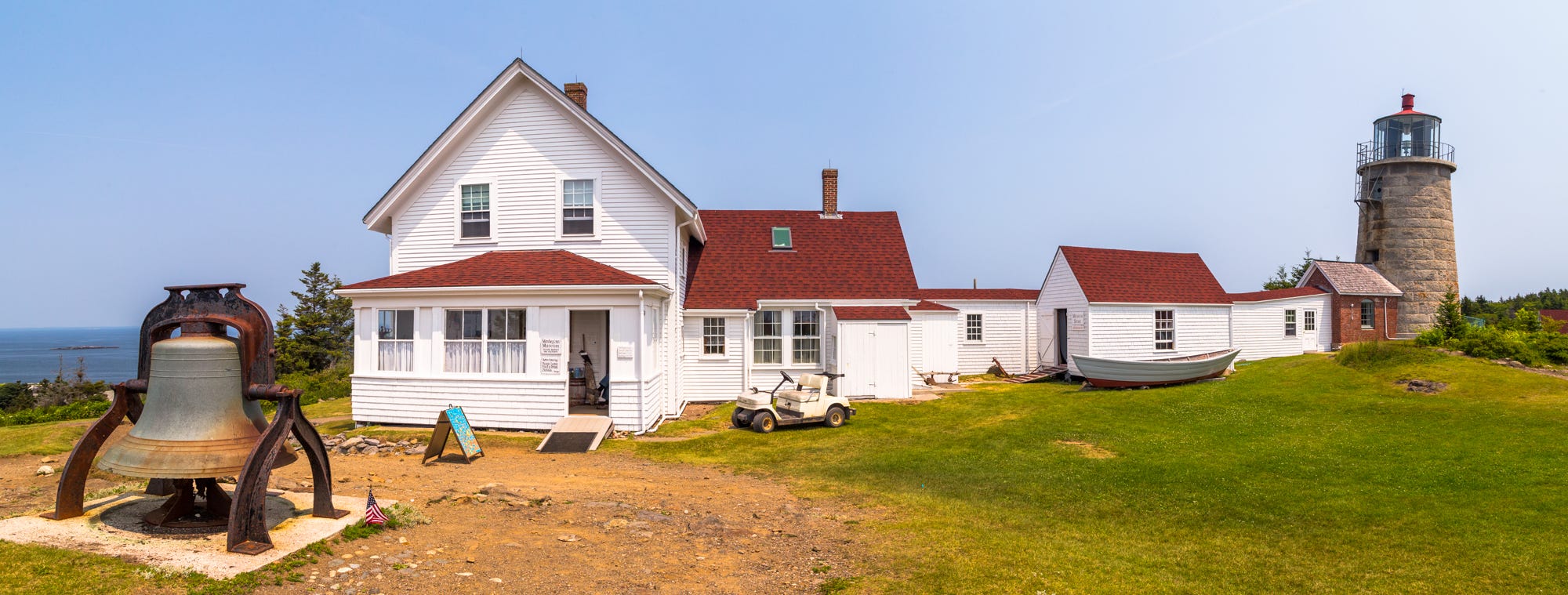
While all of this looks nice for those of you who are visiting the island for the day and not staying overnight, I’m going to show you exactly how powerful golden hour can be.
I had the idea of creating the panorama above on my first visit. The rangy layout of the building seemed perfect for it. Pleased with my results, I sat on this image until my second overnight here, two years later. That evening, the sky was a little different, and I re-visited the idea of making a panorama. The result:
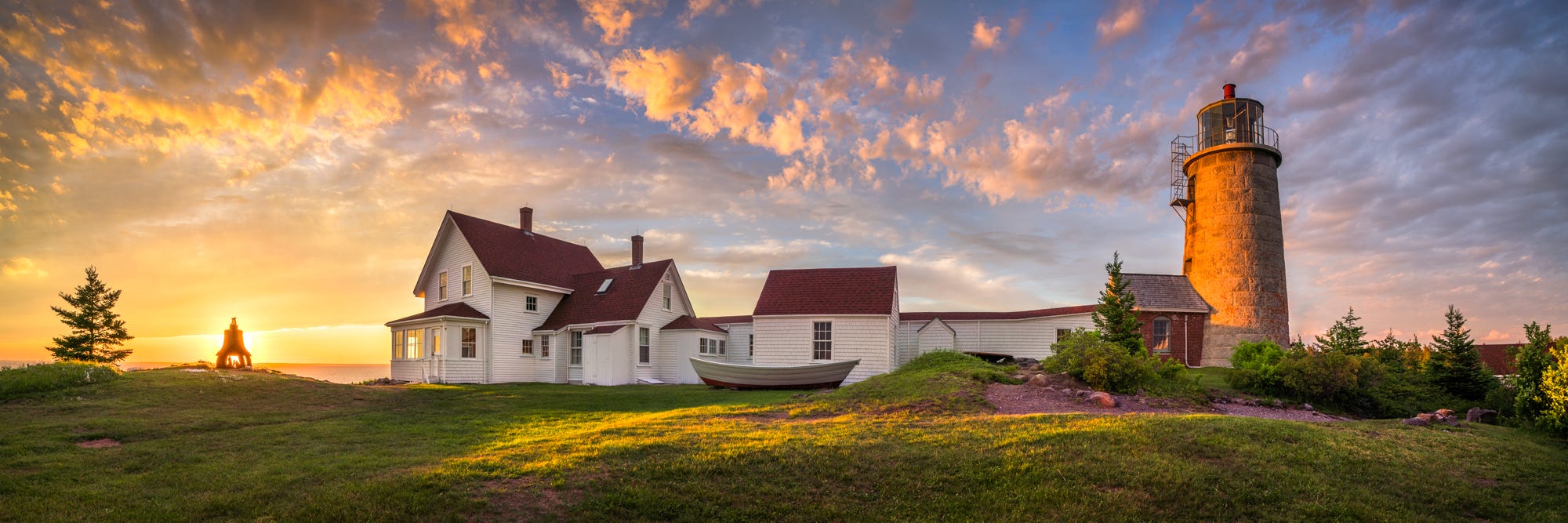
Standing closer to the lighthouse made it more prominent in the frame, and I placed the sun behind the mounted bell so it wouldn’t be so bright. I was pretty excited with how it came out!
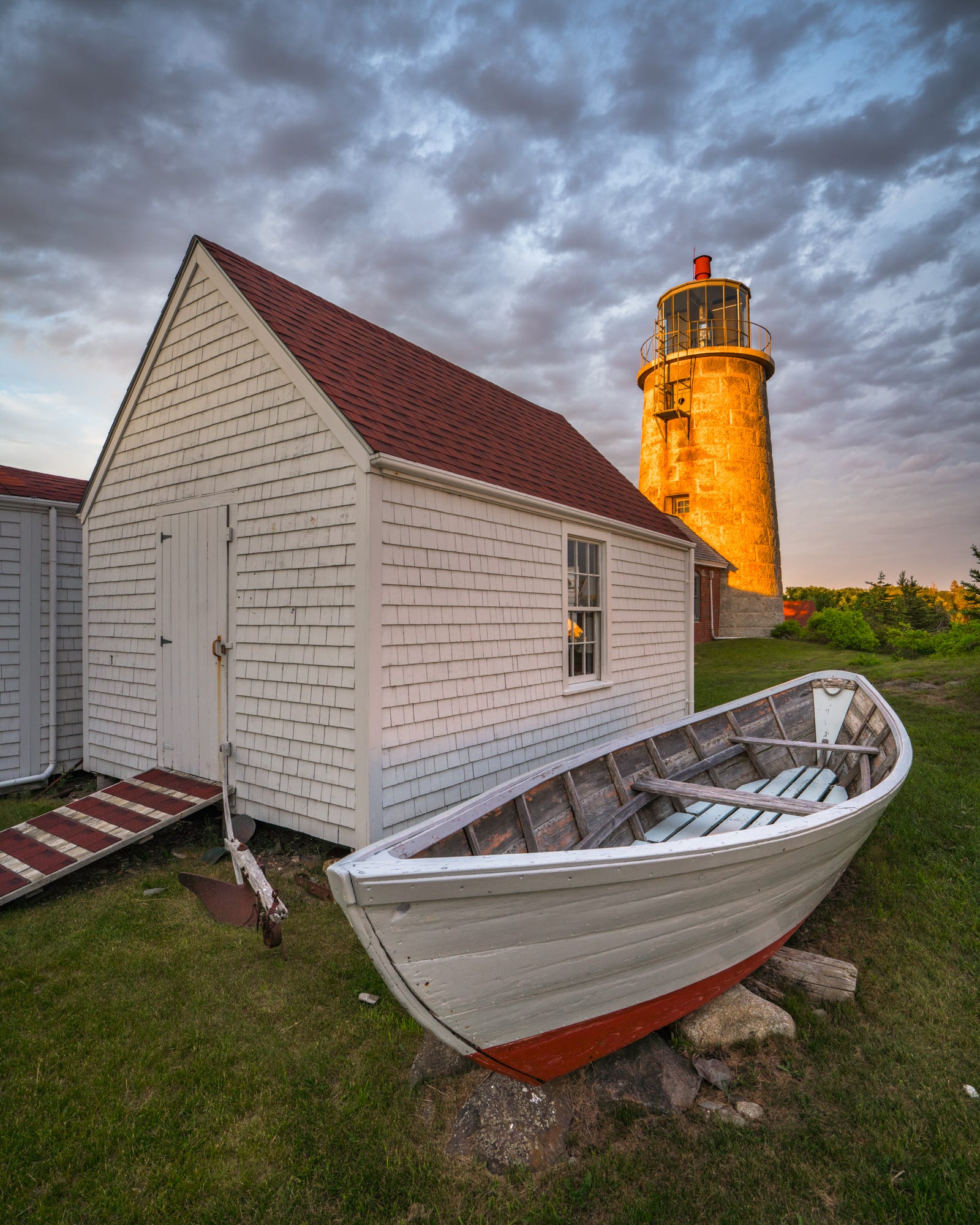
I also developed another idea during this sunset. Standing behind the Fitzgerald Dory, which is parked next to the lighthouse and creates a beautiful part of the scene, I lined it up pointing into the explosive sky.
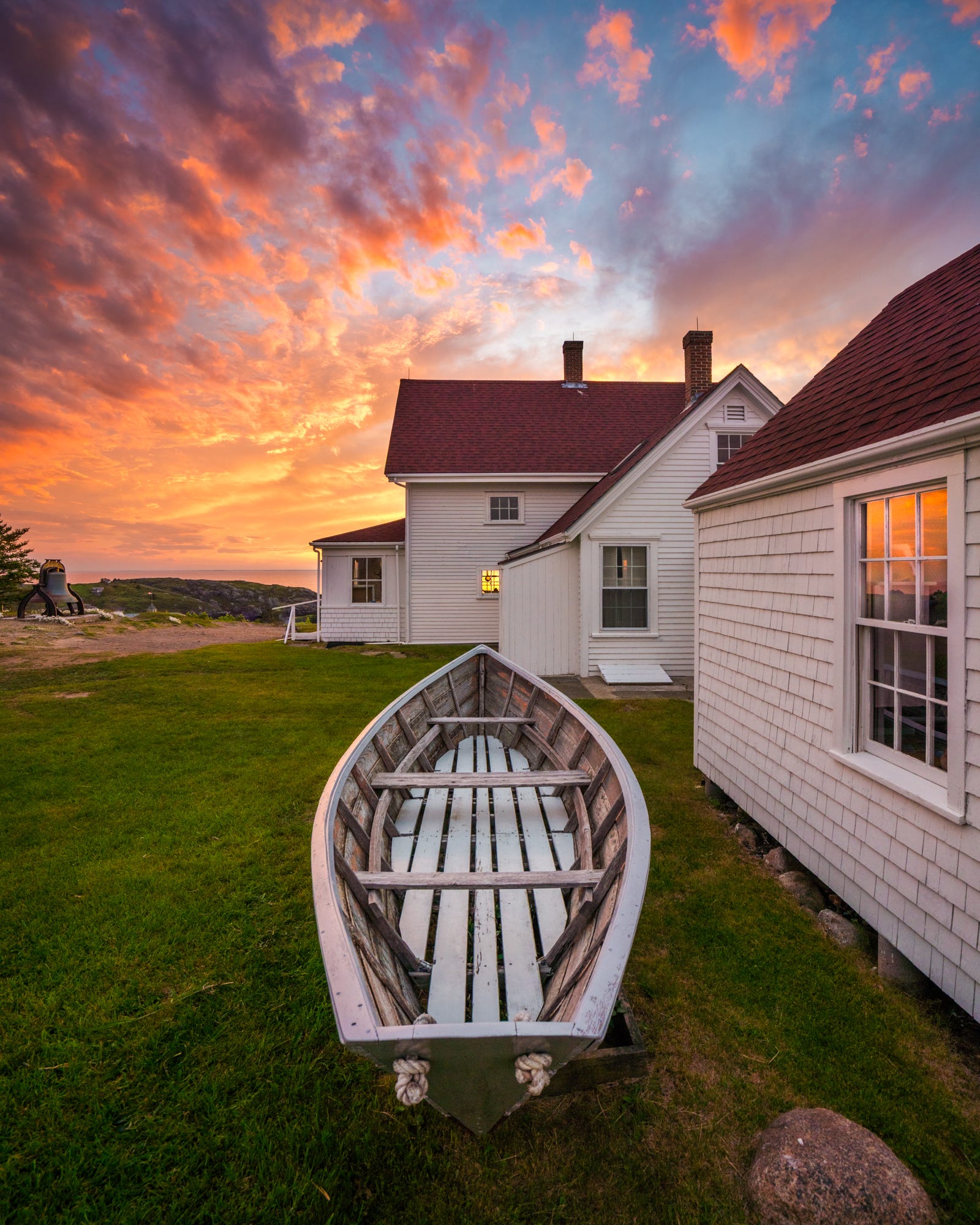
While pleased with the result, I was able to re-visit this idea subsequently during another spectacular sunset, this time as a hurricane was passing by.
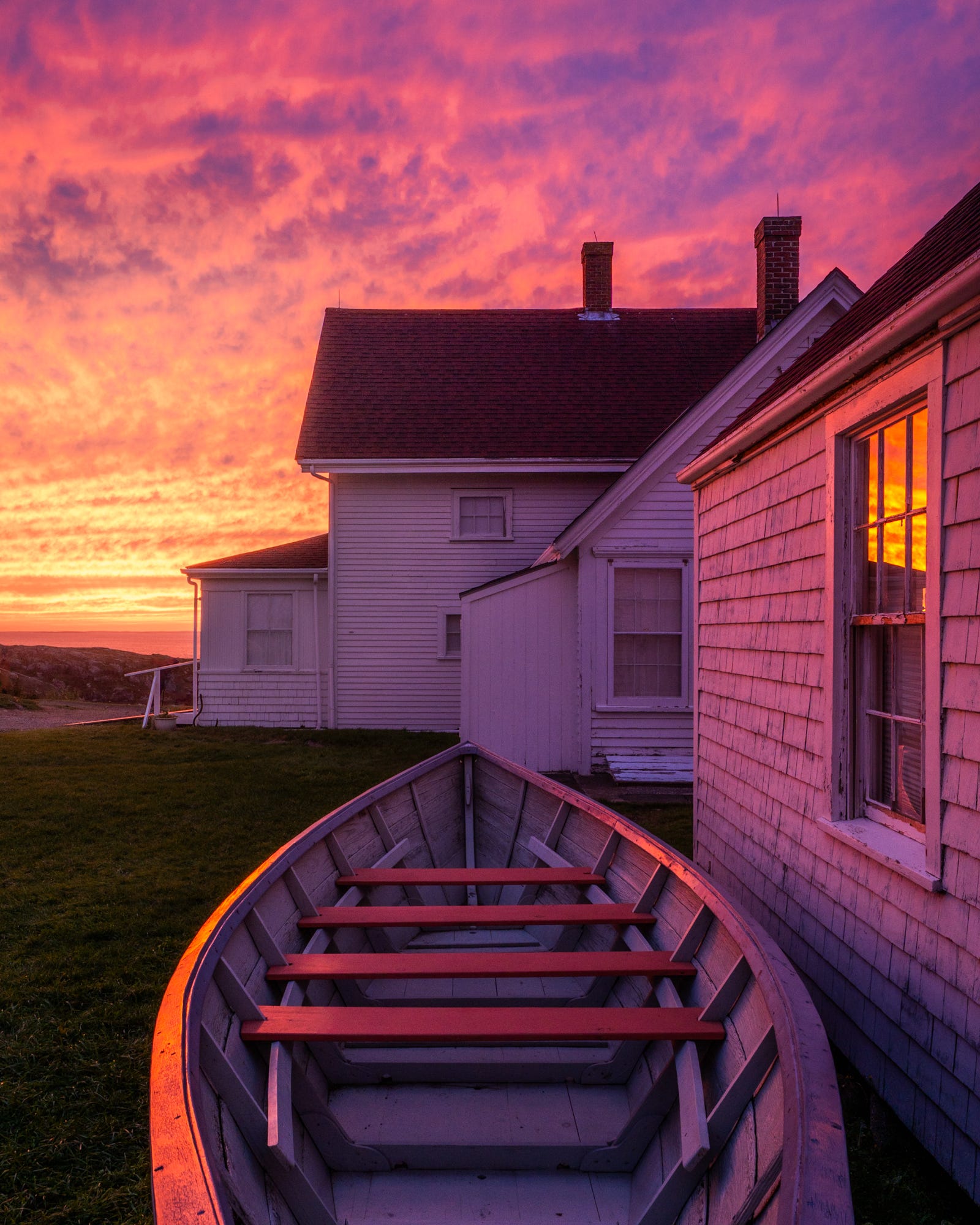
As you can see, the dory was restored and I changed my perspective a little bit, eliminating the back of the boat so that the eye would keep moving and not rest at the bottom of the frame. The glow from that sky did amazing things in the reflections on the gunwales and on the shed.
This all goes to show that repeat visits can help you execute and improve on ideas you might come up with when you are visiting for the first time, or walking around during the day, scouting locations while keeping in mind what they might look like under different conditions.
Moving a few steps forward from the views of the dory above, you get back to the view of the village below. We can see that this improves quite a bit with sunset light, too.
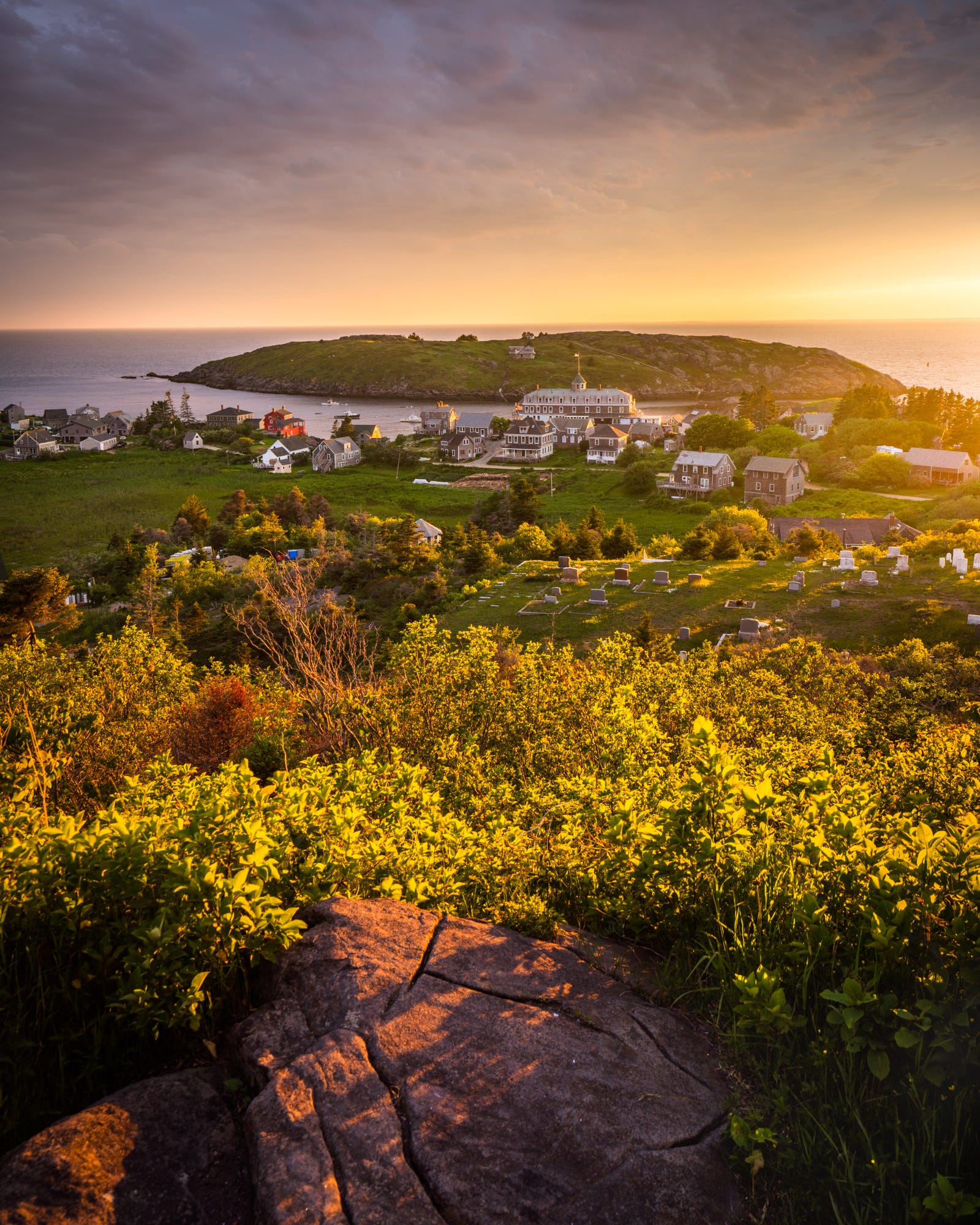
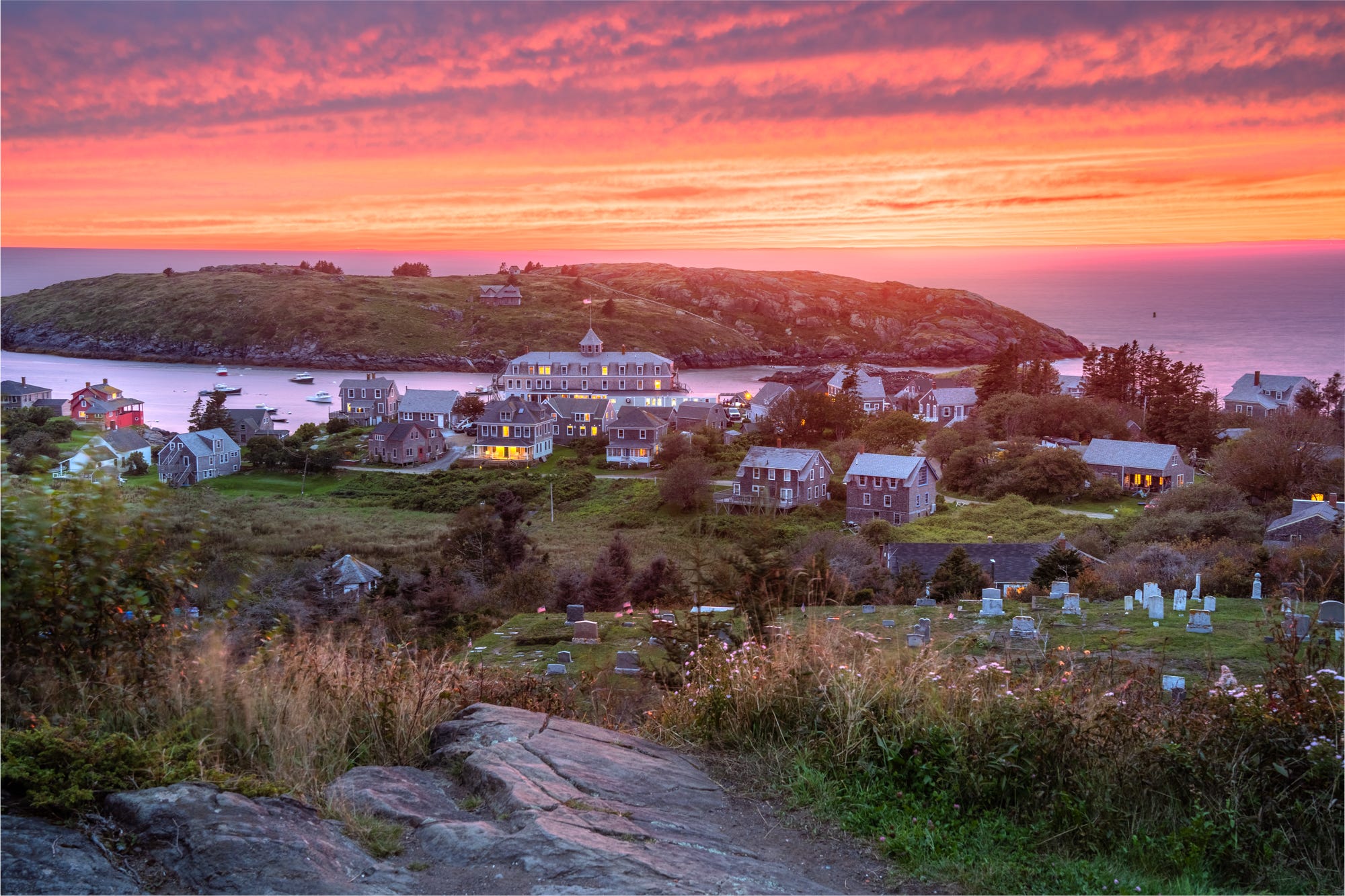
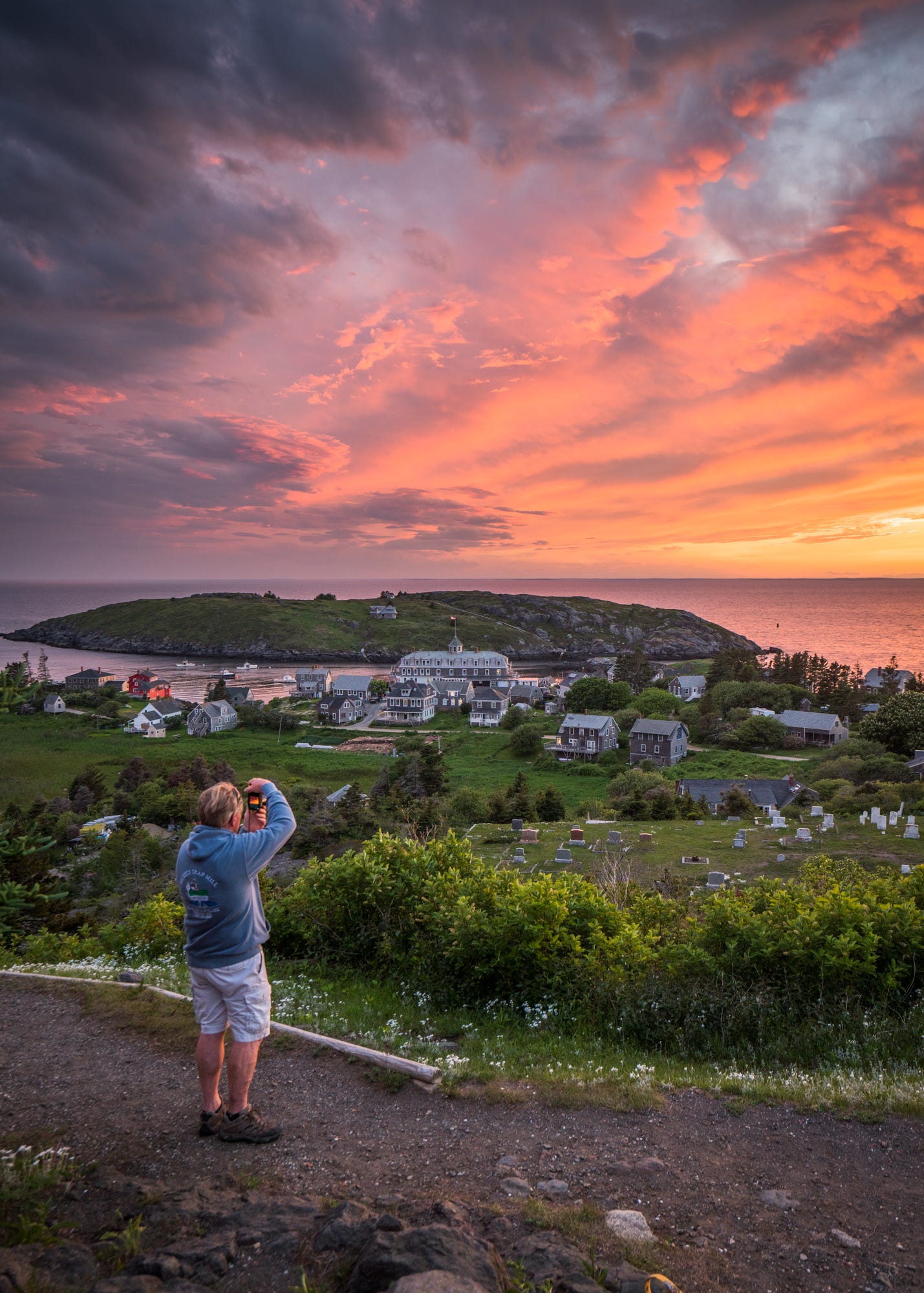
You likely won’t be alone, which is fine. There’s a wonderful sense of camaraderie, especially when the sky does something spectacular.
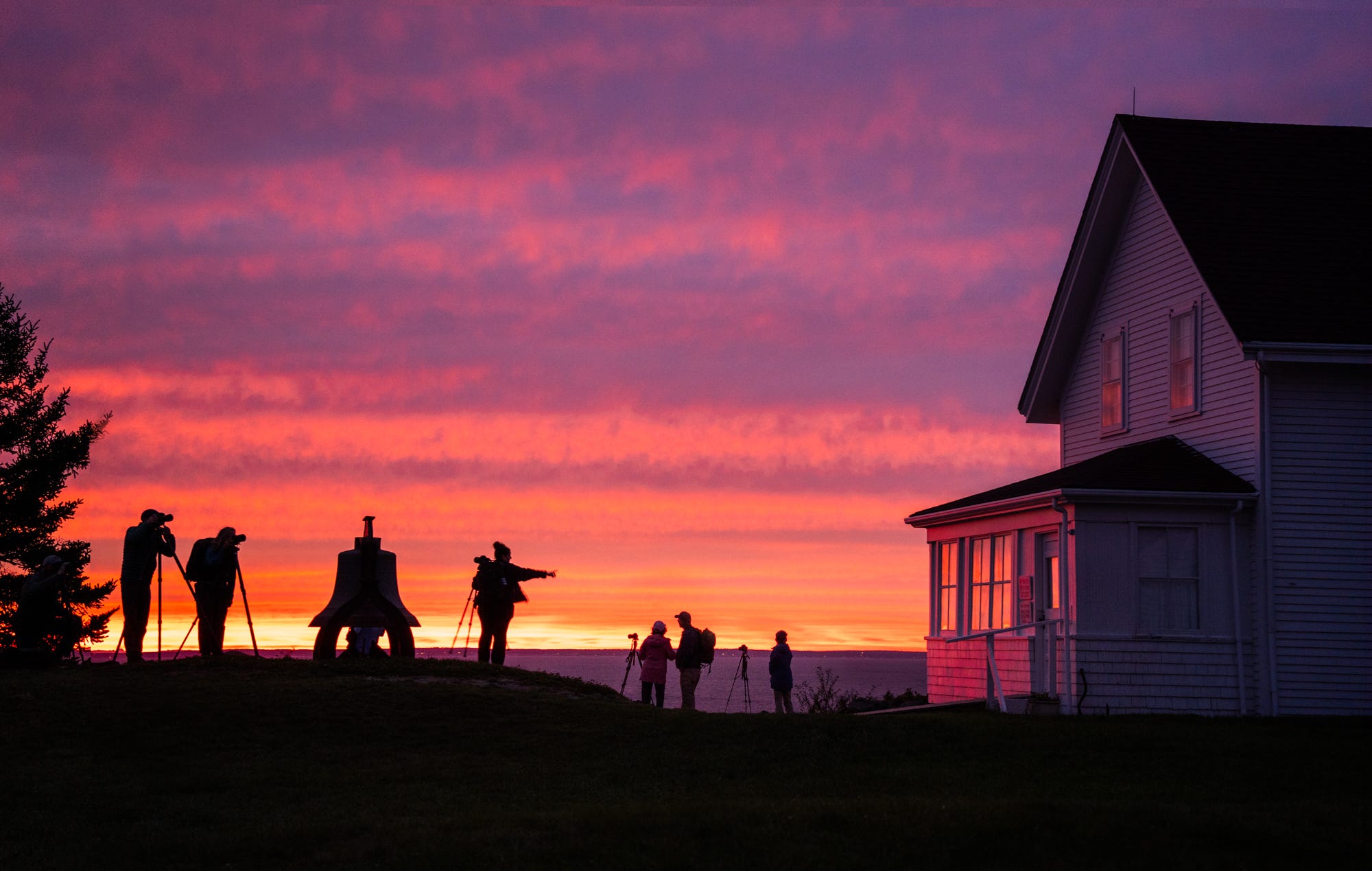
Let’s turn back around, and see what the golden hour looks like looking back at the lighthouse from this angle. Finding interesting arrangements of the elements here, the bell, the boat, and the lighthouse, can be a lot of fun!
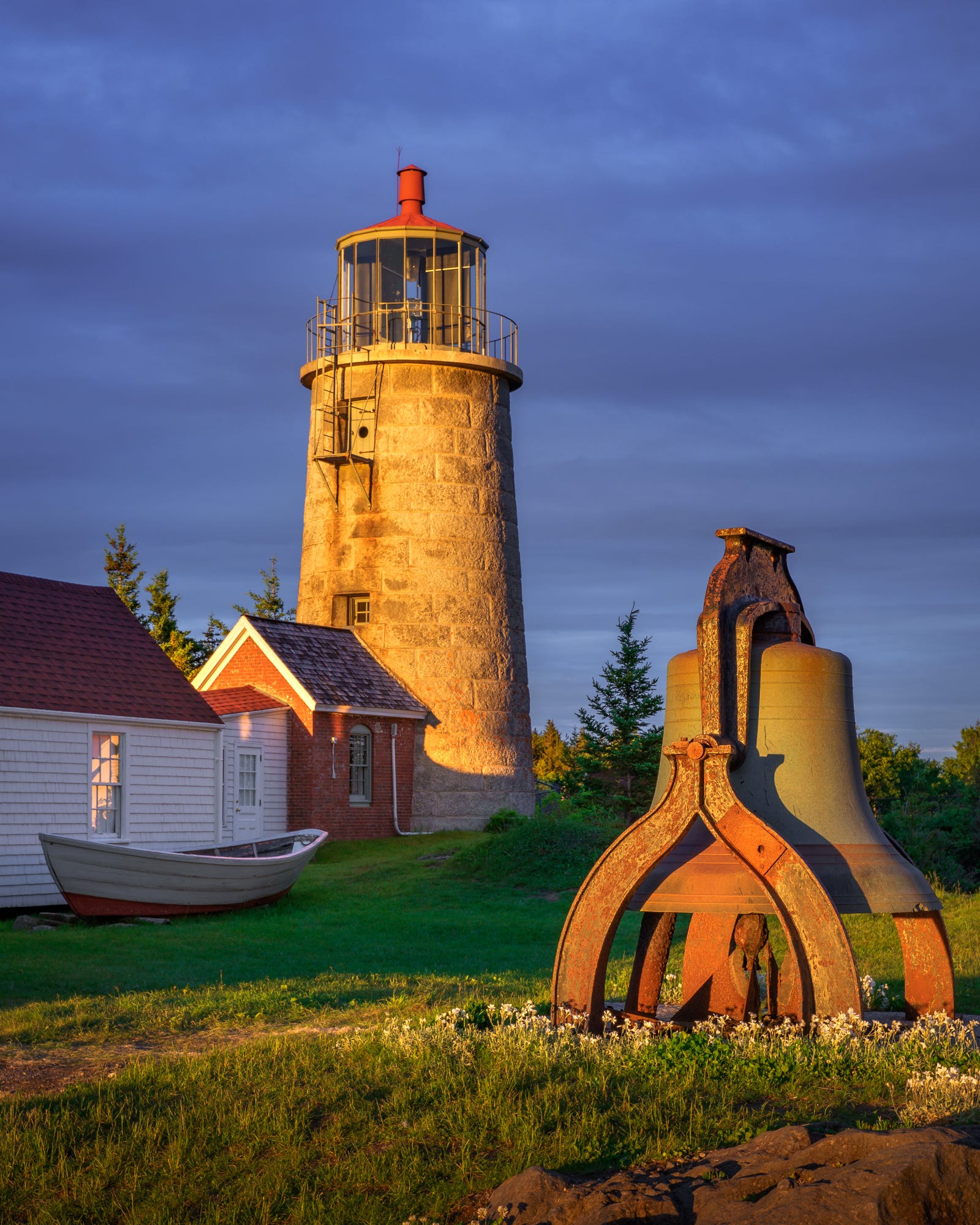
Looking in this direction, your subjects will be front lit, which isn’t too much of a problem, especially if you get a dark and dramatic sky to create contrast.
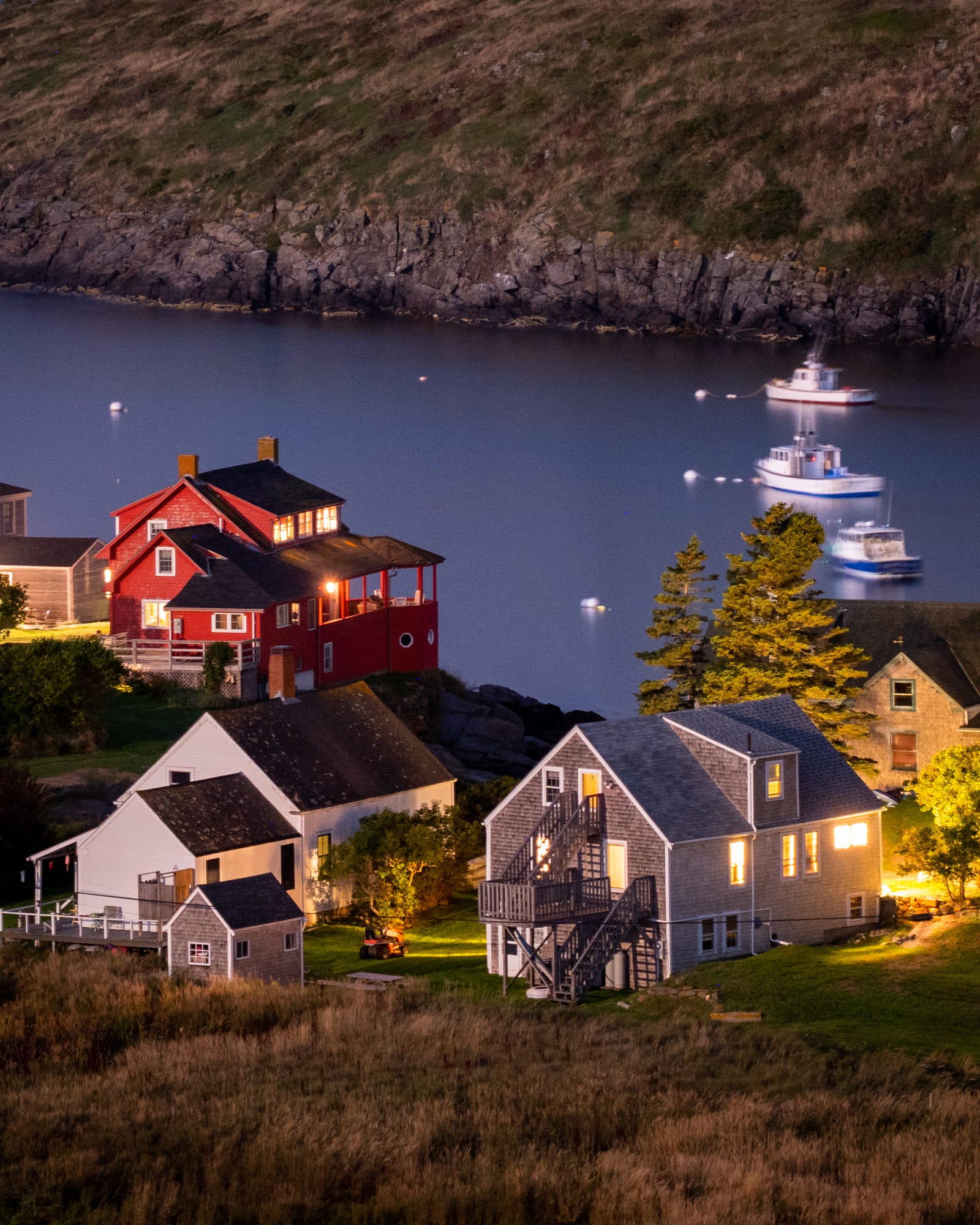
I also like staying past sunset as the lights come on in the village below, creating a beautiful mood and making the iconic red house stand out even more. That’s usually where I’m pointing my camera when I zoom in to 100mm and more.
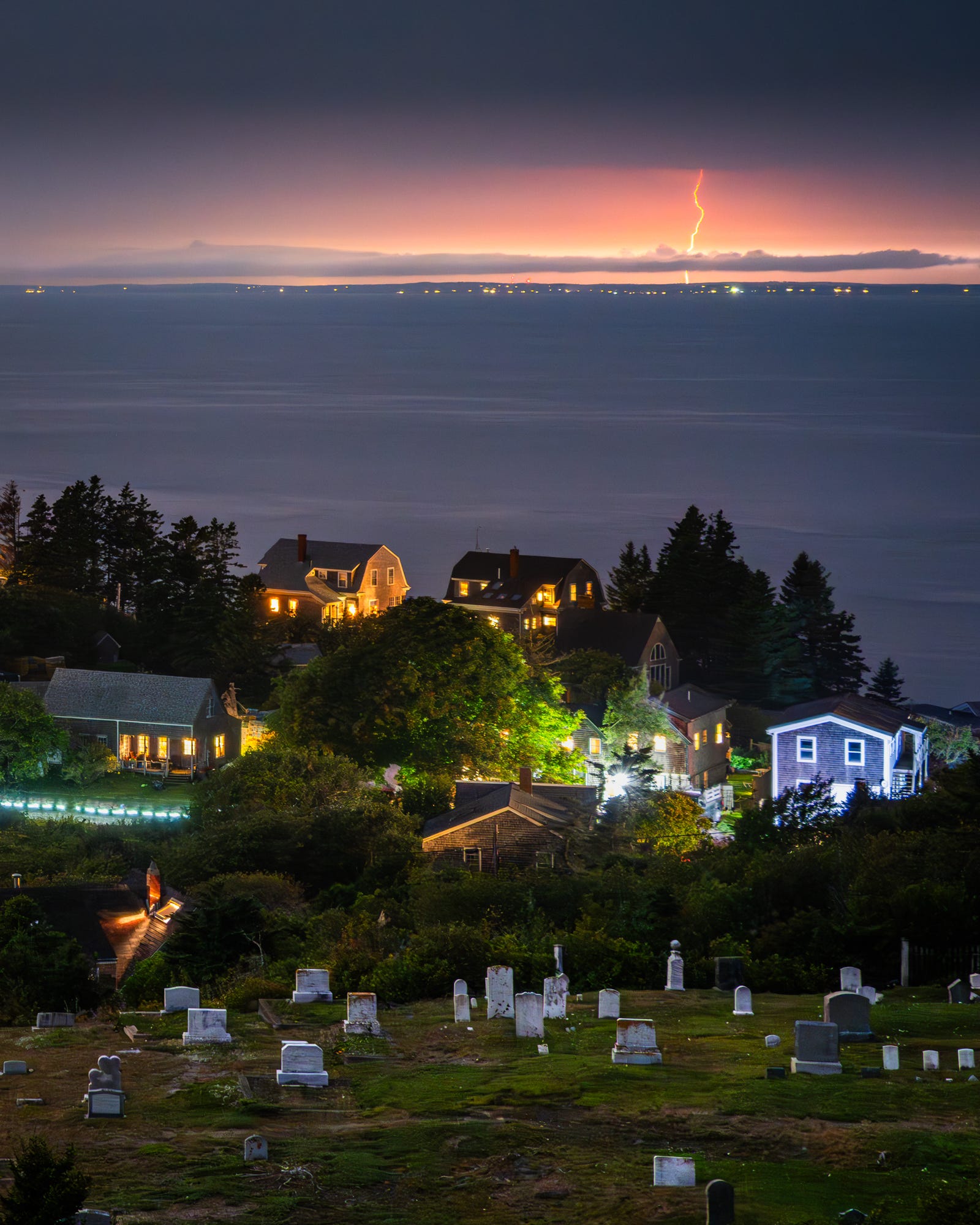
If you’re lucky enough to be here during a summer thunderstorm, this can be a great place to watch them in the distance. Just be sure you aren’t up here when it gets close! In the image below, I’m pointing my camera more to the north, to the right of the Island Inn, and including some of the cemetery in the frame to add to the spooky mood.
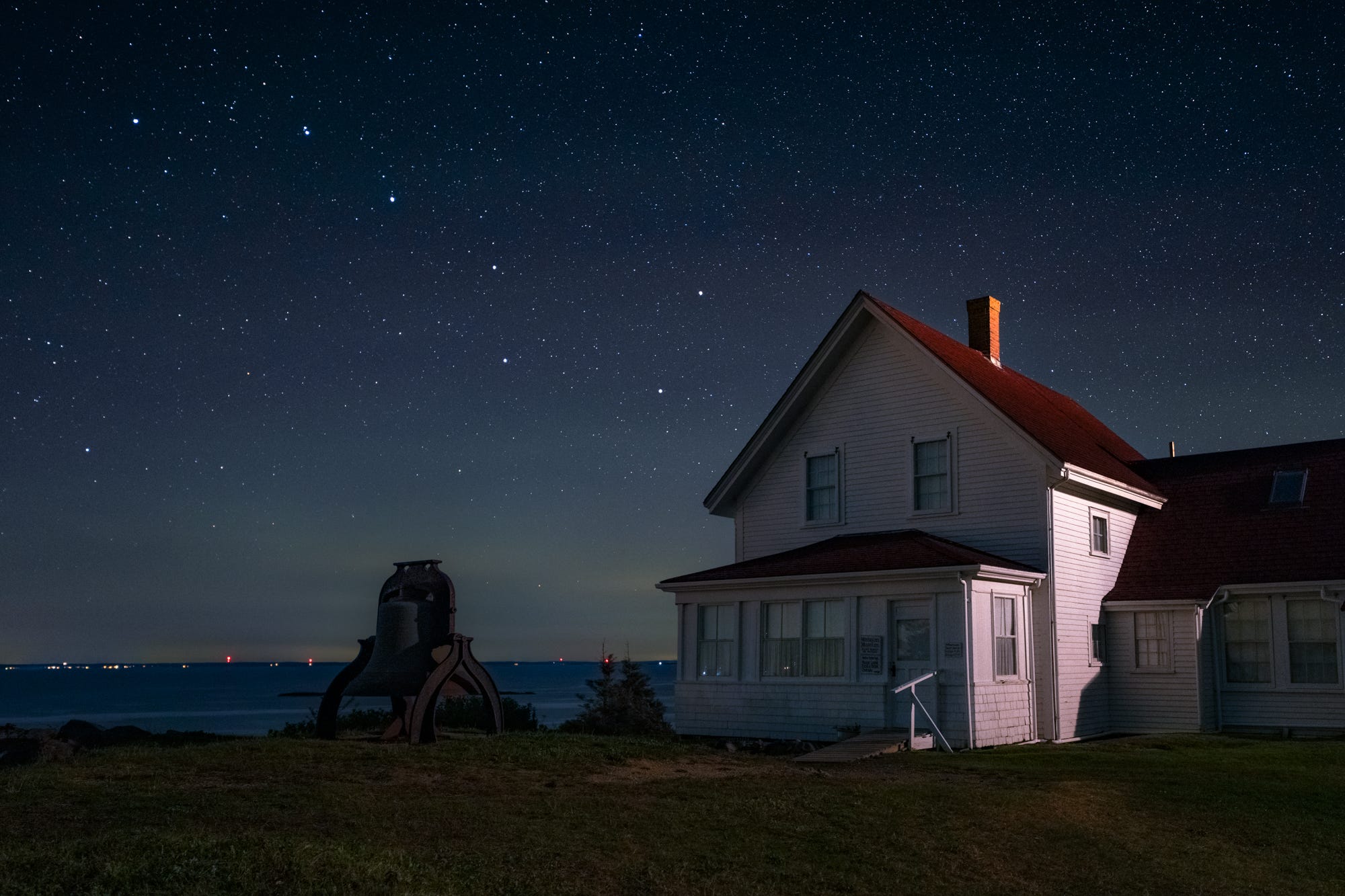
If it’s clear, the stars are pretty amazing at night in this very dark place. I loved lining up the big dipper next to the keeper’s house in the image below.
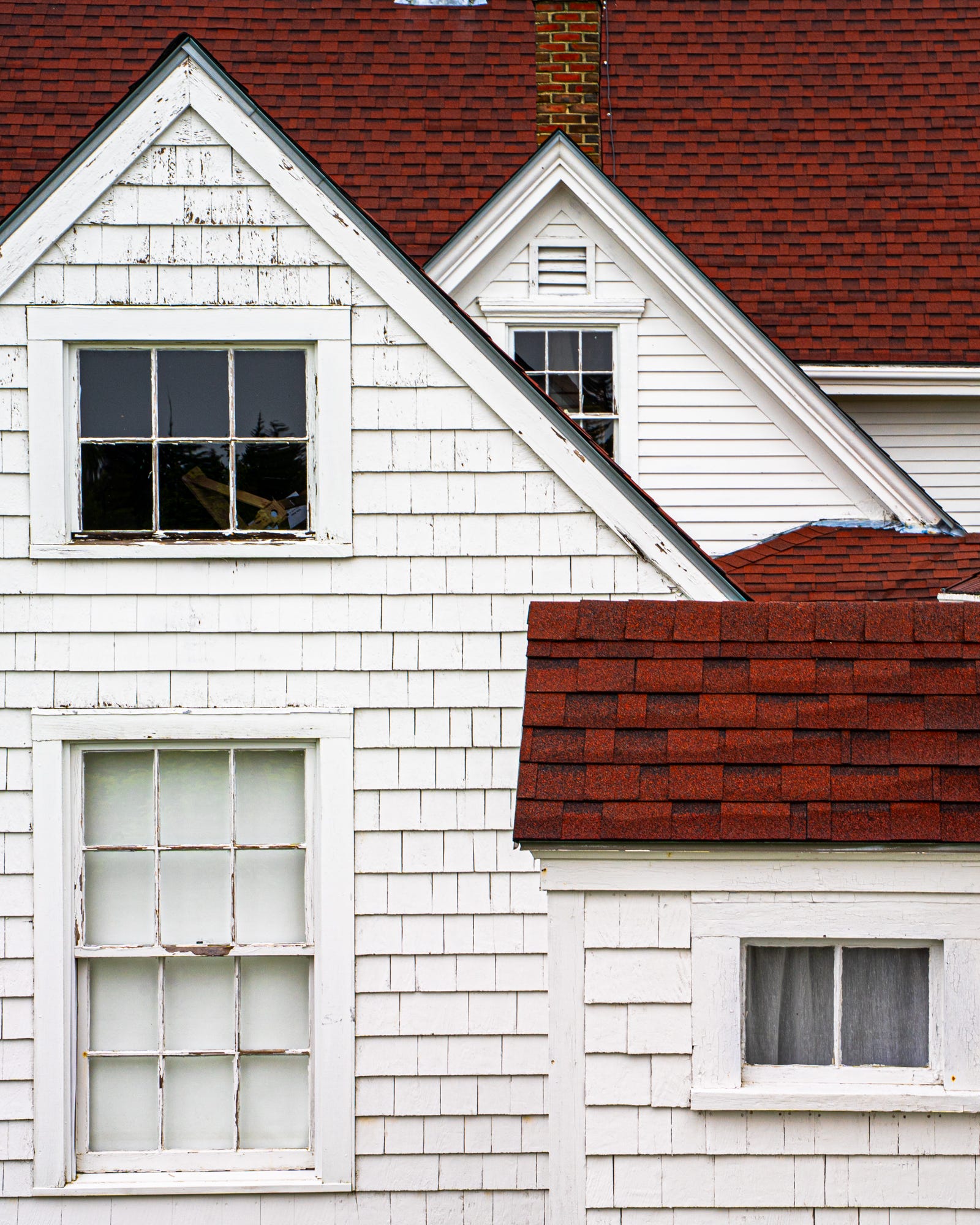
Can you believe all of the images above are from an area no more than 10 yards apart? While it seems like I’ve exhausted all possibilities, I’m still finding more details and other ways of ‘seeing’ up here. I’m sure you can come up with something unique!
Best Times of Day: Sunset and evening twilight are my favorite times to be up here. I’ve been up several times for sunrise, but the way the light falls on the scene this time of day isn’t nearly as flattering.
Best Times of Year: Spring/Summer/Fall. That’s going to be a recurring theme. Unless there are spring flowers to take advantage of, these scenes all look great any time of year. I don’t add winter because the ferry only runs twice a week in the winter and everything is closed, since there are just 40 or so winter residents.
Tides: N/A
Access: The walk up the hill from the ferry landing is surprisingly steep. Take your time getting up here!
Comments
Nothing yet. Say the first thing.
Sign in to join the conversation.