
A lot of investors come to me with a lease showing $1,500 a month and assume that’s what the underwriter will use to calculate their DSCR. I get it. It says $1,500 right there on the paper.
But the underwriter is using a completely different number. And if you don’t know which one before you run your deal, you’re going to get blindsided.
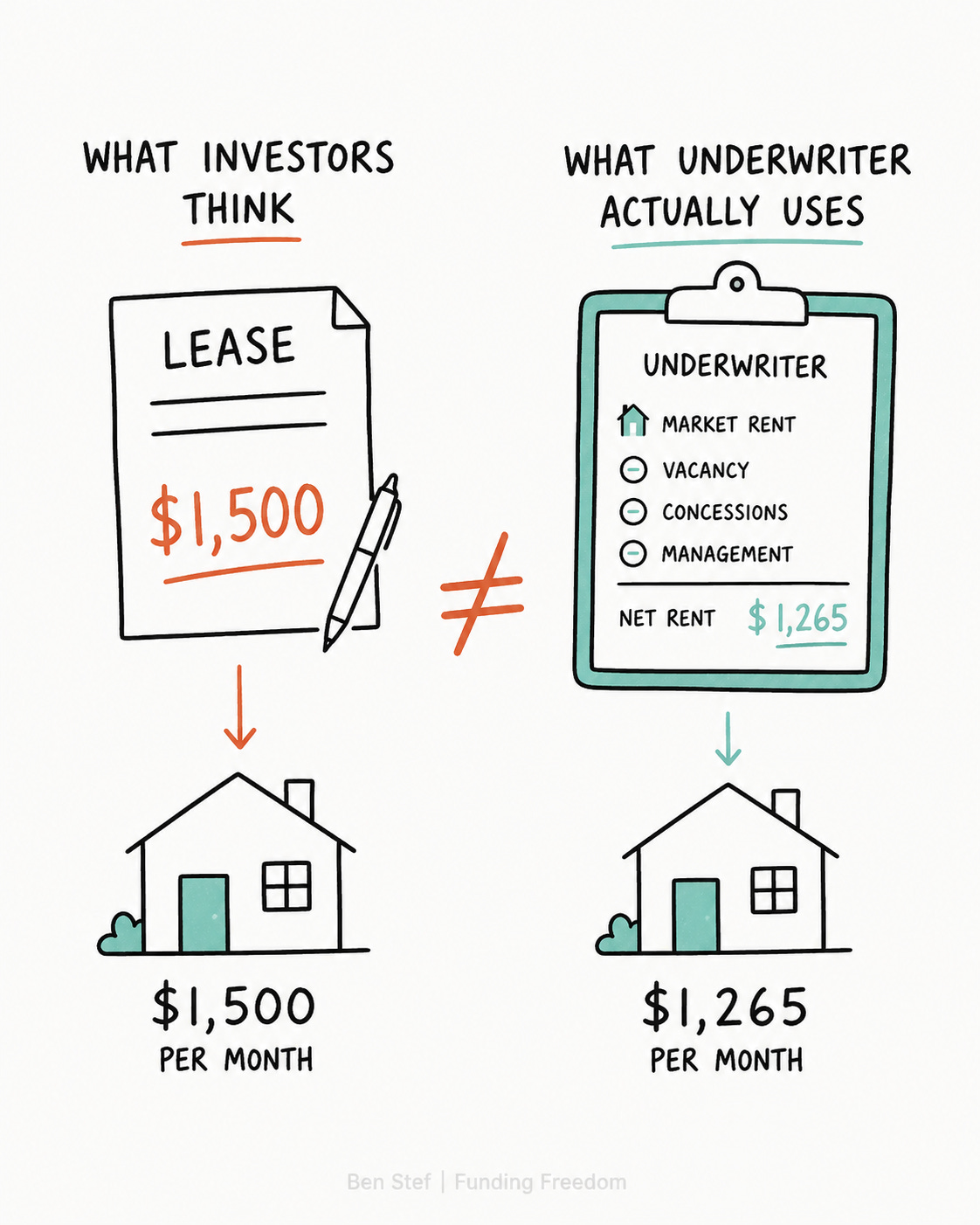
Here’s How It Actually Works
DSCR is your gross rent divided by your full mortgage payment. Principal, interest, taxes, insurance, and HOA if there is one. Land at 1.0 or above and you’re in decent shape. Drop below that and the deal gets much harder.
Now here’s the part that catches most investors off guard. The underwriter takes the lower of two numbers: your lease amount or the appraiser’s market rent estimate. Your lease says $1,500, the appraiser says $1,300, they’re going with $1,300.
Want them to use the higher number? You need two months of bank statements showing that $1,500 actually hit your account. A signed lease by itself proves nothing to them.
And if the property is vacant, there’s no lease to argue with at all. The appraiser’s number is your number, full stop.
Same deal with a brand new lease. If the tenant just signed last week, they want proof the tenant actually paid. First month’s rent, the deposit, statements showing the money came in. A signed lease on its own does nothing.
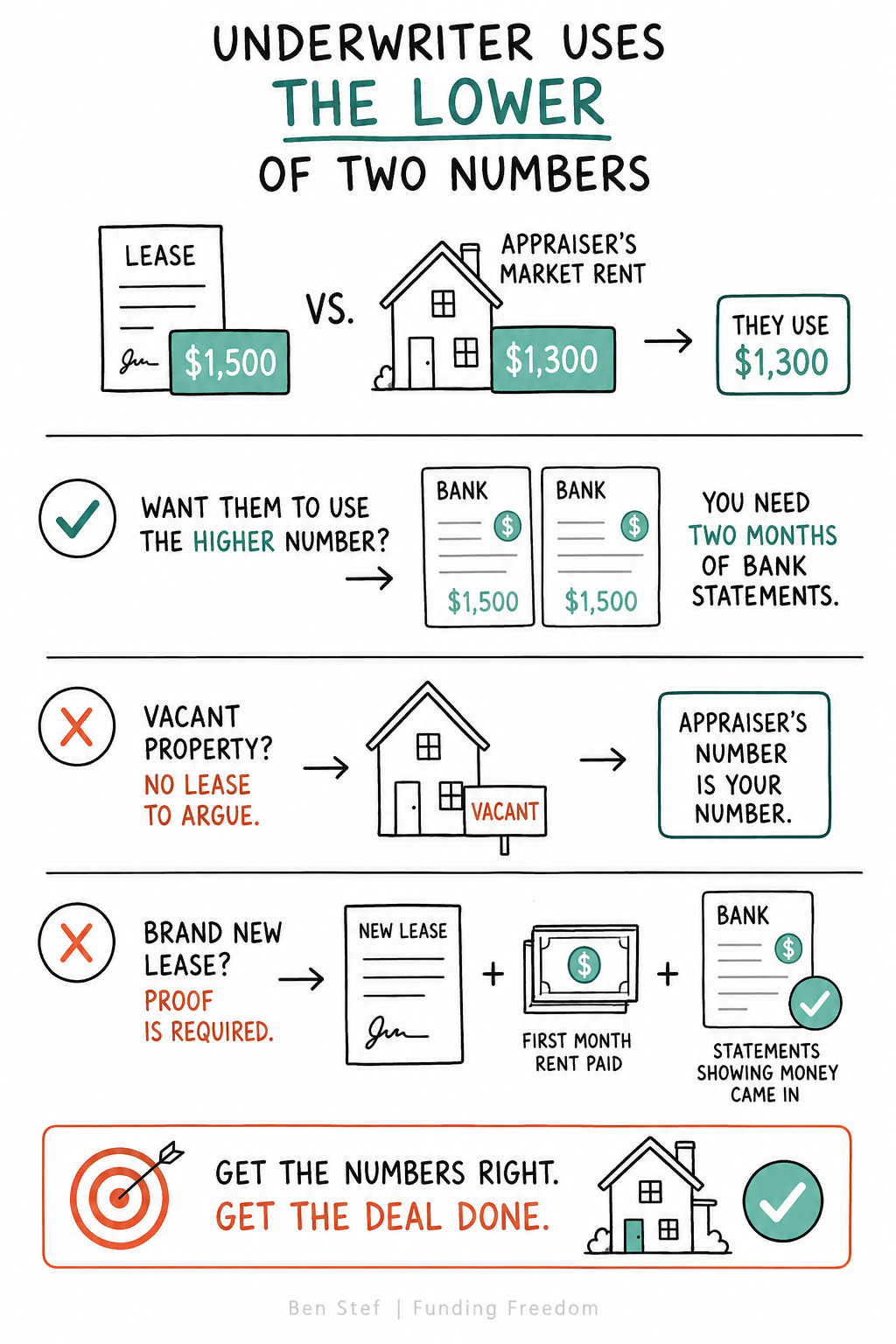
Run your ratio on the appraiser’s number first. That’s the number that actually decides your deal.
If you want help running your DSCR numbers before you go under contract, just message me.
Watch: What Is a DSCR Loan? (Explained for Beginners) and learn how investors qualify using the property's rental income instead of their personal income.
Ben Stef, Mortgage Advisor | NMLS# 2018674
Comments
Nothing yet. Say the first thing.
Sign in to join the conversation.