
The effects of caffeine consumption do not decay with a ~5 hour half-life. A profile of my new favorite drug, paraxanthine, a metabolite of caffeine that has a shorter half life.
more than 80% of circulating caffeine is metabolized into paraxanthine, which has a comparable binding affinity at adenosine receptors to caffeine itself. Paraxanthine then has its own 3-5 hour half-life as it’s metabolized into a handful of other things.
I’ve substituted paraxanthine for coffee for the past week and a half, and while I’ll share a full trip report in a few weeks, for now I endorse it as a much better version of caffeine, giving me the energy without the restlessness or sleep problems.
Clone any YC company for $1,000. YCaas.lol bills themselves as a software shop that takes general SaaS software - Cursor, Slack, etc. - and recreates them as bespoke, purchasable software, which they commit to keeping up to date.
There are obvious areas where this doesn’t get you the full experience - network effects being the standout - but given how much of SaaS software is in fact just software with no real support, I think this is a good play. Though I wonder for how long: a fully automated Claude Code should do this pretty well too, and undercut them.
It’s a pretty clear example of the disruption-of-SV thesis from AI coding. If a fast-follow can replicate a startup’s product cheaply, then the upfront R&D and exploration of a startup becomes hard to justify. It’s kind of like how if you don’t have patents for drugs, you wouldn’t see investment in the earlier research.
Half A Month Of Consolation Writing Advice. Scott Alexander provides writing tips, always a source of specific and general inspiration
If everything good in writing comes from contact with the world, then your goodness is proportional to how direct your contact is.
My ex has been blogging about her experiences after having been diagnosed with cancer. I’ve always enjoyed her writing, but I’ve also noticed that it has, around the same time as her diagnosis, become incredibly compelling. It’s not like all of a sudden she leveled up in sentence rhythm and the strategic use of the stress positions; rather she’s very much in contact with the world (the world in all its fucked up badness) and writing about it honestly, which is inspiring and makes for good posts. Truly courage is the heart of all other virtues.
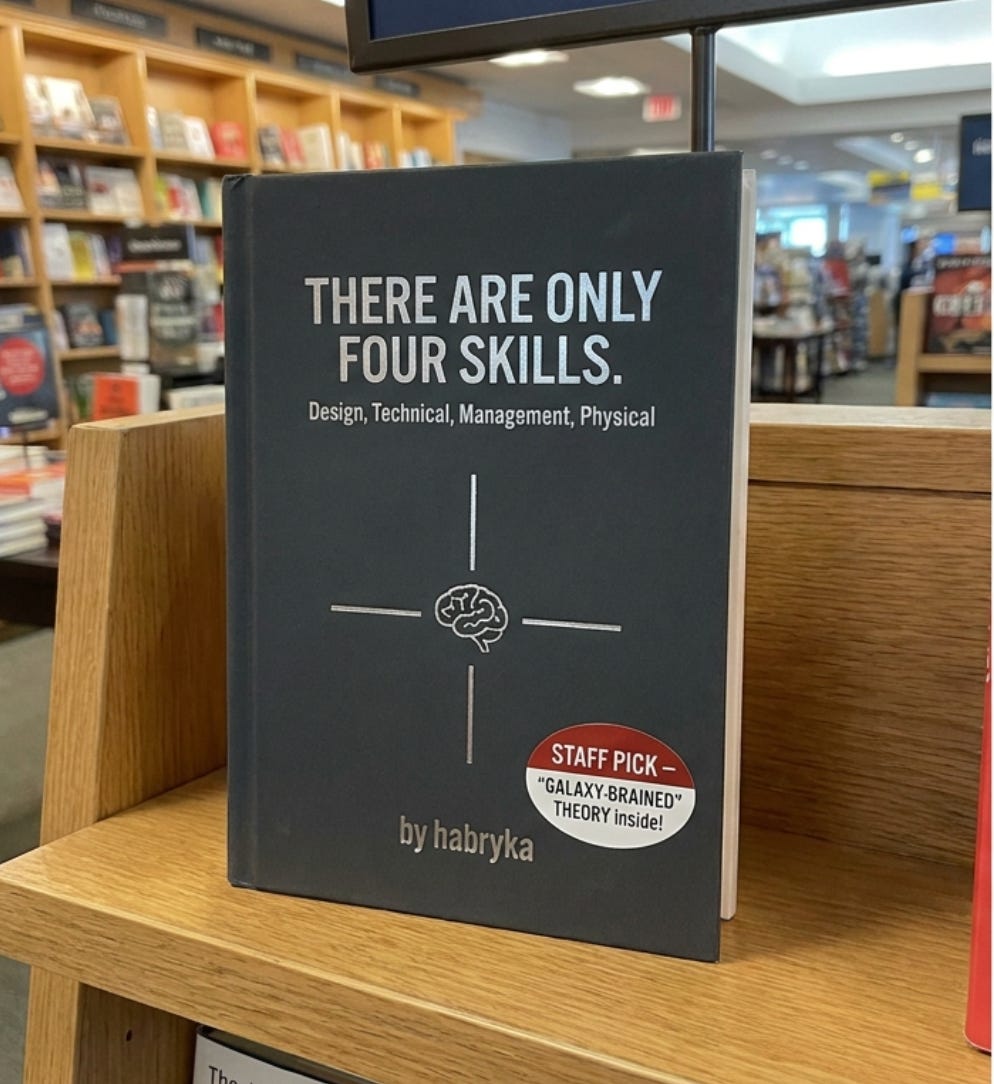
There are only four skills: Oliver Habryka proposes that all career relevant skills in fact decompose to four fundamental ones:
Design skills: The ability to make good frontend design decisions, writing and explaining yourself well, designing a room, writing a good legal defense, knowing how to architect a complicated software system
Technical skills: Follow and perform mathematical proofs, know how to program, make Fermi estimates, make solid analytic arguments, read and understand a paper in STEM, follow economic arguments, make a business plan, perform structural calculations for your architectural plans
Management skills: Know how to hire people, know how to give employees feedback, generally manage people, navigate difficult organizational politics
Physical skills: Be expert level at any sport, have the physical dexterity to renovate a room by yourself, know how to dance
If you are good at any task in any of those categories, you can become expert-level within 6 months at any other task in the same category.
Here’s what NanoBanana thinks it would look like if this blog post were one of those business books you see at an airport.
Current AIs seem pretty misaligned to me. Ryan Greenblatt describes his experiences with AI and the degree to which, contra arguments that there's been a lot of alignment progress, many current AIs fail the common-sense test of alignment.
Current AI systems seem pretty misaligned to me in a mundane behavioral sense: they oversell their work, downplay or fail to mention problems, stop working early and claim to have finished when they clearly haven't, and often seem to "try" to make their outputs look good while actually doing something sloppy or incomplete.
This hasn’t been my experience - I’ve encountered very few examples of sandbagging or shirking. But then again I’m mostly doing in-distribution work - “hey Claude could you make sure this email makes me look smart” - while Ryan is pushing the frontier of getting AIs to do stuff.
Automated Weak-to-Strong Researcher. Related, an Anthropic report on their experiment in automating alignment research through autonomous researcher agents that propose ideas, run experiments, and iterate on an open research problem.
We built autonomous AI agents that propose ideas, run experiments, and iterate on an open research problem: how to train a strong model using only a weaker model's supervision. These agents outperform human researchers, suggesting that automating this kind of research is already practical.
A recurring lesson from building AARs is that less imposed structure leads to better performance.
Of course, if this can scale empirical safety research it’s also going to be useful for other types of research, including improvements to AI capabilities.
AARs could discover ideas that humans would not have considered, thus broadening our exploration space in science. However, we still need to verify whether the ideas and results are sound.
+1 to that last point.
Claude Design: I discussed this some in my Canonical Hours app writeup - its an incredible front end design tool. I used it to create a new personal website, and it easily surpassed anything I’d have been able to design. It’s also extremely fun. Related: Pliny leaked the prompt, which contains good advice for all of us:
When designing, asking many good questions is ESSENTIAL.
Sidestepping Evaluation Awareness. Evaluation awareness is a tendency for smarter AI models to know that they are being tested, which calls into question whether the AIs might pretend to be aligned when they are being tested, and be misaligned in production.
OpenAI created a new pipeline that uses de-identified1 user conversations to find misbehavior, then turns the representative data into new evals, which results in much more realistic evaluations.
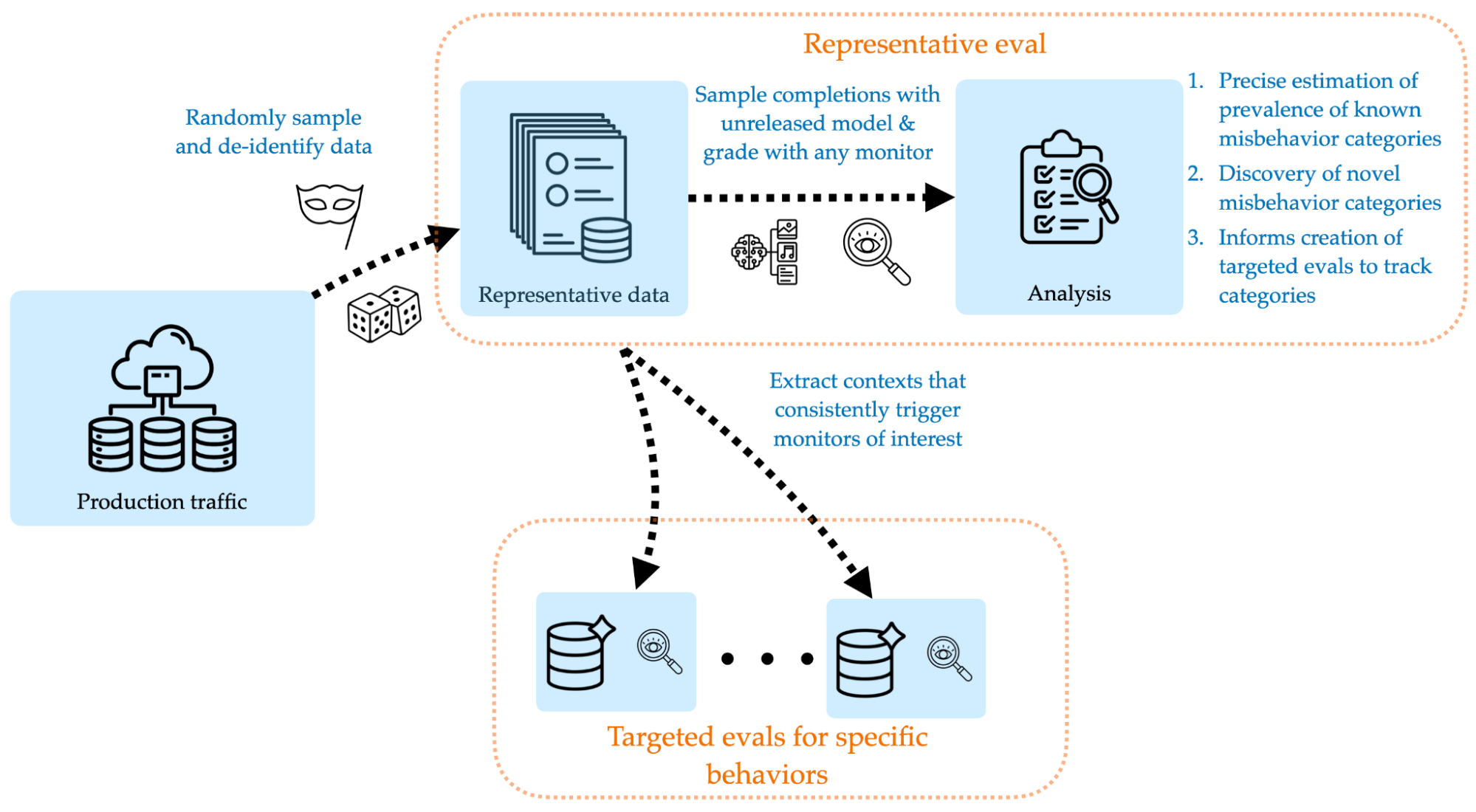
This seems basically necessary as models get smarter. As a downstream consequence, it might make it harder for third-party evaluators to do their work without greater access to frontier lab data to create less-gameable evaluations.
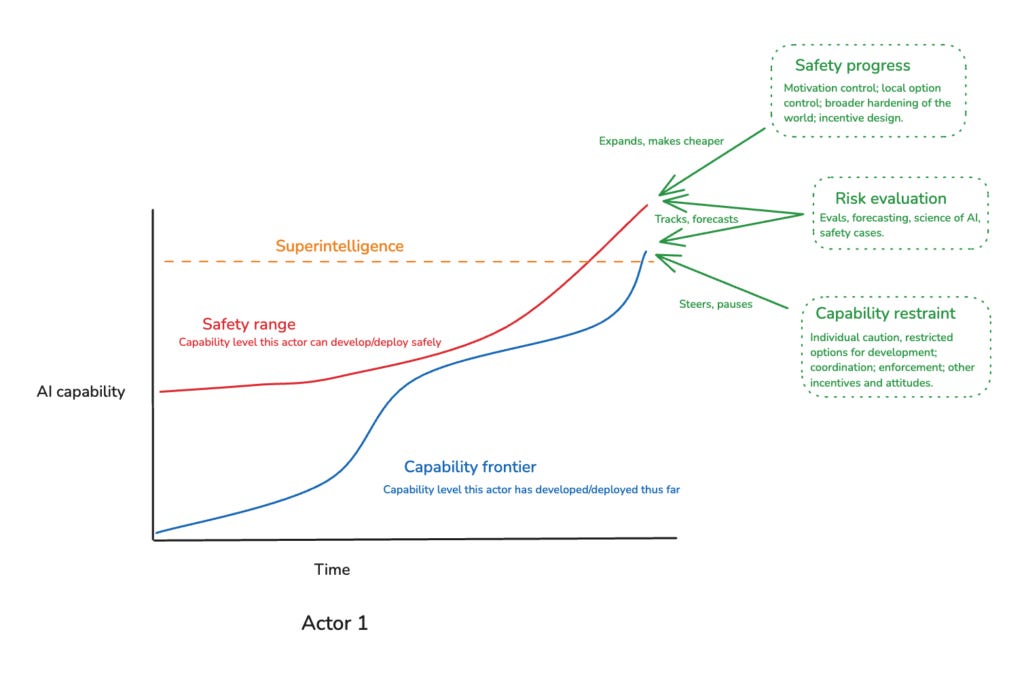
On restraining AI development for the sake of safety: Joe Carlsmith provides a fairly comprehensive overview of tradeoffs and arguments for and against pausing AI development to improve safety.
I think the case for idealized forms of capability restraint – and especially, for giving ourselves the option to engage in capability restraint if we get stronger evidence that it’s necessary for safety (i.e. “building the brakes”) – is quite strong. That is, I think a wiser and more coordinated civilization would likely be employing quite a lot of capability restraint in building advanced AI, especially as we start to approach transformatively powerful systems
Project Deal: our Claude-run marketplace experiment. Anthropic ran an experiment where they used AI intermediaries to bargain between employees. They had different instances of Claude, trained to represent individual employees interests, listing and buying and selling from one another, basically an AI powered Craigslist.
Our AI agents struck 186 deals at a total transaction value of just over $4,000. To our surprise, participants were very enthusiastic about the experience—they even stated a willingness to pay for a similar service in the future.
We found that agent quality does make a difference: people represented by “smarter” models got objectively better outcomes. Yet our post-experiment survey found that those with weaker models didn’t notice their disadvantage.
Compute advantages translating into material advantages in negotiation is a non-surprising but important finding.
Notice your limp heart until it becomes a rose-colored meteor. Sasha Chapin gives loving kindness meditation tips, many of which I’ve found helpful:
Take the emotions that already sweeten your life in small quantities, and notice that they multiply when given delicate attention. If the phrase “may all beings be happy” has zero here-and-now resonance for you, ignore it. Instead, pick up the appreciation for how music sounded when you were in college.
Flipbook. Traverse the world wide web with image generation. An agentic search feature combined with an image generator redirects your “search queries” into custom image prompts for the information. For instance, here’s “flights to Japan next week”:
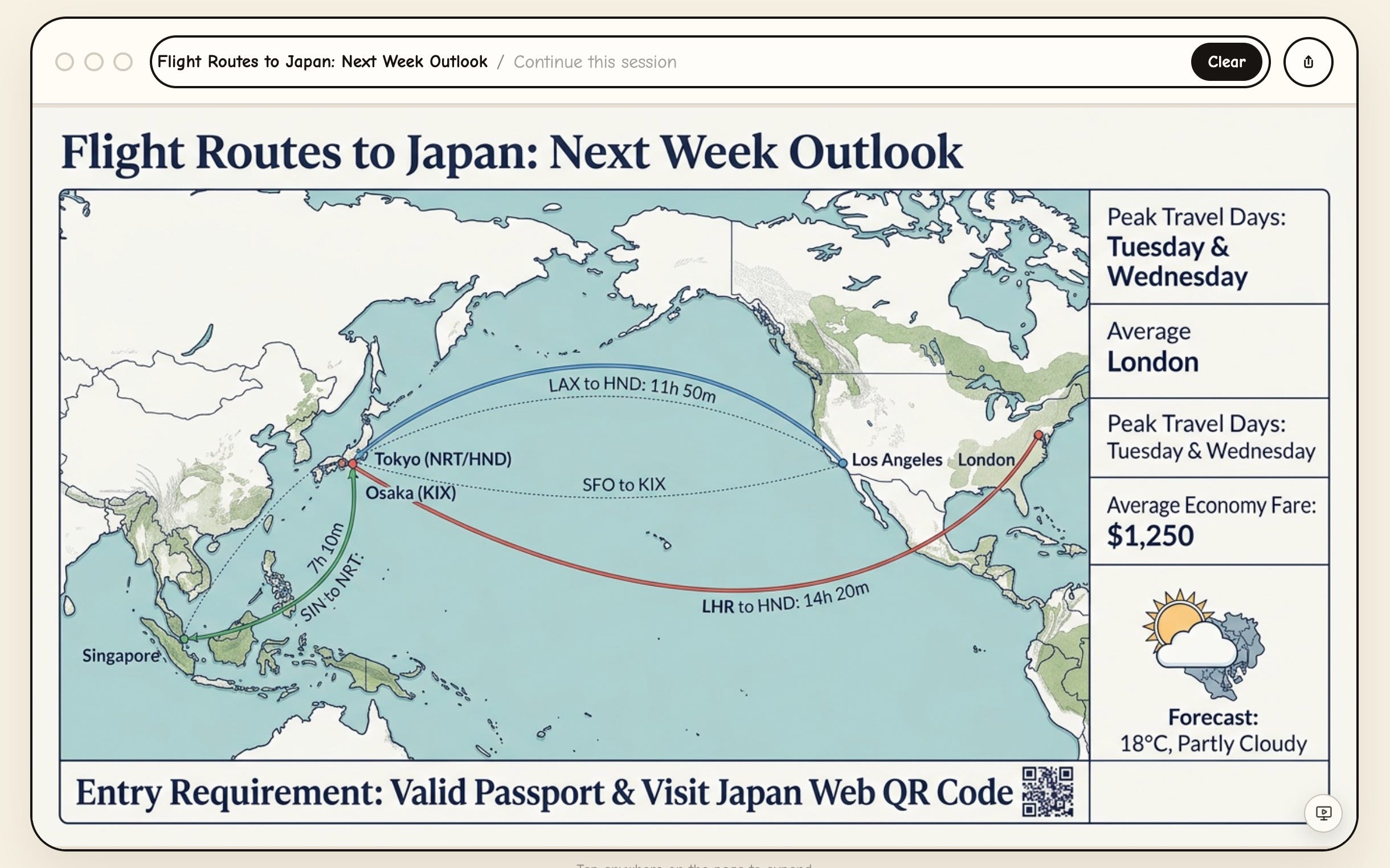
It’s cool that we can finally fulfill the dream of all web developers and fully give up on the HTML specification2.
Maybe Social Anxiety Is Just You Failing At Mind Control.
Social (and much romantic!) anxiety fundamentally comes from doomed yet habitual attempts to micromanage other peoples’ internal state… if the above is true, be effectively treated by basically any mechanism you can jerry-rig together which stops you from trying to micromanage the way other people think of you
I largely agree, though in my experience a lot of what masquerades as social anxiety is, behind the Scooby Doo mask, social shame, a fear of failing to meet societal or cultural standards. And addressing this might have similar cures (accepting more of yourself) or might have different ones (rejecting certain mores, reshaping your environment).
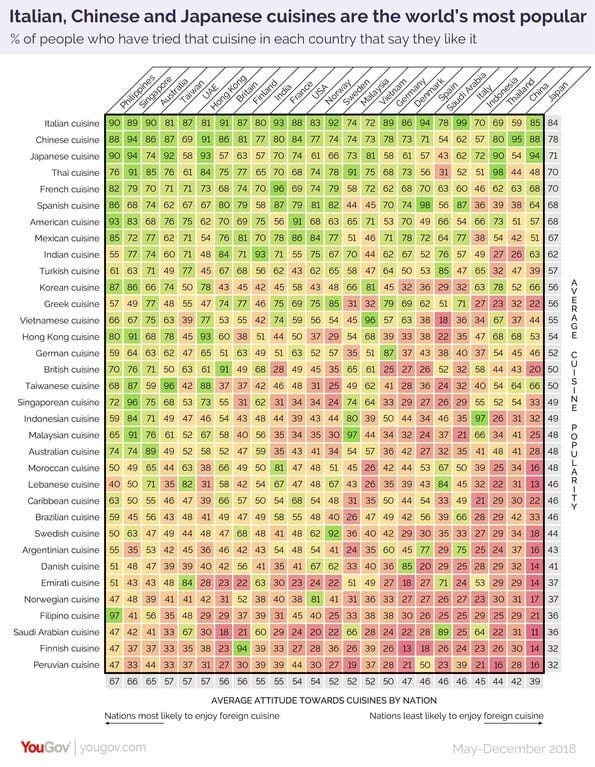
A survey of different countries ranking which global cuisines were the best:
The spear is the best melee weapon.
In one-on-one combat, the sharp pole will usually win, but in disciplined mass combat, the long sharp pole can be used to form a pike mass, and then it can beat almost anything. Even the fabled Roman legions lost when facing trained pikemen unless they could break up the pike line, flank them, or otherwise do some kind of workaround.
Practical Guide to Evil. I have been binging this 2015 web serial about a fantasy world of heroes and villains that runs on story logic, which genre-savvy characters are constantly doubling down on or subverting. Like a lot of serials it could seriously use pruning and editing, but I’m hooked and it ranks up there for me with Worm and Unsong.
All opinions in this post are my own and don’t reflect those of my employer. Relatedly, all opinions in this post are correct I am the territory that everyone else is trying to map.
“For example, the World Wide Web Consortium (W3C) provides “official” specifications for many client-side Web technologies. Unfortunately, these specifications are binding upon browser vendors in the same way that you can ask a Gila monster to meet you at the airport, but that gila monster may, in fact, have better things to do." James Mickens
No posts
Comments
Nothing yet. Say the first thing.
Sign in to join the conversation.