
The Climate Fiction Writers League is a collective of over 300 traditionally-published authors writing climate fiction and was founded by Wren James, YA author and story consultant on Netflix’s Heartstopper series.
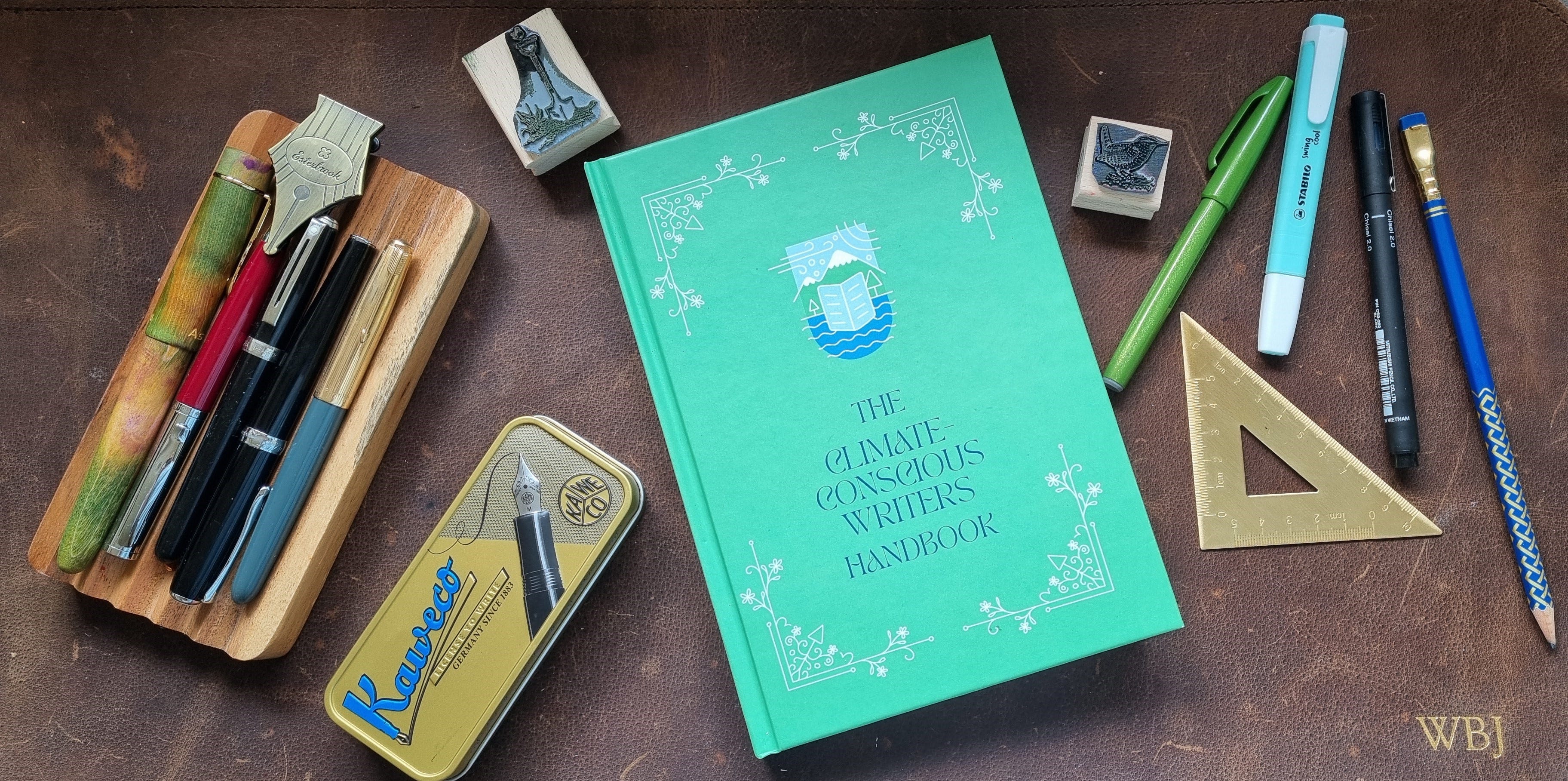
Wren created The Climate-Conscious Writers Handbook collaboratively with some of the world’s leading climate storytellers, including Climate Spring, Stanford University, the Society of Authors, Green Stories, Rewriting Earth and Bending The Arc.
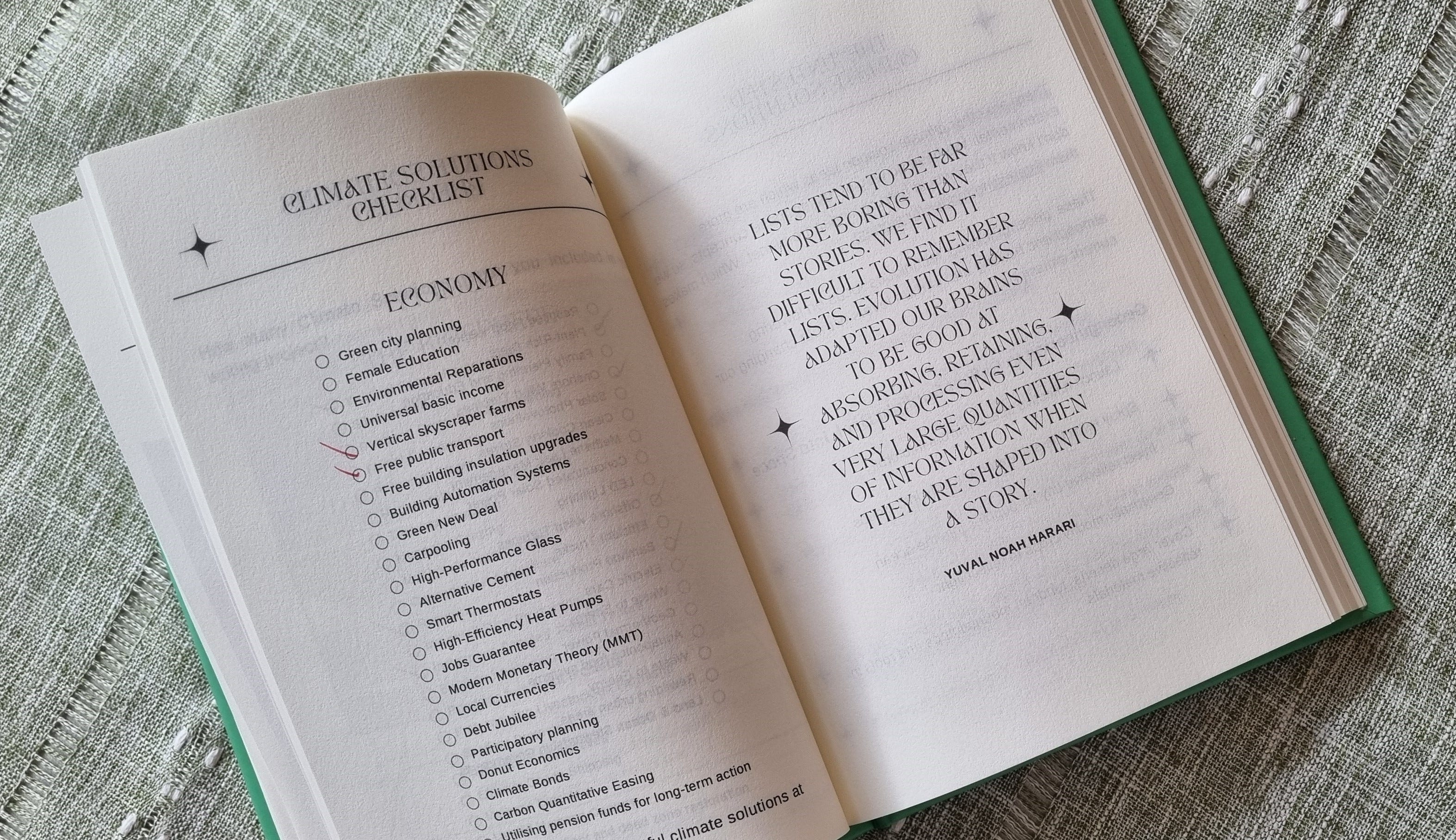
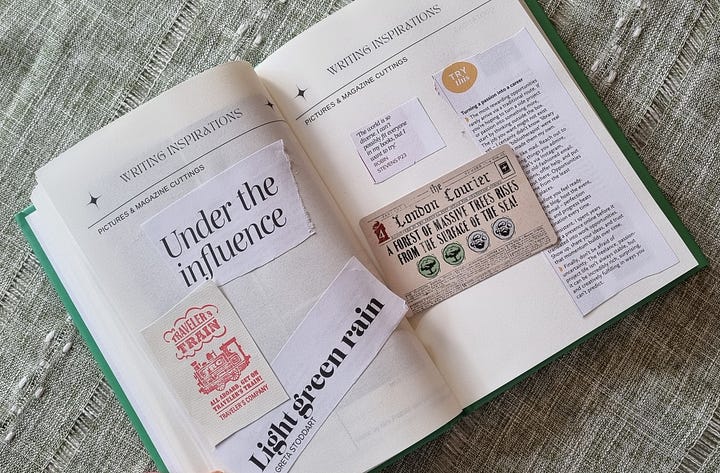
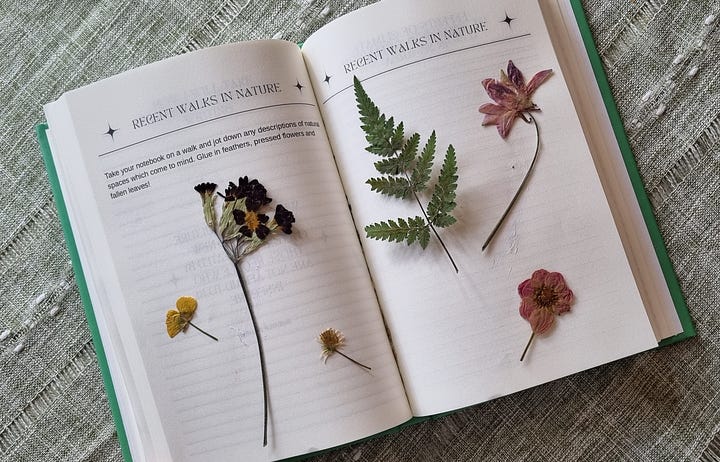
It has been designed to help writers of all genres weave climate themes into their work. The playful, interactive hardback journal includes writing exercises, reflective activities, comic strips, inspirational quotes and progress trackers.
Here, Wren describes the process of creating the handbook and the role of fiction in bringing about change.
“I’ve worked with hundreds of climate writers over the last five years, and the climate fiction I see is mainly dystopian. It focusses on the negative effects of climate change and doesn’t offer any proactive solutions. Those kinds of stories don’t encourage action – people just shut down and feel anxious. I would love to see more books that show how people can really make a difference in their community. Especially in romances and thrillers, which are read in such vast quantities. Weaving sustainable messaging into those books could start conversations about climate change in every household in the country. Scientific research shows that the most effective climate fiction is set in the present day and shows achievable sustainable actions, while being positive and solutions-focused. I set out to create a handbook that would help writers develop their craft in this area.
The key message of the handbook is that writers don’t need permission to write a story about the climate crisis, or expertise in science. They don’t need to consider themselves an activist. They only need to be creative and imaginative.
Historically, fiction has always had a big impact on politics. As imagineers and world-weavers, we should be leading the charge in climate progress by imagining a better future world.
Writing is activism. Over a decade as a published author, I’ve come to learn this. It’s subtle, and slow working, but incredibly effective. My book about climate magicians, Green Rising, was recently used to kickstart a discussion of climate-friendly investments in a book club for fossil fuel bankers and their families.
In Green Rising, teenagers can grow plants from their skin. They use their powers to rewild the planet and stand up to the profit-hungry corporations driving carbon emissions.
The fun, adventure story hit home for the investment bankers in a way that a newspaper article wouldn’t. When we read about fictional characters and experience their emotional highs and lows for ourselves, it unlocks a higher level of empathy and compassion. Even after the book is long finished, these characters stick in our minds. We are able to imagine their feelings in a way that we can’t relate to a faceless population on the news.
For climate activism, this is incredibly important. So many of the effects of climate change feel so distant, both in time and location. It’s hard to connect that to our daily lives. Fiction can help inspire people to act – whether that’s talking to their employer about their pensions scheme’s investments in fossil fuels, or changing to an eco-friendly energy tariff.
More importantly, fiction can help us to feel hope. 62% of people say they hear much more about the negative impacts of climate change than they do about progress towards reducing climate change, resulting in a perceived solutions gap. If you feel like the world is doomed, and there’s nothing we can do to stop it, then there’s no reason to take any action.
I expected the process of writing Green Rising to be depressing and mentally exhausting. But, in fact, immersing myself in the climate debate helped me to stop feeling anxious and helpless about our future. I could see all the things that needed to be done to fix the future.
As writers, we can engineer a future world long before it exists in real life.
In the forties, creators were envisioning men on the moon long before space travel existed. That cultural drive led to so much energy being invested in the Apollo missions and our successful journey into space. Without those early science fiction stories creating a cultural desire to walk on the moon, we wouldn’t have been driven to make it happen so soon.
In the 1900s, stories about a future where women had the vote encouraged support for the suffragist movement. In fact, a group was founded in the UK in 1908 called the Women Writers Suffrage League, whose mission was to encourage writers to mention the fight for the vote in their writing. As their prospectus stated, “a body of writers working for a common cause cannot fail to influence public opinion.”
Climate writers today do the same thing for our future. By creating stories about worlds filled with climate solutions, we are changing our collective picture of the future.
The Suffrage League inspired me to set up my own group, the Climate Fiction Writers League. Our guiding principle is to spread awareness of the importance of mentioning climate change in fiction of all types, from poetry to Eastenders.
In my work in the writers room for Netflix’s Heartstopper, I was able to showcase how this can be done naturally. The character Elle tours an art college when she’s applying for sixth form. An art exhibition at the college is based around climate change, meaning several scenes take place surrounded by artistic representations of the climate crisis.
The Climate Fiction Writers League now has over 300 traditionally published authors as members, who have all written climate fiction. Through the group, we partner with climate organisations and consult with museums & production companies.
It’s especially important for children to see hopeful visions of the future world they are going to grow up in. A few years ago, I pitched to my publisher a ‘positive’ climate anthology for children. The authors were given a list of solutions believed to combat climate change most effectively, and encouraged to create stories set in the future.
I told them to use their anger and frustration to drive their writing, but not to write an angry book. Their settings aren’t always positive utopias, but they don’t represent a hopeless dystopia. We want children to read stories that convey the seriousness of the situation without making it seem futile. They need to see that climate change is solvable.
I was also very careful about where we laid the blame for the climate crisis. I didn’t want to leave our readers feeling guilty about their carbon footprints. We want to inspire people, not panic them. No one will engage with climate activism if they’re just going to be made to feel guilty about not recycling!
I wanted to encourage the writers to show the industries, economics and political factors which are to blame. To call out the companies who have been specifically working to slow climate activism, like fossil fuels companies who spread climate science misinformation in the nineties.
Adding in these elements meant I could add teaching questions and resources that would make the stories useful in a classroom setting, leading to discussions of wider issues around the climate crisis.
Ultimately, climate change is a political topic – it has to be. It’s unavoidable. The end of the world is profitable.
My characters are angry they’re being told to reduce their climate footprint, that they’re being made to feel guilty about their personal pollution when industry is responsible for the vast majority of emissions.
I wanted to create a book for young people who are anti-capitalist and pro-revolution, who are changing the world at an incredible pace against the enormous weight of the existing establishment.
The best climate fiction captures the feeling of being part of an ongoing green revolution. It acknowledges that we are living in a time of unprecedented existential fear. And then shows people how to turn that fear into hope and action.
I created The Climate-Conscious Writers Handbook collaboratively with some of the world’s leading climate storytellers, building on years of workshops I’ve given to aspiring writers. The handbook aims to help make the process exciting and fun for writers. It simplifies climate science, helps writers to build confidence and supports them with tips and activities they can do while drafting their project. Pages include: How to Avoid Being Preachy, Climate Solutions Checklists, How to Reach out to Scientists for Collaboration, Common Climate Story Models, Guided Nature Walks, Traditional Storytelling and Folklore, Climate Poetry and more.”
The Climate-Conscious Writers Handbook is available to buy in hardback with global distribution. It is being sold at printing costs as a not-for-profit project.
Wren James is the award-winning British author of many Young Adult novels. Their books include Last Seen Online, Green Rising and The Quiet at the End of the World (previously published as Lauren James). The Loneliest Girl in the Universe is in development as a feature film with RK Films. They edited Future Hopes: Hopeful stories in a time of climate change and their upcoming title is The Victors (May 2026), a graphic novel illustrated by Beth Fuller.
They have won the Sustainable Story Award and been shortlisted for the YA Book Prize, Carnegie Medal and STEAM Book Award. Their books have sold over 200,000 copies in eight languages. They are on the Society of Authors’ Sustainability Steering Committee and work as a consultant on climate storytelling for museums, production companies, major brands and publishers, with a focus on optimism and hope.
Wren has a Masters degree from the University of Nottingham, where they studied Chemistry and Physics. They run a queer writers group in Coventry.
The Climate Fiction Writers League is a group of authors who believe in the necessity of climate action, immediately and absolutely. Fiction is one of the best ways to inspire passion, empathy and action in readers. The works of our 300+ members help to raise awareness of the climate emergency, highlight solutions and encourage action at the individual, corporate & government levels.
Find out more at climate-fiction.org or subscribe to the League Substack
Yesterday’s piece by Rupert Read invited us to consider possible future scenarios; today Wren James explores how to bring new futures to life through the art of fiction; tomorrow we look at a positive future already in the making in Cardiff…
Comments
Nothing yet. Say the first thing.
Sign in to join the conversation.