
Nature isn’t only in the countryside. What can national parks teach us about how to live greener, healthier lives in our urban environments?
The National Park City Foundation takes the idea of the national park as a way to ‘rethink cities, their futures and how we inhabit them’. The foundation is a grassroots movement that supports cities around the world to achieve National Park City status.
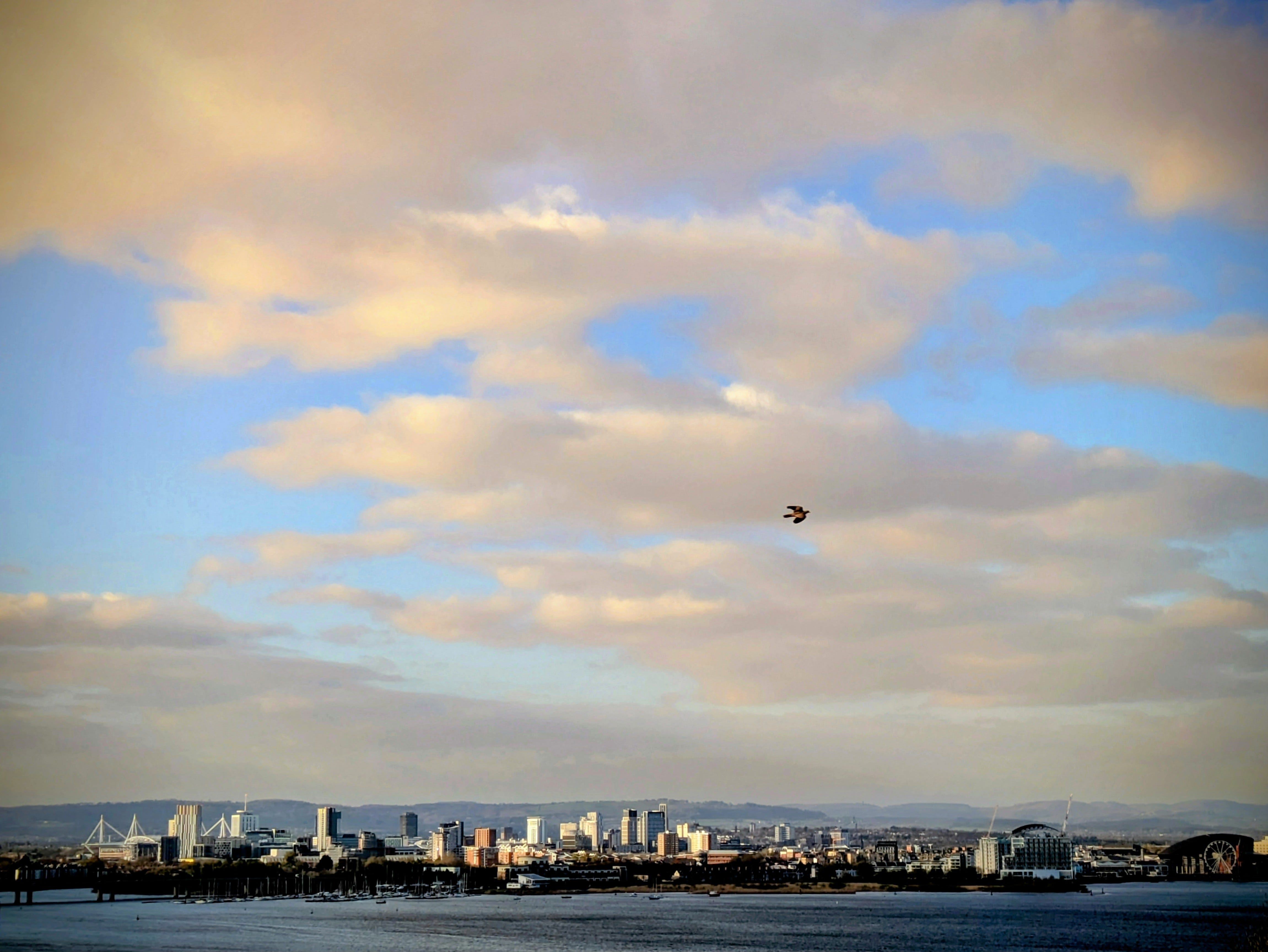
Benjamin Geeson-Brown is part of the team behind Cardiff’s bid to be recognised as a National Park City. Here he imagines a day in the Welsh capital in twenty years’ time, when the city’s green spaces, its watercourses and its wildlife are protected, loved and thriving – just like in our national parks, alongside supporting all the elements that make Cardiff the flourishing and vibrant city it already is.
Spring butterflies dance overhead as I cycle north along the Taff Trail, cricket bat protruding from my bag over my shoulder, excited for the first game of the season. At 53, those pre-game nerves are as present as ever, but lately it’s the cycle ride to the game that I’m more excited about. Since Cardiff became a National Park City, nearly twenty years ago now, this journey has just got better and better.
Progress didn’t come as a wave but as drips: a new orchard here, a school rewilding project there, a re-opened canal, an existing meadow allowed to grow. Looking back, the transformation seems inevitable, though it was anything but. There’s no doubt it took a while for the idea to catch on and get noticed, and a hell of a lot of work to convince perhaps the less nature-inclined residents. The most common roadblock we faced centred around community buy-in. People, quite rightly, were sceptical of things happening to them. Once we were able to convey the idea that NPCs are all about local change done by people rather than to them, progress started to show. It was generational for many people, I get that – like nature, change is sometimes very slow and it’s difficult to see the progress, then all of a sudden it tips and we struggle to understand why things were the way they were before.
Once other major cities in the UK and across the world saw the benefits of changing the way we see a city, from a place to just live and work, where nature is somehow separate, to a place where greater respect and inclusion of nature is part of everyday life, things shifted.
Once we embraced nature, incorporated its incredible movements and changes into our daily lives, the rest took care of itself.
As I cycle, to my right, the River Taff is full of bathers, confident in the bathing status the river achieved in the late 2020s. Serious swimmers and splashing connoisseurs share the clean and clear water with trout, salmon, herons and dragonflies. Quite a sight. Incredible to believe how this river, this city, was at one point the global centre of coal, the black gold that single-handedly powered the world and nearly destroyed it as well. In the mid-twentieth century the dockside area of Tiger Bay was known for its industrial prowess and melting pot of cultures. Now, in the middle of the twenty-first century, this part of Cardiff is a flagship for green living and co-operative food growing, repairing the impact of previous generations. On my left, the food forests and community gardens fight for my attention as every generation is out in the late afternoon sun, planting the seeds of their spring harvest; the smell of wild garlic tingles the nostrils.
Back in 2026, it took a lot of convincing people that ‘National Park City’ wasn’t jingoistic or a fancy branding device – it was a commitment. A long-term view with long-term benefits. I remember the first time I saw the new “Welcome to Cardiff, a National Park City” road signs. It was a proud, proud moment, and I knew then the idea had rooted.
My phone rings: it’s Wynnie – calling from somewhere in South East Asia, Vietnam maybe? She’s been travelling for over six months now and I’ve lost track.
‘Hi Dad, you ok? Quick question. The other day I was chatting to my local friend who I’ve been travelling with, and she said that, twenty years ago, Hanoi was one of the most polluted cities in the world. Is that right? She also said that when Hanoi became a National Park City, the rate of change was incredible, and the environment changed far quicker than it did at home. Anyway, did you have something to do with that? I mentioned you were involved in Cardiff’s bid but couldn’t remember the specifics.”
I smile. “Yes, love, I did, but I’m off to cricket now. Can I call you tomorrow morning, tell you all about it then?”
“Sure – speak tomorrow. Love you.”
Wynnie doesn’t remember the old Cardiff, the one where the air tasted of exhaust fumes on still days. Her Cardiff has the hum of bees and insects, people running and walking outside her window, not traffic noise. As she learned to walk, the city learned to plant. As she grew tall, the trees in the mini forests did too.
Who knew the way the National Park City movement could spread so quickly?
Once Hanoi got on board, the earliest adopter in that part of the world, it really took off. By my last count, every country now has at least one, if not more, designated National Park Cities. That stat alone blows my mind. In 2026, it was four. Benefits to nature, sure. But the co-benefits – financially and socially, including improvements to people’s health, schools’ attainment, employment rates, gender imbalances – these have all improved in the cities that have taken this approach.
As I approach Pontcanna Fields, where I’m playing tonight, I remember last year the ball disappearing into a patch of oxeye daisies and tall grass now left to grow as nature intended. We spent five minutes searching, ankle‑deep in flowers, bees weaving between us as if we were just another set of moving stems. No one cared though, as it was a small price to pay for the bigger picture. Sport and recreation, like every other aspect of life, now works with nature, rather than against it: we embrace it, and we benefit from it.
Don’t get me wrong, this isn’t utopia, bad things still happen. But in my city, twenty years ago, I dreamed of a Cardiff where my daughter could grow up knowing wildness not as a separate entity far away, but as a fundamental, living presence woven into daily life. Now, as I think about the journey we went on to get here, as the butterflies jag in and out of my spokes, I know we built something I’m proud to be part of.
Benjamin Geeson-Brown has lived in and around Cardiff for the last 15 years. He is part of the group working towards Cardiff becoming the first National Park City in Wales. He has recently completed an MSc at Cardiff University in Sustainability, Planning and Environmental Policy, where he completed his thesis on the concept of National Park Cities. He is currently Principal Sustainability Officer within One Planet Cardiff, Cardiff Council’s strategic response to climate change.
He lives with his partner Hannah, a primary school teacher, their two-year-old daughter Wynnie and their cat Ron. In his spare time, he enjoys playing cricket and exploring nature with Wynnie, chatting away on his back.
To get in touch about Cardiff’s bid to become a National Park City, visit the group’s Instagram @cardiffnationalparkcity, or email caerdyddnpc@gmail.com or ben@nationalparkcity.org.
“The idea of thrutopia to me conjures a sense of optimism that is so rarely heard in modern times. It presents a vision of the future in which humans actually, maybe, possibly get something right; and anything that does this has my attention.”
~ Benjamin Geeson-Brown
Yesterday we heard from the brilliant YA writer, Wren James, about the importance of writing climate fiction; today is May Day, and we bring you the joy of Cardiff National Park City; tomorrow, look out for our Saturday round up of this week’s pieces…
Comments
Nothing yet. Say the first thing.
Sign in to join the conversation.