
Featured by: Poison-Dart Films
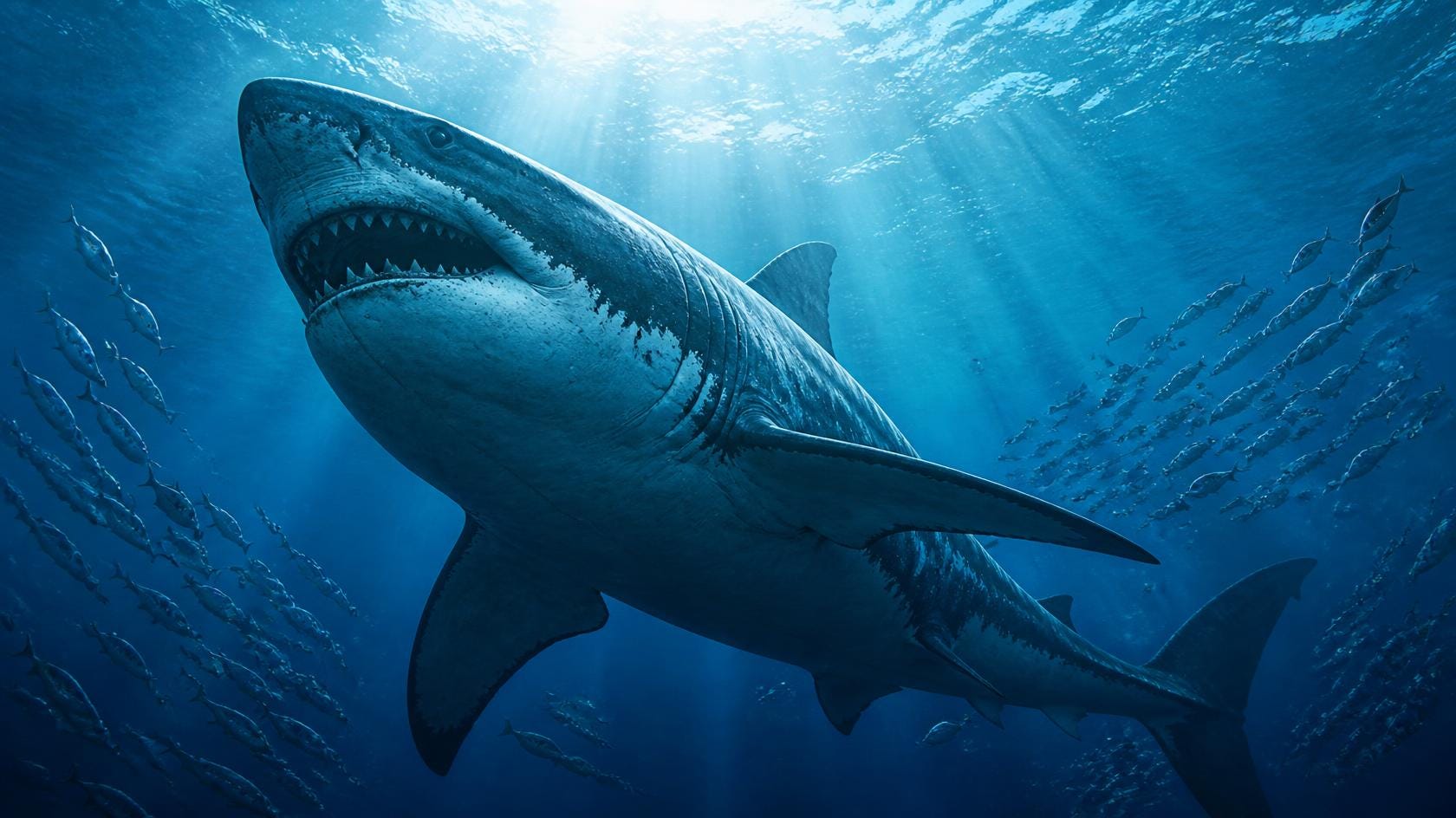
What can a single tooth tell us about an animal that disappeared millions of years ago…
Fossils are more than remnants of the past. They are evidence that give scientists clues about what lived, what disappeared, what environments once looked like, and how life changed over enormous stretches of time. Sometimes those clues come from places we might never expect to find them.
This Belouga experience takes students beneath the surface of the modern world and into the prehistoric oceans of Australia, where the fossil record is helping scientists reconstruct the life of one of the most extraordinary predators ever to exist…the Otodus Megalodon.
The story is bigger than a giant shark, telling us about the curiosity, evidence, extinction, evolution, and people still searching for pieces of a world that existed long before us.
This is where the learning begins.
The experience begins in an unlikely setting of a quiet suburban area in Bayside, Australia. Beneath the familiar landscape are remnants of an ancient ecosystem that once looked dramatically different. Millions of years ago, the coastline, sea levels, climate, and marine life were all changed. The waters were home to enormous predators, whales, turtles, fish, and other species that have long since disappeared. Among them was the Megalodon.
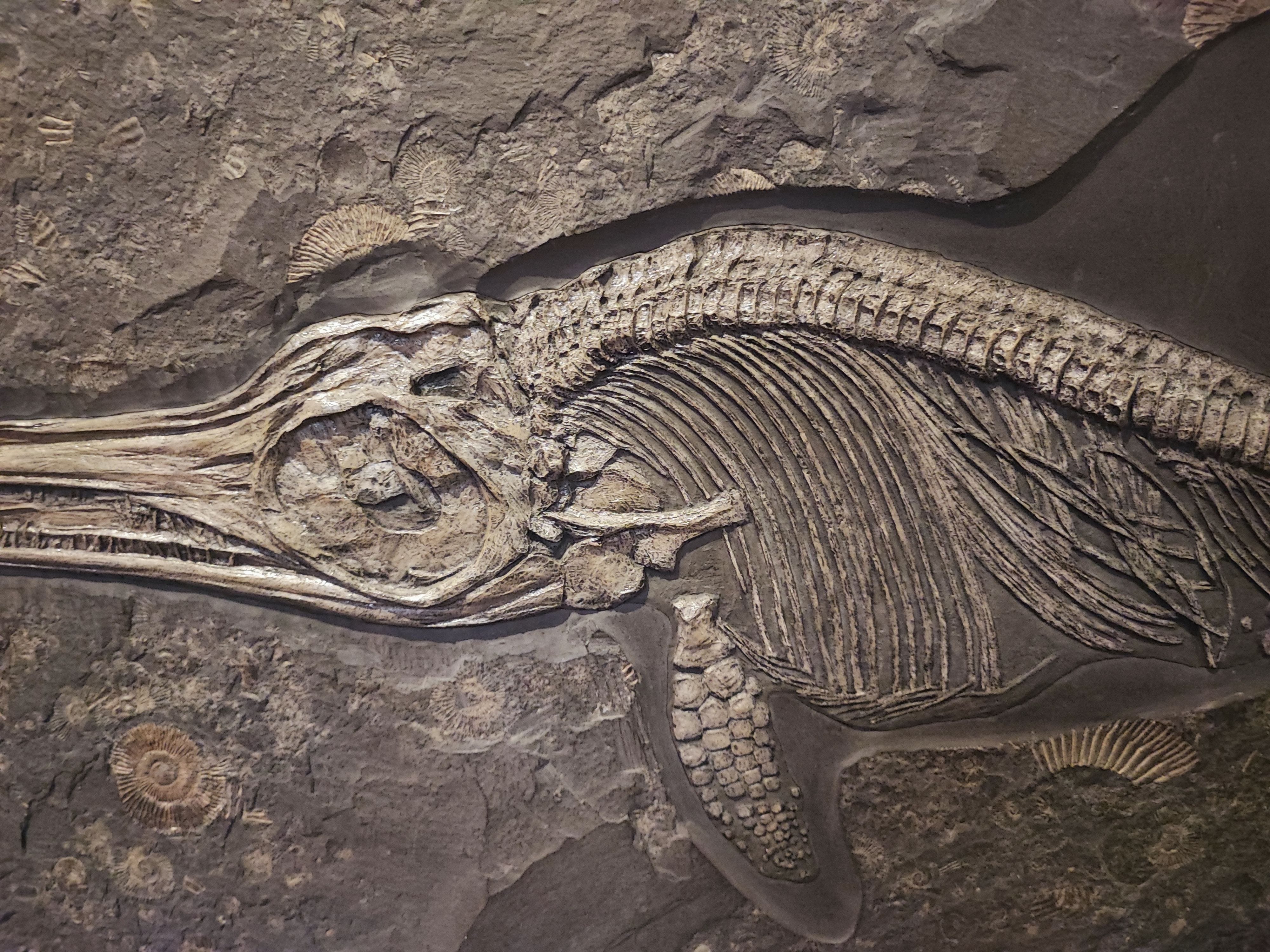
By studying its teeth and other fossil evidence, paleontologists can begin to reconstruct how this enormous shark may have lived. Its teeth reveal clues about what it ate and how it fed. Bite marks preserved on the bones of ancient whales provide another piece of evidence. The size of the animal gives scientists additional questions to investigate such as how did it hunt, why did it become so large, what role did competition play, and what eventually caused it to disappear.
The remarkable part is that scientists cannot simply observe the Megalodon directly, they have to work backward. A tooth, a jaw fragment, a bite mark, or a fossilized bone all becomes another piece of evidence in a much larger puzzle…and that puzzle is still incomplete.
It is easy to think of science as a collection of answers. This lesson offers students a different picture.
Science is often the process of asking better questions when the evidence is incomplete. Paleontologists cannot watch a Megalodon hunt. They cannot measure one in the ocean or observe its behavior. Instead, they examine what has survived and use that evidence to develop and test explanations about what may have happened millions of years ago.
That distinction matters far beyond paleontology with students encountering incomplete information constantly. They make observations, look for patterns, compare evidence, revise ideas, and sometimes discover that the fossil record makes this process visible. It also reminds us that the world we know today is only one version of Earth’s story.
The Megalodon eventually disappeared roughly three and a half million years ago. Its extinction was likely connected to several environmental and ecological changes, including cooling temperatures and shifts in the movement of whales that formed an important part of its food supply. Competition from other large marine predators may also have contributed.
There is no single surviving explanation that gives us every answer. Instead, scientists piece together a story from multiple lines of evidence. One of the most important ideas students can take from the experience is that living things do not exist separately from their environments. Think about the relationships:
When climate changes, habitats can change.
When habitats change, food sources can move.
When food webs shift, species are affected.
When enough conditions change at once, even a highly successful species can disappear.
The Megalodon was one of the most powerful predators the oceans had ever produced, yet size and strength could not protect it forever from a changing world.
This experience is built around three interconnected learning dimensions:
Evidence as a pathway to understanding: Students explore how fossils, teeth, bones, and other physical traces allow scientists to investigate events that happened millions of years ago.
Change across deep time: The story of the Megalodon places students inside a much larger understanding of Earth’s history, showing how climate, ecosystems, species, and environments continually transform.
Curiosity as scientific practice: Students encounter paleontology not simply as the study of extinct animals, but as an active process of questioning, investigating, interpreting, and discovering.
This is the deeper architecture behind the experience.
Core Subject Areas: Science, Earth & Space Science, Biology, Environmental Science, History, Language Arts
Sustainable Development Goals: Goal 4. Quality Education, Goal 13. Climate Action, Goal 14. Life Below Water, Goal 15. Life on Land
Age Bands
Elementary (8–11): fossils, prehistoric life, observation, and scientific curiosity
Middle School (12–14): ecosystems, adaptation, extinction, evidence, and environmental change
High School (15–18): evolutionary biology, paleontology, climate-driven ecological change, scientific inference, and systems thinking
Skill Development Focus: Observation, Evidence-based reasoning, Questioning, Systems thinking, Scientific communication, Research, and Perspective-taking across deep time
In the classroom, this experience can begin with the deceptively simple question of “What can you learn from a fossil if you were never there to see the animal alive?”
From there, students can investigate how scientists use physical evidence to reconstruct ancient environments and understand organisms that disappeared long before humans existed. Younger learners may focus on the size of the Megalodon, its teeth, and the differences between prehistoric and modern oceans. Older students can move deeper into questions about adaptation, food webs, extinction, climate, and the limitations of scientific evidence.
The story also creates an opportunity to challenge the idea that discovery belongs only to professional scientists. The film introduces students to citizen scientists who have contributed significant fossil discoveries. In doing so, it opens a door to a broader idea: curiosity is not restricted to a laboratory, university, or museum.
This Belouga experience also includes downloadable educator and student resources designed to bring paleontology, prehistoric ecosystems, scientific investigation, and deep-time thinking into classrooms and learning environments. These resources are designed to make it easier for educators to move from viewing into inquiry, helping students investigate not only what the Megalodon was, but how scientists reconstruct a world they can no longer observe directly.
Continue into the full educator guide and student experience pack below.
Comments
Nothing yet. Say the first thing.
Sign in to join the conversation.