
Featured by: NASA
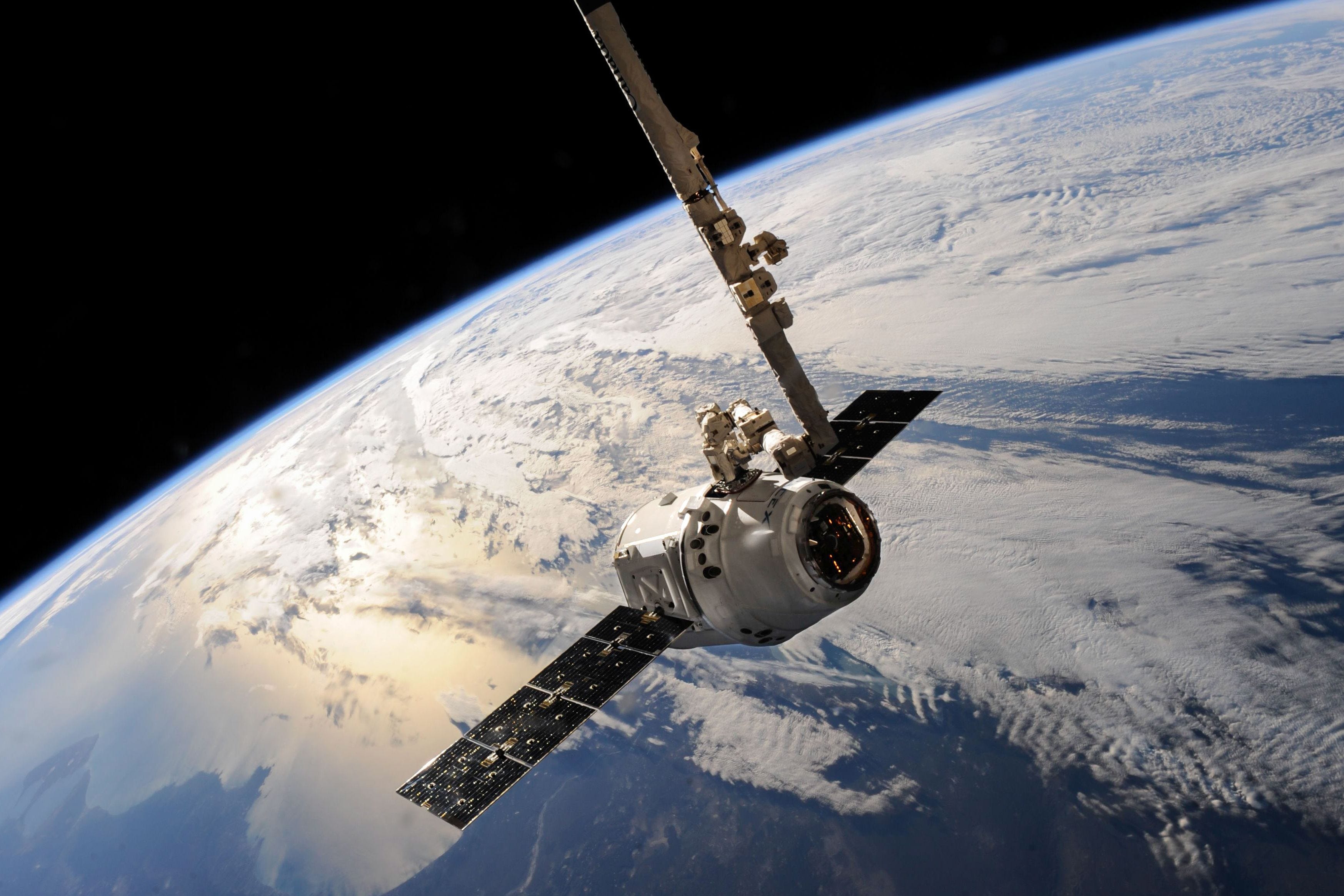
How do people actually live here…
Where do astronauts sleep? How do they eat, work, exercise, conduct experiments, repair equipment, and stay connected to life back home? What happens when every system inside their environment must be designed, tested, and maintained because there is no outside world to step into?
The International Space Station is more than a spacecraft traveling above Earth. It is a home, a laboratory, a workplace, and one of the most complex engineering projects ever created. For more than 25 years, people have lived and worked continuously aboard the station, using the unique environment of space to conduct research, develop new technologies, and prepare for future missions farther from Earth.
This Belouga experience invites students inside that extraordinary environment to explore what it takes to build a place where humans can survive, work, learn, and collaborate beyond the planet they call home.
This is where the learning begins.
The tour begins with movement. Instead of walking through hallways, astronauts glide from one module to another. Instead of floors and ceilings, there are surfaces in every direction. Equipment is secured to the walls. Workstations are designed for a world where gravity no longer pulls objects downward. Every space inside the station has a purpose, from laboratories and sleeping areas to exercise equipment, storage systems, and places where crews prepare food or connect with Earth.
As students move through the International Space Station, they begin to see how much invisible thinking is built into every part of life in orbit, such as how does water reach the crew, how is air kept safe, and what happens when a piece of equipment stops working hundreds of kilometres above the planet?
The station is filled with answers to these questions, but it is also filled with new ones. Every object, system, and space reflects a series of engineering decisions. The station must protect people from the environment outside while supporting the routines of everyday life inside. It must operate continuously, adapt to changing missions, and provide the tools needed for scientific discovery. Nothing can be treated as ordinary when every resource is limited and every system is essential.
What begins as a tour of a spacecraft becomes something larger: an exploration of how human curiosity, engineering, and cooperation can make the seemingly impossible livable.
Space exploration is often taught through major milestones: the first launch, the first person on the Moon, a new mission, or a distant destination. These moments matter, but they can sometimes make space feel like something achieved only through extraordinary events.
The International Space Station reveals another side of exploration. Progress is not created through a single launch, but rather depending on thousands of interconnected decisions made by engineers, scientists, astronauts, technicians, programmers, medical specialists, mission controllers, and teams working across countries and disciplines. The station operates because people continually observe, test, repair, communicate, and improve. This is an important lesson for students living in a world shaped by increasingly complex challenges. The future will require people who can understand systems rather than isolated parts. It will require collaboration across fields, the ability to solve problems under changing conditions, and the imagination to design environments that have never existed before.
The International Space Station makes these ideas visible, showing that engineering is not only about building machines. It is about understanding human needs and designing solutions that allow people to live, work, and thrive in difficult environments. It also demonstrates that exploration is rarely the work of one person, or even one country. The station is the result of long-term international collaboration, bringing together space agencies, researchers, engineers, and crews from around the world.
A spacecraft can travel through space without being a place where people can live. But a human habitat requires something more. Astronauts need breathable air, clean water, food, sleep, movement, communication, safety, and opportunities to maintain their physical and emotional well-being. They need systems that can operate reliably while also allowing people to work, learn, and respond to unexpected problems. This changes the way we think about engineering. Engineering is not only concerned with whether something functions. It also asks:
How will people use it?
What happens when conditions change?
How can a system be repaired?
What resources are available?
How can a design protect people while helping them accomplish meaningful work?
The International Space Station brings all of these questions together. Its modules are connected like parts of a larger system. Its technology supports life while enabling scientific research. Its design must account for the effects of microgravity on both people and equipment. Astronauts exercise regularly to help protect their muscles, bones, and cardiovascular health, while researchers study how the human body changes during long periods in space. The result is a powerful example of human-centered design, and a place built not simply to travel farther, but to support life in an environment where life cannot survive on its own.
This experience is built around three interconnected learning dimensions:
Engineering as problem-solving: Students explore how the International Space Station was designed to respond to the challenges of living and working in space. They examine how systems, materials, technology, and human needs must work together.
Life beyond Earth: Learners consider what people need to survive and thrive in an unfamiliar environment. The experience encourages students to think about how everyday activities, including sleeping, eating, exercising, and working, must be reimagined when gravity and resources change.
Exploration through collaboration: Students discover that the International Space Station is the result of global cooperation. Its success depends on people with different expertise working toward shared goals across countries, cultures, and disciplines.
This is the deeper learning architecture behind the experience.
Core Subject Areas: Science, Engineering, Technology, Mathematics, Space Science, Geography
Sustainable Development Goals: Goal 4. Quality Education, Goal 9. Industry, Innovation and Infrastructure, Goal 12. Responsible Consumption and Production, Goal 17. Partnerships for the Goals
Age Bands
Elementary (8–11): life in space, basic engineering, curiosity, and observation
Middle School (12–14): spacecraft systems, human adaptation, scientific investigation, and design thinking
High School (15–18): aerospace engineering, systems design, microgravity research, international collaboration, and future exploration
Skill Development Focus: Systems thinking, Scientific inquiry, Engineering design, Spatial reasoning, Problem-solving, Collaboration, and Future-oriented thinking
In classrooms, this experience can begin with a simple design question:
If you had to live inside a spacecraft for six months, what would you need? How would you design it?
Students may initially identify familiar necessities such as food, water, beds, bathrooms, and communication. As the conversation develops, the challenge becomes more complex, shifting to thoughts such as how would those systems work without gravity, where would resources be stored, how would people exercise, and how would the spacecraft support both physical health and emotional well-being.
Younger learners often focus on the surprising details of everyday life in space. They may notice how astronauts float, how objects are secured, or how familiar activities become unfamiliar in microgravity. Older students can explore the station as a connected engineering system. They may investigate life-support technology, resource management, human health, scientific research, or the international partnerships required to operate a shared laboratory in orbit.
Across age groups, students begin to recognize that the International Space Station is not one invention, but rather an interconnected environment built through thousands of ideas, experiments, decisions, and collaborations.
This Belouga experience also includes downloadable educator and student resources designed to bring space exploration, engineering, scientific discovery, and human-centered design into classrooms, STEM programs, makerspaces, and future-focused learning environments. These resources are designed to help educators guide meaningful conversations while giving students opportunities to explore how astronauts live, how spacecraft systems function, and what it takes to design for human life beyond Earth.
Continue into the full educator guide and student experience pack below.
Comments
Nothing yet. Say the first thing.
Sign in to join the conversation.