
This article is provided for educational purposes only and should not be considered medical advice. The scientific information referenced is based on published, peer-reviewed research. Any decisions regarding personal treatment or care should be made with a qualified healthcare professional who can evaluate your individual health needs and circumstances.
When most people think about cancer, they think about treatment.
But what if we spent as much energy talking about prevention?
Every week, I hear from people whose lives have been touched by cancer. Some are newly diagnosed. Others have completed treatment but continue to worry about recurrence. Many simply ask:
“What can I do today to lower my cancer risk?”
There is no single food, supplement, or lifestyle habit that can guarantee protection against cancer.
But science increasingly points toward something encouraging: our everyday choices influence the environment in which our cells live.
After more than three decades supporting cancer research through The Beljanski Foundation, I have come to believe that cancer prevention is not about perfection. It is about creating the best possible conditions for our bodies to function as they were designed.
Or, as I like to summarize it:
Avoid toxins. Restore balance. Support homeostasis.
Those three principles are reflected in some of the simplest—and most powerful—daily habits.
Our bodies were made to move.
Regular physical activity helps support a healthy metabolism, maintain hormonal balance, regulate inflammation, strengthen the immune system, and improve emotional well-being. Numerous studies have also associated regular exercise with a lower risk of several types of cancer.
The good news? You do not have to become an athlete.
Walking after dinner.
Swimming.
Yoga.
Strength training.
Cycling.
Dancing.
Gardening.
The best exercise is often the one you enjoy enough to do consistently.
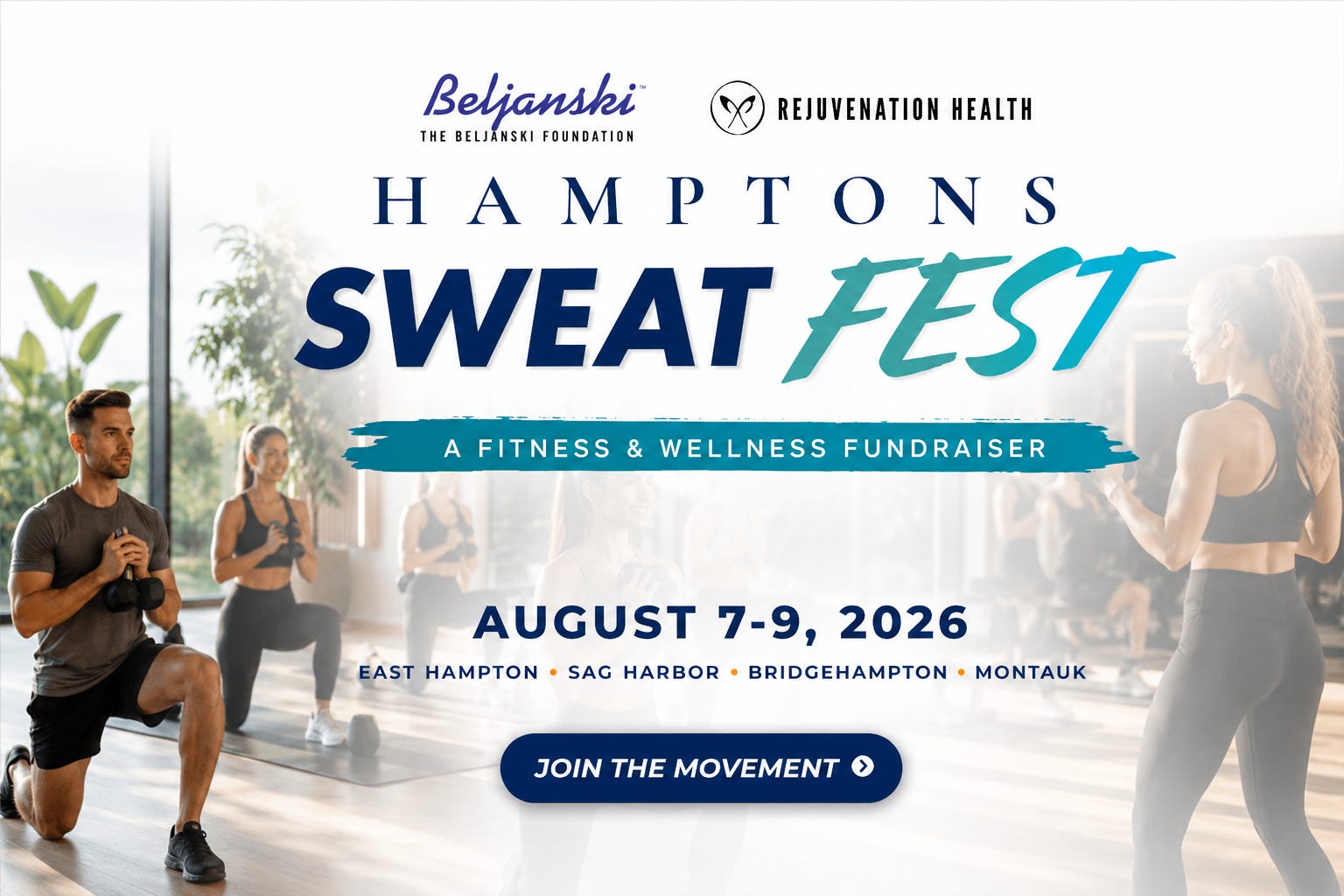
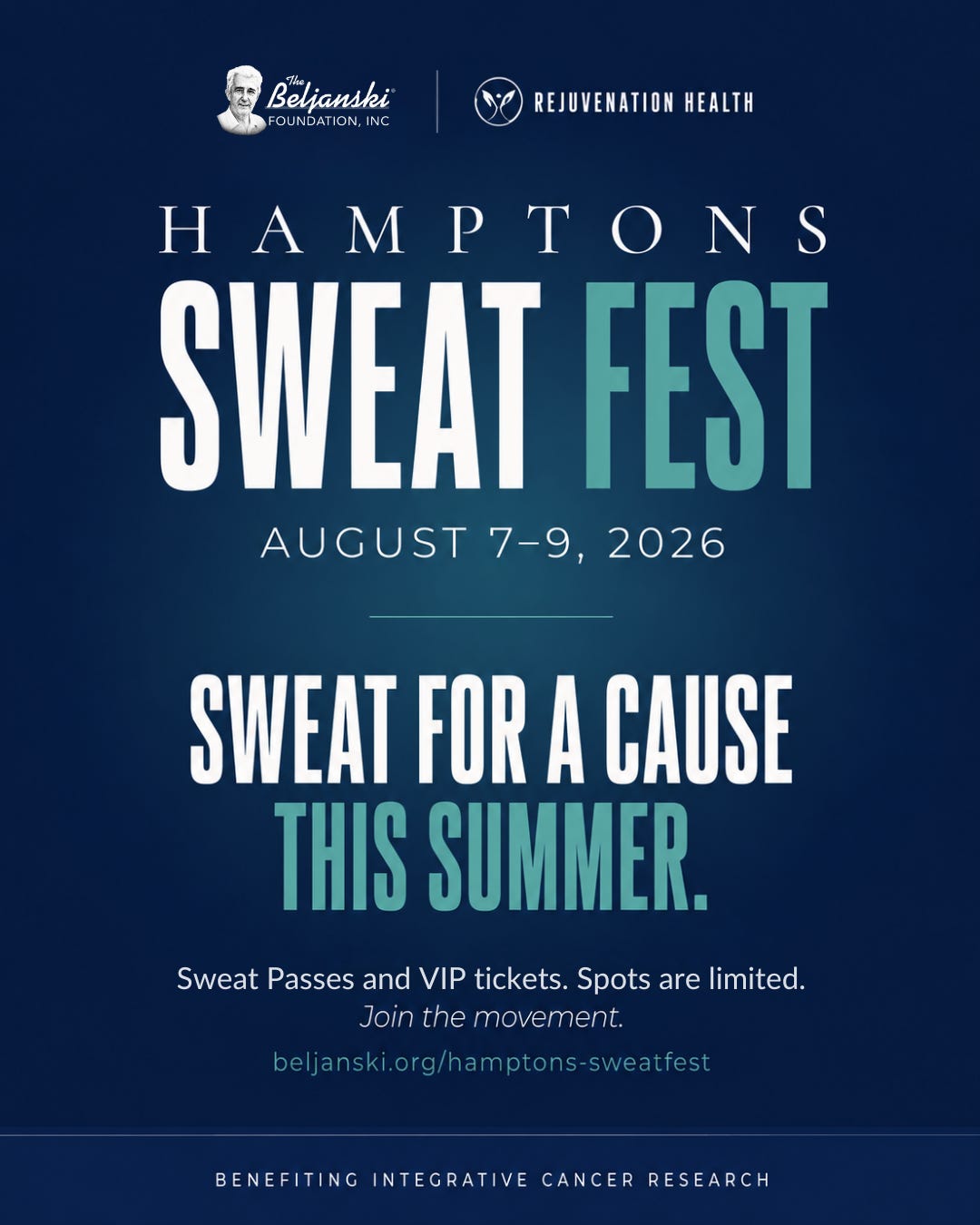
That is one of the reasons I am so excited about the Hamptons SweatFest, taking place in the Hamptons on August 7–9, 2026, which invites you to Sweat for a Cause. More than a fitness festival, it is a celebration of movement, community, and wellness. Every registration also helps support the Beljanski Foundation’s groundbreaking research on cancer stem cells.
Because every step counts.
One of the most exciting areas of modern medical research is the gut microbiome.
The trillions of bacteria living inside our intestines influence digestion, immune function, inflammation, metabolism, and even communication between the gut and the brain.
When this delicate ecosystem becomes imbalanced—a condition known as gut dysbiosis—the consequences may extend far beyond digestive discomfort. Researchers continue to investigate its role in chronic inflammation, immune dysfunction, metabolic disease, and colorectal cancer.
One fascinating discovery concerns the appendix.
Long dismissed as a useless organ, the appendix is now believed to serve as a reservoir of beneficial bacteria, helping repopulate the colon after illness or disruption of the microbiome. While an appendectomy is often medically necessary and life-saving, people who have had their appendix removed may have a reduced reserve of these beneficial bacteria, making it even more important to support long-term digestive health.
So how can you nurture a healthier microbiome?
· Eat a wide variety of colorful fruits and vegetables.
· Choose fiber-rich foods whenever possible.
· Include fermented foods if they agree with your digestion.
· Limit highly processed foods and excess sugar.
· Stay well hydrated.
For those looking for additional digestive support, I developed Digestive Harmony as part of the Targetage wellness line. It was formulated to gently support digestive comfort and help maintain a healthy digestive environment as part of an overall wellness routine.
A healthy gut is not simply about digestion; it is one of the foundations of overall health.
Sleep is often underestimated.
Yet while we sleep, our bodies are remarkably busy.
Restorative sleep supports tissue repair, hormone regulation, immune function, memory consolidation, and healthy inflammatory responses.
When sleep becomes chronically inadequate, these essential processes can become disrupted.
Think of sleep as your body’s overnight maintenance program.
Protect it by establishing a regular bedtime, limiting screen time before bed, creating a cool, dark sleeping environment, and allowing yourself enough time to fully recover.
Good sleep is not a luxury.
It is a cornerstone of health.
People often ask me whether cancer prevention comes down to finding the perfect supplement or the latest scientific breakthrough. I believe it begins much earlier than that. It begins with the decisions we make every single day:
Choosing to move,
Choosing to nourish our microbiome,
Choosing to prioritize restorative sleep.
These habits may seem ordinary, but over months, years, and decades, ordinary choices become extraordinary investments in our future health.
We cannot eliminate every environmental exposure or every genetic risk.
What we can do is reduce the burdens we place on our bodies, restore healthier habits whenever we drift away from them, and support the body’s remarkable capacity to maintain balance.
Avoid toxins. Restore balance. Support homeostasis.
To me, that is not simply a slogan.
It is a philosophy of prevention.
If you would like to celebrate movement while supporting innovative cancer research, I hope you’ll join us to Sweat for a Cause in the Hamptons on August 7–9.
Together, we can promote healthier lifestyles while helping fund the Beljanski Foundation’s pioneering research on cancer stem cells—research aimed at reducing recurrence and bringing us closer to a future with better outcomes for people affected by cancer.
Because prevention starts long before diagnosis—and every healthy choice matters.
Explore and reserve your place
Thanks for reading Working To Cure Cancer The Natural Way! This post is public so feel free to share it.
No posts
Comments
Nothing yet. Say the first thing.
Sign in to join the conversation.