
I built the Session Zero Kit because I see so many DMs asking how to run an effective one. From what to include, what to say, and how to manage player expectations. This kit represents my process that I’ve used for both friend and professional games for over six years, turned into something you can use at your table with minimal work. This article is also a deep dive into how I actually run each of these pieces with real examples from my own campaigns, and a look at where my head's at when I'm making these calls.
The Session Zero Kit is the first drop in Table-Ready, my new monthly premium series of done-for-you kits that go straight from behind the screen to your table. These are the areas I've found matter most and the whole packet is built around them. A full Session Zero usually runs one to two hours, depending on how deep you go into character creation and player backstories.
Remember: Substack gives free readers a one-time pass to unlock a single premium post, and a kit you'll keep for every campaign is a pretty good place to spend it.
Here’s what you get in this twelve-page packet.
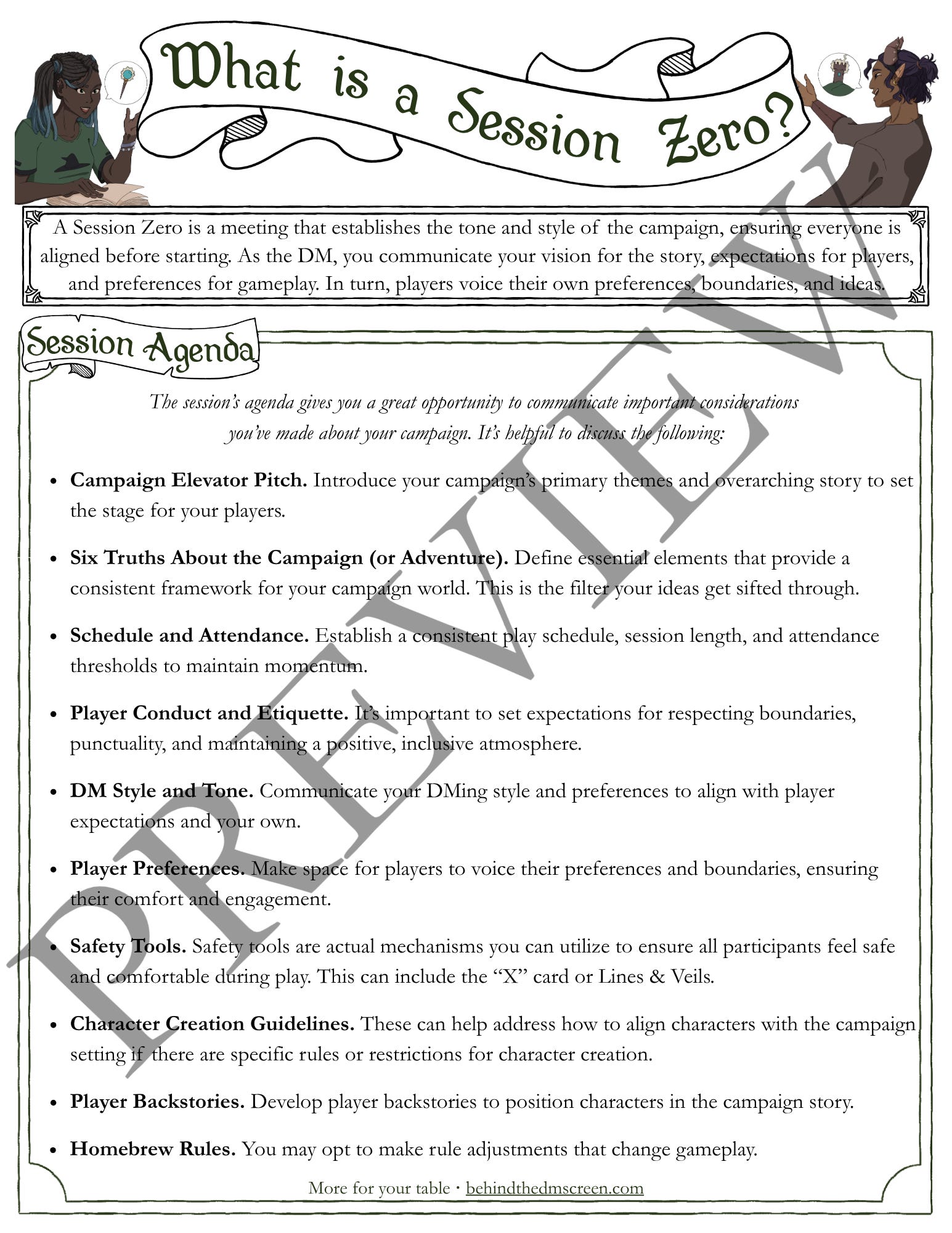
The “What is a Session Zero?” guide
A simple walkthrough of what a Session Zero is and why every campaign should have one. It lays out the full agenda, from your elevator pitch to safety tools to character creation, so you know exactly what to cover and why each piece is an important component to the session.
The Session Zero Checklist
This is the heart of the kit and it’s a set of fill-in worksheets that turn the agenda into something you can actually work through at the table. Below is how I run each piece and the why behind it. Fill them in as you go and by the end you'll have your whole agenda mapped out.
Elevator Pitch
The elevator pitch is the first thing I mention in the Session Zero about the campaign. It's the fastest way to give players a feel for the world they're about to step into. By this point you've already had the "what kind of campaign do you want?" conversation and landed on something together. The pitch just tells them what's going on in that world and what's at stake as spoiler free as possible.
Here's the pitch I opened my Vecna: Eve of Ruin campaign with while borrowing some text from the adventure itself:
Existence is in peril. For years, the lich Vecna has dreamed of remaking reality, and by the time our adventure begins, he's already a god. Never satisfied, he wants to become the most powerful being in the multiverse. To do it, he's devised the Ritual of Remaking: gathering powerful secrets, drawing out their energy, and weaving it into his own to rewrite history across every world. When we begin, he already has his secrets and the ritual is underway. You'll meet Vecna and his minions on a small scale at first, but this quickly becomes a multiverse-spanning adventure across the worlds of D&D. So get ready.
That short blurb sets the tone, builds the stage, and lets players understand the scale of the stakes before they build their characters. The whole universe is on the line and that sense of scope shapes the kind of heroes they’ll want to make. The more specific details you offer, the better understanding your players have about the campaign’s story.
One more thing I always fold into the pitch is the level range. Telling players that up front means they know where the whole thing is headed. In this case, it was levels 10-20.
Six Truths
After the pitch, I anchor the world with six truths. I first drew the idea from Sly Flourish’s The Lazy Dungeon Master, but I use it for more than a list of facts about the setting. For me, the truths are a filter for every idea that comes later.
A few from my Vecna campaign:
Comments
Nothing yet. Say the first thing.
Sign in to join the conversation.