
The commute is not where we expect to find meaning.
This liminal space within our real lives asks very little of us, and maybe that’s why we give so little back to it. Yet, we’re all familiar with it.
On average, we spend about 27 minutes en route to work or school each way. There’s a good chance you might even be reading this while in the middle of one. It’s rarely the highlight of our day. If anything, it’s something we pass through without much thought.
An in-between space. Not quite here, not quite there.
This repetition strips away meaning, but what it provides in its place is form. The commute of everyday life gives the rest of our day structure.
It is where we rehearse presence without realizing it. Where thought becomes softer, less directed. And in that softness, the human behind it all peeks out.
Reminder: You can support Behind the Masterpiece and get access to members-only content for a few dollars per month, such as:
Access to paid subscriber articles
Unlock the full curriculum: From the ‘Language of a Masterpiece’ to the ‘History of Colors’
Ask me anything about your favorite works or upcoming museum trips
Ability to comment and join community chats
Edward Hopper is well known for his depictions of the solitary. Empty streets, quiet diners, and the particular loneliness of being amongst others. You might remember his works circulating during the COVID-19 pandemic; after all, that sense of melancholy and distance we all felt, Hopper was—though preceding it by about a century—its visual author.
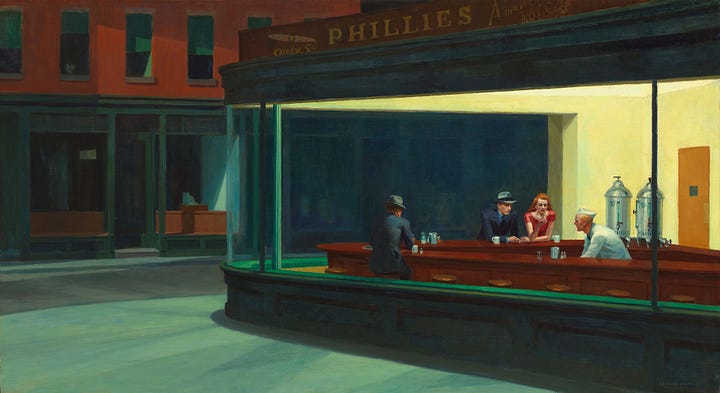
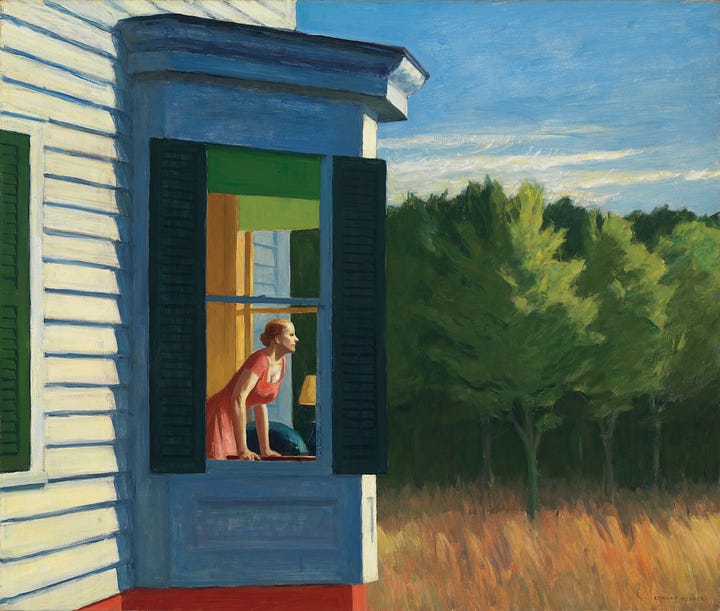
Given his interest in the internal terrain, it’s not surprising that he turned time and time again to the scene of the commute—a space that naturally places us into that state of introspection.
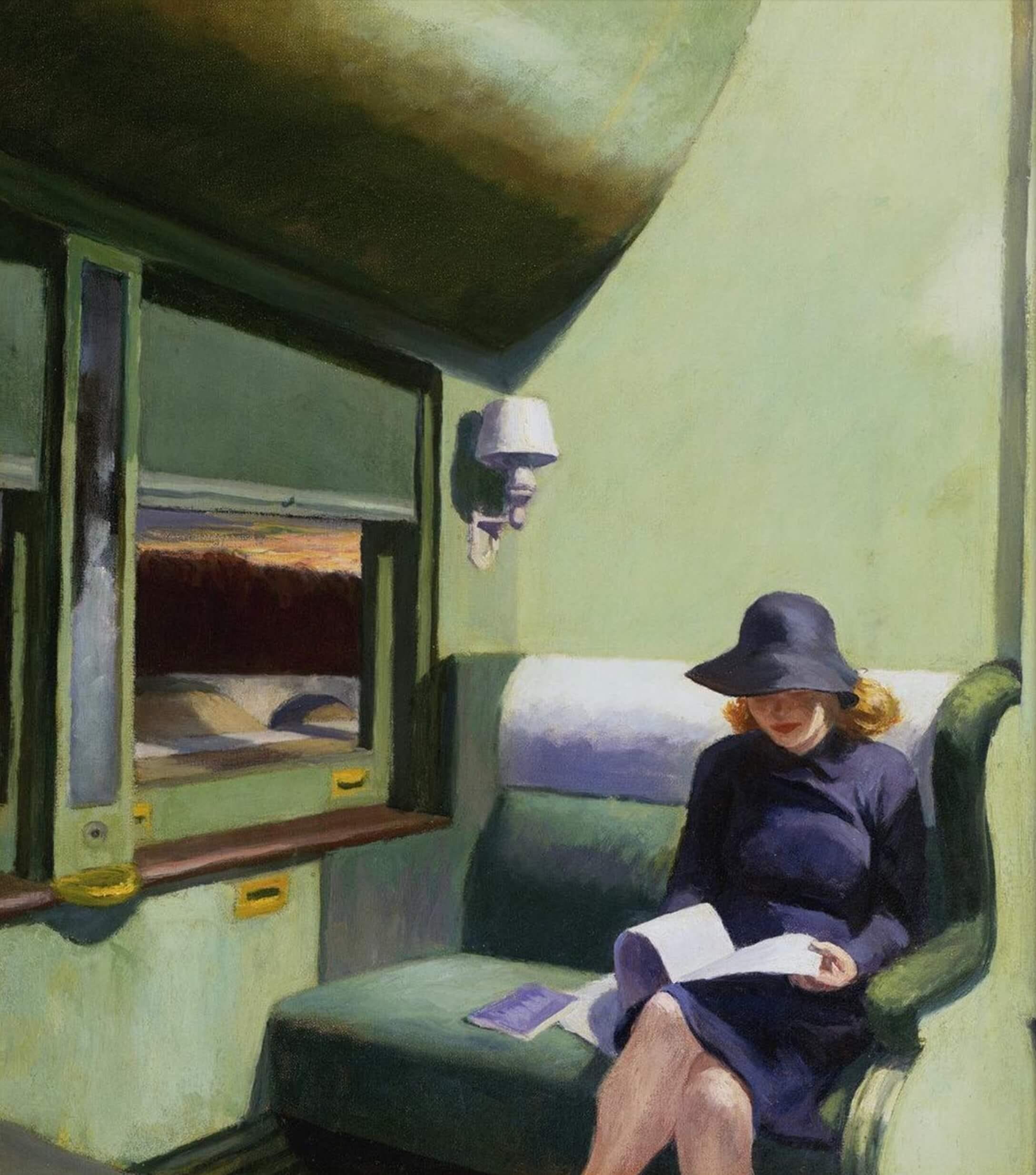
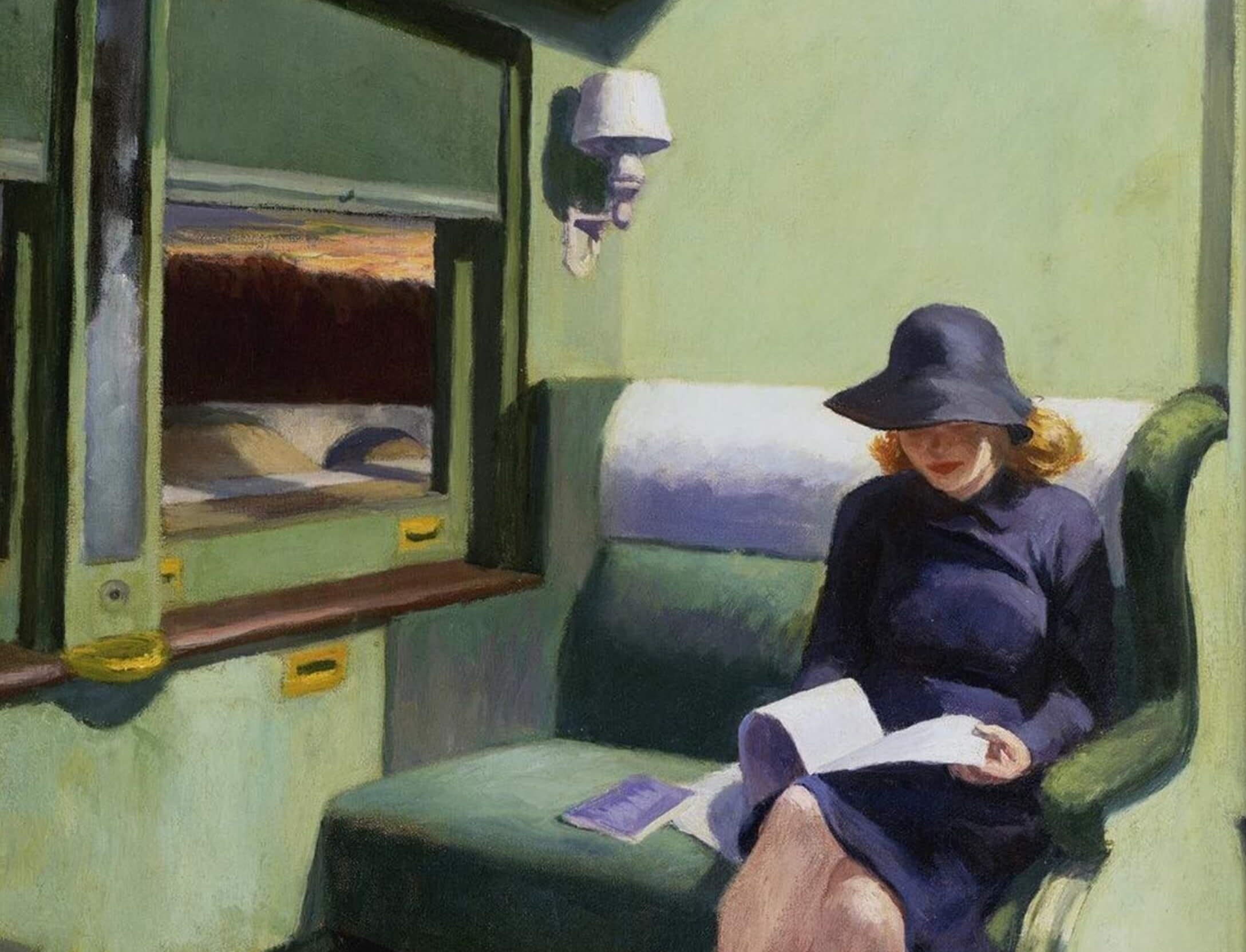
Here, we see a solitary female figure seated in a green carriage, moving through a natural landscape under a setting sun. Let’s put ourselves in this space—what do you hear? Perhaps it’s the rhythmic sound of the train beating against the rails, steady and audible, while the inside holds a weighty quiet. The sounds we hear become the soundtrack of the dreamy landscape of the outside. It’s special. Only you and I, along with our subject, are privy to this. In this space, a pocket set apart from everyday life, we gain access to thoughts and memories that might not surface elsewhere.
In Hopper’s works, his subjects often emanate a sense of discomfort. There is a tension in simply being—in occupying space, in sitting beside others, even in existing within the scene itself. But here, I find that it’s the opposite; a rare exception in the artist’s oeuvre.
She feels at home.
Somehow, in the commute, in the movement, in the in-between, she seems most herself. She is going somewhere, yes, but she’s not restless to arrive per se. She has already arrived.
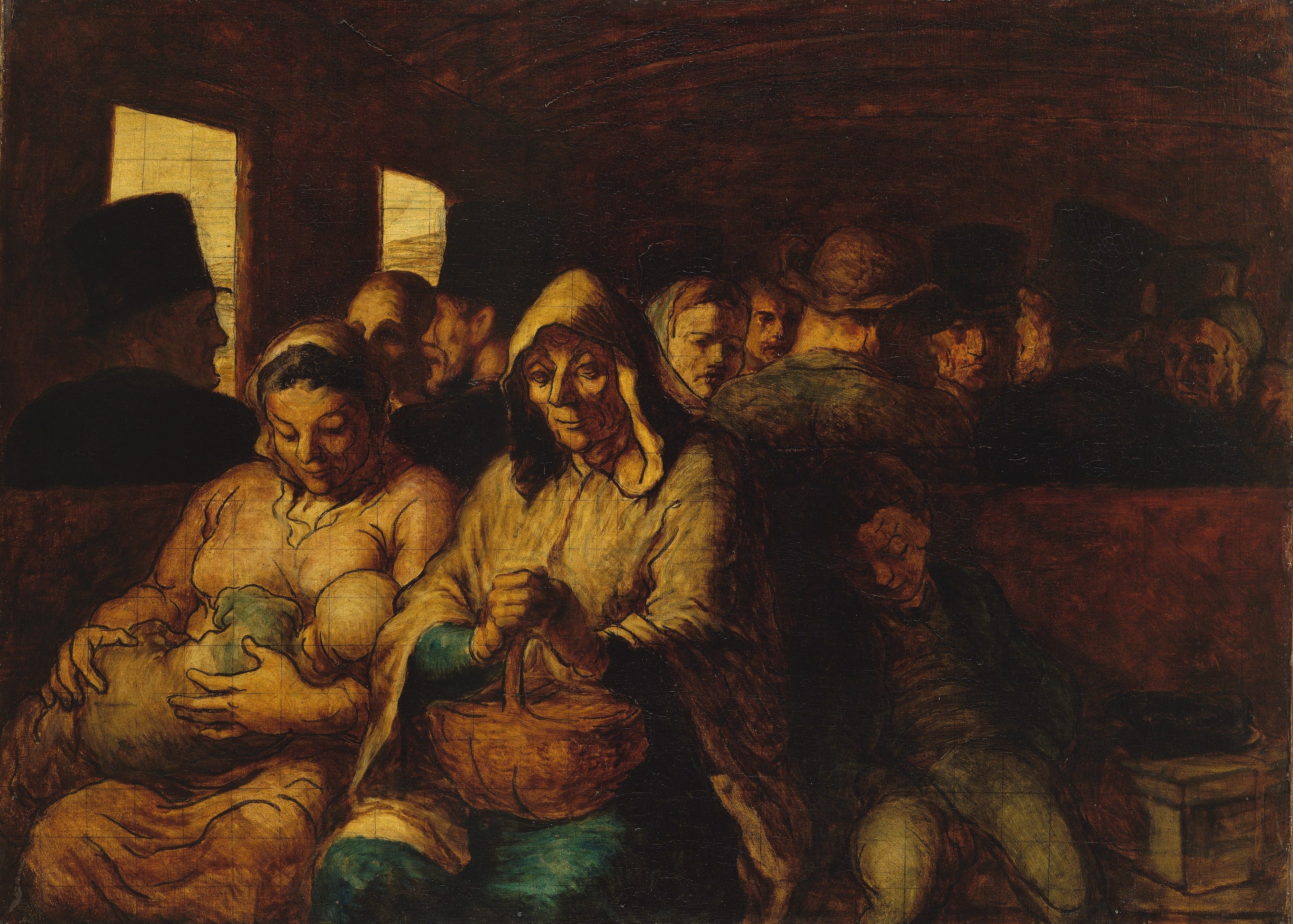
The French painter, Honoré Daumier, was an artist with a voice. He earned a living through his realist portraits of the middle class and caricature art for newspapers and chronicles. He used his talents not just to record, but to make a comment.
One of his thematic interests was the impact of industrialization on the modern urban life of Parisians in the 19th century. We can see an example of this in The Third Class Carriage.
Here, he brings us into the crowd occupying the interior of a railway’s economy (or third) class. These are not the people in positions of power, nor those with financial comfort or security, but those who move through the city without it, and yet bathed in Daumier’s light, they possess a dignified strength.
We see a nursing mother, an elderly woman, and a sleeping boy in the front. They anchor the scene. Behind them, we see only portions of the other travelers’ faces; they sit silently, their gazes falling onto one another, yet their looks are turned inward.
They too, not unlike us, sit within their mind’s eye and review the day that’s ahead of them.
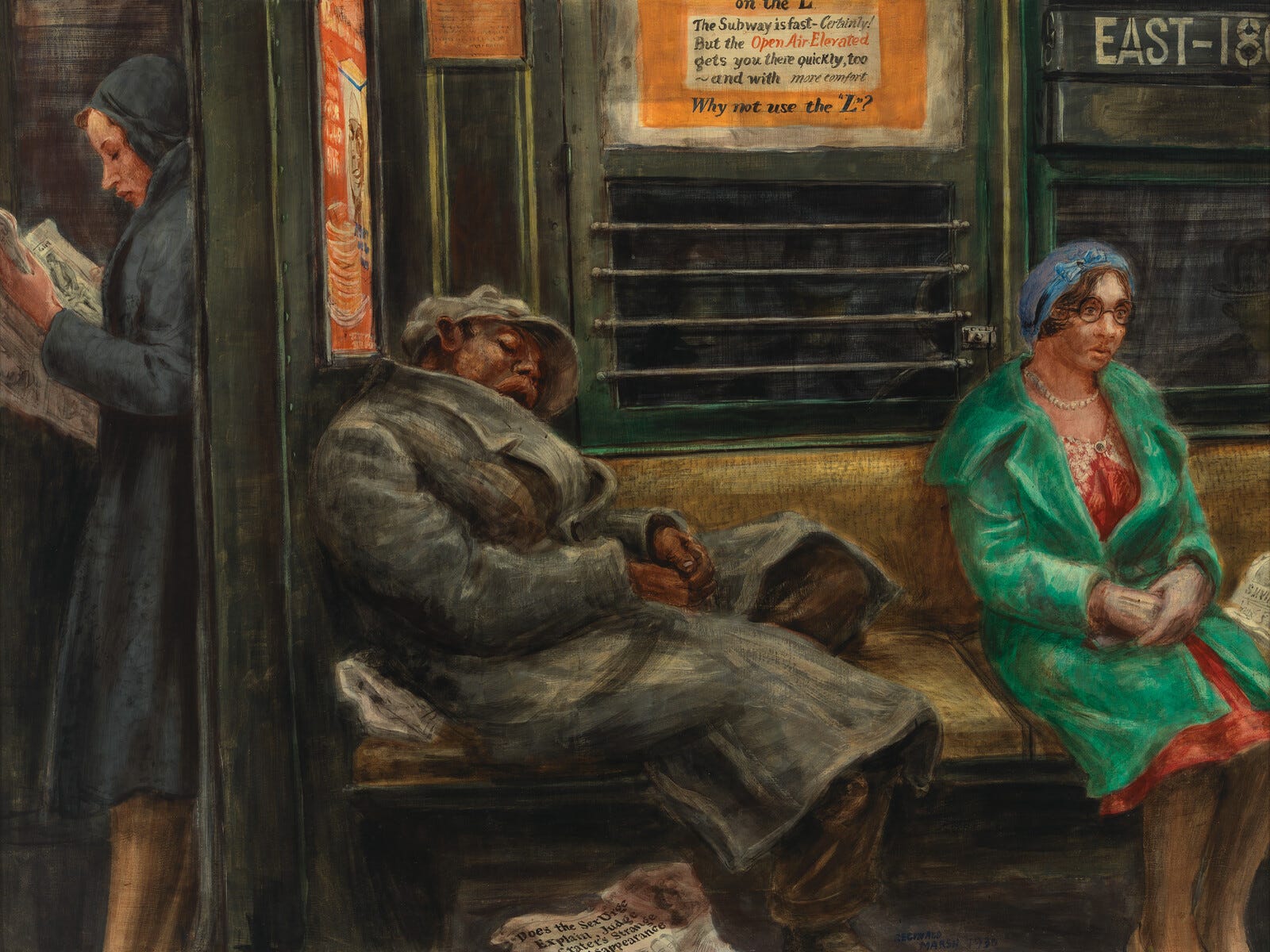
Reginald Marsh was a painter and photographer who worked within the Social Realism movement of the 1920s and 30s that accompanied the Great Depression. This movement had one and one intention only. To depict the real socio-political conditions of the working class, and in doing so, critique the power structures behind our society.
Here, we see three passengers on the elevated “L” train line of the New York City Subway. They fall into the categories of the commuters we all know and have personally been: the exhausted one, the distracted one, and the one lost in thought. Above them, we can see advertisement posters lining the carriage. Marsh actually copied these from real life into his sketchbook during his own commutes.
The one at the center top reads:
“The subway is fast—certainly! But the open Air Elevated gets you there quickly, too—and with more comfort. Why not use the ‘L’?”
It is from this very line that the painting takes its title.
With this work, we see a moment pulled from a decade-long artistic movement, one that took place at one of the most uncertain periods in American history. Yet, in looking at the painting, I don’t feel the 94 years that’s between us; it feels closer. We, too, carry this memory firsthand.
Hi. I want to thank you for your time, truly. Your support, whether it’s reading these posts, liking them, or watching any of my videos, means so, so much to me.
And if someone has shared this post with you, please don’t forget to subscribe to make sure you get the weekly articles.
No posts
Comments
Nothing yet. Say the first thing.
Sign in to join the conversation.