
Behind the Masterpiece is a free newsletter. If you love it, consider supporting it financially. For $5/month you'll get my deep-dive art history series, access to reader Q&As, and a direct line to me to ask your art history questions, or museum recommendations. My work is reader-supported, hence the lack of ads or sponsors. Thank you for being here!
There's a version of me (not my best self, I'll admit) who moves through a museum like I'm completing a task. Head up, eyes forward, ticking off the famous names before my feet start to complain and I locate the nearest café. I suspect I'm not alone in this.
And yet, recently, I found myself standing in front of a painting I’d walked past before, and this time it felt right to come to a full stop. It felt similar to spotting a familiar face across a crowded room and approaching to catch up. Not a close friend per se, but someone I had met before, whose name I knew, whose energy I could recall, someone who made the room feel slightly less unfamiliar.
So I stayed a little longer than I had planned. It turned out that there was more for both of us to talk about.
A study conducted in the permanent collection of the Metropolitan Museum of Art (the MET) in New York City found that when visitors return to a work of art, their engagement with it increases from 33.9 seconds to 50.5 seconds—about a 49% increase. And what’s more is that half of the visitors, 55.3% to be exact, who viewed an artwork once actually returned, sometimes up to six times. That’s lovely to hear.
As we spend more time with the artwork tucked away in the corner of the room, the one that caught our eye on the first pass, we start building something. Familiarity, perhaps. Affection, certainly. Time is all our loved ones ever ask of us, and artworks are no different. So let's spend time together and see where the conversation takes us next.
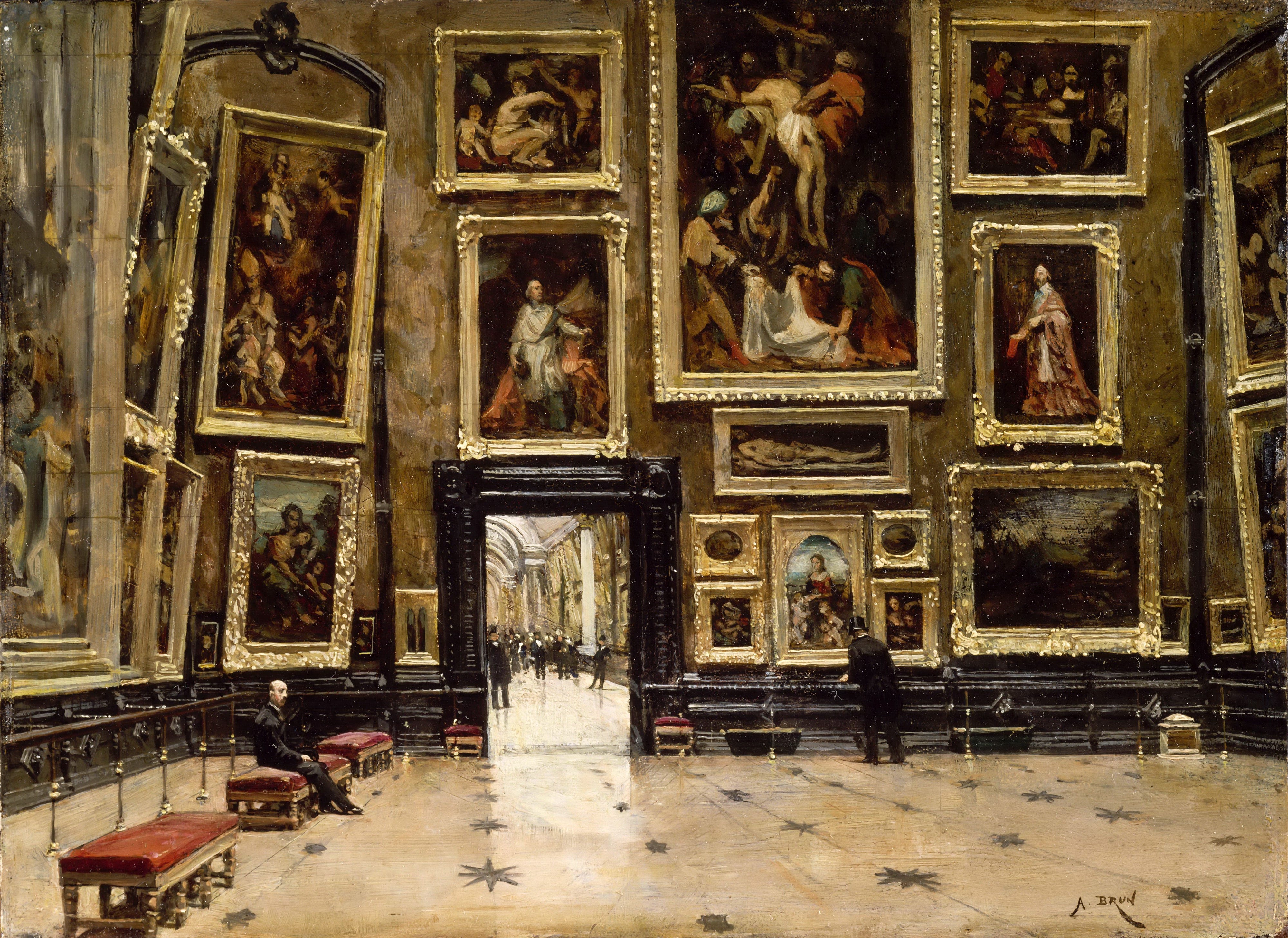
Most museum visits are rushed, and not entirely by choice. There's simply too much: too many halls, too many works, occasionally too many other people standing between you and the thing you're trying to see. So the first visit tends to become about recognition.
Do I know this one? Do I recognize any part of it? When is it from? Who made it?
That kind of thing. The subject, the artist, the time period, the style — the basic coordinates. Similar to what it’s like meeting someone for the first time. You're not really listening yet; you're building an impression, deciding whether this is someone you want to stay with a little longer or politely edge away from.
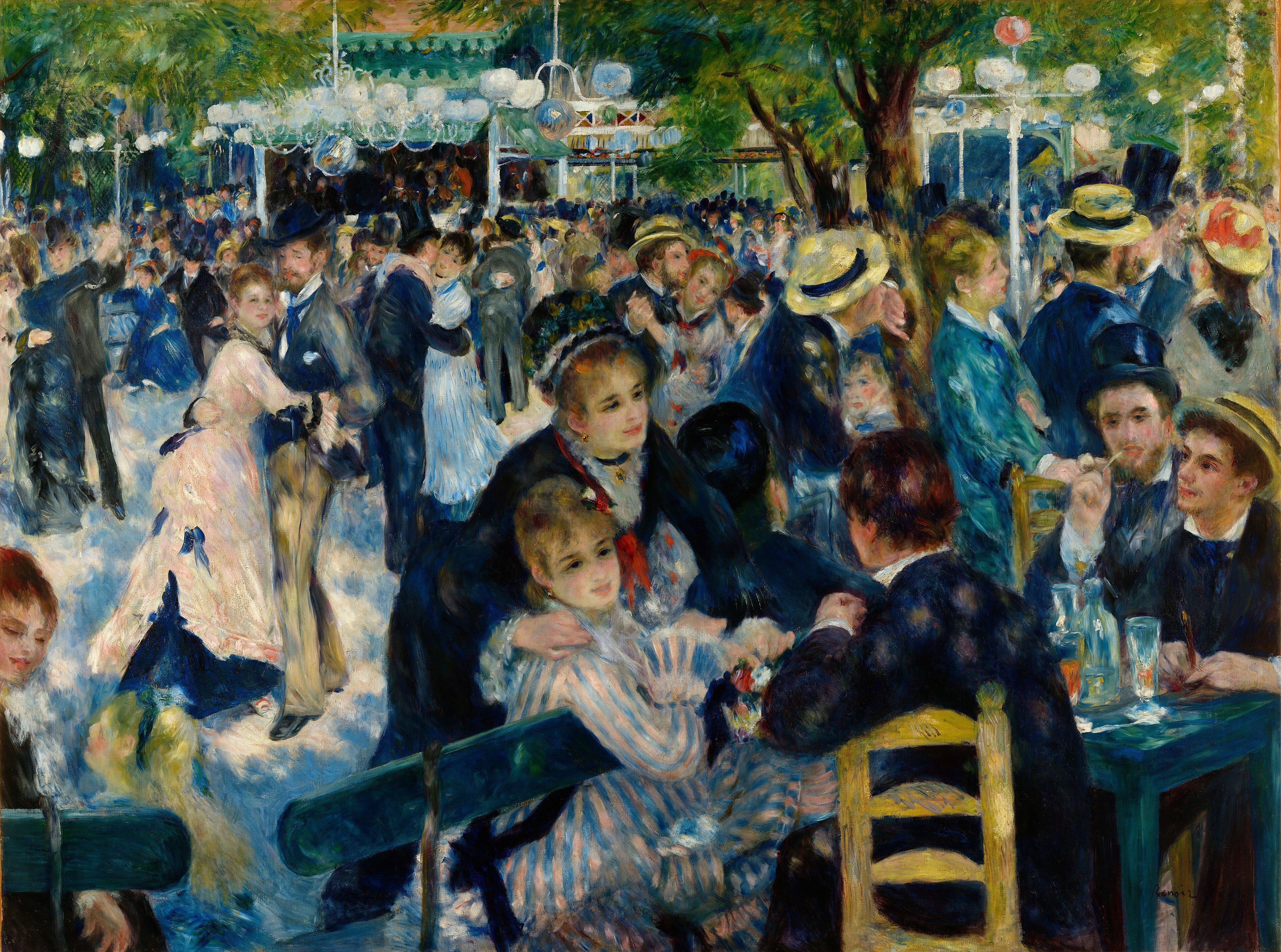
Let’s practice together. Take Auguste Renoir’s Bal du moulin de la Galette from 1876, currently held at Musée d’Orsay in Paris.
First time around, it reads pleasantly enough: people, sunshine, a summer afternoon. A group of figures, too many to count, are covered with dappled sunlight that touches every surface of the scene. It’s a gathering, as suggested by the title, from the 19th century, as suggested by the date. The short brushstrokes, the outdoor scene, the depictions of everyday people, and the focus on sunlight place it well within the Impressionist movement.
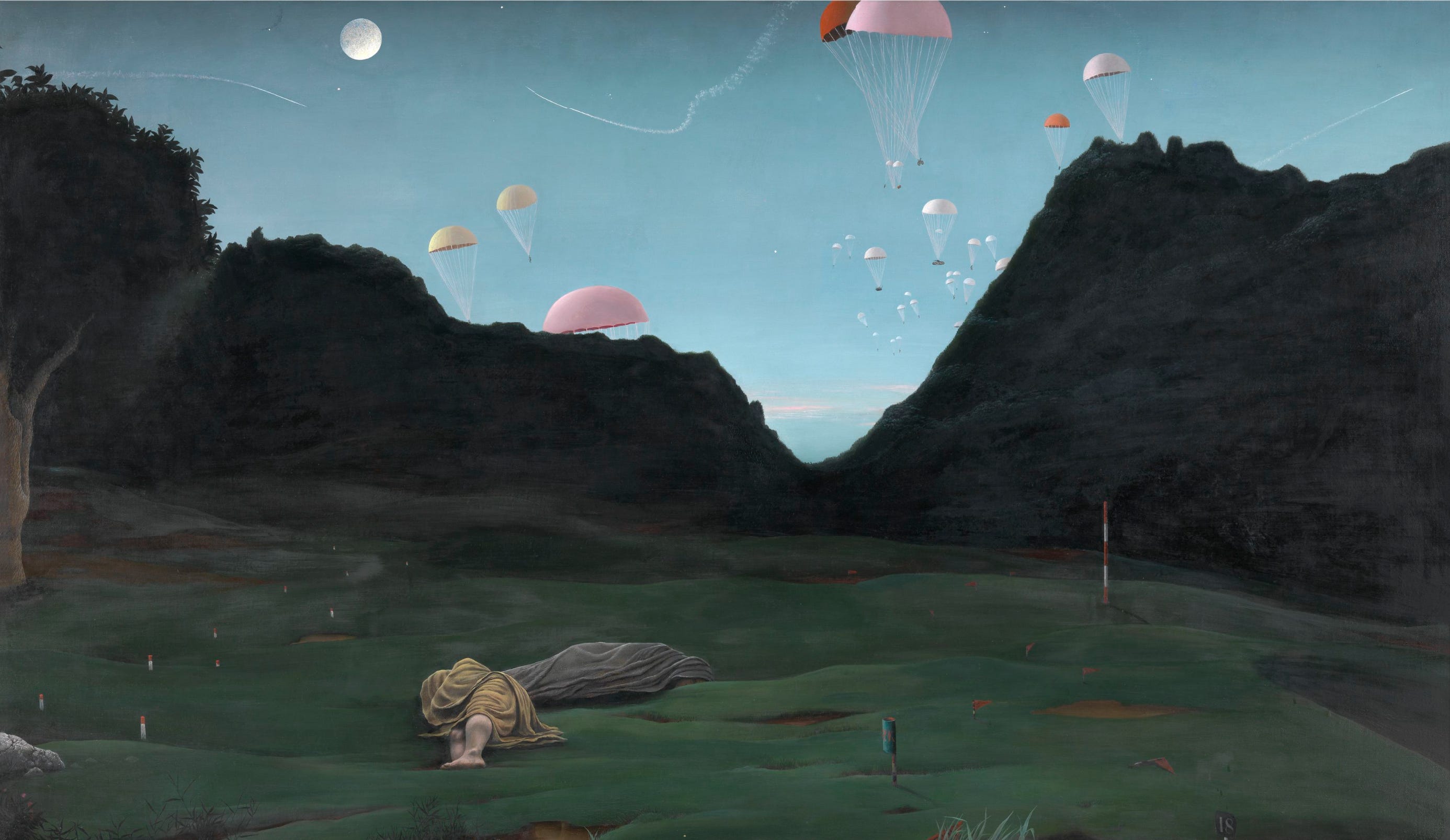
Now let’s take a more recent example— Het uur U III by the Dutch artist Pyke Koch from 1971, currently held at the Royal Museum of Fine Arts Antwerp in Belgium.
What can you see? A green golf course with hills nearby obstructing our view of the distance. A pale blue sky holds several pastel-colored parachutes and a full moon in its upper left corner. The dark green shades of the hills suggest it is dusk. In the foreground, a figure or two lie, their faces and bodies covered in cloth, with only one set of legs showing.
The return is where things get interesting.
The artwork is the friend you make a beeline for in a room full of strangers — standing close, letting the temperature of things settle, before you feel brave enough to venture back out into the crowd. A familiar face in an otherwise unfamiliar, occasionally overwhelming space. So let’s thank them.
This goes some way to explaining why people return to a piece multiple times despite technically having already seen it. A painting viewed at different times in our lives—at 20, 40, and 60 years old—can feel like a different piece each time, changing as we do. We’re still getting to know each other.
And so, repeat viewing becomes partly a record of your own life and shifting interests. The friendship metaphor earns its keep here: old friends stay the same, yet every reunion feels different.
Comments
Nothing yet. Say the first thing.
Sign in to join the conversation.