
2-Minute Summary:
Photography’s principle of camera obscura (light through a small hole projecting an inverted image) was observed as early as the 5th century BC and described scientifically by Leonardo da Vinci in 1502.
Light-sensitive chemistry was discovered by Johann Heinrich Schulze in 1727, and then used by Nicéphore Niépce in 1827, who combined it with camera obscura to make the first permanent photograph.
In the early 19th century, Louis Daguerre improved the image clarity and tonal ranges of a photograph with his Daguerreotype, and William Henry Fox Talbot invented the negative-positive process, which allowed us to create reproducible prints.
Beyond technical history, key photographers such as Paul Strand, Alfred Stieglitz, Yves Klein, Dorthea Lange, Helen Levitt, Nan Goldin, and Lee Miller shaped the medium’s use in social representation, artistic principles, technical developments, and documentary commentary.
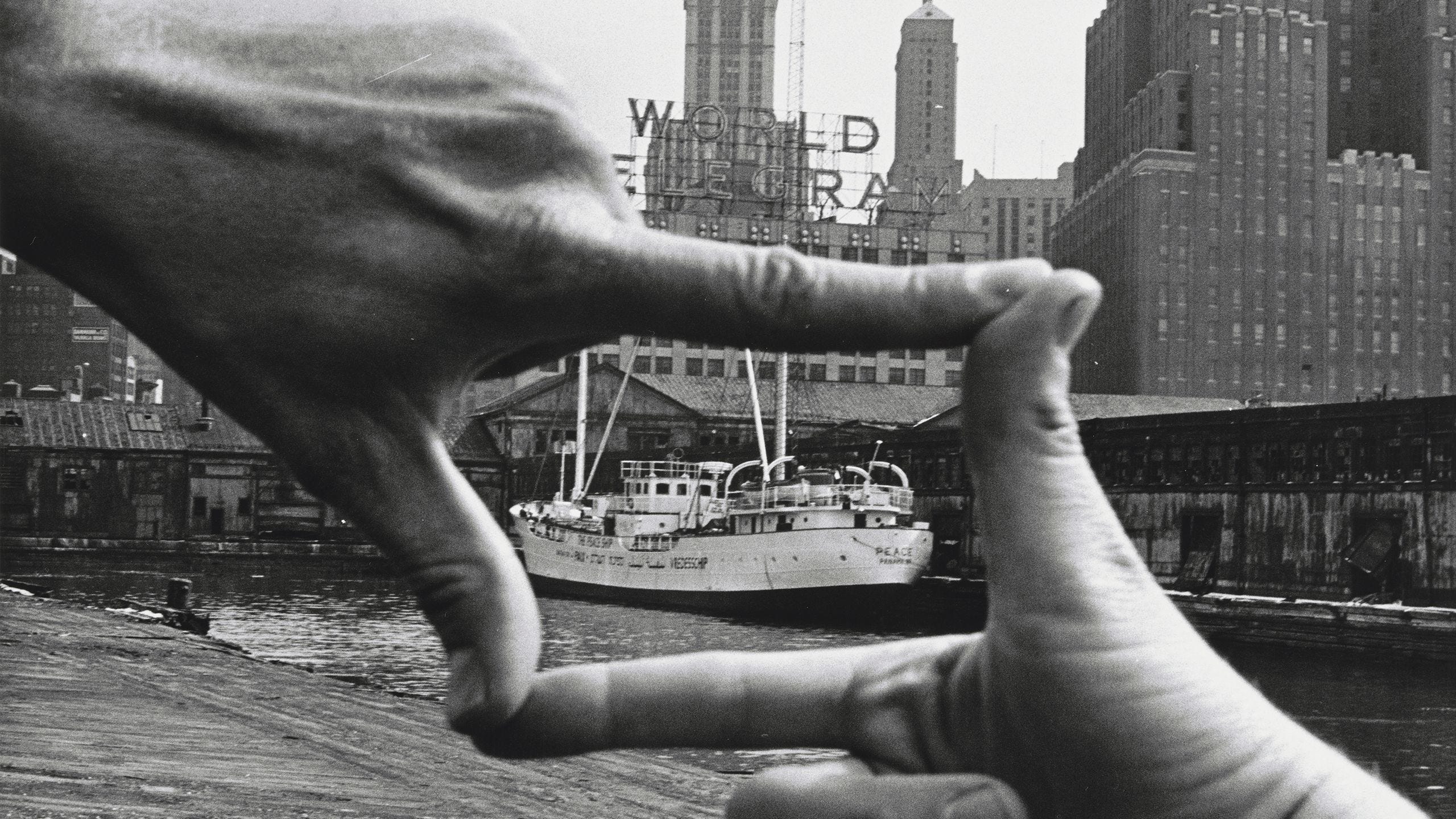
I’ll admit it: I have taken photography for granted. I snap a handful of pictures a week and delete most without a second thought.
But that convenience itself is something close to a miracle, as we’ll see today. A box, a hole, a bit of chemistry, and somehow the world holds its pose long enough to be remembered, to come with us into the future.
We didn’t always have this, though. For most of human history, a sunset, the faces of our loved ones, and an awe-inspiring landscape simply gave in to the moment and vanished. So today, let’s find out how we got here.
In this piece, we’ll look at:
The Origins
The Development
The First Photograph
Modern Photography
Reminder: You can support Behind the Masterpiece and get access to members-only content for a few dollars per month, such as:
Access to paid subscriber articles
Unlock the full curriculum: From the ‘Language of a Masterpiece’ to the ‘History of Colors’
Ask me anything about your favorite works or upcoming museum trips
Ability to comment and join community chats
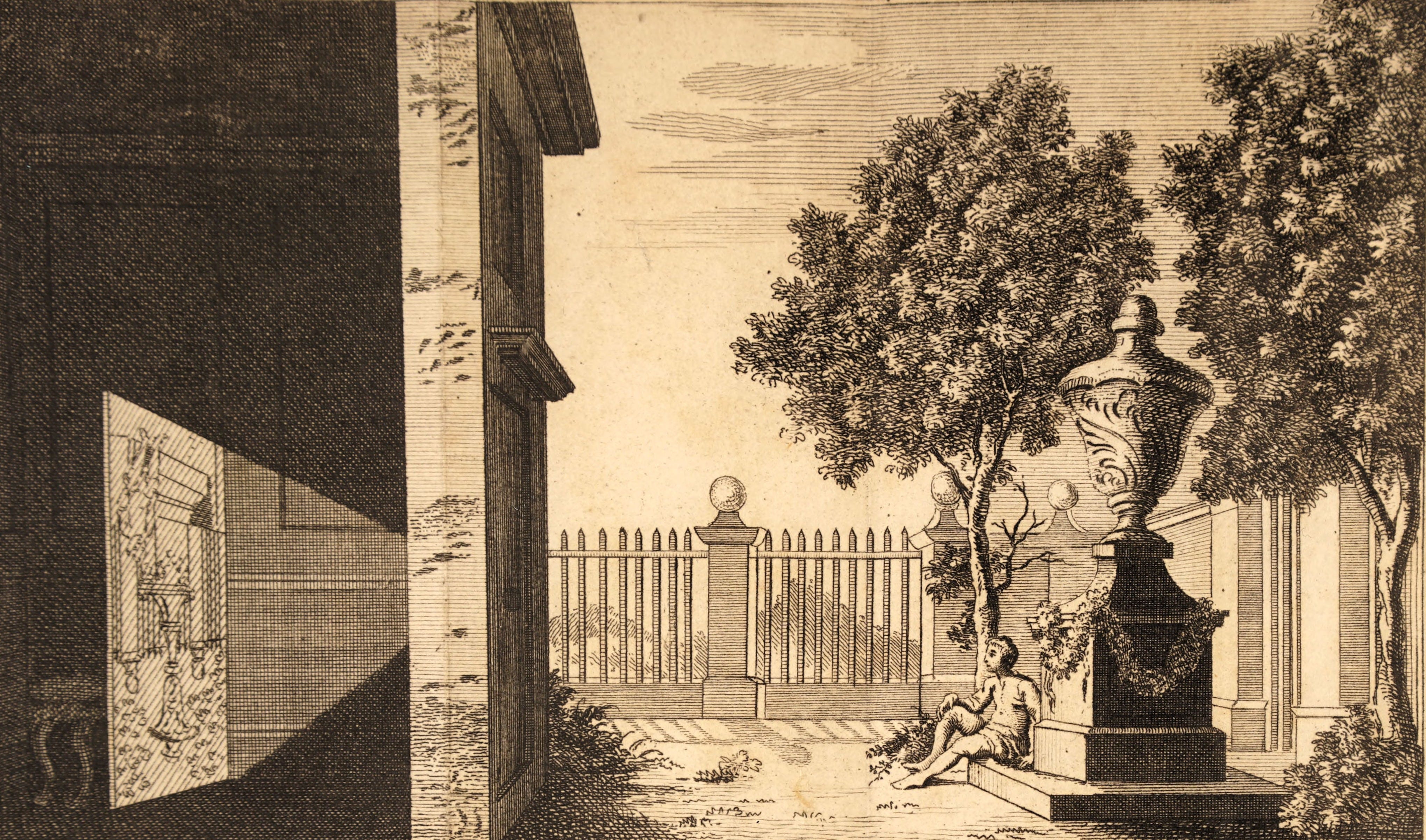
Here’s how photography works: Light travels in straight lines, so if you poke a small hole in the wall of a darkened room, the world outside comes in, and it’s projected upside down onto the opposite wall. The Latin name for this is camera obscura, which translates, rather fittingly, to dark chamber. The earliest versions of utilizing this optical phenomenon were, in fact, in literal rooms.
The principle itself had, however, been observed long before anyone thought to do anything particularly useful with it. The oldest known mention of the effect belongs to Mozi—a Chinese philosopher and the founder of Mohism—during the 5th century BC. He noticed that light entering a small opening in a darkened space created a reversed image, and called it the “locked treasure room.”
It took a Renaissance polymath to really articulate scientifically what was happening. Leonardo da Vinci, a man who seems too curious and too talented to be real, was familiar with the work of the Arab scholar Alhazen. He had extensively studied the physics and physiological aspects of optics and wrote the oldest known clear description of the camera obscura in his book, Codex Atlanticus.
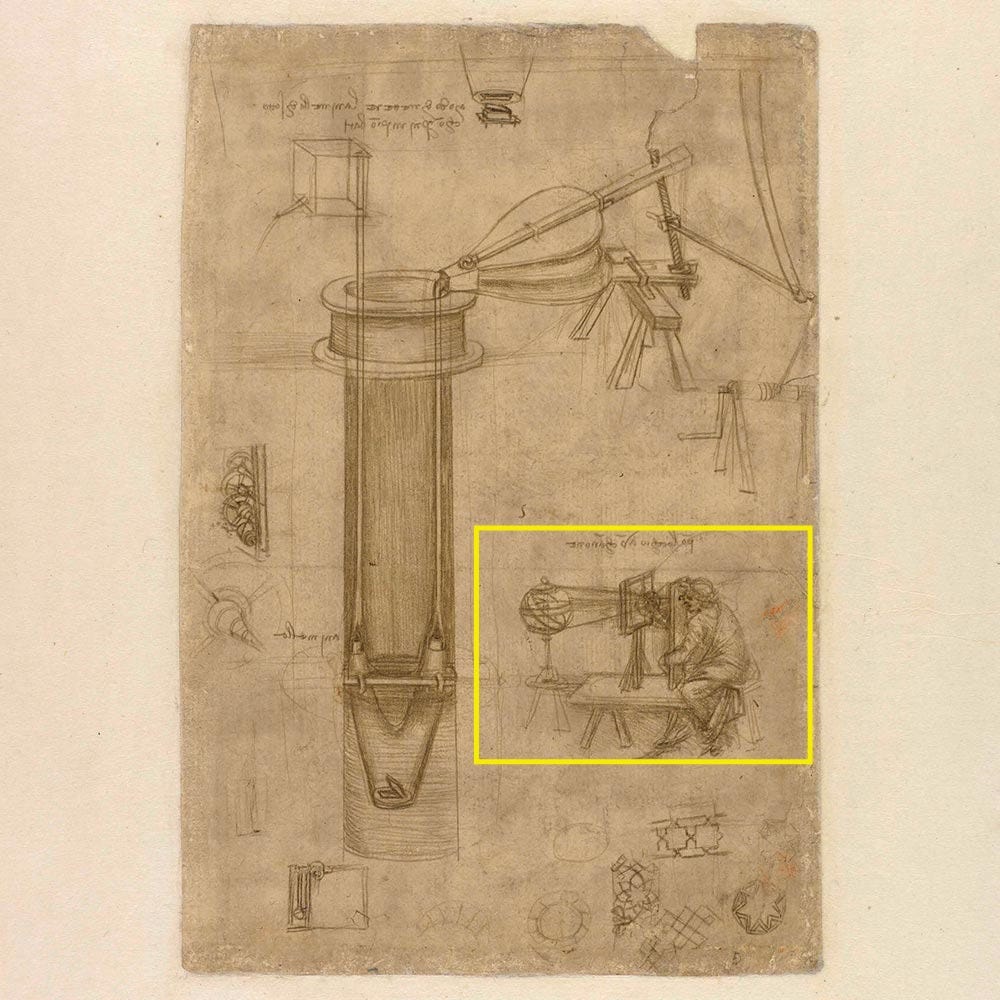
Da Vinci was also the one to notice the striking similarity between the way the camera obscura worked and the way the human eye functioned: light reflecting off an object, travelling through a tiny opening, and landing upside down on a surface on the other side. But he couldn’t yet figure out how our eyes inverted the image to make it appear right-side up.
So now the question you might be asking is, how did anyone get the image to stop appearing upside down?
That happened in 1585, by the Venetian mathematician Giambattista Benedetti, who proposed in his book Diversarum Speculationum Mathematicarum to use a mirror at a 45-degree angle to project the image upright.
Next came the miniaturization of the process. The obvious limitation of a room-sized camera is that it requires you to have an entire room: highly impractical and untransportable.
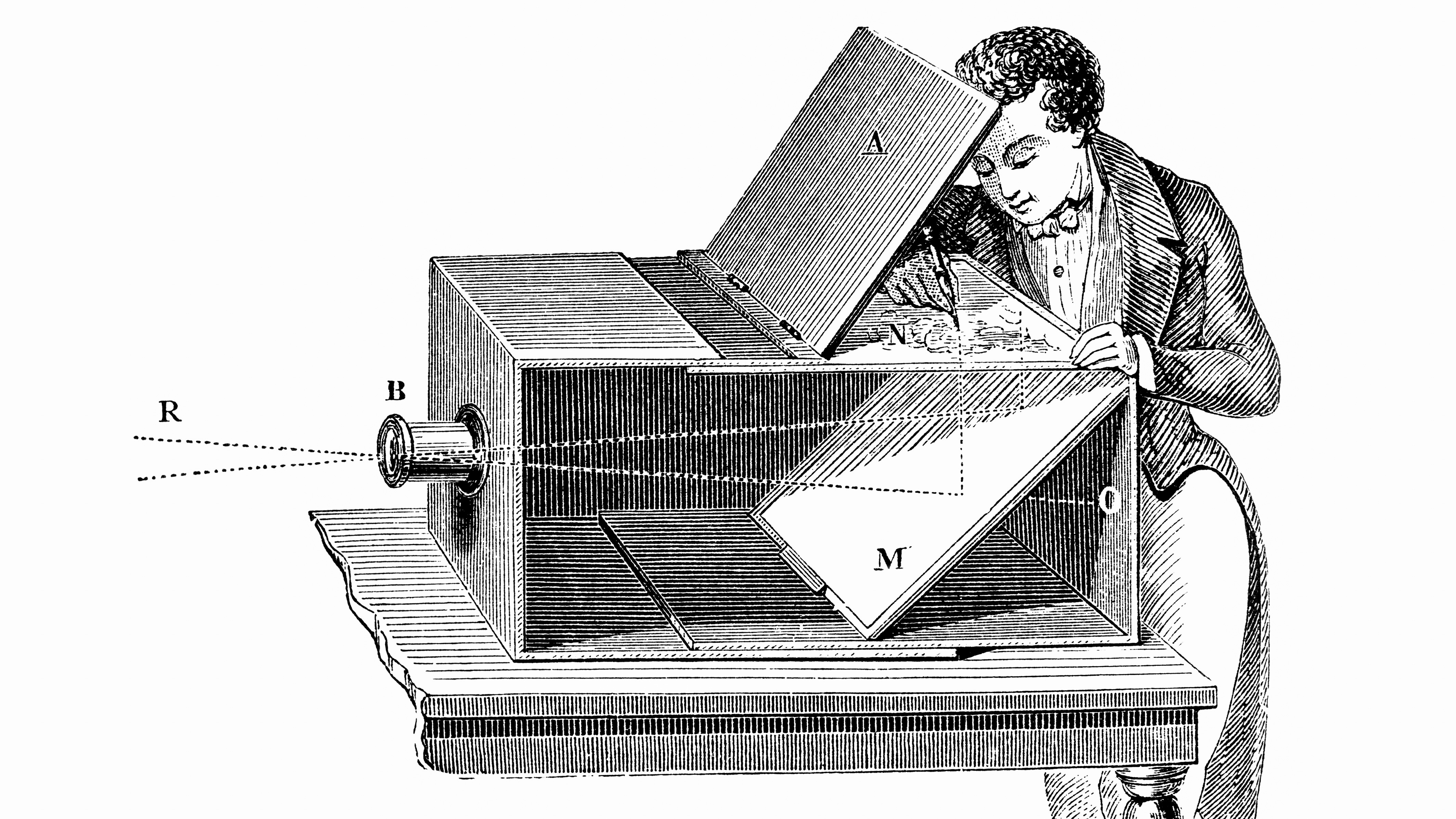
In the 17th century, a portable camera obscura was made: a small box with a lens at one end and a translucent screen at the other. The pinhole had to be the exact correct size. Too large, and the image will be blurry; too small, and it will be too dim to make out. It is, in essence, the eye. Then, add a mirror to deflect the image upward, a hood to shade the screen, and you have something that closely resembles a modern reflex camera. The image that came in was then captured by hand, by placing a thin paper over the screen and tracing it.
It’s important to distinguish, however, that projection does not mean preservation. We could not yet capture it chemically, permanently, and automatically.
Light changes things, we know that. It fades colored fabrics. It turns vegetation green. And, for the purpose of our conversation today, it darkens the salts of silver — a chemical reaction in which exposure to light leaves behind pure metallic silver, which appears black. This light sensitivity was first observed in 1727 by the German Professor of Anatomy and Chemistry, Johann Heinrich Schulze.
Comments
Nothing yet. Say the first thing.
Sign in to join the conversation.