
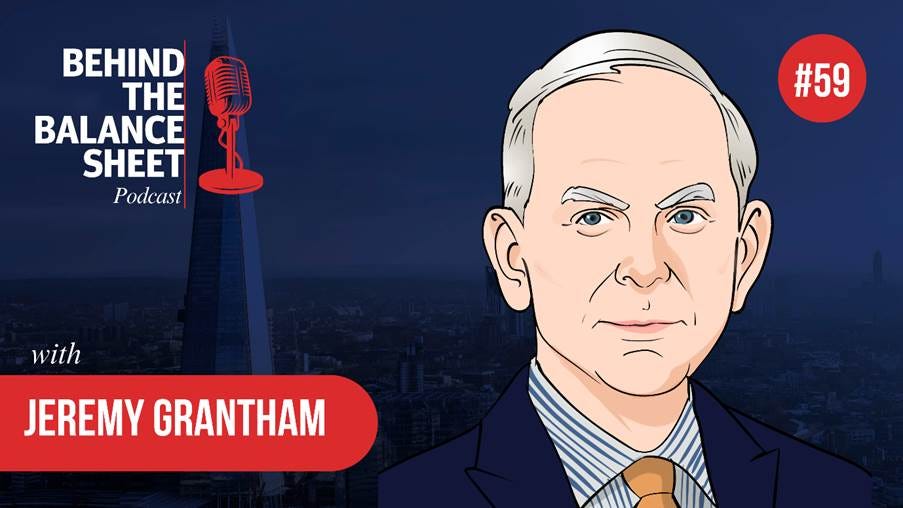
This month’s podcast guest is Jeremy Grantham, co-founder of GMO and famed for his work on bubbles. He is still intellectually sharp at 87, experimenting with AI and continuing to work.
He has written a book (The Making of a Permabear: The Perils of Long-term Investing in a Short-term World) with Edward Chancellor. In a similar vein to Capital Account and Capital Returns, Chancellor mined his past writings for material, as well as interviewing him extensively. Edward used to work for GMO, so he was the natural choice and he has done a brilliant job. Not only is the book full of wisdom, but it’s really well written.
Chancellor is one of the speakers on Russell Napier’s A Practical History of Financial Markets course (be quick, it runs next week in central London) and had arranged to interview Grantham at the Library of Mistakes in Edinburgh. When I heard, I contacted him and we arranged to record the podcast there.
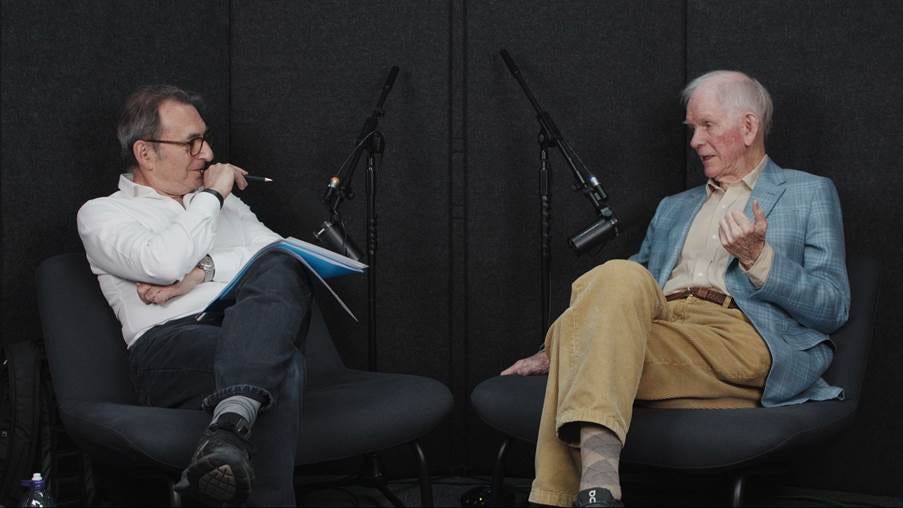
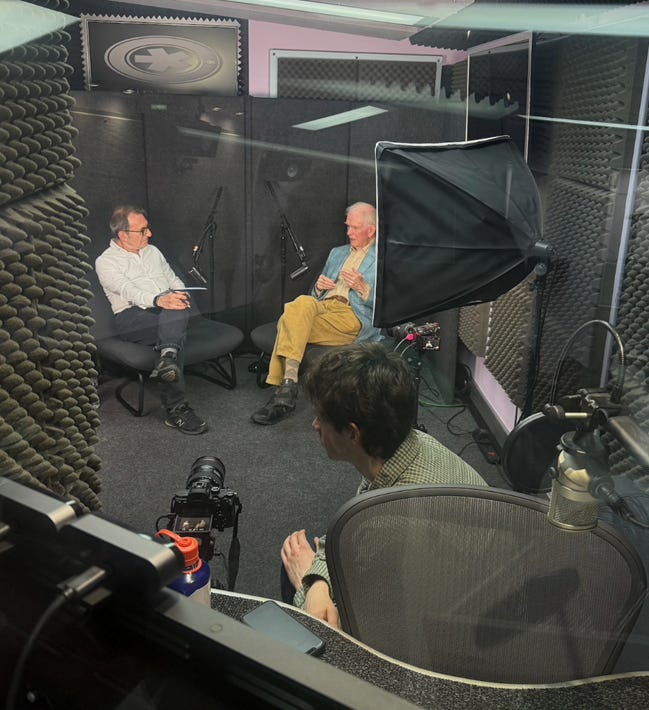
I watched as Jeremy was interviewed by Edward at the Library of Mistakes and I was kindly invited to dinner afterwards with various luminaries of the Edinburgh investment scene. I ended up being seated close to Jeremy and had a most enjoyable and fascinating dinner.
We also discussed the foundation’s work, which has centred around climate change, resource depletion and more recently toxicity. This was a subject new to me, but Jeremy explained that sperm counts have been in a precipitous decline and couples increasingly need help to have children. This is an extremely long term problem but a serious one. And it’s characteristic of Grantham that he should seek out this information and publicise it.
I shall be writing a little more about health, as so many advances are being made and it’s a great area of exploration and investment. I had a Neko Health scan recently and it was a medical experience like none other – this is future medicine and once I have had a conventional full medical, I shall compare the two in a future article.
The book is excellent and explains that Grantham and his two co-founders at GMO didn’t really get on, which led Jeremy to switch from small-cap to quantitative investing. The thing was, however, that they didn’t have a computer., so they needed to do all the back testing manually. Imagine the effort; and the information advantage!
When they bought their first computer, a mainframe, they were able to do much more but their competitive advantage was quickly lost. Grantham was also one of the first proponents of index investing, another sign of the originality of his thinking.
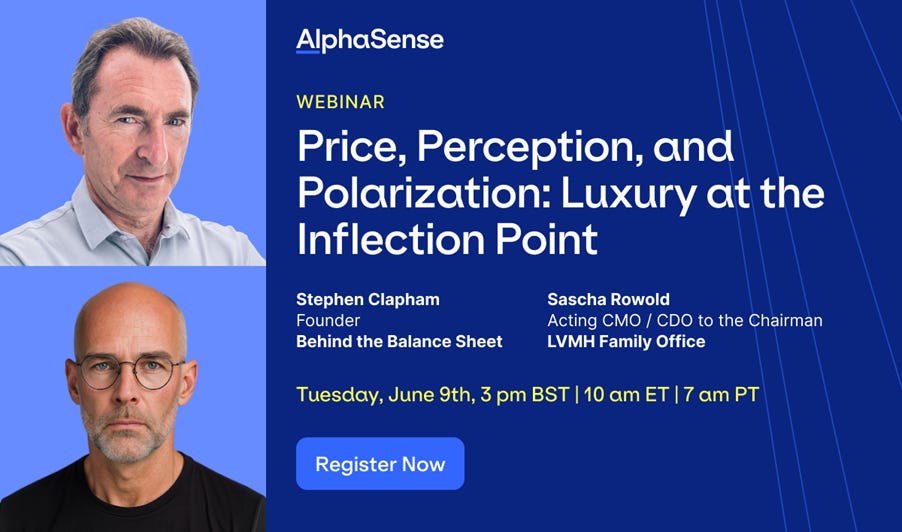
Before we get to Grantham’s views on bubbles and AI, a quick word from my sponsor, AlphaSense.
Last year, I did an interview with Sascha Rowold, Acting Chief Marketing Officer at LVMH, discussing what had happened at Kering and asking if it could recover. A year or so on, we are teaming up again to discuss the outlook for the luxury sector. The sector faces challenges particularly in China, a key market where younger consumers in particular are being drawn to new local brands, while the backdrop of a slowing economy and property price pressures are unhelpful to wealthier consumers’ propensity to spend.
Readers will not be surprised that Grantham believes we are in an AI bubble now, and he expects the market to fall by 50% - that was when we recorded in April. He and the GMO team have examined 27 market bubbles and in every case the market retreated to the previous trend which is the rationale for this call.
One of the clues that we are near the top is that the flakier stocks, often the small caps with no earnings, which had done brilliantly in the bull run, start to top first. In 1929, the S&P Low Priced Index went down before the market crashed, but it’s unusual for the small high beta stocks to actually fall while the market is making new highs; they are, however, the first to top.
He observed a similar experience in the dot.com bust where the growth stocks topped out and crashed from March 2000 but the S&P regained its prior high in September when Cisco and similar were already down 50%.
He believes a similar process was under way in 2021. He cites the story of QuantumScape, a battery company in which he had made a large personal investment – it was too large and too risky for his foundation. The company went public via a SPAC deal at $10, 4x his original investment.
In 3 months, it hit $131, and was as big as GM. He was locked in and not allowed to sell for six months – the position was several $100m but by the time the lockup expired, the stock was $25. He sold and it went to $4. Similarly the ARK ETF run by Cathie Wood was down 30% or more before the S&P fell in 2021/22.
Grantham believes that 2022 was the start of a bear market but it was interrupted by the announcement of Chat GPT when the market went all-in on AI. A bear market had never in the past been halted by the arrival of a new speculative bubble, but that’s his analysis of what has happened in this cycle.
Of course, AI is a revolutionary technology, unlike anything which has preceded it, so people are saying “this time it’s different”. Jeremy simply laughed at that suggestion. Next month’s podcast guest, recorded on Wednesday morning, said exactly the opposite!
Grantham told me that GMO didn’t have a single person whose job description was sales for 22 years. When you are doing well, you can sell any new product. If you are doing badly, you cannot sell any new product, regardless of the opportunity. He and his partners initially did all the selling; then the performance effectively became the sales person and he would go to an initial meeting and often not speak to a client thereafter, unless they asked for a meeting.
Jeremy got GMO into asset allocation almost by accident. They were value managers but had started a growth fund because it was so cheap. When it got to fair value, they told their clients to get out as they had captured the outperformance as the style reverted to the mean. Their clients then asked them what next which is how Jeremy started an asset allocation offering.
In the dot.com boom, Grantham refused to participate and as they underperformed, he became more and more vociferous about it, speaking at conferences and debating the bulls. In this period, GMO lost half its clients but even more in market share, as their fund was going sideways and participants in the bubble were shooting the lights out. In the ensuing bust, of course the positions were reversed.
But not one of GMO’s clients who left came back. Lots of new clients invested with them as they became the star performer and Grantham’s vocality during the boom was remembered. But the former clients who had pursued the performance were too embarrassed to return.
Therein lies an uncomfortable lesson: for an investment firm, doing the right thing can be commercially disastrous. Hence no large firm will tell their clients to sell, even at the height of a bubble when the managers themselves may believe that’s the right thing to do.
Jeremy believes man is programmed for optimism because pessimism was not a good survival characteristic. For hundreds of thousands of years, it helped you to be optimistic and that’s why bull markets are longer than bear markets. It also means we are not good at thinking long term and have no interest in anything longer than saving some food for winter.
The Grantham Foundation for the Protection of the Environment was established in 1997 by Jeremy and his wife, Hannelore, whom I also met, with the mission to protect and conserve the natural environment. The Grantham family had been on a series of holidays and were shocked by how fast the world was disintegrating and the foundation was set up to do something about it.
The foundation makes grants to scientists and non-profits to drive advocacy and research in these areas and also engages in philanthropic venture capital – they finance ventures which don’t have a commercial rationale but can drive some benefit to society. By the end of 2026, or early in 2027, Grantham hopes to have given away a billion dollars. Quite an achievement.
Premium subscribers can read on for one of the most interesting quality-growth ideas I’ve heard this year and own myself - a UK company with dominant market share, 60%+ gross margins, a strong cyclical tailwind and a valuation that looks more “deep value” than quality compounder.
I also explain why I think most investors have misunderstood Ferrari’s controversial EV strategy, and why Albert Manifold’s abrupt BP departure reminded me of an expensive investing lesson from my own portfolio.
Comments
Nothing yet. Say the first thing.
Sign in to join the conversation.