
The concept of transwarp was introduced in Star Trek III: The Search for Spock with the Excelsior class ‘great experiment’, and ultimately proliferated during many episodes of Star Trek: Voyager. The term transwarp has been used to describe special superluminal drives and wormhole-like passages, called ‘conduits’, where each of which have been characterised by being somehow faster than conventional warp.1
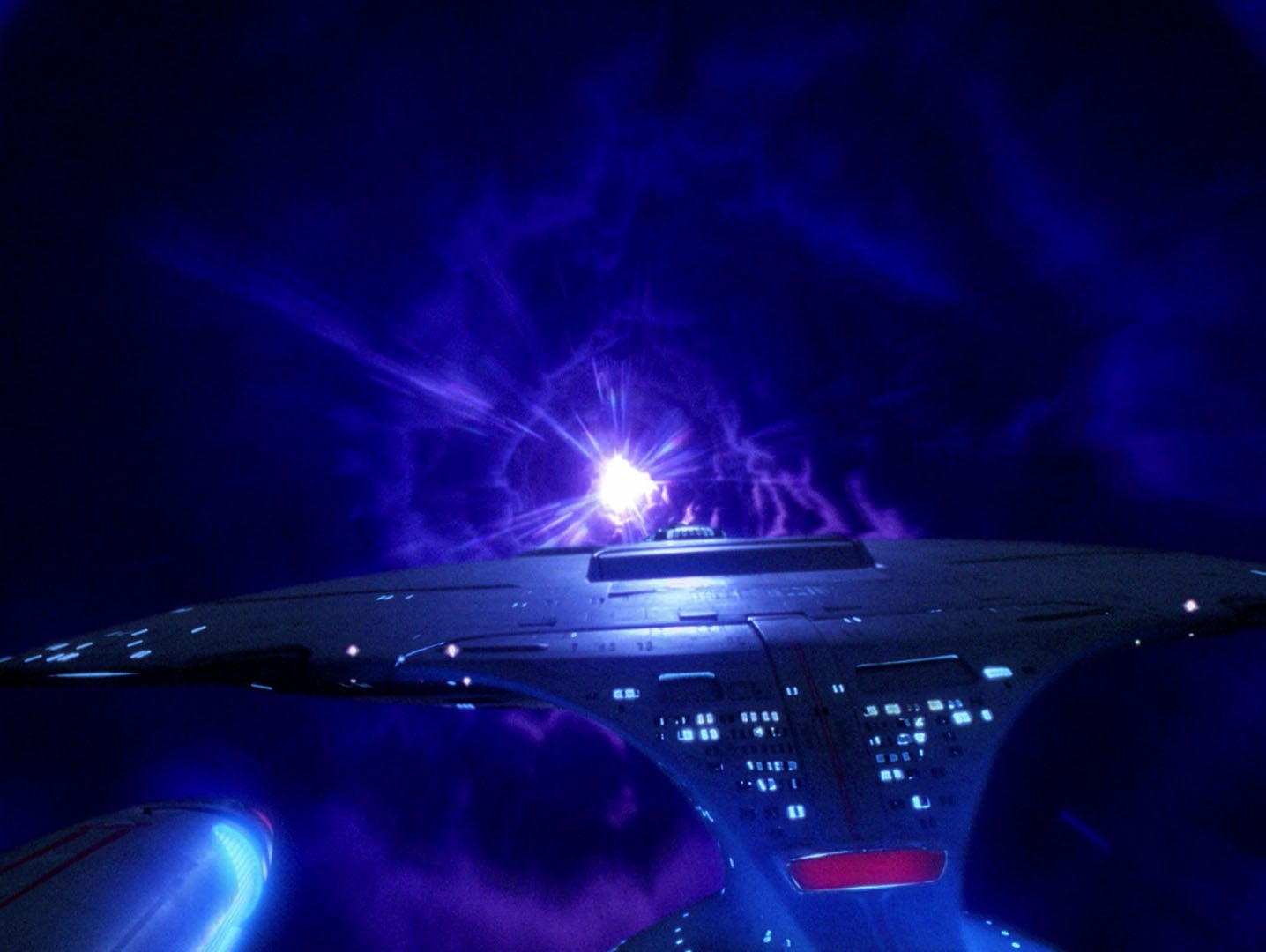
Yet, the term transwarp is misleading because the prefix ‘trans’ - Latin for ‘across’ - should conventionally refer to going to warp from rest, rather than moving at high warp speed. The term ‘transatlantic’ refers to not being in the Americas, but crossing the Atlantic ocean. Why should transwarp refer to being beyond warp? I think this problem can be best understood when one compares transwarp speed to transonic speeds in aerodynamics.
Aerodynamic Flight Regimes
NASA defines multiple ‘flight regimes’, each a range of speeds where the consequences of air compression impose certain conditions upon an aircraft..2 Which of the regimes below seem most applicable to transwarp?
1. Subsonic
This regime is the obvious opposite to the famous ‘supersonic’, where the aircraft is moving below the speed of sound.
2. Transonic
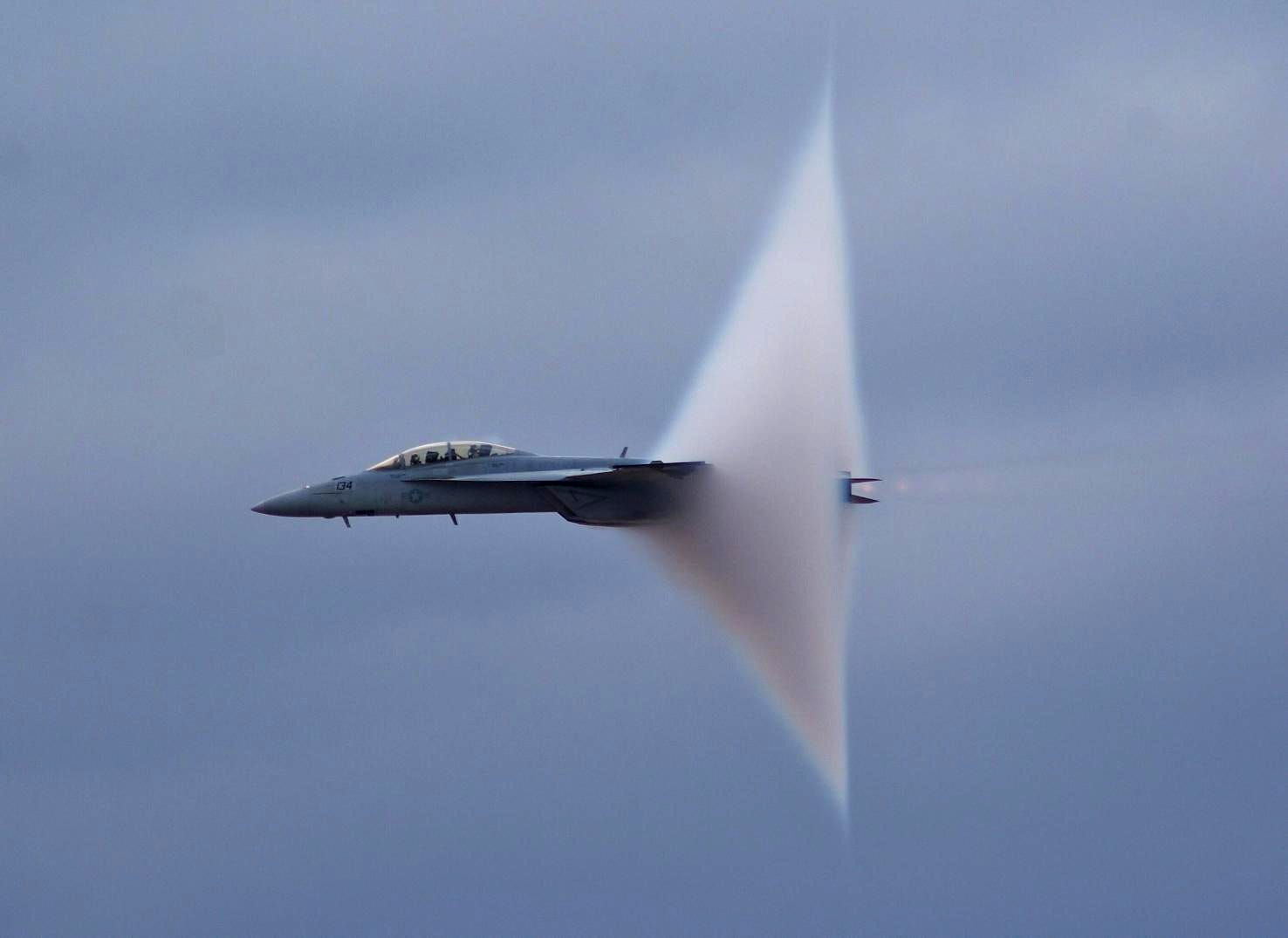
Air flows past an aircraft’s surfaces at different speeds, as the shape of aircraft influences the air. This air flow can exceed the speed of sound before the aircraft does. When some of this airflow does exceed the speed of sound, the aircraft is said to be flying at transonic speeds, as is the F/A-18F Super Hornet depicted.
3. Supersonic
This is the famous regime where the aircraft exceeds the speed of sound.
4. Hypersonic
A hypersonic aircraft moves at least five times faster than the speed of sound.
Evidently, transwarp and transonic are not at all alike. One describes high speeds and the other the passing of the sound barrier. One might be tempted to suggest ‘hyperwarp’ as a more appropriate term, intending to describe a range of very high warp speeds, but the suitability of this depends upon what Star Trek means by transwarp.
TNG: Descent Part 1LAFORGE: Our current theory is that the Borg have established several transwarp conduits through subspace. A ship, when entering the conduit, is immediately accelerated to an extremely high warp velocity. It's like falling into a fast moving river and being swept away by the current.
When Geordi La Forge first explains transwarp, he likens it to ‘extremely high warp velocity’, which does qualify the usage of hyperwarp instead.
However, with transwarp being later described as a ‘barrier’ in VOY: Threshold, an obvious echoing of aerodynamics’ sound barrier, one has to wonder if ‘superwarp’ is a more appropriate term.3 It would seem that there are a range of speeds that are inaccessible without transwarp drives, but this seems contradicted by the warp scale itself. Threshold further canonises that absolute maximum warp - warp factor ten - is infinite velocity, not some theoretical transwarp barrier.4 This maximum warp is further supported by the wealth of extracanonical sources such as The Next Generation Technical Manual and so seems to confirm that transwarp is not a distinct method of superluminal travel, but a region of warp speeds.5
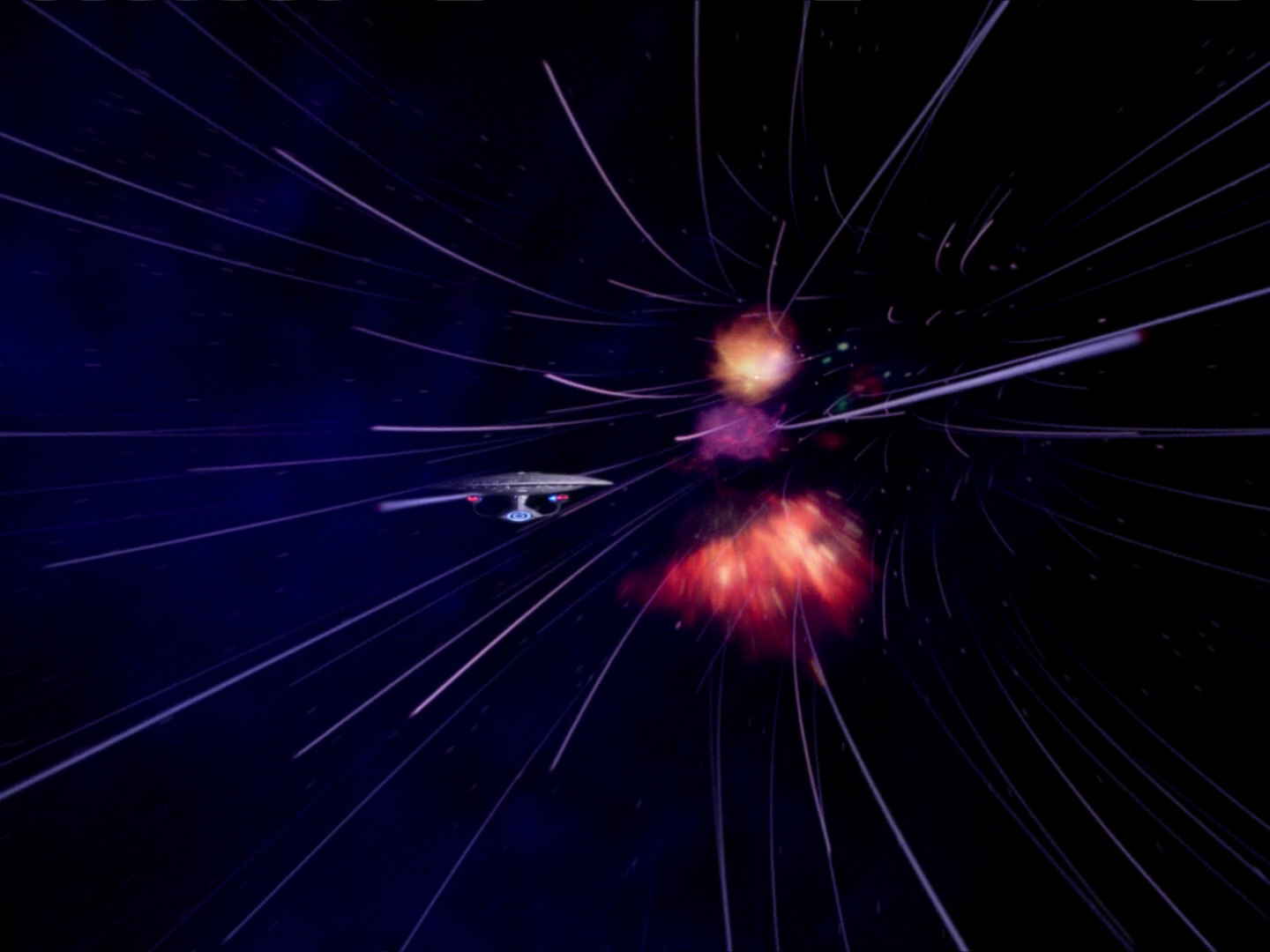
This conclusion does contradict what we see on screen, where vessels at transwarp observe much more elaborate effects, suggesting transwarp to have radically different mechanics.
Conclusion
While the etymology of transwarp is elusive, the meaning of the word can be consistent with its usage in Star Trek, if we accept the prefix ‘trans’ as meaning ‘beyond’ rather than ‘through’. Precedent exists for this usage in words such as ‘transcend’ and ‘transgress’, hence the main contradiction emerges only when one tries to compare transwarp to modern aerodynamics.
I still believe it inelegant that Star Trek uses a convention for warp drive that is inconsistent with aerospace and prefer the idea that travel faster than conventional warp be described as hyperwarp, or superwarp should it exceed some in-universe limitation of warp drives.
However, Star Trek is famous for highlighting that human convention is rarely logical. Humans make use of misleading terms quite frequently. Even in physics, the field of science dedicated to understanding the fundamentals of the universe, misnomers such as ‘black hole’ or ‘dark matter’ are used.6
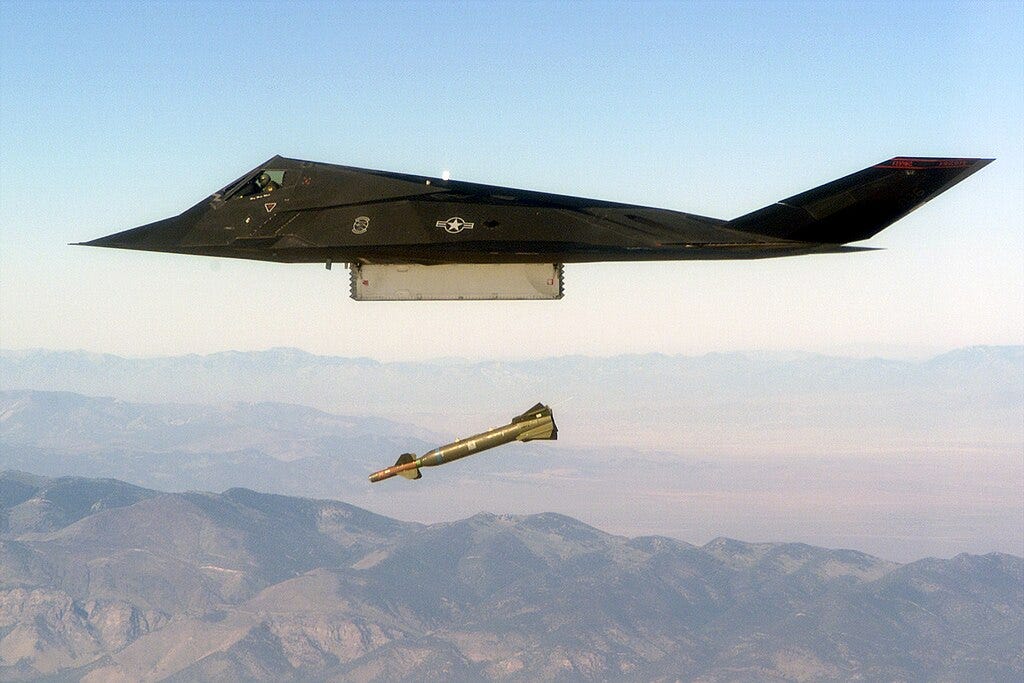
An example of military convention being defied is with the F-117 Nighthawk, an aircraft which is indisputably not a fighter, despite what the ‘F’ designation suggests.
Considering that such oddities occur in both science and the military, it is entirely understandable that some awkward words like transwarp might be adopted by Starfleet.
I believe that the Star Trek universe is sufficiently large and nuanced to accommodate debate; perhaps, somewhere in the Federation, there exist some disgruntled pedants who insist upon using ‘hyperwarp’ to describe their theories.
Thank you for reading The Beginning Of Wisdom. Please share with those interested.
Appendices
1. Speed of transwarp in TNG: Descent
Twenty times faster than the Galaxy-class’ maximum speed is somewhere within the transwarp region.
LAFORGE: We don't know. Normal subspace limitations don't apply to transwarp variables. But I'd say based on the distance we covered during our trip through the conduit, the speed would have to be at least twenty times faster than our maximum warp.
Enterprise later uses a conduit for a few seconds and travels sixty five light years, suggesting a speed hundreds of thousands of times greater than Enterprise’s maximum.
RIKER: Navigational sensors show that we've travelled sixty five light years from our previous position.
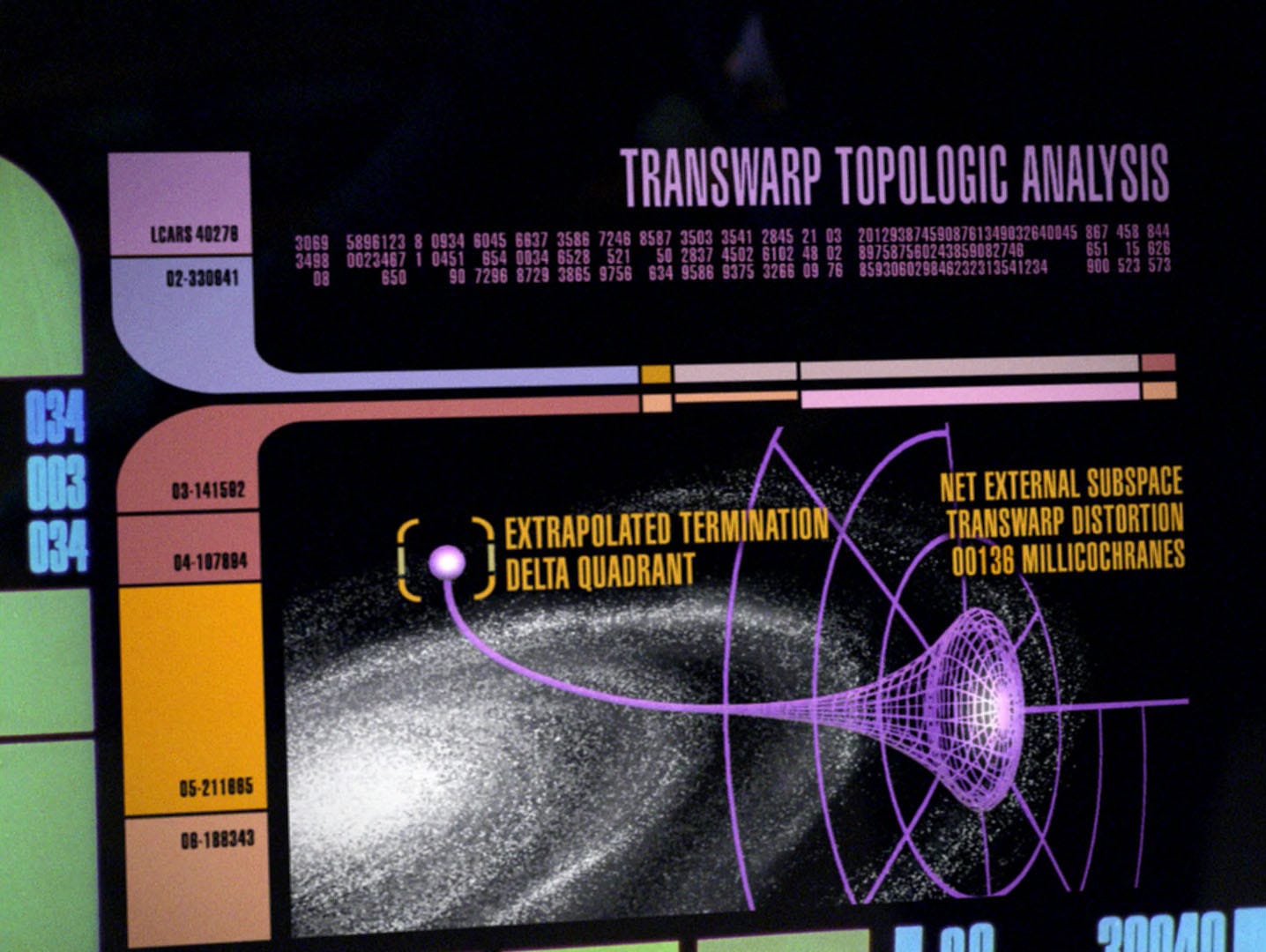
This episode also appears to be where the Borg were canonised to be present in the delta quadrant.
Credits & Citations
Scripts - Star Trek Minutiae
Transcripts - Chakoteya
TNG: Descent Part 1LAFORGE: We don't know. Normal subspace limitations don't apply to transwarp variables. But I'd say based on the distance we covered during our trip through the conduit, the speed would have to be at least twenty times faster than our maximum warp.
NASA. Mach Number [Internet]. Nasa.gov. 2021. Available from: https://www.grc.nasa.gov/WWW/k-12/airplane/mach.html
VOY: ThresholdPARIS: You're jealous that I broke the transwarp barrier, and now you're hoping I'll die!
Threshold contains the first explicit reference that warp factor 10 refers to infinite velocity, but it is implied earlier, such as in TNG: Time Squared.
VOY: ThresholdKIM: Nothing in the universe can go warp ten. It's a theoretical impossibility. In principle, if you were ever to reach warp ten, you'd be travelling at infinite velocity.
TNG: Time SquaredRIKER: None that we've encountered. In theory, accelerating beyond warp ten.
Sternbach R, Okuda M. Warp Propulsion Systems. In: Sternbach R, Okuda M, editors. Star Trek: The Next Generation Technical Manual. New York: Pocket Books; 1991. p. 56.
“Even if it were possible to expend the theoretically infinite amount of energy required, an object at Warp 10 would be traveling infinitely fast, occupying all points in the universe simultaneously.”
Black holes are not holes, although it is admittedly difficult to suggest what they should be named instead - gravitationally collapsed objects? Singularities? Even the notion of singularities is reputably disputed.*
Dark matter is not necessarily matter and nor is it dark. Dark matter does not absorb light, but instead does not interact with it at all.
*P KR. Do Black Holes have Singularities? [Internet]. arXiv.org. 2023 [cited 2024 Nov 7]. Available from: https://arxiv.org/abs/2312.00841
Comments
Nothing yet. Say the first thing.
Sign in to join the conversation.