
Introduction
The United Federation of Planets is the most beautiful vision of the future that science fiction has ever created. We are presented with a unified Earth. Said Earth exists within an interplanetary organization dedicated to the advancement of collective well-being and intercultural understanding. Considering the crises currently plaguing our 21ˢᵗ-century Earth, this is nothing short of a utopia. After all, it implies that Humanity has reached a much better position in some way, shape, or form.

When you ponder those crises currently plaguing us — climate change, resource exploitation, wars, et cetera — the gap between dream and reality becomes glaringly obvious: The lack of action on climate protection (see IPCC 2023 Synthesis Report)1, the erosion of democracies (see Selk 2023)2… when pondering how we deal with these crises, the gap becomes outrageous.
Given our species’ current grievances, how do we arrive at a future where Humanity is an integral part of the United Federation of Planets? In this article, I will highlight some of the potential avenues holding the answers to that question - the primary insight being that it is all a bit more complicated than you might think at first glance. In that sense, this articles main objective is re-allinging and sharpening the readers understanding of what complex a task this is.
Provincializing Humanity
In his ‘Provincializing Europe’, Dipesh Chakrabarty attempts to demystify and expose certain ideas and concepts prevalent in modern social sciences, which were developed in Europe.
“Concepts such as citizenship, the state, civil society, public sphere, Human rights, equality before the law, the individual, distinctions between public and private, the idea of the subject, democracy, popular sovereignty, social justice, scientific rationality, and so on all bear the burden of European thought and history” (Chakrabarty 2000: 4)3.
He refers to all these concepts as a burden since they also come with certain problematic aspects themselves: “My purpose is to explore the capacities and limitations of certain European social and political categories in conceptualizing political modernity in the context of non-European life-worlds” (Chakrabarty 2000: 20).
Some of the above-mentioned categories are quite important for Star Trek as well one might add. In a federation of planets with over a hundred member worlds4, they ought to play a role for non-European life-worlds — or non-Human for that matter — as well. Herein, though, lies the difficulty of it all.
Arguably, the setup of the Human brain developed into its current form between 100,000 and 35,000 years ago (Neubauer et al. 2018: 1)5. Nevertheless, our own understanding of Human anthropology keeps on evolving. The inclined reader might be familiar with Abraham Malsow’s hierarchy of needs, a model of Human existence that has been quite influential in public and scientific discourse (Rojas et al. 2023: 1)6.
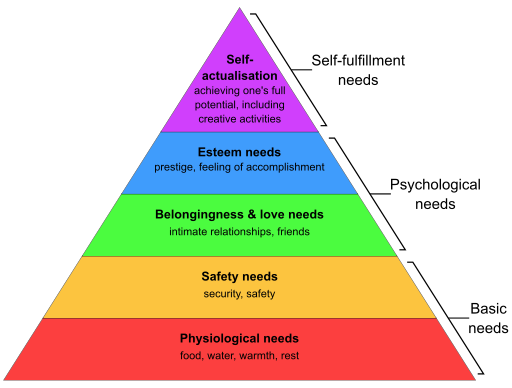
Even this prolific theory has been questioned, with some scholars arguing Humans do not at all fulfil their needs in a sequential way, but multiple needs in a gradual manner (Rojas et al. 2023: 13).
Given their different evolutionary paths, can we assume that all Federation species understand the same thing by ‘citizenship’? By ‘law’? What about ‘democracy’? Are they even able to understand what a Human might mean by them, given their own possible “cognitive universals”? (Damerow / Lefèvre 1994: 25)7
That is to say, we must not take our alleged psychological and sociological foundations for granted, let alone as a standard. Indeed, avoiding to project personal biases and beliefs on other species is a recurrent issue in Star Trek too. Or to put it in Jan Mejer’s words:
“What can be assumed after the discovery of an ETIS*? Social organization? A culture of symbols, of interaction? Socialization with social and physical adaptation? A social structure of economic and political institutions? Religion? Deviance? Social class contradictions? Social classes? To apply such categories uncritically would anthropomorphize the ETIS8” (Mejer 1983: 171).9
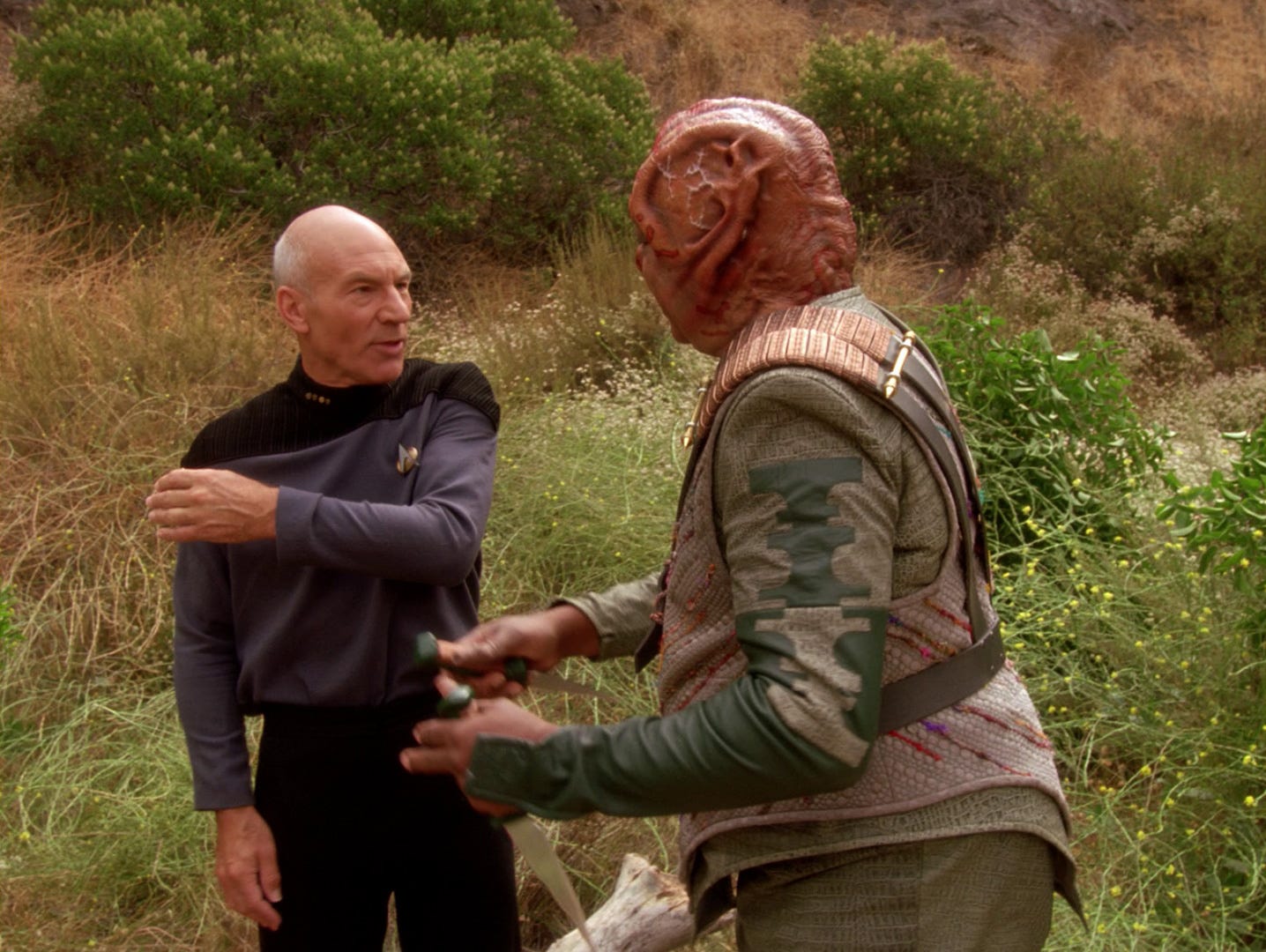
And in conclusion: “Aliens, then, remain either stolidly human or quite unknowable. Worse still, aliens become deficient versions of humanity” (Oldman 1983: 63).10
Thus, to understand how the Federation can function despite such possible differences, and to avoid projecting ourselves onto them, we have to ‘provincialize Humanity’, take a step back and see what we might find.
The Gap
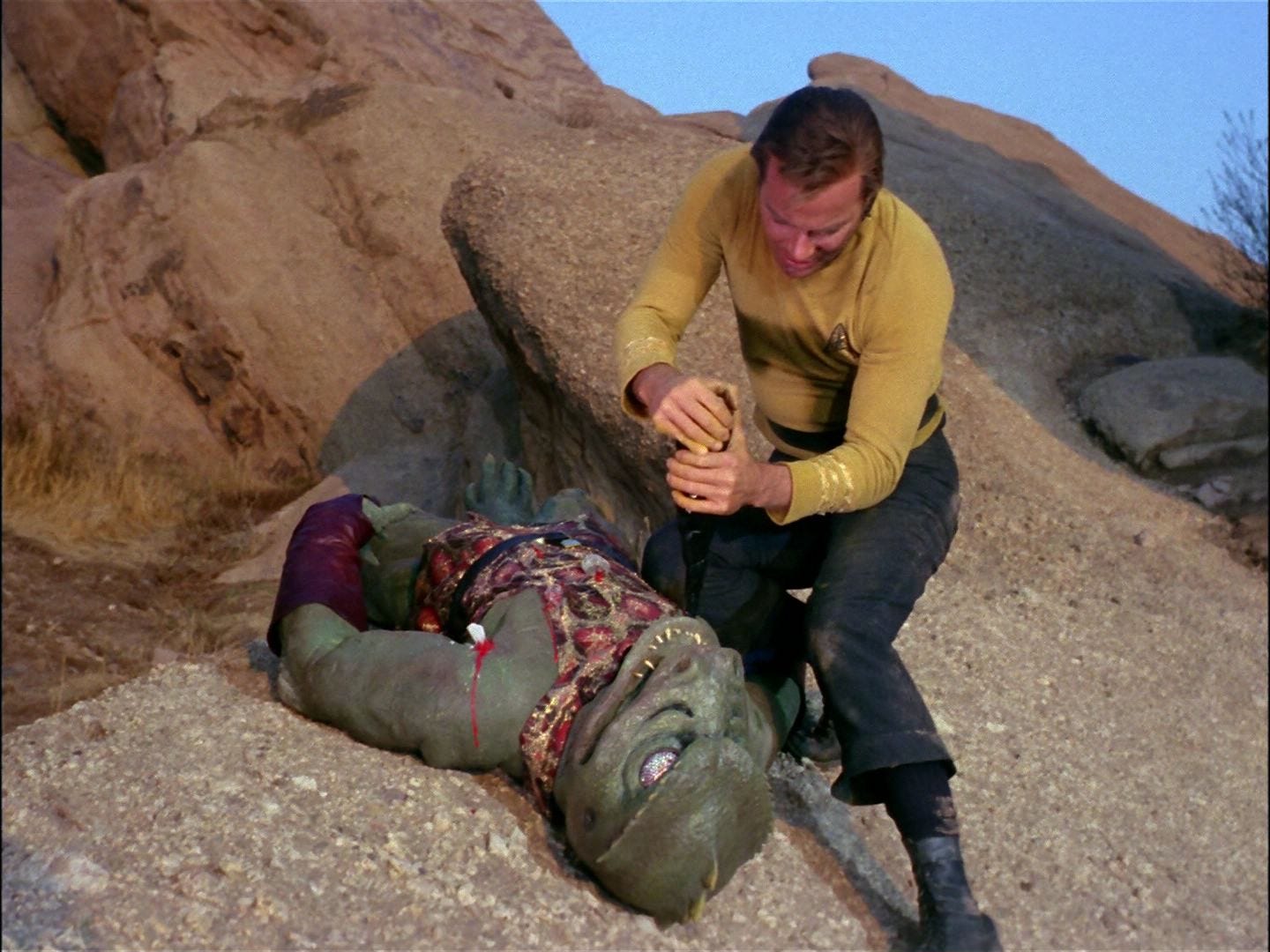
Whether coexistence with species like the Gorn or the Klingons is possible at all has been an issue of debate within Star Trek time and again. Despite the occurrence of wars, Star Trek most often resolved such conflicts with mutual understanding.
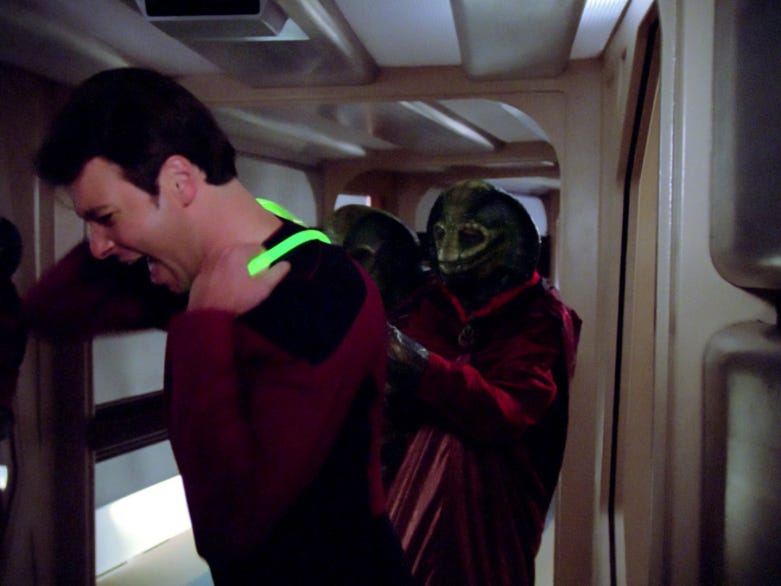
In 2364, both the Selay and the Anticans applied for Federation membership (TNG: "Lonely Among Us"). Both species were staunch enemies prior to their application for membership, and even en route to a diplomatic conference, delegates from both sides remained on the verge of attacking each other on board the Enterprise-D. However, since a Selay delegate was present in a Federation committee in 3191 (DIS: "Red Directive", "Jinaal"), we may assume at least they have indeed become a member world.
Against that backdrop and our discussion above it is interesting how little Star Trek turns on the (possible) mechanisms the Federation employs to continue functioning. This is, admittedly, a difficult task. After all, we do not currently know a real alien civilization from which to draw empirical data. We are, however, left with some implications.
With regards to the sensory systems of Earth reptiles, Jenna Crowe-Riddell and Harvey Lillywhite note: “Behaviour is shaped by the perception of the surrounding world, which is created by the senses. Reptilian sensory systems are shaped by the varied ecologies and complex evolutionary histories of reptiles” (Crowe-Riddel / Lillywhite 1995: 45).11
Visual communication, for instance, alone can take place in many ways here. Rapid movements can serve to attract attention or confuse enemies; body colors can convey both warning signals and territorial claims (Crowe-Riddel / Lillywhite 1995: 58). Some reptiles communicate via tactile cues too (Crowe-Riddel / Lillywhite 1995: 63), and chemical cues play an even greater part in communication for some than they do for Humans (Crowe-Riddel / Lillywhite 1995: 74).
We may speculate on the Selay and their sensory abilities with such inspiration. This, in turn, allows us to speculate on opportunities inhibitors for communication.
Adult Human women and men produce respective physiological fundamental tones at 190 Hz to 250 Hz, and at 120 Hz to 160 Hz (Becker et al 2018: 7).12 Rattlesnakes can hear within 200 to 400 Hz airborne frequencies; Ballpythons, however, are assumed to possess a peak auditory sensitivity of 80 Hz to 160 Hz - and only if the vibration is ground-borne (Crowe-Riddel / Lillywhite 1995: 66). One physiological set of abilities would allow for good verbal interspecies communication between Humans and Selay, the other would not.
If chemical cues — smell, pheromones, etc. — are important for some reptiles, it may irritate a Selay to be confronted with a much different chemical setup in a Human. In contrast, we would perhaps not be able to interpret theirs at all, potentially eliminating the basis for any subtleties in communication. Vulcan women may experience difficulties working with Humans, given their acute olfactory senses.13 In Star Trek Enterprise, T’Pol addresses this issue with nasal-numbing agents. But would it be ethical to expect the same of all other species, especially ones to whom this aspect of their being is essential?
Thank you for reading Sociology of Star Trek!
Xeno-Sociology - Institutions & Everyday Life
The above-mentioned are not mere cultural differences. We are dealing with fundamental axioms of different species and their biological setup, which in turn shapes their abilities to think, perceive, and act; thus their societies. Bridging these differences within the spirit of the Federation requires an enormous effort. It could thus be argued that the corresponding infrastructure is a strategic asset for the Federation, without which it could not function.
In Star Trek Discovery, we were already familiarized with the effort it requires to communicate with a species like 10-C, and the dire consequences of lacking communication. The very notion of individualism was something they were unfamiliar with prior to first contact. Indeed, 10-C had destroyed star systems — inadvertently causing billions to die — during a mining operation. To resolve the crisis, an ad hoc way of communication via light-emission and hydrocarbons had to be found. Instruments like the universal translators were ineffective from the start.
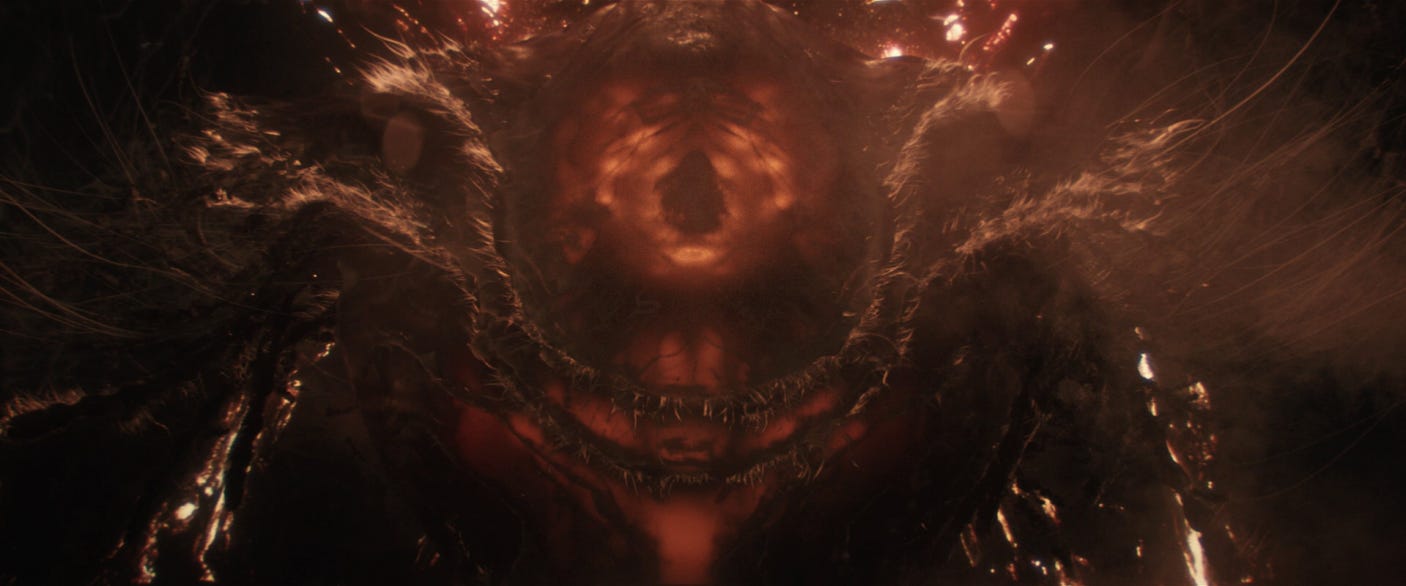
We see that communication is essential for the Federation's survival. Accordingly, the institutions that facilitate it would need to be exceptionally well-equipped. Enabling mutual understanding of biological, historical, and cultural factors requires the inclusion of diverse scientific perspectives and the involvement of a multitude of communicators. Time is also of the essence, as common ground and an awareness of nuances would usually not be developed overnight.
Before a world can be admitted into the Federation, it is not only political, institutional, and legal alignment that must be ensured. First and foremost, it must be guaranteed that both sides understand the same terms to mean the same things, or find equivalents. Otherwise, the Federation might admit members who do not fully understand what they are committing to. Or, as illustrated in Star Trek: Strange New Worlds "Spock Amok" with the R'ongovian Protectorate, the Federation could fail to understand the new member itself.
To address this means to understand what we think and know about the other, plus aiming to understand what the other thinks about us. Or can think in the first place. At the very least, extensive taskforces comprising different experts — from biology to linguistics — and civilians would be in order to ensure a common ground.
But scientific knowledge does not necessarily translate into a stable civil society; there is also everyday life, and a member world will not forever be ‘a new one in the neighborhood’. When it comes to everyday life in the Federation, the task becomes even more important and complex. After all, we are talking about an institutionalized frame for all member worlds, necessitating a kind of xeno-sociology, in sync with other involved disciplines.
It may be possible to find a common understanding of rules, but there is also the issue of socialization. Behavioral sciences established that Humans tend to be influenced in their prescription of others by certain biases, e.g. status, perceived intentions, friendliness, or competence (Fiske 2015: 45).14 If the Selay are not — to return to this example — this may create some irritation in long-term interactions, which may be difficult to address for Humans given biases are often subconscious. Perhaps, Selay are biased by scale color, chemical cues, etc. ‘If you smell nice, you are nice’ instead of ‘If you act nice, you are nice’, so to speak.
Humans can train to mitigate biases (Abenroth et al. 2020: 150)15, but to avoid them on a societal scale necessitates an adequate education system. As of now, we simply do not know about other species’ needs to adress such issues. But again, they might differ from ours.
Conclusion
In this piece, we have discussed the challenges the Federation faces in maintaining its social cohesion. As we have seen, this does not merely begin with cultural differences but extends to questions of the biological setups within individual species. Different setups can fundamentally affect whether communication, as a basis for understanding, is even possible, thus creating a level playing field.
We can conclude that social cohesion is not merely an ideal but a critical infrastructure for the Federation. Its maintenance requires the active participation of all species to establish a shared foundation, provide the necessary knowledge, identify and resolve sources of irritation, and broadly disseminate the necessary social prerequisites within the societies involved.
Future discussions may fruitfully return to this line of thought in order to explore adequate institutions on a planetary and interplanetary for this task. After all, a successful implementation of common ground on this scale would be quite the inspiration for our day and age.
Cite as: El Lobo, Nylo (2025): Social Cohesion in the United Federation of Planets. In: Sociology of Star Trek, 2025, 1.
Images
Image 1: United Earth Logo - Source
Image 2: Maslow’s Hierarchy - Source
Image 3: Jean-Luc Picard and an alien attempting communication without a common language
Image 4: Kirk and a Gorn on Cestus III
Image 5: Selay inadvertently attacking William Riker
Image 6: Species 10-C
(Images 3-6 - as well as the article’s thumbnail - have been taken from Trekcore.)
Sources
IPCC (2023): Climate Change 2023. Synthesis Report. Summary for Policymakers, https://www.ipcc.ch/report/ar6/syr/.
Selk, Veith (2023): Demokratiedämmerung. Eine Kritik der Demokratietheorie. Berlin, Suhrkamp.
Chakrabarty, Dipesh (2000): Provincializing Europe. Reissue of 2008. New Jersey, Princeton University Press.
Star Trek VIII: First Contact
Neubauer, Simon / Hublin, Jean-Jacques / Gunz, Philipp (2018): The evolution of modern human brain shape. In: Science Advances, 2018, 4.
Rojas, Mariano / Méndez, Alfonso / Watkins-Fassler, Karen (2023): The hierarchy of needs empirical examination of Maslow’s theory and lessons for development. In: World Development, 165, p. 1-15.
Damerow, Peter / Lefèvre, Wolfgang (1994): Wissenssysteme im geschichtlichen Wandel. Preprint, Berlin, Max-Planck-Institut für Wissenschaftsgeschichte.
Extra-Terrestrial Intelligent Society (Mejer 1983: 171).
Mejer, Jan H. (1983): Towards an exo-sociology: Constructs of the alien. In: Free Inquiry in Creative Sociology, 11, 2, p. 171-174.
Oldman, David (1983): Making Aliens: Problems of Description in Science Fiction and Social Science. In: Theory, Culture & Society, 2, 1, p. 49-65.
Crowe-Riddell, Jenna M. / Lillywhite, Harvey B. (1995): Sensory Systems. In: Warwick, Clifford / Arena, Phillip C. / Burghardt, Gordon M. (ed.): Health and Welfare of Captive Reptiles. 2nd ed. Cham, Springer, p. 45-92.
Becker, Stefan / Döllinger, Michael / Kaltenbacher, Manfred (2018): Die humane Stimmgebung als Produkt einer Fluid-Struktur-Akustik Interaktion. In: Akustik Journal, 2, p. 7-15).
ENT 1x01: Broken Bow
Fiske, Susan T. (2015): Intergroup biases: a focus on stereotype content. In: Current Opinion in Behavioral Sciences, 2015, 3, p. 45-50.
Abenroth, Johanna / Feulner, Lena / Richter, Tobias (2020): Wie Menschen mit kon-fligierenden Informationen umgehen. In: Appel, Markus (ed.): Die Psychologie des Postfaktischen: Über Fake News, „Lügenpresse“, Clickbait & Co., Berlin, Springer.
Comments
Nothing yet. Say the first thing.
Sign in to join the conversation.