
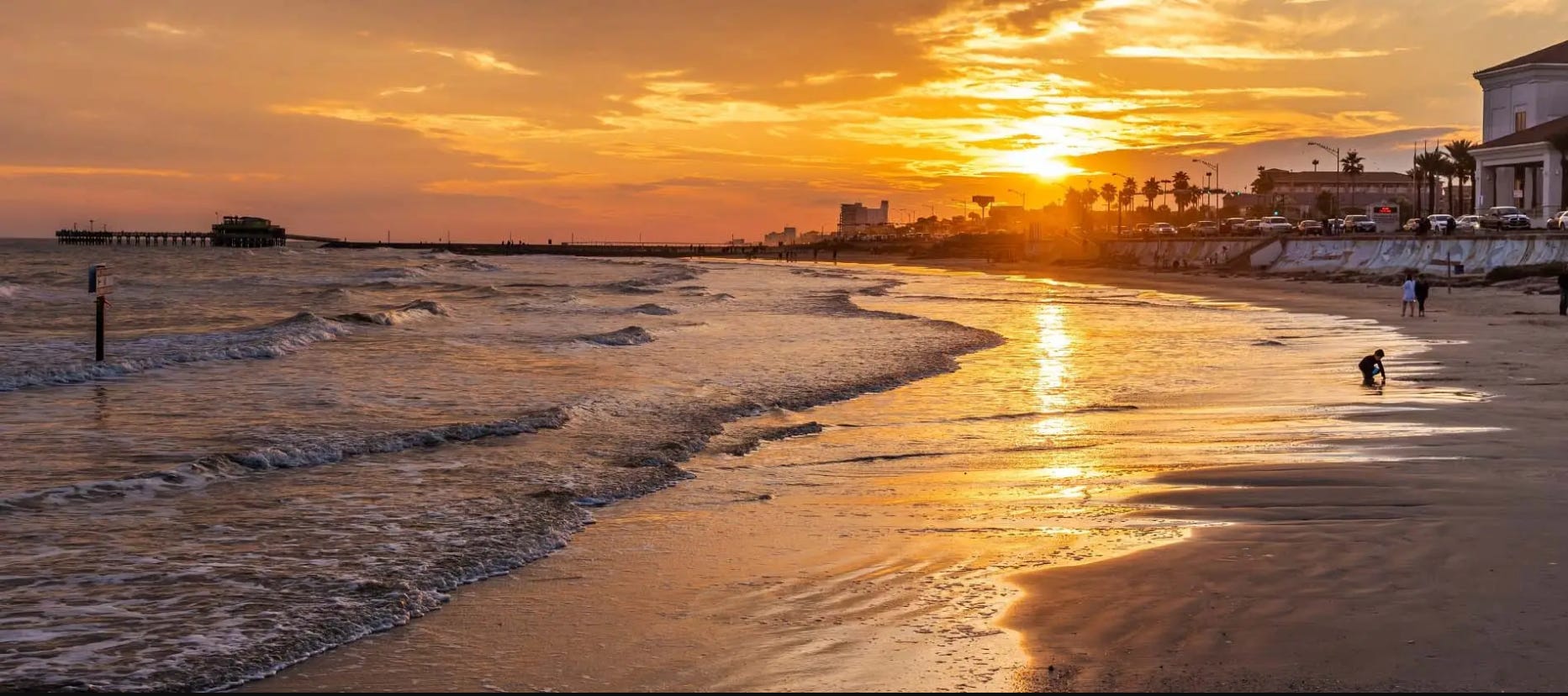
Galveston, oh Galveston
Wonder if she could forget me
I’d go home if they would let me
Put down this gun
And go to Galveston...
Before We Were White is a reader-supported publication. To receive new posts and support my work, consider becoming a free or paid subscriber.
In November, 1968, the USA was embroiled in an increasingly unpopular war, just like today.
The lead-up to an expanded war in both Vietnam and Iran was marked by the US (or US-sanctioned) assassination of both countries’ leaders - President Ngô Đình Diệm in Nov 1963, and Supreme Leader Ali Khamenei in Feb 2026, respectively.
One major difference, though.
Ngô Đình Diệm was actually the leader of SOUTH Vietnam, a state ostensibly seen as a “friend” of the USA at the time.
French colonizers of a much larger “French Indochina” (which included Vietnam, Cambodia, and Laos) had already colluded with the communist North Vietnamese against South Vietnamese nationalists in the years immediately after WWII, mainly due to the South Vietnamese nationalists’ hostility to French colonial occupation.
In an effort to salvage their collapsing southeast Asian empire during the First Indochina War of 1946-1954, the French soon switched their support from the communists to the nationalists.
This last gasp French effort failed and they withdrew from southeast Asia in 1954, but the USA decided to increase American involvement and low-key support of Vietnamese nationalists - support which had already begun under the Truman and Eisenhower administrations during the 1950s.
John F. Kennedy further increased the number of “military advisors” from 900 to 16,300 during the early 1960s, and JFK was the man in the Oval Office when Ngô Đình Diệm was assassinated in 1963.
Kennedy himself would be assassinated three weeks after Diệm...
The assassinated Diệm was replaced by a military junta general named Nguyễn Văn Thiệu in a rigged election in 1967.
As the late war criminal and US secretary of state Henry Kissinger put it in a conversation with William F. Buckley, Jr: “Word should be gotten to Nixon that if Thiệu meets the same fate as Diệm, the word will go out to the nations of the world that it may be dangerous to be America’s enemy, but to be America’s friend is fatal.”
At any rate, the USA now had a “bastard in charge” who was more to their liking, just as they had achieved in Iran THE FIRST TIME back in 1953, when the UK’s MI6 and the US’s CIA conspired to overthrow the democratically elected government of Mohammad Mosaddegh, a leader who had the temerity to believe that Iran’s petroleum reserves should benefit the Iranian people, not UK and USA business interests.
The Iranian peoples’ uprising in 1979 against the brutal and sadistic puppet “Shah” imposed on them by the UK and USA was an act of self-determination (and a bloody nose to US empire) which no USA administration has ever forgiven...
*****
Anti-Vietnam War sentiment took time to grow in the pre-internet age, with most Americans still relying upon the traditional “big three” corporate networks (CBS, ABC, and NBC) for most national news.
US foreign correspondents during the early days of the Vietnam War were, for the most part, the journalistic embodiment of contemporary USA Cold War ideology, and their view of the Vietnamese people (in both North and South Vietnam) was suffused with America’s peculiar form of white ethno-supremacist bigotry.
Only the influx of larger numbers of foreign correspondents during the late 1960s (including freelancers and non-US journalists) led to wider American awareness of the brutal nature of the conflict in southeast Asia.
The Tet Offensive of Jan 1968 took many Americans back home by surprise, with most “respected” media outlets having spent years assuring the mothers and fathers of US soldiers that things were moving along just fine.
The reportage of the Mỹ Lai Massacre of Mar 1968, in which US soldiers committed war crimes including gang rape, and the outright murder of hundreds of innocent women, children, and the elderly, brought anti-war protests to a boil.
With the Black civil rights struggle happening concurrently, college students and many other people became radicalized, with thousands protesting and burning draft cards in public.
As Black civil rights leader Stokely Carmichael remarked in 1966, in a comment partially borrowed from the street (and later attributed to Muhammed Ali): ““Why should black folks fight a war against yellow folks so that white folks can keep a land they stole from red folks? We’re not going to Vietnam. Ain’t no Vietcong ever called me ni**er!”
The USA’s triple-tap bombing of a girls’ elementary school in Minab in Iran on 28 Feb 2026 (which killed around 170 children) hasn’t seen a similar level of US public outrage, probably due to the fact that American boys haven’t <yet> been drafted into an illegal, futile, and immoral ground war.
The Israel lobby in America has spent decades egging-on American military involvement in Western Asia, and would sorely love to see American kids thrown into the furnace of a ground offensive in Iran.
The difference between 1967 and 2026?
The internet.
Young Americans in particular no longer trust or rely upon the corporate media.
Things which are the same in 2026 as the 1960s?
Federal government and state agencies attacking student protestors.
Most people of my generation will recall the shooting dead of unarmed student protestors at Kent State (in Ohio) in 1970.
Student advocates for Palestinian rights and critics of the US-financed genocide in Gaza today have been suspended, arrested, detained, incarcerated, and threatened with deportation.
Perhaps the single biggest thing which remains unchanged is the hard-core, highly indoctrinated and propagandized base of supporters (representing around 30% of the USA voting population), who will go to the wall to defend their narrow, ill-educated, bigoted worldview, and lawless, extremist governments which attempt to criminalize legitimate political dissent.
*****
One of the greatest American songwriters of all time turns 80 this week.
Jimmy Webb wrote the song “Galveston” in 1968 during the height of the US war in Vietnam, and the song was recorded and released by the great and virtually inimitable Glen Campbell in early 1969.
I often stayed with my maternal grandparents in their humble trailer home in Phoenix, Arizona back in 1969, while my “blended” Missouri family tried to make a fresh start in the Sun Belt.
As was common in those days among working class evangelical folk, me and my older brother were made to kneel on the floor beside our beds at night and say our prayers.
I can still remember clearly at the end of prayers having to recite the names of family members serving in Vietnam:
“And God bless Uncle Elmer overseas...”
I barely understood what “overseas” actually meant.
Maybe the prayers worked, because Uncle Elmer came back home in mostly one piece, invalided out of the army after being shot by one of his own fellow soldiers.
As was also common in those days (and is still common), Uncle Elmer, as a veteran, got preferential treatment when applying for a job in law enforcement, and in photos, he looked suitably smart and imposing in his deputy sheriff garb.
Uncle Elmer died of multiple skin carcinomas at a relatively young age, probably brought on by exposure to exfoliants like Agent Orange (produced by Dow and Monsanto) - “products” which made a fortune for those chemical companies.
I wasn’t particularly sad when Uncle Elmer died, because he was also a violent man who liked to use the buckle end of a belt on children.
I guess you might call him part of “unsung America”.
*****
Music was always an escape from the world of trailer parks, and no one should ever underestimate the power of a song, even a half-understood song, to have an impact on a young mind.
Even as a five-year-old, the music, vocals, and words of “Galveston” were deeply affecting:
Galveston, oh Galveston
I am so afraid of dying
before I dry the tears she’s crying
before I watch your seabirds flying in the sun
at Galveston
It would be many years before I understood that this song was written from the viewpoint of a young man, a virtual kid, who had been drafted into the war in Vietnam.
And it would be many, many years later before I learned that Jimmy Webb’s original lyrics had been “modified” for Glen Campbell’s recording, lest they come across as too “hippy” or anti-war, and thus alienate the hyper-patriotic “base” most likely to purchase country music records.
The original second verse:
Galveston, oh Galveston
Wonder if she could forget me
I’d go home if they would let me
Put down this gun
And go to Galveston...
Became this:
Galveston, oh Galveston
I still hear your sea waves crashing
While I watch the cannons flashing
I clean my gun
And dream of Galveston...
“I clean my gun...” FFS.
On Jimmy Webb’s 80th birthday, with another war being waged by the same morally bankrupt suspects, let’s all wish Mr. Webb - the man who wrote “Wichita Lineman”, “Up, Up and Away”, and “MacArthur Park” - a happy birthday.
But let’s also remember that many of those “damn hippies” back in the day were actually right.
And if we sing along to “Galveston”, let’s sing the original words of fear, loneliness, and longing.
Not the words forced into our mouths by corporations and warmongers.
Before We Were White is a reader-supported publication. To receive new posts and support my work, consider becoming a free or paid subscriber.
Comments
Nothing yet. Say the first thing.
Sign in to join the conversation.