
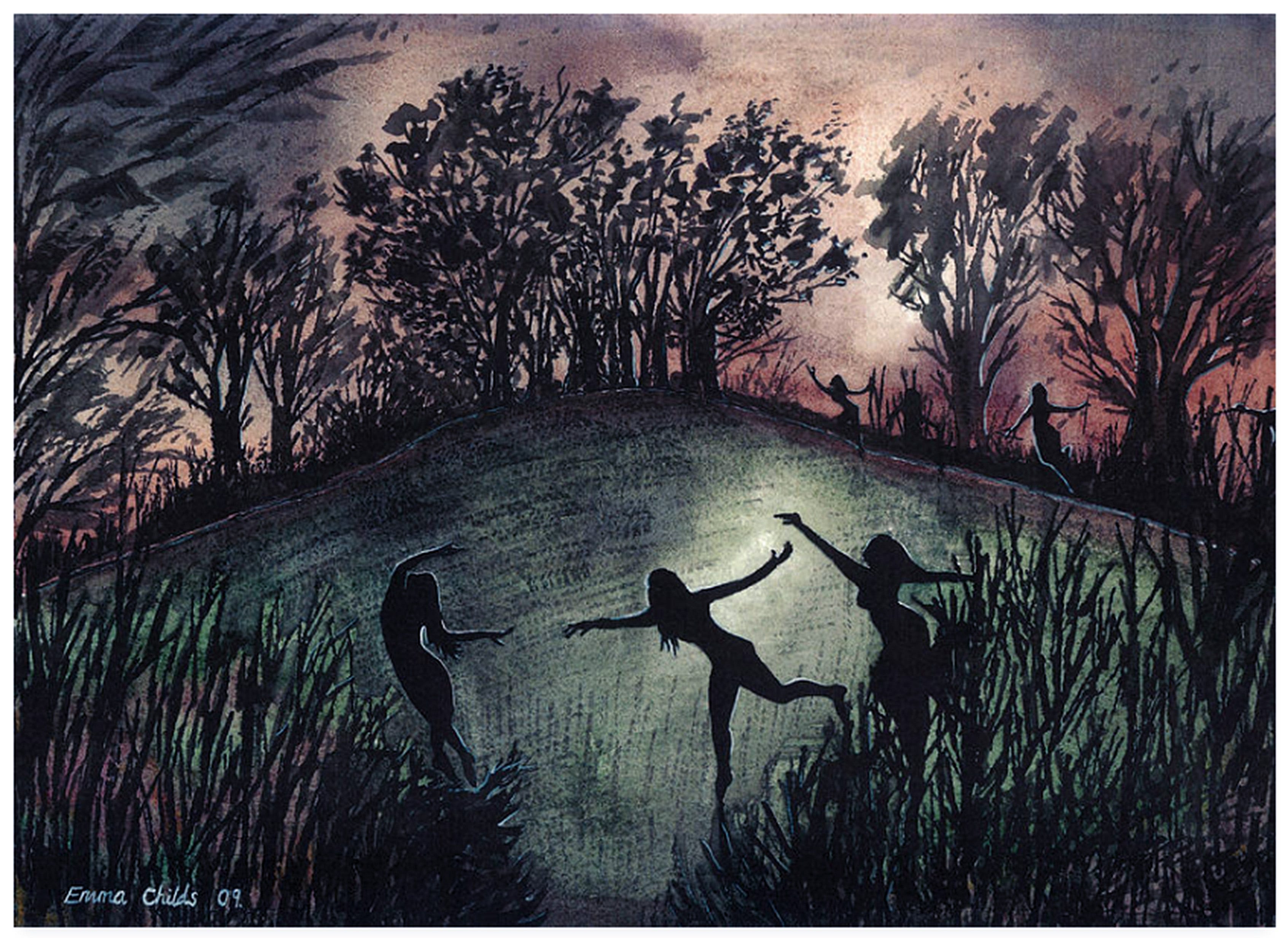
Knowledge is a funny thing.
Knowledge rips down curtains and opens up broad, hitherto unimagined vistas.
In American pop culture, this idea was advanced in films like “The Matrix”, where choosing to take “the red pill” was used as a metaphor for gaining sudden access to everything which is real and true, instead of existing inside the comforting haze of illusion induced by taking “the blue pill”.
Almost all metaphors or analogies are flawed or simplistic by their very nature.
There is no real life version of being “red-pilled” just once.
Epiphanies arrive daily or weekly or yearly or just once in a lifetime, in all sizes.
They can be the quiet “aha” moments when we discover a new way of understanding, or they can be life-altering earthquakes which bring the safe walls of our entire existence crashing down.
Put another way, being “red-pilled” is just what should come from being intensely curious about the world and its endless, wondrous inner workings.
Being “red-pilled” should be the natural result of maintaining a childlike openness to seeing things in new and different ways.
But in our ultra post-modern world of “alternative facts” and AI, where truth is relative, reactionaries and far right conservatives have once again inverted the meaning of a term, in order to force it into their own rigid worldview.
Lots of people nowadays use this concept of being “red-pilled” in a completely different (and dishonest) way, such as when conspiracy theorists talk about the “knowledge” which only they, and a few select others, possess.
They claim to have been “red-pilled”, implying that their eyes have been opened to new facts (or a hidden reality), when they have in fact learned nothing new at all.
They are merely taking their previously-held beliefs, gut feelings (and perhaps some newly-formed suspicions) and elevated this smorgasbord of “stuff they heard” into a category THEY call “the truth”.
This elevation of unsubstantiated suspicion into a political worldview is not confined to conservatives.
It is not that long ago that millions of people from both ends of the political spectrum were united in seeing a dark and vast conspiracy behind the Covid pandemic and various attempts to manage or contain it.
*****
This is of course all about a desire for a sense of empowerment in a complex, unjust, and confusing world in which the underclass majority feel oftentimes powerless.
To believe we have rare and privileged access to the machinery whirring behind the curtain is a sort of spiritual or emotional compensation for not having access to the levers of actual power.
Access to those levers usually requires access to accurate information, which in turn requires “connections” and higher education.
Then we need luck. Probably a certain level of ruthlessness. Money.
Those of us lacking all or most of these things are the underclasses, the modern equivalent of the medieval peasantry, whether we like it or not.
There is no “blue pill” or “red pill” state of existence.
There is only a spectrum between “high information levels” and “low information levels”.
There is only a spectrum between education and indoctrination.
There is only a spectrum between curiosity and indifference.
People who are on the wrong end of any such spectrum might drive down a highway through a pine forest.
Some might recognize the place where their uncle drives a truck for a logging company.
They might notice a roadside picnic table or the scent of the “nice woods”.
A person on the other end of the spectrum - one who is intensely curious - also notices those things, but might also have learned the names of many kinds of tree.
Even those trees with no immediate value to a logging company or paper mill.
A person on the other end of the spectrum - one who is intensely curious - will probably know the difference between virgin or old growth forest and a commercial monoculture forest devoid of wildlife and carpet-bombed with urea fertilizer pellets.
All of this means that a 15 minute drive down the road through a wooded area is a completely different experience for different people, depending on their place on the information spectrum.
The information spectrum also has a large hand in how we perceive religion, money, patriotism, sexuality, entertainment, food, childrens’ behavior - even the very concepts of good and evil.
Like I said, knowledge is a funny thing.
In a world moulded by neo-liberal economics, many of us now occupy a physical space - a nation, a world - alongside people inhabiting an entirely different mental universe.
In a way probably never seen in human history.
This is not “community”, and that is worrisome.
Worrisome for the people with power, and worrisome for the people without power.
*****
Depending on what kind of power we are lacking, many people reach for other forms of security, other ways of achieving a sense of self-worth and personal agency.
Like joining a gang.
Gangs come in many forms, good, bad, and well, silly.
Churches and religious sects. Lodges and freemasonry. Trade unions. Charity and volunteer work. Political parties. Criminal gangs. Like-minded conspiracy theorists. Bowling teams. White supremacist groups. Witches’ covens.
Notice how religion and witchcraft are bookends to this list of gangs.
That’s because the current acting Secretary of the Navy, a man with the power of life and death over thousands of Americans and Iranians, recently expressed his conviction that entire sections of California have been taken-over and beset by “witches”, and that these witches are a threat to the Christian way of life in America.
By “witches”, Hung Cao (who is of Vietnamese descent) was referring to what many people call “neo-pagans”, and sometimes, “Wiccans”.
By “Christianity”, Mr. Cao was referring to evangelical, or “dispensationalist” Christianity.
It doesn’t matter right now whether you believe in one or the other - New Agerism or Evangelicalism.
What matters is that they are both a certain type of gang, cut from similar cloth.
Both believe in the existence of supernatural forces. Both believe that humans can influence these supernatural forces through human action - prayer or spell-casting, for example.
What also matters, is that both evangelical Christianity and neo-pagan witchcraft like to believe that they are the inheritors of ancient beliefs, passed down through millennia of immutable tradition.
In fact, like so many “American” cultural movements, both evangelical Christianity and neo-pagan witchcraft find their roots in post-industrial 19th century British society.
*****
We could easily write 50,000 words or more about the roots of evangelicalism, going back to at least the Protestant Reformation of the 1500s, and the English Civil War of the 1600s.
We could spend hours outlining the explosion in varieties of Christianity during those years - Hussites, Moravians, Lutherans, Anabaptists, Separatists, Puritans, Quakers, Methodists - but we won’t.
The simple fact is that most modern American “evangelicals” today - the ones who place emphasis on being “saved” or “born again”, the ones awaiting “The Rapture” - originate from mainly two sources:
1) from “Revivalist” meetings, camps and churches which sprang up during the 1800s and early 1900s as a perceived antidote to increasing secularism or “ungodliness”, with preachers as shamanic-entertainers (see groups like the Mormons and Seventh Day Adventists, for example).
2) from 19th century British “splitters” from the established churches who began to offer a new interpretation of The Bible - instead of the old belief in a timeless “covenant” between God and His followers, people began to speak in terms of “dispensations”, or periods of time in which God would fulfil certain prophesies leading up to the “end times” and “final judgement”.
Almost every trope found in popular American culture associated with evangelical Protestantism - “The Mark of the Beast”, “The Number of the Beast”, “666”, “The Rapture” - comes from one single British person’s 19th century interpretation of the final book of the Christian Bible.
John Nelson Darby, you have a lot to answer for...
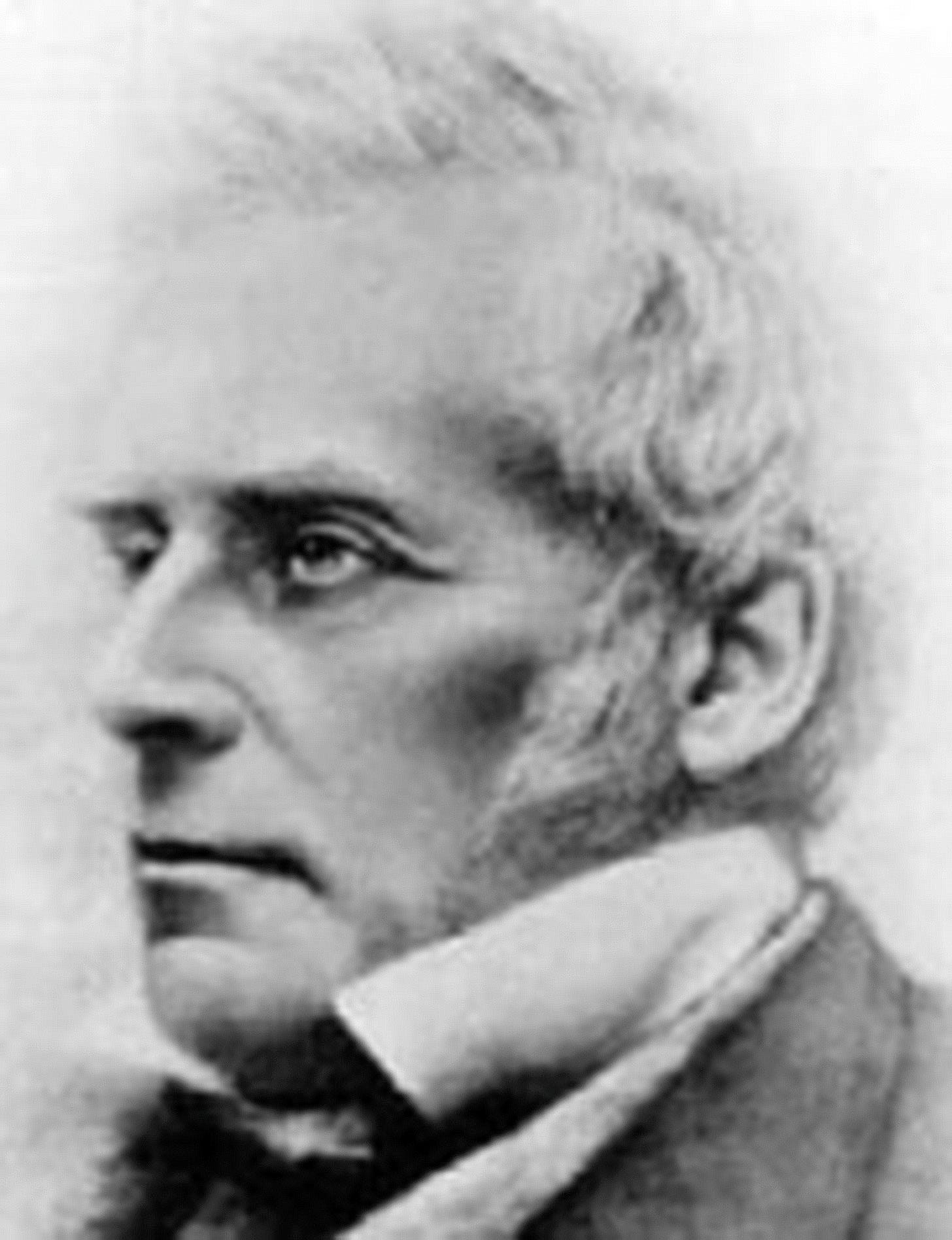
Darby’s personal interpretation of the final book of the Christian Bible - a non-historical, non-didactic array of visions, prophesies, symbols, and weird allegories - fed directly into various American pentecostalist movements.
“The Revelation of John”, and its place in the Christian canon, is highly contentious, and its value as “scripture” has been disputed for centuries by Catholics and Protestants alike.
No one knows who actually wrote it, and its preoccupation with lurid visions of violence, apocalypse, and chiliasm (millennialism) made early gatherers of Christian writings (the first Christians!) suspect that “John of Patmos”, if not actually mentally disturbed, was borrowing heavily from older Persian and Babylonian religious ideas.
This new-fangled form of Christianity became a craze. And with USA society based firmly within a tradition of “doing business”, any craze is fertile soil for the harvest of dollars.
It is almost certainly no coincidence that the biggest bursting-forth of Pentecostalist-style evangelicalism in America coincided with the birth of paperback publishing, radio, film, and later, TV.
Metaphorically speaking, these dispensationalists were able to turn an artful, sober, and steadily paced novel - The Bible - into a Hollywood action movie.
Those of us of a certain age, raised within the American underclass evangelical belief system, will remember decades like the 1970s.
The best-selling non-fiction lists published in places like The New York Times included titles like “The Joy of Sex” or “Dr. Atkins’ Diet Revolution”. What they didn’t include was the predominantly mail order-based book sales aimed at evangelical Christians. One of the biggest selling books of the 1970s was “The Late Great Planet Earth” by Hal Lindsey, a low-brow, decidedly non-academic romp through various end times interpretations of the books of Daniel, Ezekiel, and The Revelation.
This nonsense would be harmless except for the fact that such “folk religion” or “pop religion” laid much of the foundation for modern Christian Zionism, with dangerous apocalyptic fools like Mike Huckabee - the current US ambassador to Israel - airily inviting Israel to complete its genocidal expansionism.
Those doomsday prophesies won’t fulfil themselves, after all...
Remembering 1976 in particular, non-evangelicals might recall popular films like “Rocky” or “All the President’s Men”, while those of us held in thrall to “the cult” ensured that “The Omen” and “In Search of Noah’s Ark” were also in that year’s top ten movies.
It is doubtful in the extreme whether the current Secretary of the Navy (an unexploded ordnance disposal specialist) understands how an ex-Anglican clergyman living in colonized Ireland completely altered American Christianity during the 1800s.
Mr. Cao and his wife home-schooled their children and attend an evangelical mega-church in Leesburg, VA.
Their church is affiliated with the Calvary Chapel Association, an international group which “holds to evangelical doctrine with charismatic practices like tongues and prophecy while maintaining a strong pre-tribulationist, pre-millennialist eschatology”.
In other words, the man occupying one of the most important posts in the US military believes in supernatural miracles and sees himself as part of God’s plan for the end times.
Not a comforting thought.
Maybe he is an expert in neo-pagan witchcraft, though?
*****
Most of us have a pretty categorized view of “witches”.
There is of course the witch as icon, the witch of costumery.
Black hats and black cats, warts on noses, double, double, toil and trouble witches.
These are the stylized descendants of medieval and early modern witches, and in popular culture they are seen as a solidly European phenomenon.
The victims of the Salem Witch Trials of 1692 Massachusetts inhabit a liminal zone between Europe and America, being mostly the children and grandchildren of people from Civil War-era (Cromwellian and Puritan) England.
Oddly, the witch as icon, the witch of costumery, preserves a whisper of truth within it.
Women on the edge of a community - the aged (the hag), the widowed, the less devout, impoverished beggars, the outspoken, the sharp-tongued, the mixed-ethnic, the one-time “working girls” - these were the women often accused of witchcraft and devilment in highly superstitious and insular communities.
Whether we look to medieval Germany and Iceland during the 1500s and 1600s, or Scotland, England and colonial America slightly later, we also see accusations of witchcraft being used as a way to force conformity - especially religious conformity.
Practitioners of pre-Christian or non-Christian folk magic or healing were often characterized by Christians and the Christian clergy as being in league with The Devil of European Christianity.
This “Satan” of Christian teaching is a being oddly difficult to ascertain from Hebrew scriptures (being more often characterized as one of God’s henchmen, sent to periodically test Yahweh’s children).
Judaeo-Christian theology is a complicated mess, with faith and historicity, scripture and archeology, and endless internal contradictions almost never being reconcilable.
That is another story, though. Back to our witches.
The framework of belief for most modern “witches” can be found in Victorian and Edwardian era England, just like dispensationalist theology.
A girl named Margaret Murray was born into a well-to-do household full of Indian servants in British colonial India in 1863, to a businessman father and a missionary mother.
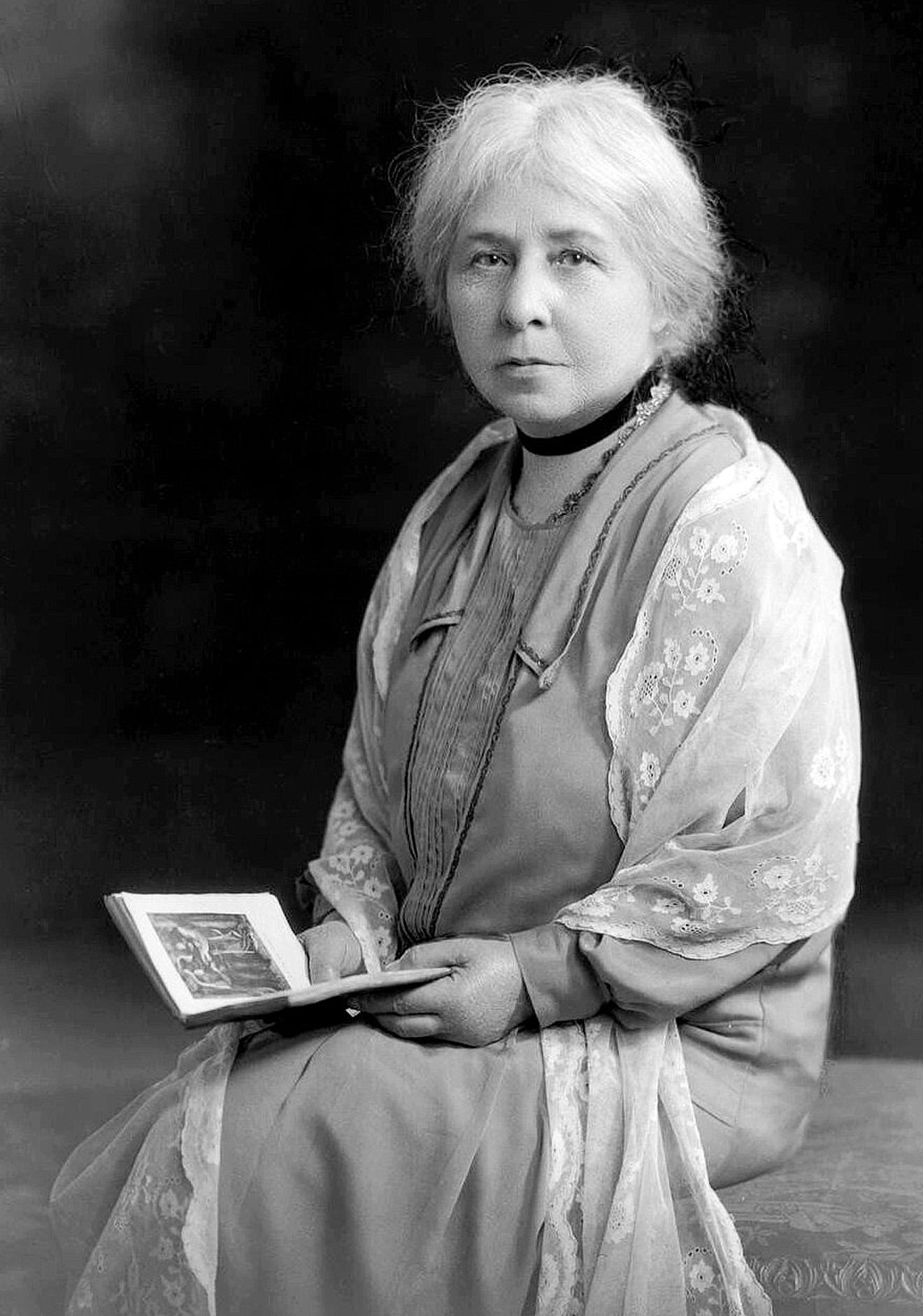
Murray would eventually become a well-travelled and highly-educated Egyptologist, archeologist, folklorist, and first-wave feminist.
It is Murray who first tried to connect the early modern witch trials of Europe to the Christian Church’s putative attempt to stamp out relict practitioners of a pre-Christian religious “Horned God” cult.
She wrote “The Witch Cult in Western Europe” in 1921, and wrote the Encyclopaedia Britannica’s “witchcraft” entry in 1929.
This encyclopedia article would remain in place until 1969 - long enough to influence generations of people’s thinking on the subject of witchcraft.
And while Murray’s work in Egyptology and archeology remain respected, her work in folklore and witchcraft in particular has been almost wholly discredited by better and more extensive research.
But the damage was already done, by Murray and later English occultists like Gerald Gardner, the latter an amateur anthropologist and “Wiccan”.
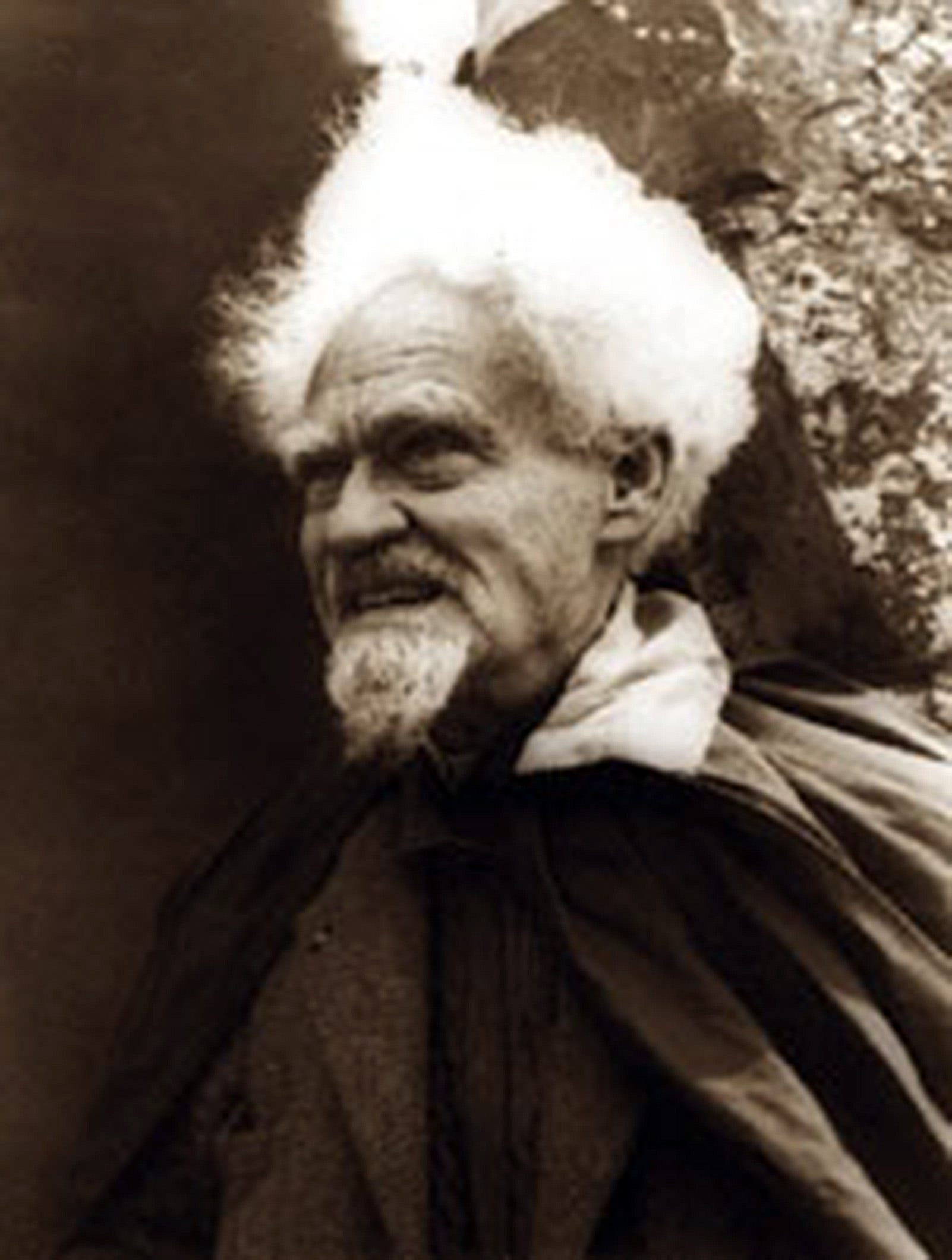
Uncountable self-styled “witches” today are firmly convinced that “the craft” is a continuation of an ancient legacy, and often view it solely through a feminist lens, believing that witch trials were a systematic attempt to break matriarchal power and pre-Christian female-centered belief systems.
Many neo-pagan witches will also state baldly that most accused witches in history were herbalists and midwives, and that a misogynistic patriarchy sought to supplant women in these positions with male doctors.
This universalist view completely ignores the fact that throughout much of Europe, anywhere between 13% and 27% of people accused of witchcraft were male.
In some places like Normandy, Burgundy, Finland, Estonia, parts of Baltic Germany, Russia, or Iceland, men were the gender more commonly accused of witchcraft.
In other words, while patriarchy and misogyny almost certainly played a role in some accusations made against many female “witches”, this is only part of a far more complex story.
Many Americans might be surprised to learn that in between the witch crazes of Shakespeare’s time and the rise of neo-paganism and Wicca, a belief in witches was being kept firmly alive in places like Southern Appalachia.
And just as the “Old Time Religion” of mountain people was situated between 16th century Calvinism and 19th century evangelicalism, mountain witches occupied a space between the European witch crazes and the “witches” said by the Secretary of the Navy to currently be infesting Monterey, California.
*****
18th and 19th century Appalachia saw no shortage of misogyny or patriarchal beliefs, but those considered to be “witches” were found among both genders.
My own 300,000 person database includes many mountain folks who were accused of being, or widely considered to be witches (not an exhaustive list):
William Stout of Overton County, TN (1898-1865)
Parthenia Hammock of Putnam County, TN (1834-1899)
John Fox of Owsley County, KY (1790- )
Elizabeth Clay of Harlan County, KY (1810- )
William “Devil Bill” Boggs of Russell County, VA (1823-1854)
Polly Brewington of Putnam County, TN (1830-1882)
Betts Mollett of Johnson County, KY (1810-1870)
Leah Smock of Meade County, KY (1818-1840)
Phoebe Lingerfelt of NC and Sullivan County, TN (1887-1943)
The last person on the list above seems to have favored wandering about the mountains in the form of a turkey, while poor Leah Smock was burned to death (according to local lore).
We even find backwoods counterparts to the “Witchfinder Generals” like Matthew Hopkins of 1600s England, with mountain men like Elkana “Caney” Robey of Lewis County, WV (1775-1851) being regarded locally as competent witchfinders.
Here is a mountain man in conversation with a travelling Methodist minister named John Dickey, speaking of local witches in 1898:
“Old Aunt Dinah, a slave of the same Wm Turner, 104 years old was another (witch). (Turner was about 100 at that time). Salim Sturgeon, a white woman lived as the concubine or wife of Negro George, a slave of the same Wm Turner, she was the third (witch). It began by cattle dying and hair balls being found in them, hide whole but the internal part shot to pieces, horses died, hogs died, cows, etc. Log heaps were made and all these were burned as a torture to the witches. The hair balls were carried in peoples’ pockets to show what had happened. The people who feared the witches kept their pockets turned wrong side outwards, at night for safety...”
Note how much of the “witchery” above is associated with people living on the margins of “respectable” society - enslaved women, or white women who had taken Black men as partners.
But unlike Puritan-era England or Scotland under James VI, being called a “witch” in Southern Appalachia did not automatically condemn a person.
Away from the authoritarian eye of state churches and clergymen paid by state-sanctioned tithes and taxation, Appalachian witches seem to have been judged by their work and intentions alone.
In fact, “Granny Witch” and “Granny Doctor” seem to have been almost interchangeable terms among mountain folk, with women of American Indian background or mixed-ethnic ancestry being held in particularly high regard for their medical skills and knowledge.
And far from being a situation where “the patriarchy” was seeking to supplant or stamp out the existence of herbalist doctors and midwives, “Granny Witches” (and their male counterparts) seem to have been, for the most part, regarded with a combination of caution and respect.
“Granny Collins”, a Melungeon woman born “Louisa Bolling” in Floyd County, KY in 1869 (and related to the Locke family of Gypsy ancestry), was said to have worn large golden bangles in her ears, and was a typical example of the blurred line between “granny doctor” and “granny witch”.
While outsiders like to mock “hillbillies” and Southern Appalachia as place of inbreeding, the mountain population included people with ancestors from at least 5 continents, and it would be almost impossible to trace every aspect of mountain culture back to an original source.
It is probably best to see Appalachian culture, including its folk beliefs and religion, as what anthropologists like to call “syncretic”.
A good example might be the once widespread use of “witch balls”.

Once well-known in parts of Kentucky, Tennessee, West Virginia, and the mountain parts of Virginia and North Carolina, “witch balls” or “witch bullets” were balls of hair (usually animal) rolled into a small hard ball and held together with tallow or beeswax.
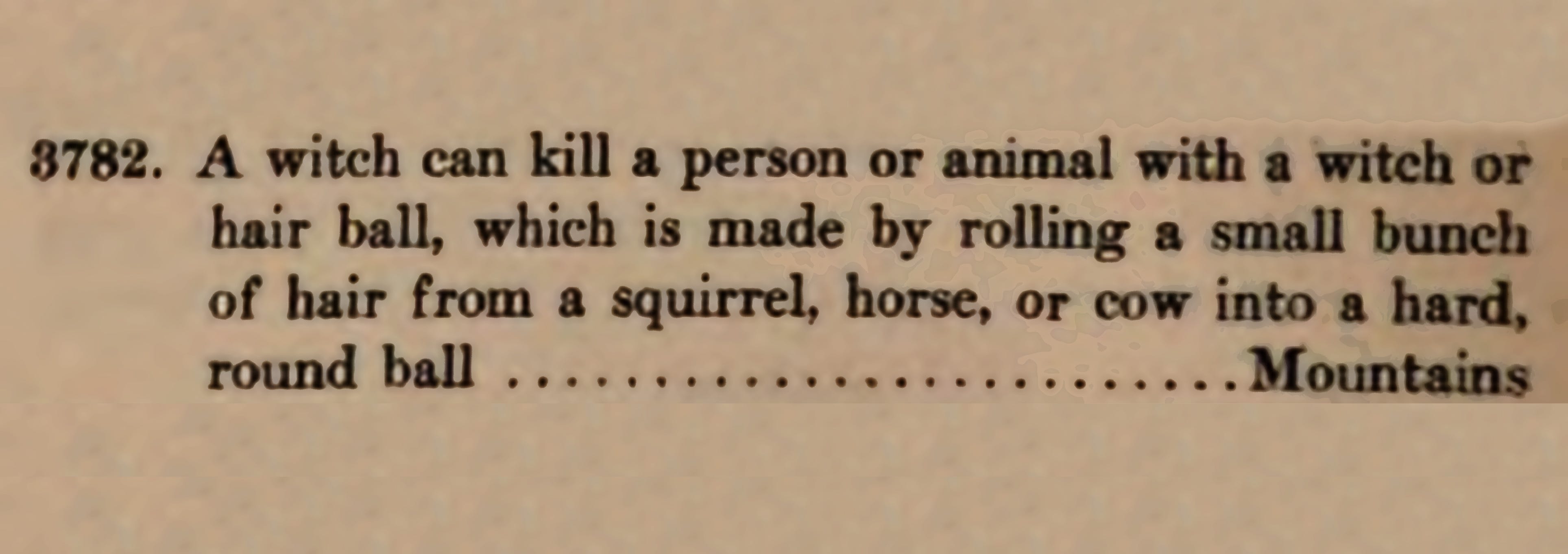
It is possible that “witch balls” were an evolution of the antiquated practice of using “bezoars” in folk medicine (a word from ancient Persia describing the round and polished hairballs found inside certain animals).

Witch balls in Appalachia were used in a way similar to what might be considered “Voodoo” in the popular imagination.
A “witch” would draw an image of the person or thing they hoped to cause harm, and the witch ball would be thrown or flicked at the image.
It was believed that pain or damage would be caused to the part of the victim which had been struck by such a ball.
Unlike modern American evangelicalism or neo-pagan witchcraft, we will likely never know the true and complete story behind every aspect of mountain religion or mountain “witchcraft”. Its origins are simply too diverse and complex.
Which is really kind of cool, don’t you think?
But in place of knowledge, information, and education, we have a Secretary of the Navy offering his half-baked theology as a counterweight to another half-baked pseudo-religion.
Before long, this Substack will have managed to alienate 90% of its potential readers…
Damn.
But just for the record, given a choice between living among dispensationalist, Pentecostalist, evangelical Christians and the neo-pagan witches of Monterey, I will always opt for the people motivated by tolerance, kindness, forgiveness, generosity, and a love of nature.
Light a black candle, and throw another leg of newt in the pot for me...
[Images: “Moonlight Dance” by Emma Childs; John Nelson Darby; Margaret Murray; Gerald Gardner; modern witch balls; a selection of bezoars]
Comments
Nothing yet. Say the first thing.
Sign in to join the conversation.