
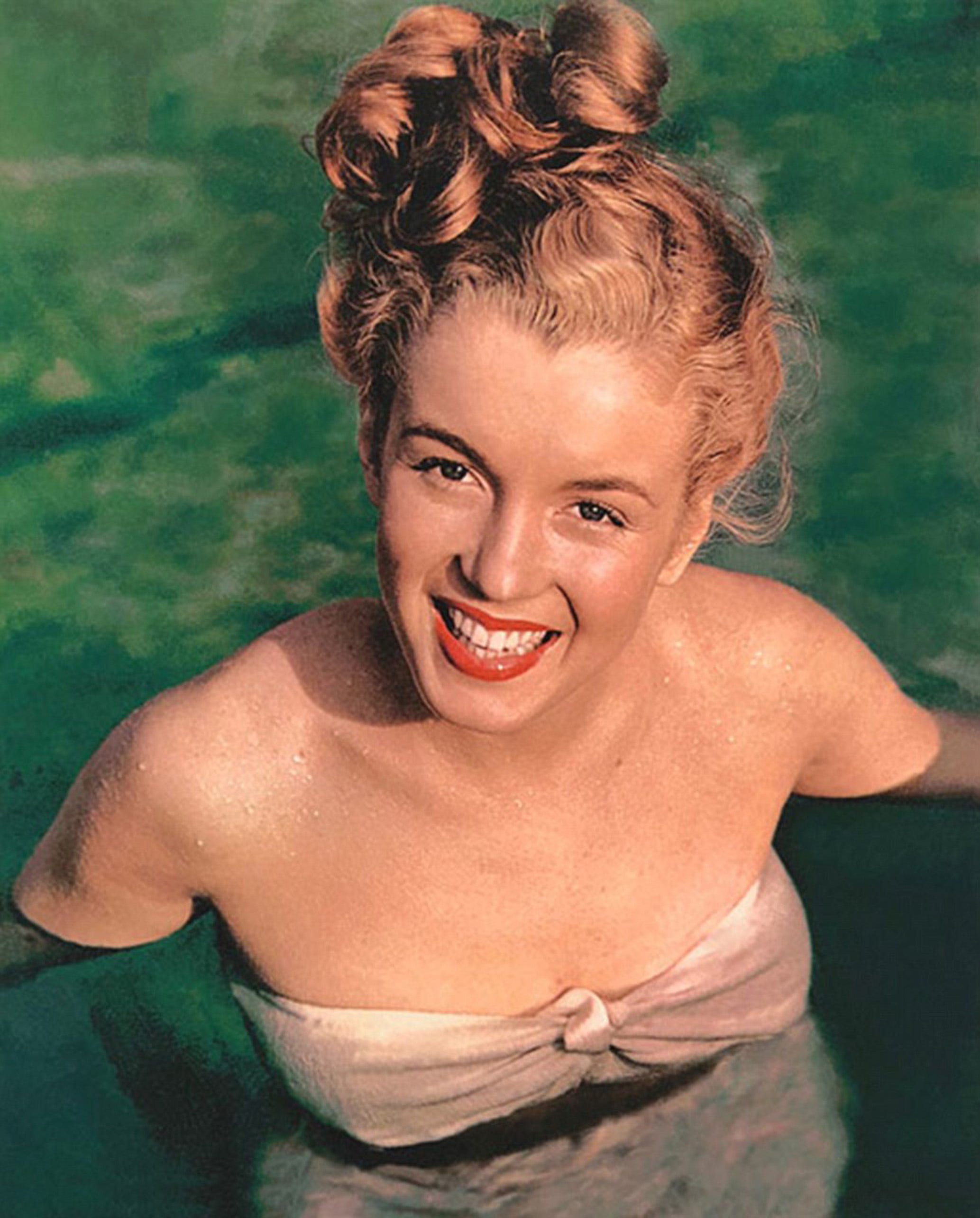
I’m re-posting this article from a while back, to commemorate the centenary of the birth of Marilyn Monroe on the first of June, 1926.
I am asking those who are followers or supporters of our podcast to bear with us, as we are in the process of moving host due to issues with our current provider.
*****
Like many millions of people around the world, I’ve always been fascinated by Monroe.
In my own case, this fascination has little to do with the glamorous Hollywood icon - which Monroe herself admitted was a character carefully crafted over many years.
No, my fascination lies in the way an image or character sold as a commodity can become so vast and overwhelming it consumes its creator.
In popular culture, songs like Elton John’s “Candle in the Wind”, while seemingly empathetic, do an injustice to Monroe, portraying her solely as a sort of naive victim, chewed up and spat out by the men in her life and a ruthless, sexist film industry.
It’s more complicated than that.
And if anyone ever had a right to call themselves “self-made”, it was Marilyn Monroe.
Monroe was born in 1926 to a mother who was first married aged only 14.
We can only speculate what role, if any, this child marriage played in the later mental health issues which would plague Gladys Pearl Monroe.
Gladys was actually born in Mexico to railway worker Otis Monroe and his wife Della Mae Hogan, with the family moving to California around the year 1900.
Her marriage at 14 to Jasper Baker was "stormy", with many later accounts accusing Baker of extreme domestic violence. Gladys appears to have already been pregnant at the time of her first marriage, giving birth to their first child, a son named Robert Baker, at the tender age of 15.
Gladys Monroe managed to extricate herself from this marriage at the age of 20, already a mother of two children, but her children were taken away by Jasper Baker. It is known that she tried to remain in contact with these children for a while, but became estranged for reasons impossible for outsiders to know or understand - let alone pass judgement upon.
Gladys Monroe married again in Los Angeles at the age of 22, this time to a man called Martin Mortenson.
The exact hows and whys are unclear, but this marriage also broke down, and Gladys became pregnant by a work colleague (and married man) named Charles Gifford in 1926.
The child of this tryst, Norma Jeane, took the surname of her mother's still legal husband, and was officially born as "Norma Jeane Mortenson" on paper.
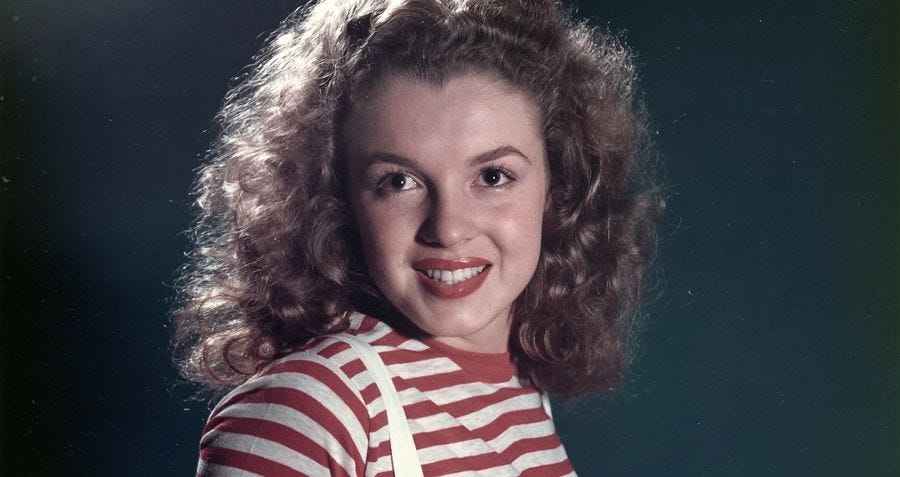
Norma Jeane had what can only be called a desperate and difficult childhood, with "home" a constant rotation between intermittent spells with her birth mother, and time spent with foster parents, work colleagues of her erratic mother, and in orphanages.
Norma Jeane's mother would spend her first spell in an asylum for the insane when Norma Jeane was only nine years old, after suffering what was back then called "a nervous breakdown".
Gladys Monroe would later be diagnosed with paranoid schizophrenia...
Norma Jeane would take various quasi-paternal surnames before settling on her mother's maiden name - the name by which she would become famous.
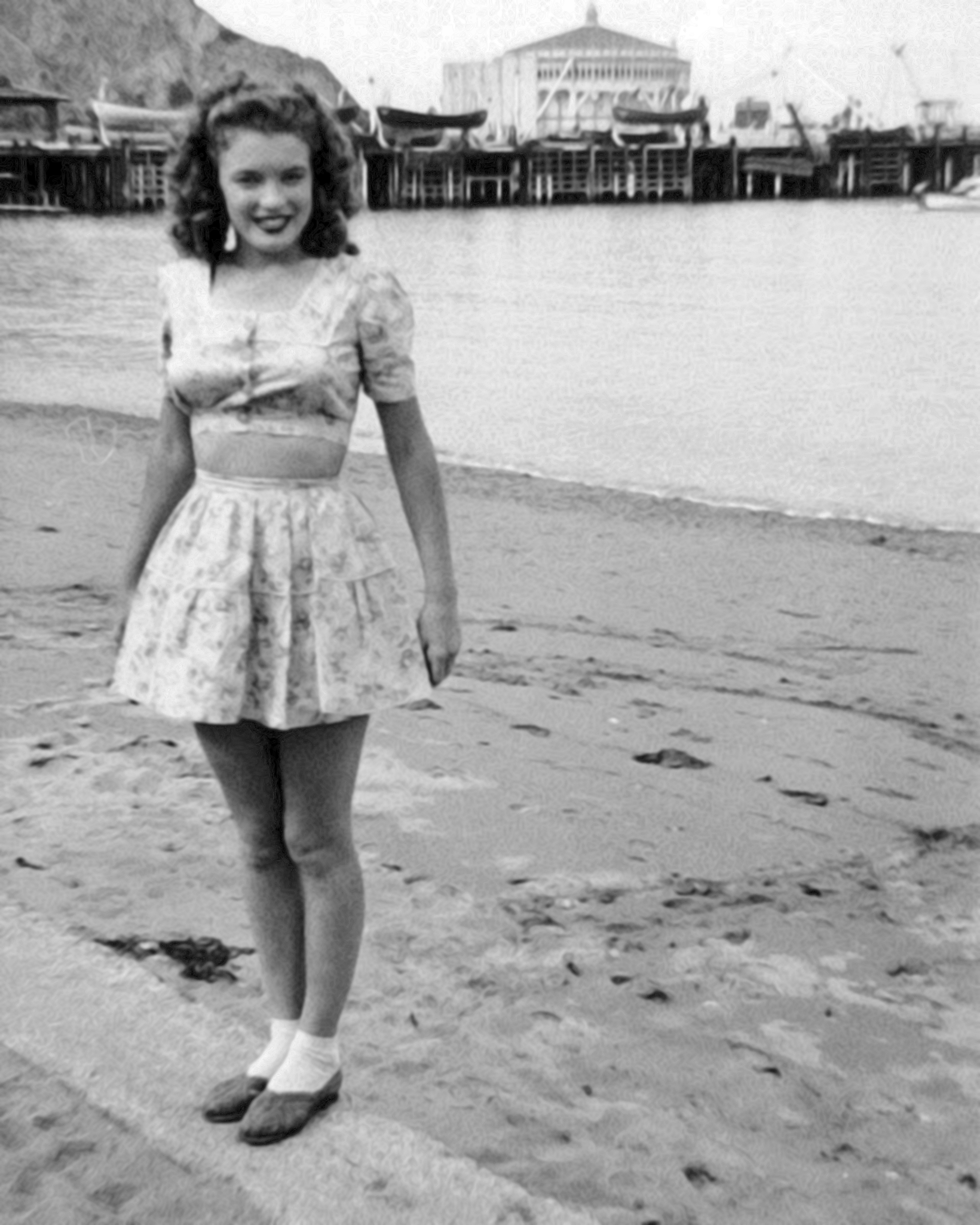
[Image: Norma Jeane at 17]
Every later effort to establish contact with her biological father Charles Gifford was rebuffed, and this rejection must have been the source of real emotional pain.
Monroe’s biological father’s background was relatively privileged, with deep roots in colonial-era Rhode Island and Massachusetts.
Put in the bluntest terms, Monroe’s mother, on the other hand, came from generations of impoverished Appalachian people.
I’ve written elsewhere, in articles/podcasts like “Hillbilly Face”, about the way Southern Appalachians have been mocked and stereotyped through the years, while often turning the tables on their smug “social superiors”, even to the point of making huge amounts of money by playing up to outsiders’ presumptions and expectations.
Marilyn Monroe was no innocent ingénue - she knew full well how to sell an intoxicating mix of playfulness and unapologetic sexuality minus any sense of guilt, cheapness or tawdriness.
A brown-haired girl from an underclass background portraying a “blonde bombshell” character was a decision made by her, not a film studio.
While guessing ethnicity from photos is a fool's game of phenotype analysis, I am still posting this series of photos, because I have some familiarity with the Hogan and Nance families behind Marilyn Monroe's mother, and her mother before her.
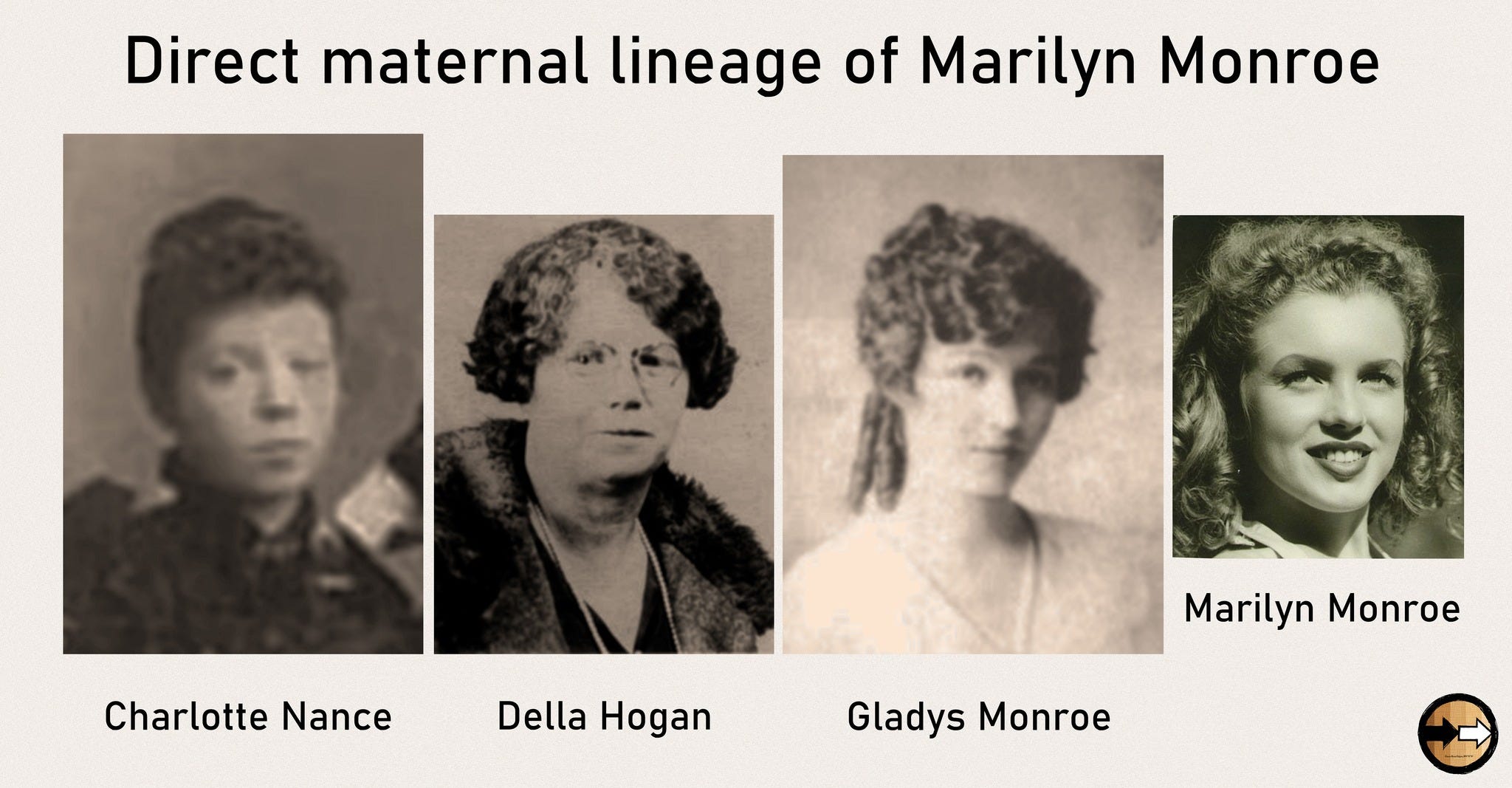
They are my own distant relations (Norma Jeane is an 8th cousin). Lest this seem like a wish for fame by association, I will point out that Charles Manson is a closer 7th cousin...
We would find that we are all cousins in one way or another if we cared to dig deeply enough!
Both the Nance and Hogan families of Marilyn Monroe's maternal lineage are mixed-ethnic, "Old Mix American" people, and it is hard to ignore the possibility that the tragic lives of Norma Jeane and her mother were at least partially the result of trans-generational trauma.
The extremely low social status of most Black and mixed-ethnic women throughout American history made the formation and development of confident, ambitious young girls from such backgrounds the exception, rather than the rule - at least until more recent times.
Monroe was found dead of an apparent barbiturate overdose in the summer of 1962, after suffering years of anxiety, bouts of depression, and low self-esteem coupled with the type of substance abuse we would now call "self-medication".
While her untimely death was certainly a tragedy, I refuse to see her solely as a victim.
Monroe was a voracious reader, and independent-minded. She refused offers of marriage from studio bigshots, because she didn’t want her success to be seen as coming from anything but her own work.
She took time out from the Hollywood merry-go-round to put herself through proper acting school, where her ability was admired and respected by fellow students.
In 36 short years, this woman managed to give the world a body of work built on tenacity, real comic genius, serious acting chops, and sheer charisma - DESPITE her desperate family background and attempts by various men to rein her in and control her.
At a time when the USA was more deeply sexist than today (and the film industry often predatory), Monroe was a miracle of human, and especially female, resilience.
Comments
Nothing yet. Say the first thing.
Sign in to join the conversation.