
Someone with twenty years and a big audience told you the tell.
Their clients look sharp. Their bloodwork reads normal. Their heads are full of fog. So the fog must be the nervous system, and the fix must be the thing they sell.
Read that chain again. The normal bloodwork is the load-bearing beam. And it’s the weakest part.
What you’ll learn in this post:
→ What a standard GP panel checks, and what it quietly skips
→ Which tips have evidence, and what that evidence measured
→ The four tests that catch fog before a blood count does
→ Read time: 8 min
If you do one thing today, ask for the ferritin number. Not “iron.” Ferritin. The reason is below.
A woman in the community told me she’d been told her bloods were “all fine” three times in two years. On the fourth visit a different GP ran ferritin. It came back at 11.
This is experience, not evidence. One person. One number.
Here’s the move these threads all make. Your labs came back normal, so the problem must be deeper, subtler, and conveniently only fixable by them.
A standard blood panel is designed to catch disease. It is not designed to explain why your head feels like wet cotton at 3pm. Those are different jobs, and passing the first says nothing about the second.
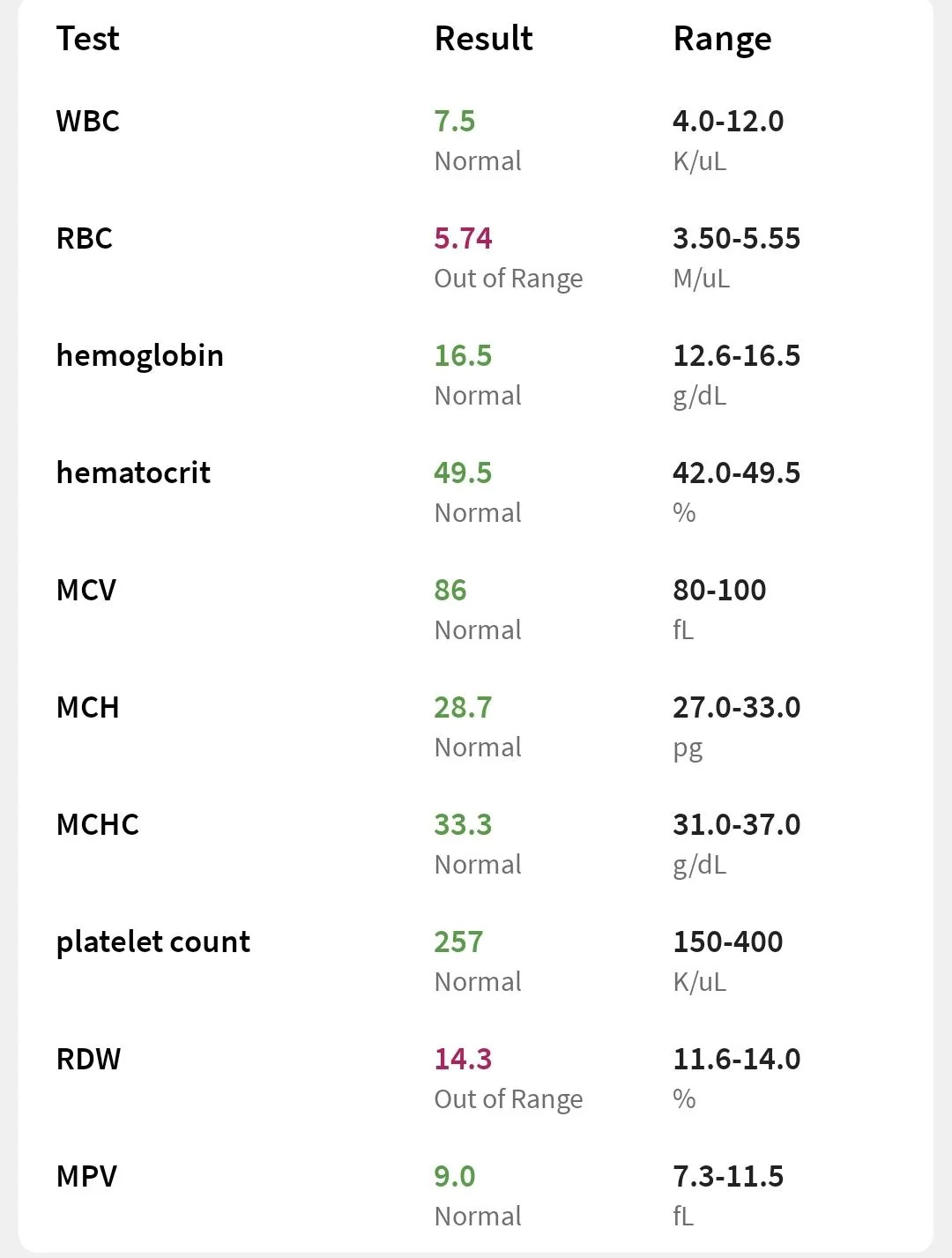
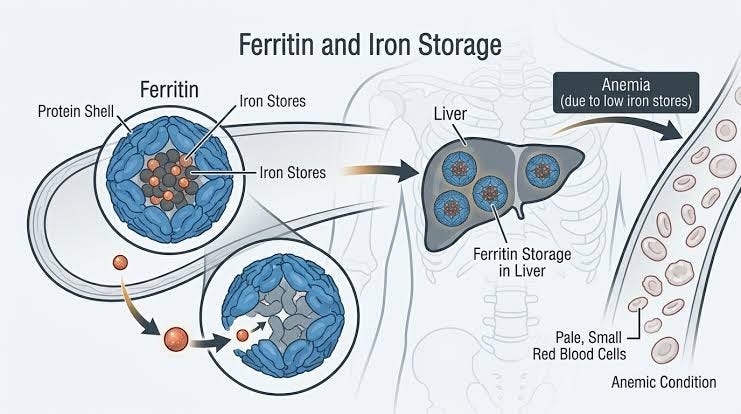
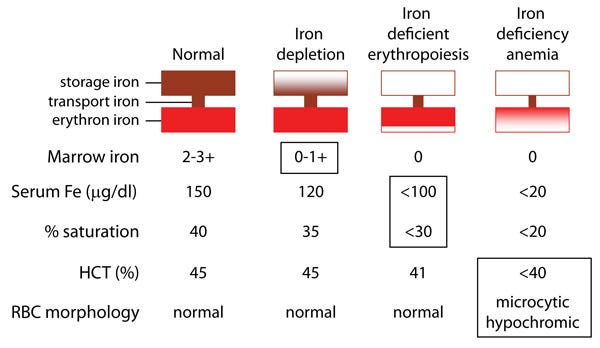
Take iron. A full blood count checks whether you’re anaemic. It does not check your iron stores. You can have a completely normal blood count and be running your brain on empty tanks, because ferritin drops long before haemoglobin does.
This isn’t a fringe idea. In trials, non-anaemic women with low ferritin and unexplained fatigue improved on iron supplementation, and a placebo-controlled study of iron-deficient women with normal or borderline haemoglobin found better fatigue scores, better mental quality of life, and better cognitive scores after treatment (Favrat, 2014, PREFER — https://pmc.ncbi.nlm.nih.gov/articles/PMC3994001/). A pilot trial in young women found attention improved specifically in those whose ferritin rose (Blanton, 2013 — https://pmc.ncbi.nlm.nih.gov/articles/PMC4073160/).
Your blood count was normal. Your ferritin was never measured. Those are not the same sentence, and one of them was quietly swapped for the other.
I spent a stretch convinced my own fog was a discipline problem. I did the cold showers and the 5am starts and the box breathing. I white-knuckled routines for months and felt slightly worse.
My ferritin, when someone finally checked, was 14.
Before we go on: if you’ve had ferritin, thyroid, B12 and vitamin D checked and they’re genuinely fine, then this post isn’t the one you need tonight. Nervous-system work may be exactly where your answer lives. This is for the person whose “normal” never included those four.
THE TWO TIPS WITH REAL EVIDENCE
→ Empty your open loops. Keep it. There’s a stronger version.
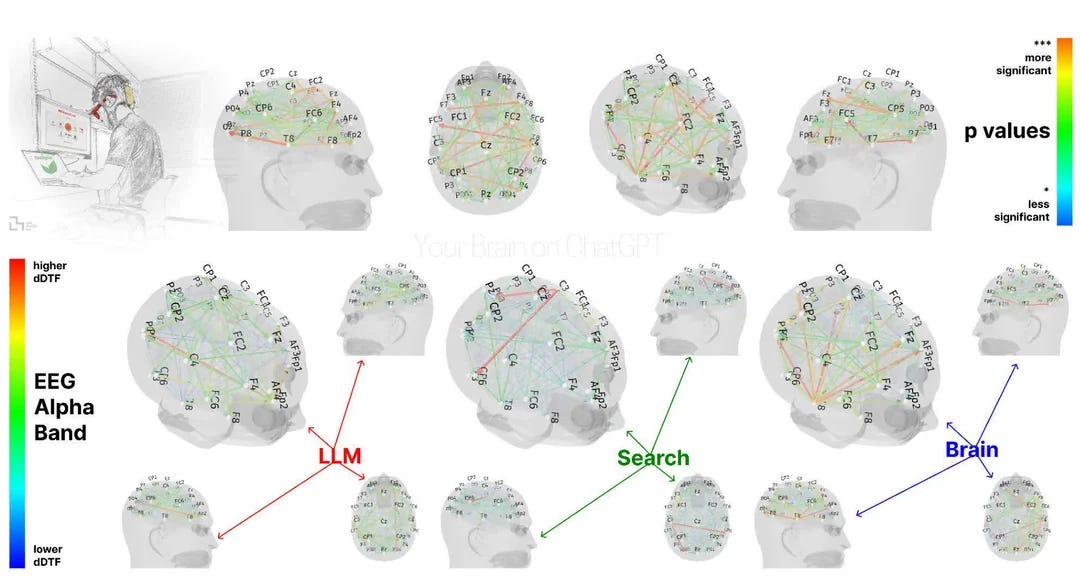
Writing unfinished tasks down works, and it’s been measured properly. 57 people wired for polysomnography: those who wrote a specific to-do list before bed fell asleep faster than those who journaled about finished tasks. The more specific the list, the faster they dropped off (Scullin, 2018 — https://pmc.ncbi.nlm.nih.gov/articles/PMC5758411/).
The thread says “on paper your mind stops guarding them.” Close. The study measured falling asleep, not daytime fog, and the effect came from being specific. “Email Dan re: invoice,” not “work stuff.”
→ Pause and choose. Keep it. Lower the claim.
The three-second gap between trigger and reaction borrows from real work on emotion regulation. Labelling a feeling instead of reacting to it changes how the brain handles it. None of that work was done at 6pm in a kitchen with two kids shouting, and none of it measured cortisol or fog. Use it because it helps you steer. Not because it drains a hormone.
That leaves five tips, one built on a sleep claim that the best experiment reversed, and the thread’s whole closing argument resting on that “normal bloodwork” line.
Here’s all seven graded, and the four numbers that catch fog before a standard panel does.
The full sleep + nutrition protocol is inside, including the exact meal timing that works around your kids’ bedtime.
Hit reply with one word: have you ever had your ferritin actually measured? Yes. No. Not sure.
Most people say “not sure,” which usually means no, because a full blood count isn’t a ferritin test and nobody explained the difference.
Send it and I’ll tell you the exact four to ask your GP for, and the one that gets missed most. Reply here or DM me. I read every one.
THE FOUR NUMBERS TO ASK FOR
A standard panel often means a full blood count and maybe TSH. Here’s what to add, and why each one hides from the basic test.
1. Ferritin.
Your iron stores. Drops before haemoglobin, so a normal blood count misses it. Low ferritin causes fatigue and fog, and treating it has improved cognition in trials of non-anaemic women (Favrat, 2014 — https://pmc.ncbi.nlm.nih.gov/articles/PMC3994001/). Ask for the number, not “is my iron okay.” Many labs flag ferritin only under 10 to 15, and symptoms can show well above that.
2. B12 and folate.
Both build myelin, the insulation on your nerves. Low B12 produces fog, memory slips and mood changes, sometimes with a normal blood count early on. Ask for the actual value.
3. Thyroid, and not only TSH.
Comments
Nothing yet. Say the first thing.
Sign in to join the conversation.