
The following interview is about a hop water brand, but the themes behind it are crucial to every modern beverage founder trying to build methodically in today’s market.
In talking with Michael Moeller of Kentucky Hop Water, the conversation quickly moves beyond NA beverages and into much broader territory: introducing products that don’t fit tightly into existing categories, balancing line extensions without losing brand identity, expanding into new markets while staying rooted in a specific place, and learning how social media can become part of the brand-building process instead of just an advertising channel.
There’s also a level of honesty and self-awareness throughout this interview that I think many people in the industry will appreciate. Michael talks openly about retailer skepticism, pricing objections, THC uncertainty, and the reality that consumer education is still a major hurdle for emerging beverage categories. In my experience, the most effective beverage founders in our unique three-tier system are not just confident and persuasive; they’re also direct, open to feedback and willing to be proven wrong.
Whether you’re growing a hop water brand, brewery, RTD cocktail, THC beverage, or something entirely different, there’s a lot in here that will resonate. In many ways, Kentucky Hop Water is tackling the same questions that much larger beverage brands are still trying to figure out.
Thanks for taking the time, Michael. Would you give us a little background on yourself and your connection to the beer industry?
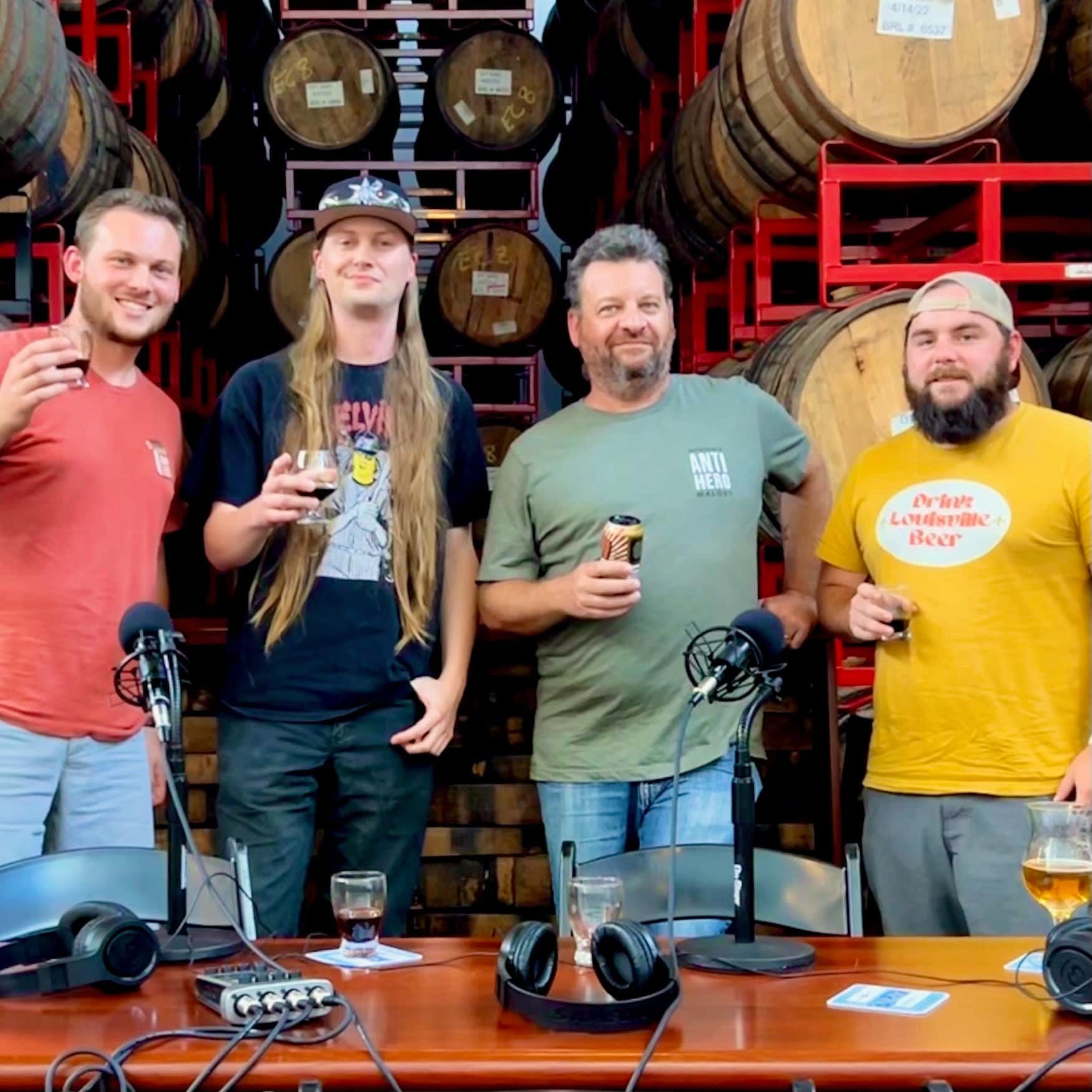
“Thanks for having me! I’ve worked in the beer and spirits space for a little over ten years now, but my real entry point into craft beer was starting a podcast in 2015 called Building Breweries.
It was an interview-based beer podcast where I talked with brewery founders and owners around the country. At the time, I had never hosted a podcast before, and I definitely didn’t know much about beer or brewing. But I was curious, and I had an appetite for learning. That ended up opening a lot of doors.
The podcast eventually led to interviews outside the traditional brewery lane, including Sam Kass, who was the White House chef under the Obama administration and helped lead the White House homebrewing effort, along with Senator Ron Wyden (Oregon) and Governor John Hickenlooper (Colorado).
From there, I started working in different parts of the industry (parallel to my career in agency marketing): distribution, beer bars, bottle shops, breweries, and beer blogging. That path eventually led to co-founding Louisville Ale Trail with John Ronayne and David Satterly, which started as a passport program and brewery advocacy project in Louisville. We also went on to start another podcast called Kentucky Commons (I actually rebranded the original Building Breweries podcast feed to host it).
So - my connection to beer has always been a mix of storytelling and community-building.”
When did the idea for Kentucky Hop Water come about? How did the initial concept compare to the final product? How long did it take to go from a dream to a commercial production run?
“I hate to perpetuate the stereotypical NA founder story but…it happened briefly after COVID shutdown.
I think I was drinking so much in isolation that something snapped in my brain and, to this day, I am now incapable of drinking alone at home (I wish I could. It’d be cheaper). I had a kegerator that became pretty useless. So, I started carbonating my own water and mixing in different things like Mio and lemonade crystals, mostly just messing around with something cold, flavorful, and had a bite.
I was already a fan of Lagunitas’ Hoppy Refresher at the time, so eventually the obvious thought hit me: I could probably make my own hop water.
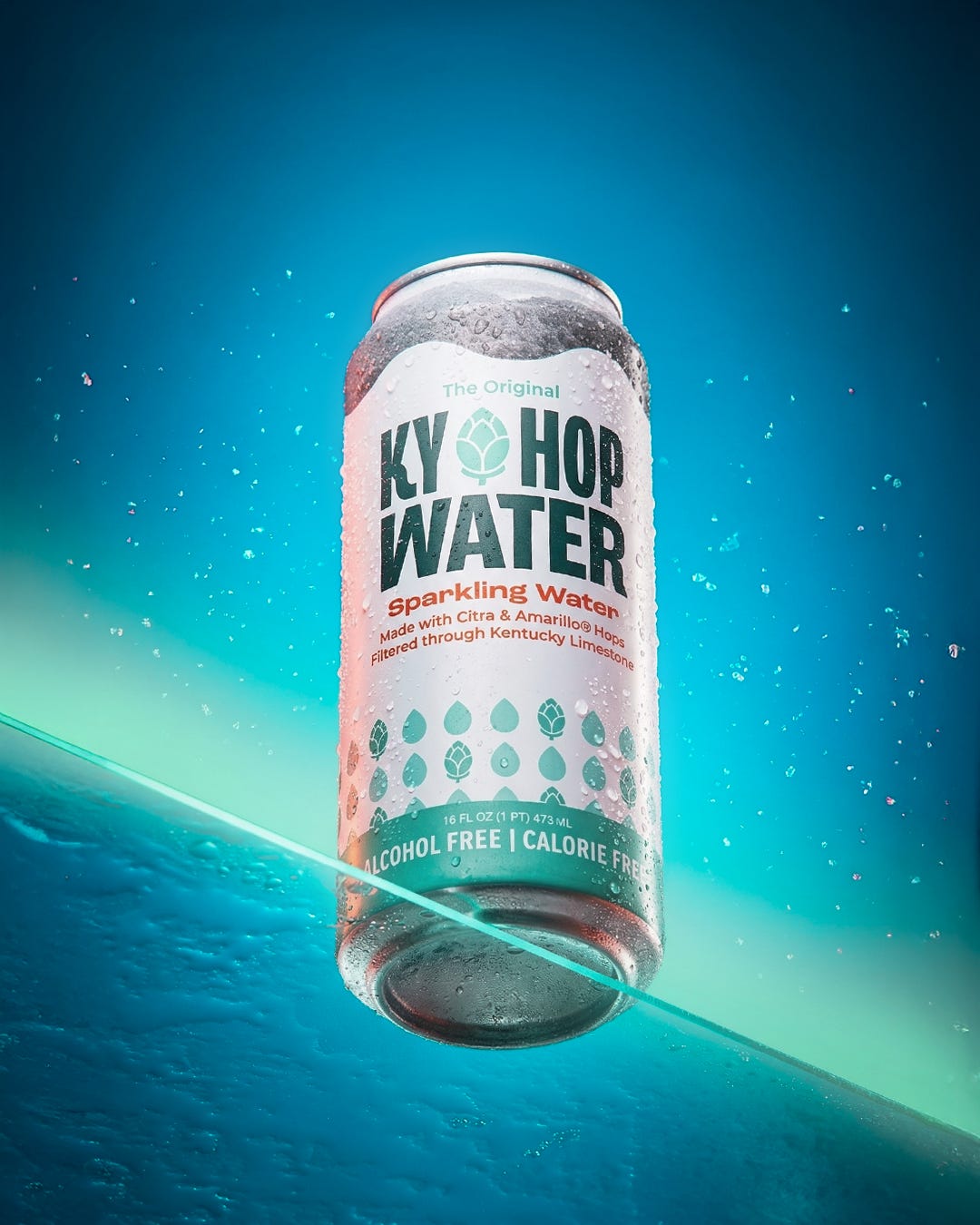
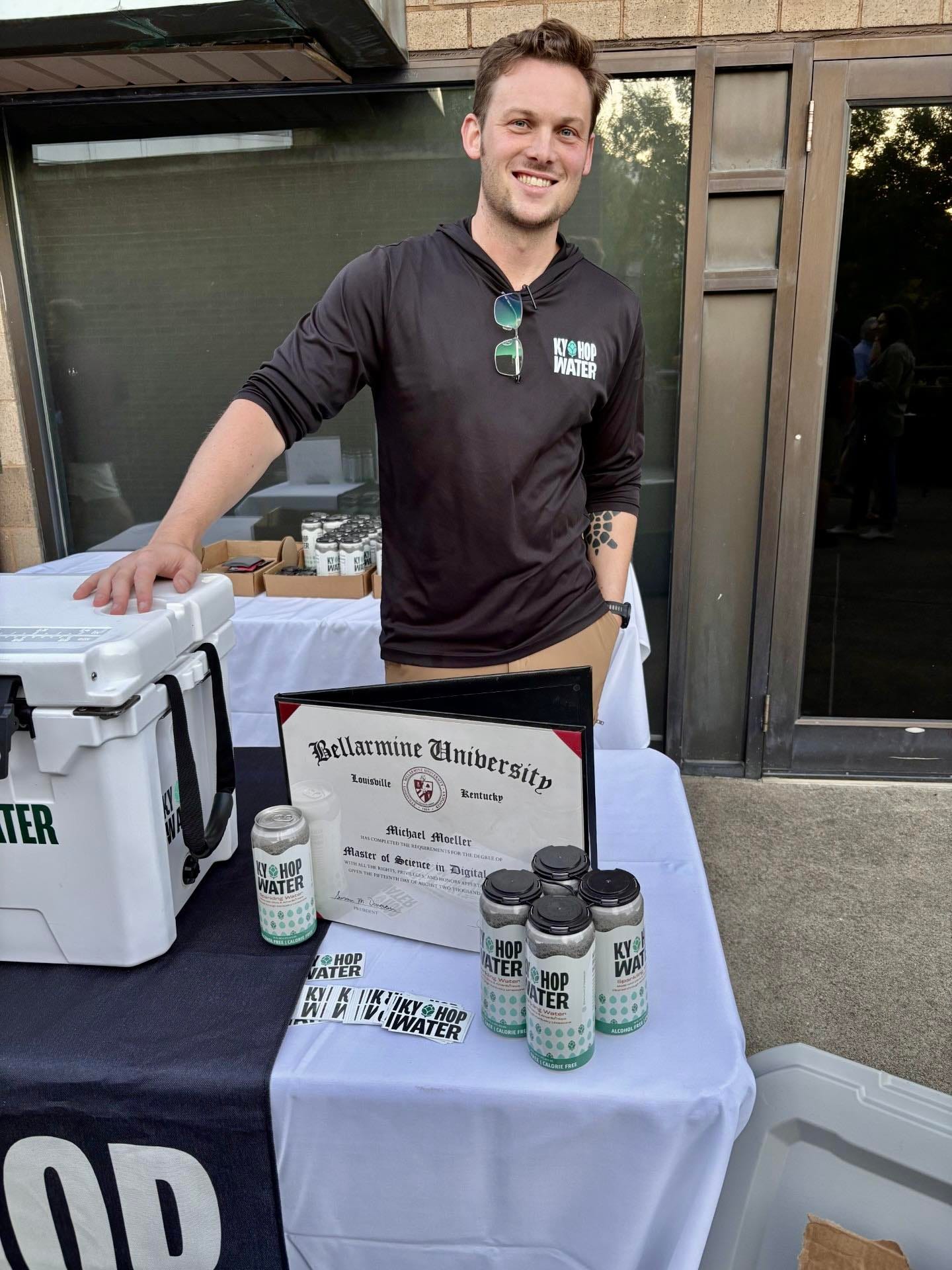
The original concept was pretty close to what Kentucky Hop Water became. It was always meant to be hop-forward and connected to beer culture, despite being alcohol-free. The difference is that the early version was very much a kitchen project. My production partner, Against the Grain (Louisville, KY), was able to take my recipe and scale it into a 20bbl commercial batch. We’ve continued improvising the recipe and process a little with each run.
Once I started seriously looking into what owning a beverage brand would entail, it took about 11 months to get it from idea to launch. I started working on it in February 2024 and I was able to soft-launch in January 2025.”
What was it like introducing a new segment like Hop Water to retailers and how has the positioning and pitch evolved since you started, if at all? What are the most common objections you hear from prospective distributors, retailers, and consumers? What is the most successful way to navigate this feedback in your experience?
“Introducing hop water to retailers has been interesting because the NA category has grown a lot, but hop water still isn’t widely understood. A lot of consumers, even people who like beer, still don’t really know what hop water is. So before I could think too much about consumer education, I had to think about retailer education. Specifically, what does the average liquor store owner, bottle shop buyer, or beverage director need to understand before this product makes sense on a shelf or on their menu?
The pitch changes depending on the audience.
For distributors, retailers, and beverage directors, I usually lead with the NA category. That’s the framing they already understand. They know NA is growing. They know more consumers are looking for alcohol-free options. So Kentucky Hop Water fits into that larger movement, but with a beer-adjective angle that makes sense.
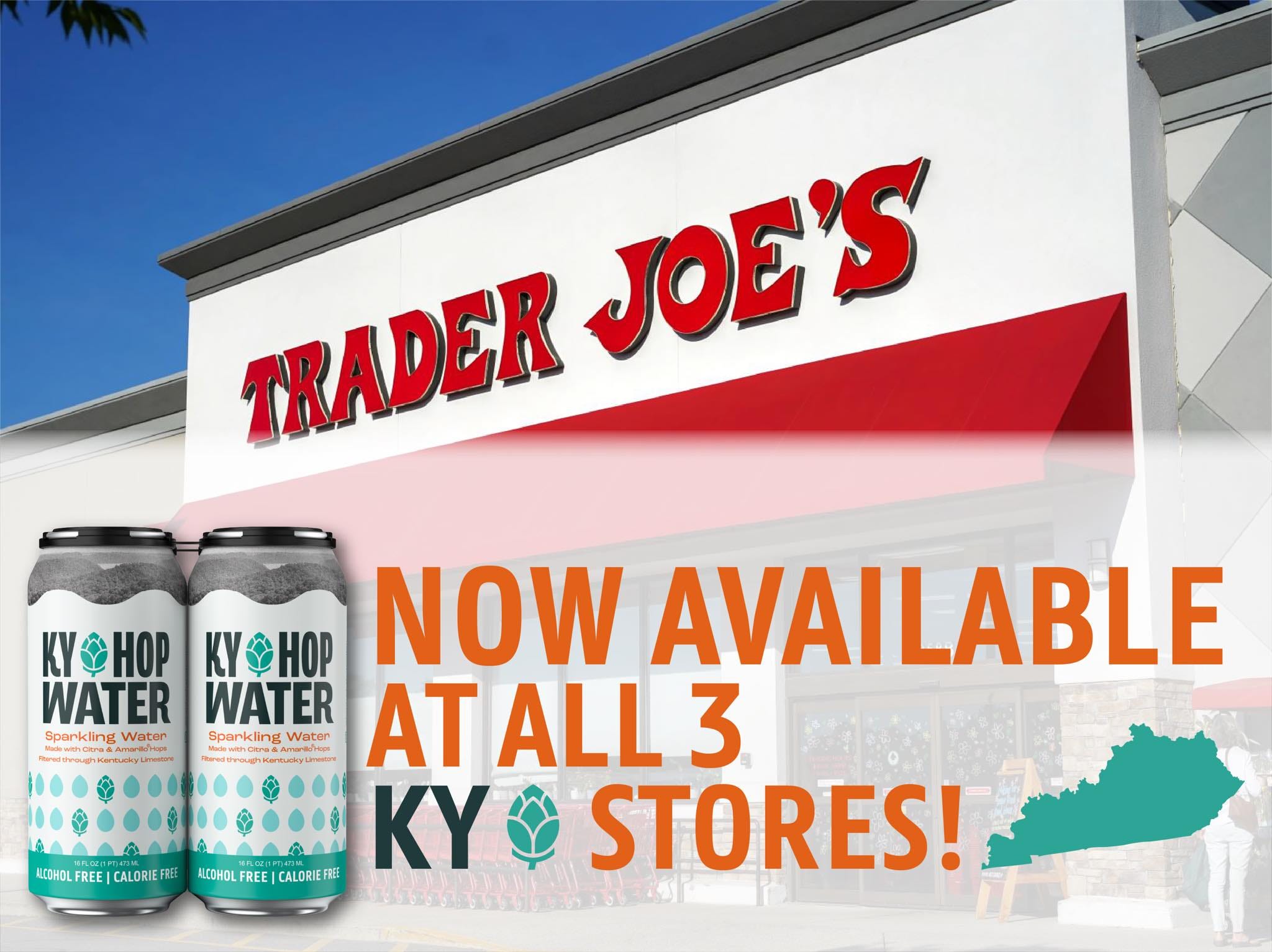
For consumers though, I don’t really want to box Kentucky Hop Water in as “only” an NA product. I want Kentucky Hop Water to be Kentucky Hop Water, a beverage they like that happens to be NA.
There’s a regional soft drink here in Kentucky called Ale-8-One that I think about a lot. Ale-8 doesn’t show up calling itself an NA brand. It’s just…Ale-8. That’s the kind of space I’d like Kentucky Hop Water to earn over time. It can be alcohol-free, but that doesn’t have to be its whole identity.
The most common objection is the same one most NA brands hear: why does this cost what it costs?
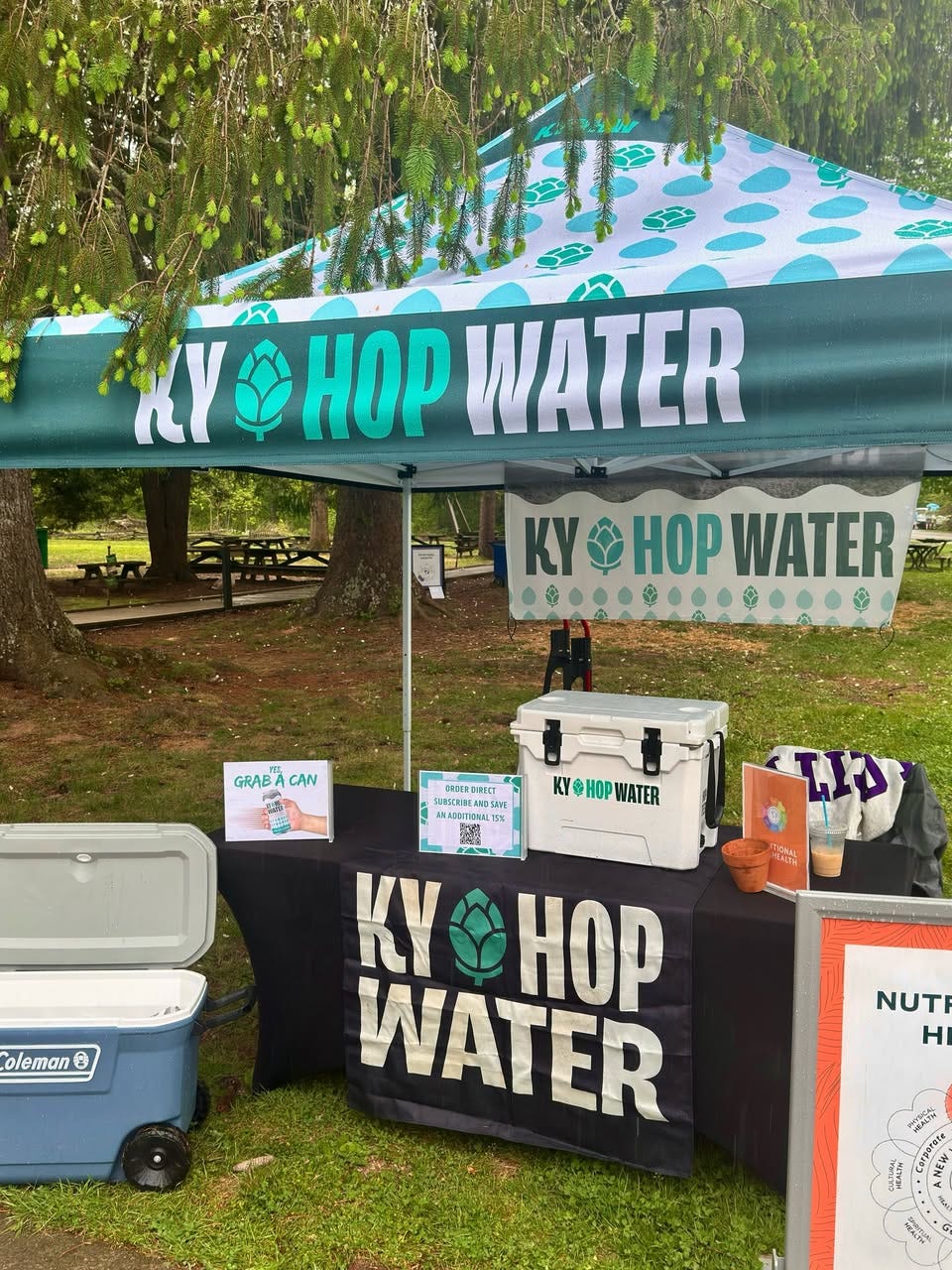
I get it. If someone sees hop water as just sparkling water, the price might not make sense to them (although, hey, people are still buying bottled water for a reason). But that’s also probably not going to be our core customer. The people who understand hop water, or who want something that still feels connected to beer culture without being beer, are willing to pay for it. Some of them are even willing to pay shipping, which anyone selling liquid online knows is half miracle, half pain in the ass.
With distributors and retailers, the objection is usually less philosophical and more practical. They want to know whether it will move. They want to know where it belongs in the store. Is it NA? Is it sparkling water? Is it beer-adjacent? Is it a wellness product? That’s where the education piece matters. You have to give them a simple shelf story and a simple customer story. This is for the person who likes hops, likes beer culture, but doesn’t want another beer in that moment.
As far as navigating feedback, my background in public relations and customer experience has taught me to listen closely, answer honestly, and look for a path forward when there is one. But you also have to know when someone just isn’t your customer. Not every objection is a problem to solve. Sometimes it’s a filter.
If somebody fundamentally doesn’t understand why an alcohol-free hop beverage should cost more than a can of plain sparkling water, I can explain it. But I’m probably not going to convert them in one conversation. The better use of time is finding the retailer, distributor, bartender, or consumer who already understands the occasion and just needs the product explained clearly.”
You’ve since added a THC version. Was that the vision from the beginning or was that a logical opportunity that presented itself after the fact? How crucial is the pending hemp legislation to Kentucky Hop Water’s business model? How are you prioritizing your efforts between the two different lines over these next 6 months?
“I always knew we’d probably release a hemp-infused line - I just didn’t expect to do it so quickly.
For Kentucky Hop Water, it wasn’t a random trend chase. Hemp has a real history in Kentucky. The state was once one of the country’s major hemp producers, so a hemp-derived THC version of Kentucky Hop Water felt connected to the larger story of Kentucky agriculture and beverage culture, not like some random SKU extension.
The timing though…We launched the THC line, and within a few months, the federal hemp landscape became a lot more uncertain. That has definitely affected the way retailers think about the category. A lot of chains are interested in this category, but they’re also skittish about taking on new inventory when nobody knows exactly what the rules will look like seven months from now.
Is the legislation important to the business model? Of course. It would be better for us if hemp-derived THC beverages had a clear legal path forward. The margins are stronger, the consumer interest is there, and the category is still early enough that we could still make an impact.
But Kentucky Hop Water is not only a THC brand. The original alcohol-free line is still the foundation. If the THC line gets restricted, we’ll adjust. I won’t pretend that it wouldn’t be a bummer, but the brand can survive without it.
Over the next six months, I’m treating the two lines differently. For the original Kentucky Hop Water, the focus is still retail, distributor relationships, and building awareness in places where a hop-forward alcohol-free drink makes sense. For the THC line, I’m much more focused on direct-to-consumer while the regulatory picture shakes out. That lets us reach the people actively looking for the product without asking every retailer to take on a category they may not be ready to support yet.”
Has having a similarly branded line extension that crosses categories presented any messaging challenges or confusion in the marketplace that you may need to address in future iterations? Does the THC version get merchandised separately from the original, undosed version? Any other unexpected learnings from being in two different categories with the same brand?
“This was a fun exercise in branding for us.
First, I have to give credit to Brian Ott here in Louisville who built the brand guidelines, designed the logo, and created the can. He took the version of Kentucky Hop Water that was in my head and made it feel like a real beverage brand.
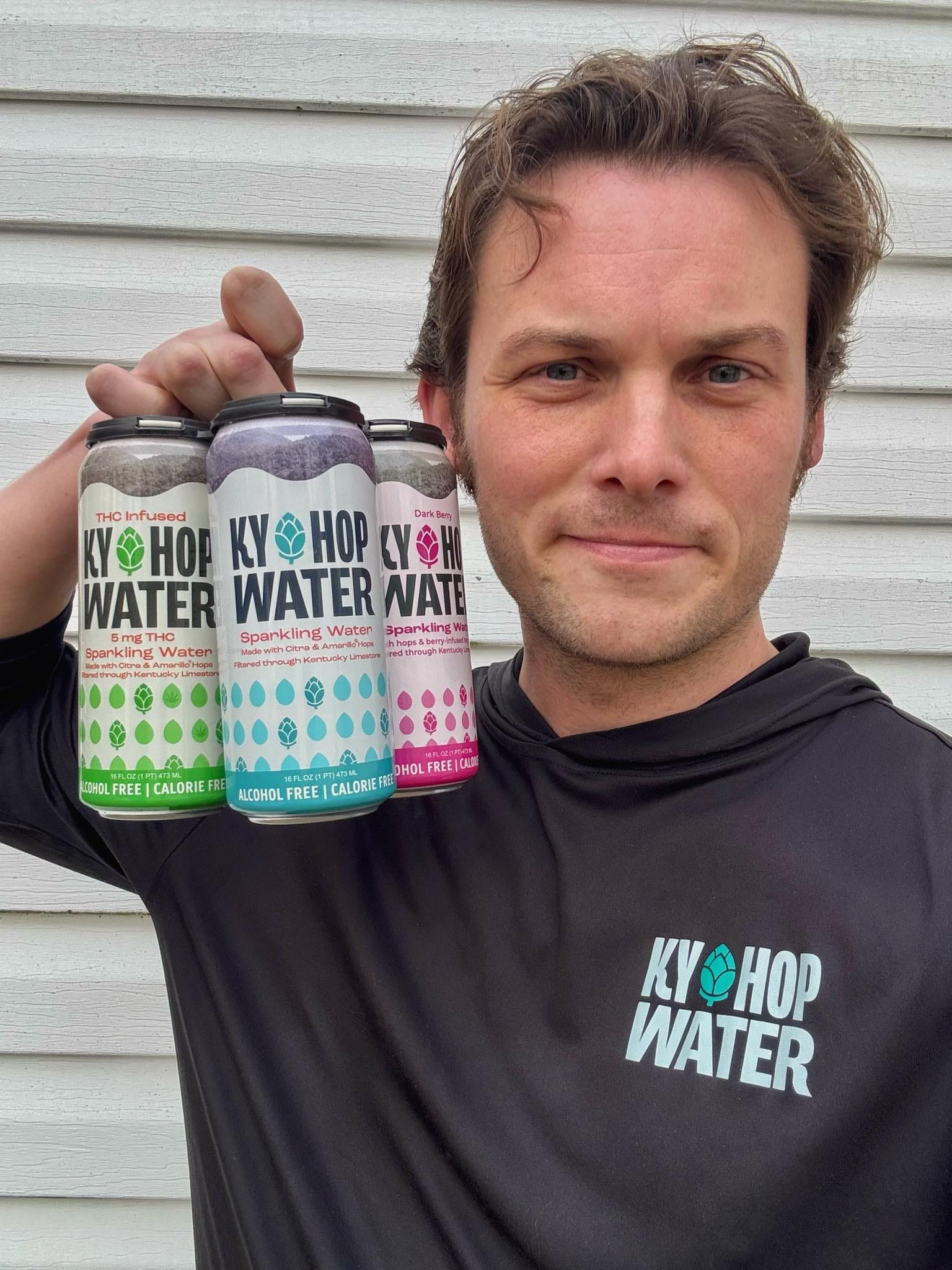
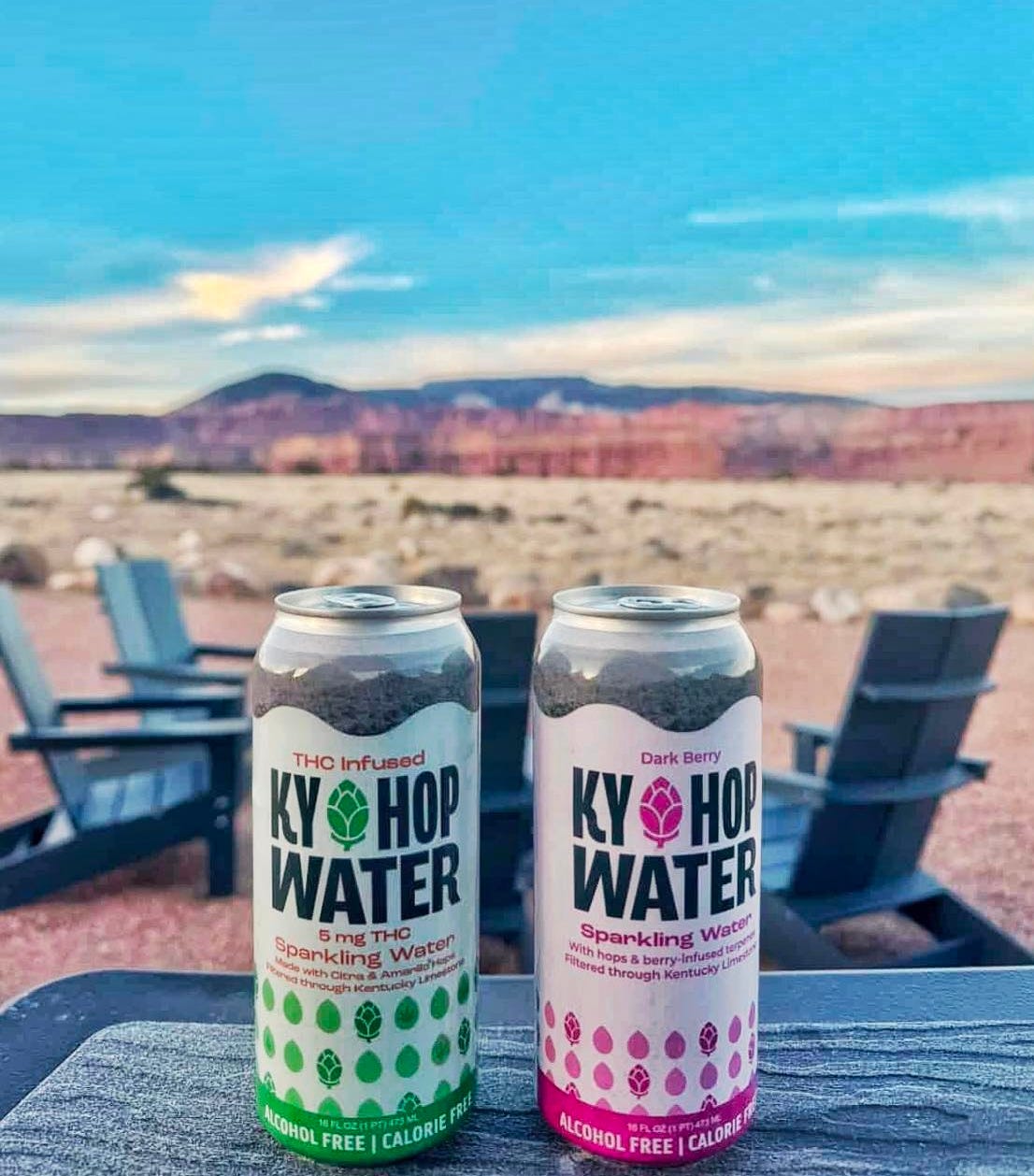
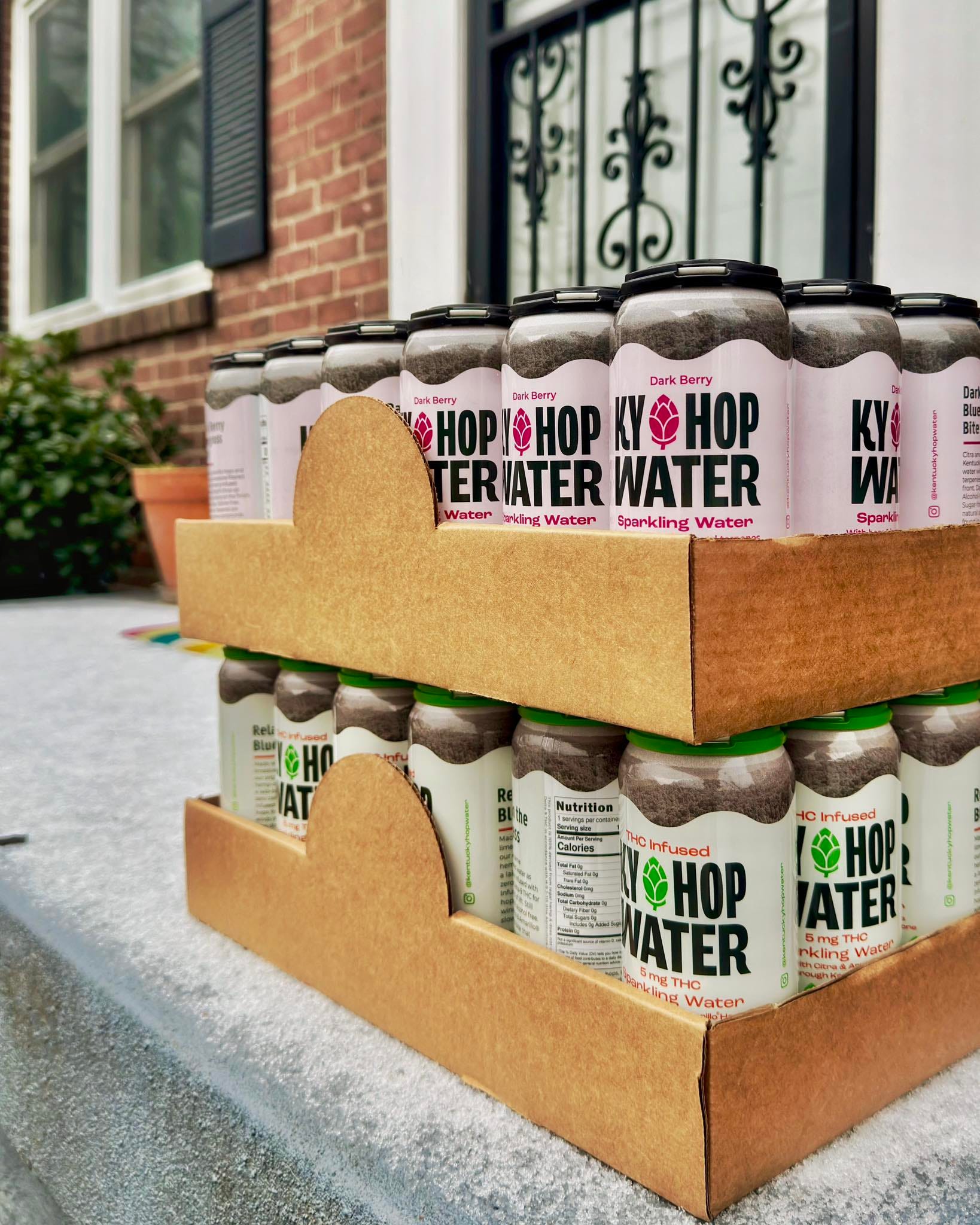
But then, a little over a year later, we had to go to him again and tell him that we needed a differentiator for the THC-Infused line labels that were still consistent with branding. While some might think the differences are subtle, we haven’t run into any issues of consumer confusion yet. The core brand cues are still there but the THC-infused cans have enough separation to signal a different product experience.
The bigger challenge is less about confusion and more about context. A consumer doesn’t process a product the same way in every environment. If they see Kentucky Hop Water in an NA beer section, they understand it one way. If they see the THC-infused version in a THC beverage set, they understand it another way.
The original line is still more tied to beer culture. I don’t really want to replace somebody’s beer. I do want to replace their second beer. Or their third. It doesn’t have to be your last drink of the night, but it can be your next one.
It’s not a punishment drink. It’s not some sad little compromise because you’re “being good.” It’s for people who like beer, like hops, like being out, but maybe don’t need every round to be another 8% DIPA.
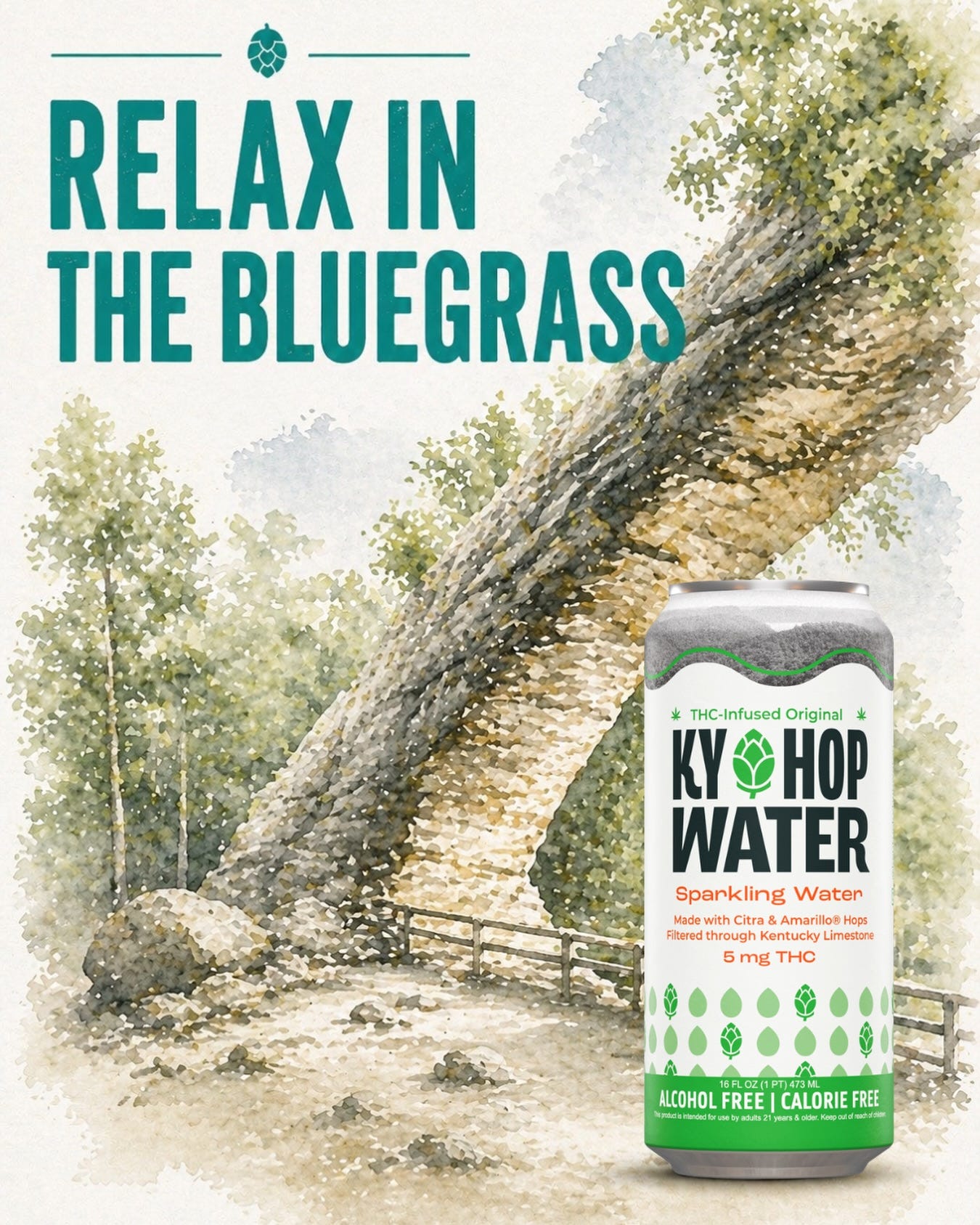
The THC line has a little bit of a different job. We have the “Relax in the Bluegrass” slogan for a reason. It’s still Kentucky Hop Water. It’s still hop-forward. But the occasion is more about winding down, hanging out, and feeling something without cracking open a beer or grabbing something sugary.”
I see that you also added a Dark Berry flavor of Kentucky Hop Water. Can you share what all went into determining when it was the right time to add a second flavor and how you decided on Dark Berry? What needs to be true before you add more flavors? If you could waive a magic wand and have one more SKU, what would it be?
“Mostly consumer research.
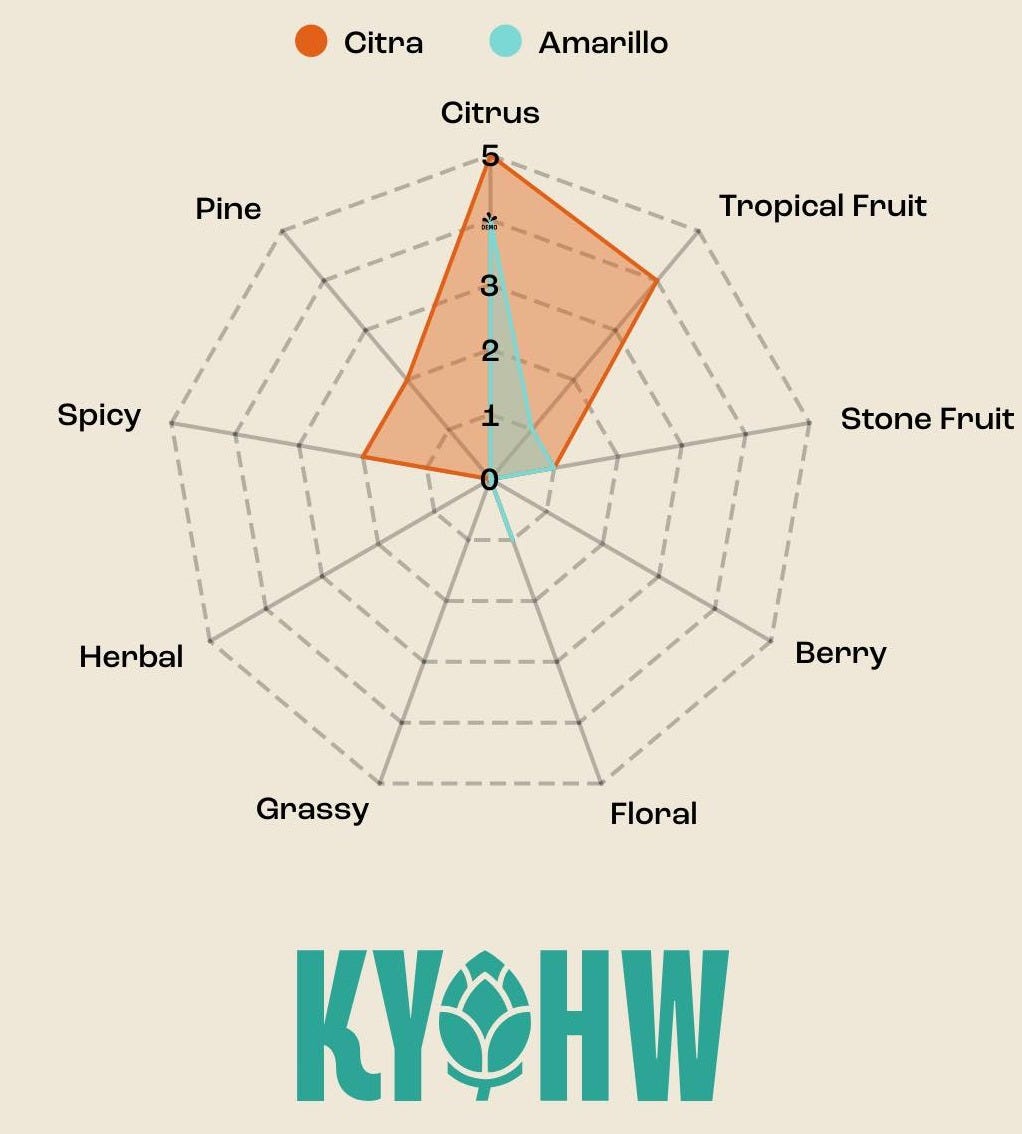
In my ideal little beer-nerd world, I’d love to get by with hop varietals providing the only “flavor” someone tastes. That’s also useful from a beer education standpoint, because as you and I know, hops *can* express citrus, berry, tropical fruit, and floral notes.
But the broader market doesn’t always want to work that hard. Most consumers want a flavor they can understand immediately. They don’t want to stand in front of a cooler and ask themselves whether Citra is giving them grapefruit or orange peel or something else.
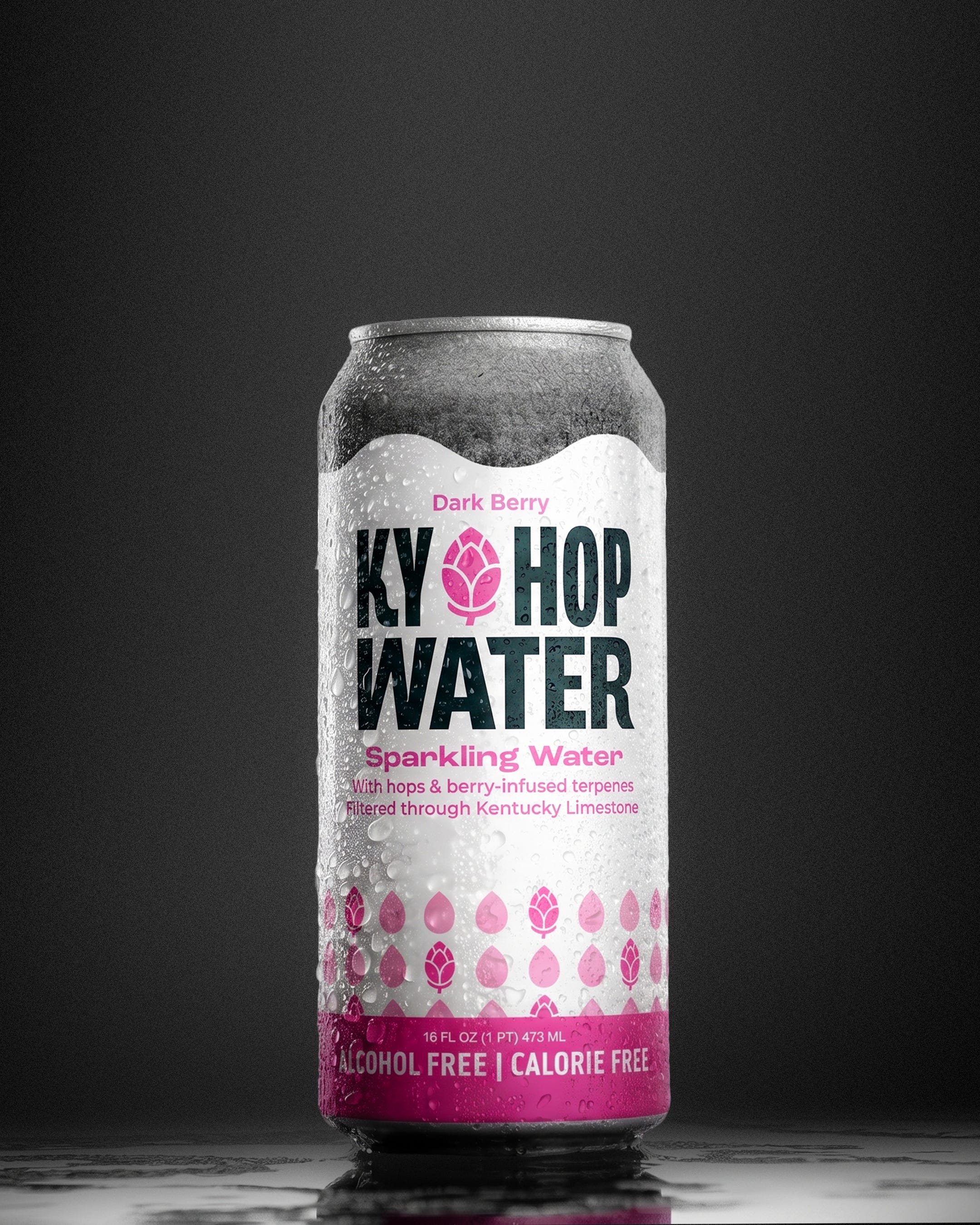
At the same time, I didn’t want Kentucky Hop Water to become a brand that added juice, sugar, or a bunch of artificial flavoring. So flavored terpenes ended up being the happy medium. You can build aroma and flavor perception without adding sugar or calories.
The Dark Berry path started pretty randomly. I met Kaleb Schwecke, Yakima Chief Hops’ CMO, at Great Taste of the Midwest last year by happenstance. Not long after, he sent me samples from their Euphorics terpene line. There were a few that worked well (so well that we’ll use them), but Dark Berry was the first to feel ready to become a real product.
For future flavors, I think a few things need to be true, all related to brand and promise, but the main thing is that I know brands can get themselves into trouble fast by creating too many products before the core lineup has enough velocity. So I try to keep that in mind every time I get too excited about a new idea.
Still, if I could wave a magic wand and add one more SKU, I’d probably revisit a hop-only version. Maybe Motueka? I still think there’s room for a more varietal-driven Kentucky Hop Water that speaks directly to beer people.”
Can you share more about the decision to name the brand Kentucky Hop Water and any challenges that poses with distributing beyond your home state, both with courting a great distributor partner and the brand’s effectiveness in the market? You launched your first new market with Michigan, so clearly it can be done! Can you share how this came about and how it’s going so far in Michigan? What have you learned so far from launching your first new state? (if its the first)
“Sense of place is really important to me. I love Kentucky and I wanted the brand to feel rooted here from the beginning.
Early on, I thought about naming different flavors after some of my favorite trails around the state. I still like that idea in theory, but, to my earlier point, it probably asks too much of the consumer. It’s my job to make it as easy as possible for somebody to understand what they’re buying and what they’re about to taste. “Dark Berry” does that a lot faster than Sheltowee or Auxier Ridge might.
And I knew the name could limit us geographically. That was always part of the tradeoff. But I’ve also been inspired by brands like Ale-8 (Winchester, KY) and West Sixth Brewing (Lexington, KY) - both have shown that being deeply tied to a place can be a strength as opposed to a constraint.
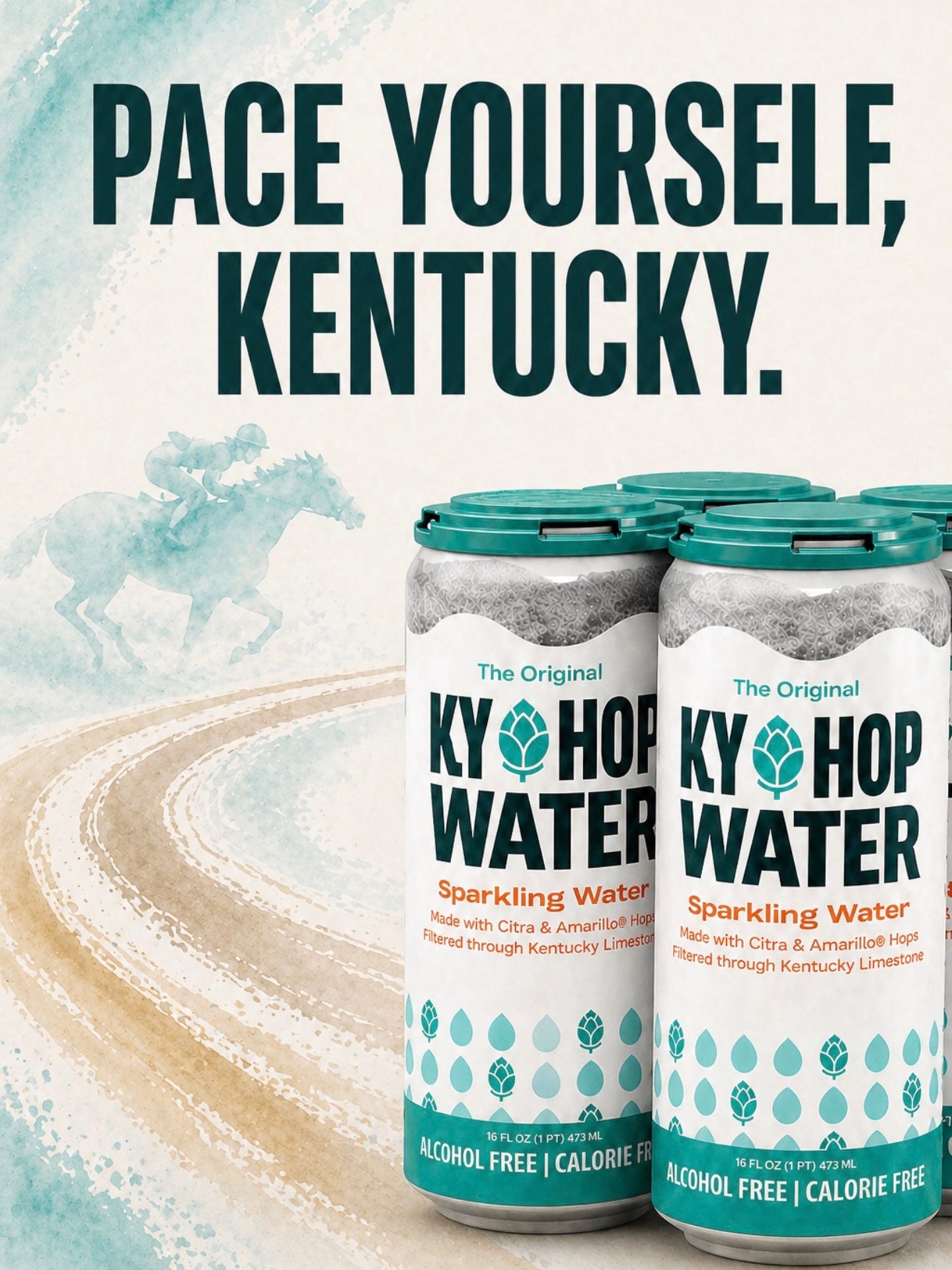
One thing people should know about Kentuckians is that we’re very loyal to local businesses and products. Sometimes irrationally loyal, which I mean as a compliment. As direct-to-consumer grows and we’re able to put more resources behind digital marketing, I don’t have to only reach Kentuckians that live in Kentucky. I can reach Kentuckians wherever they are.
That’s also where I think the brand can travel better than people might assume. Kentucky has a pretty strong diaspora. The sun never really sets on Big Blue Nation, as we UK fans like to say. We’re everywhere - and I think there are markets where that connection gives the product a real opening, should we want to go after it.
Michigan is our first out-of-state market and I’m happy to be there. Especially in the Grand Rapids area. That opportunity came about because the distributor actually reached out to us first about bringing it on. So, in that case, the name clearly wasn’t a barrier. If anything, I think it helped make the brand more distinct.
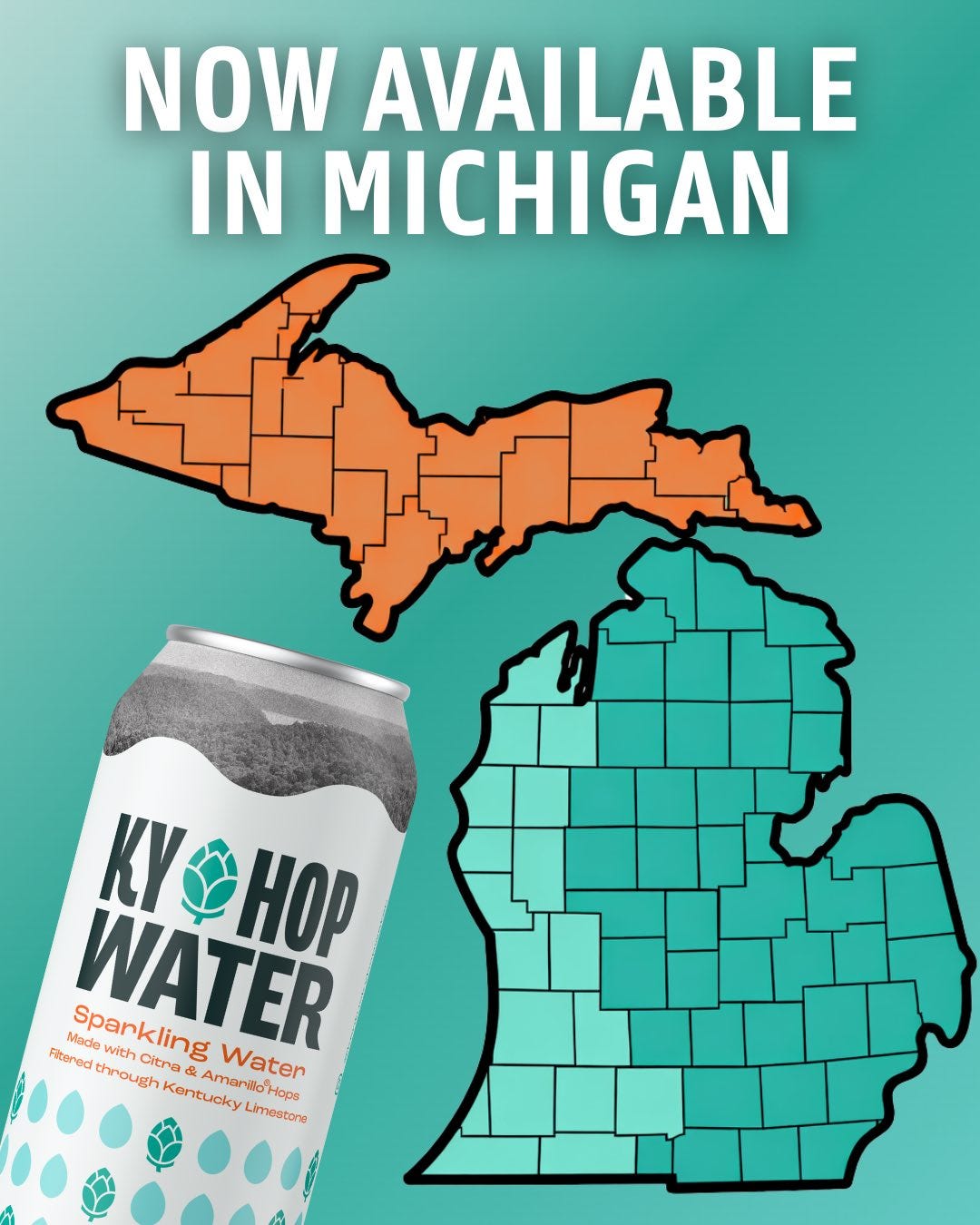
That said, it’s still early. So I don’t want to pretend I have some lessons from Michigan yet. The broader challenge is that Kentucky Hop Water has to work on two levels. In Kentucky, the name gives us immediate local relevance. Outside Kentucky, the name has to become a story - a reminder of home.”
You’ve done a great job with Kentucky-focused content on TikTok and built up a sizable following in the process. How did you come up with the idea to go county-by-county and has this had a positive impact on the Hop Water brand? If so, in what ways? As a content creator under your own name, telling Kentucky stories while running the brand, how do you balance what should be Michael Moeller content vs. Kentucky Hop Water? And when to work the hop water into your personal content?
“Thanks! Funny enough, it’s only been about six months since I Started taking TikTok more seriously.
I come from a social media marketing background, but I never really pivoted to video like I should have. It took me a bit longer. And I never thought I’d be talking at my camera so frequently. But I wanted to experiment on a personal page before putting energy into a branded page.
The county-by-county idea came from genuine curiosity. I wanted to know more about Kentucky history and all of our 120 counties. It was similar to why I started Building Breweries. I didn’t know enough about a subject, so I built a format that forced me to learn in front of an audience. Back then, the medium was a podcast. This time, it happened to be TikTok.
Has it helped Kentucky Hop Water? I think so. But probably not in a neat, trackable way people want marketing and ROI to work.
I don’t think somebody watches one video about Graves County or Morgan County and immediately buys a case. That’s not usually how product adoption works. As many folks in our business know, it takes multiple “touches” for an individual to try a new product for the first time. So, to me, even just occasionally wearing a Kentucky Hop Water shirt or hoodie enforces some level of brand awareness.
There’s also a place-based piece to it. Kentucky Hop Water is not just using “Kentucky” because it sounds nice. The brand is rooted in this state. So telling Kentucky stories under my own name and building a beverage brand tied to Kentucky are not totally separate things.
My personal page cannot be *just* a disguised sales channel. Gary Vee wrote a book a number of years ago called Jab, Jab, Jab, Right Hook that I think about often. The marketing strategy for any business should not be to constantly ask consumers to buy its product. How tiring and annoying that would be. Instead, you provide value. Education (jab). Entertain (jab). Some sort of company news (jab). Then you go for the ask (right hook).
I’m comfortable being the face of the brand for now. If people connect Michael Moeller with Kentucky Hop Water or vice versa, I don’t see it as a problem. For a small brand, founder visibility is often an advantage. People may not understand hop water immediately, but they could maybe understand their neighbor telling Kentucky stories while building something of their own.
It’s not the only way to grow a beverage brand but it’s the way that makes sense to me. For now.”
What advice would you have for a founder looking to get started with a new story-telling approach on social media? How important has the content journey been to building the Kentucky Hop Water brand?
“Document more than you create. Sorry, Gary Vee’s influence is stronger on me than I thought.
If you’re a founder, you probably already have more content than you think. You’re making decisions, solving problems, learning the category, talking to customers, and trying things that don’t work. You don’t need to always create a new ad campaign because the stuff you’re seeing in real time could be interesting enough.
You can only force so many posts before it starts to feel fake. Trust me, I know.
To Gary Vee’s point, businesses have to start thinking more like media companies, especially now that social platforms are moving more toward interest-based discovery. People don’t only follow accounts because they know the brand already. They find content because the subject matter is interesting to them. That means a beverage brand can’t just post cans and say “come and get some!” forever (this is applicable to so many brewery taprooms out there right now).
Content should feel less like a product launch and more like a living project.
I’m not always so good about following all of this advice, but it’s something I do keep in the back of my mind at all times.”
The Hop Water market had a tough 2025 in the world of scan data, which mostly represents the larger suppliers like Hop WTR, Lagunitas, Sierra Nevada, and Hop Lark. Have you felt that the hop water proposition has become more challenging compared to when you first started? Or do you feel that other factors are impacting these results?
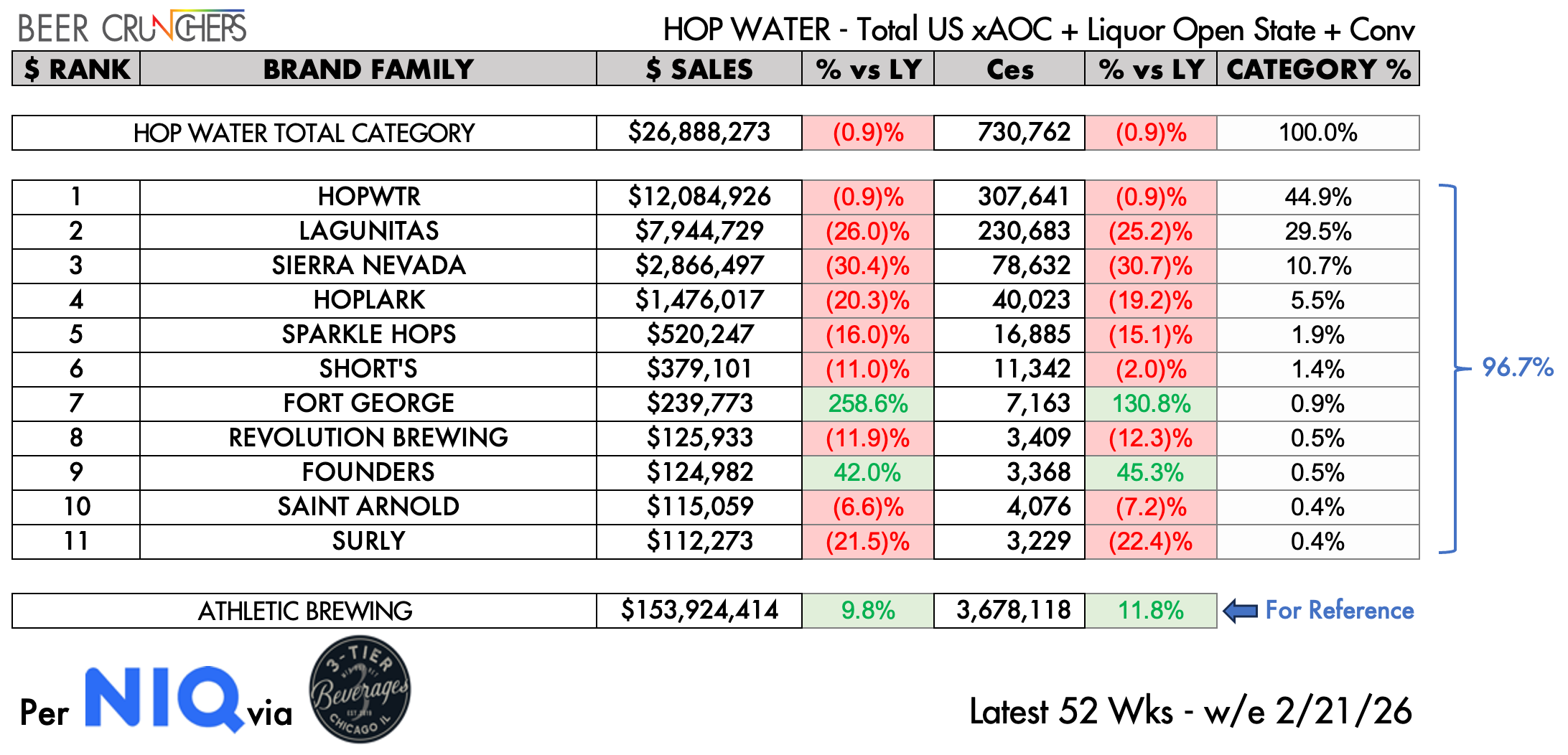
“I’ve seen some of that scan data, and I wouldn’t dismiss it. If the larger hop water brands are down, I am, of course, taking notice.
But I also don’t think it means the hop water proposition is dead or dying. I think it means the category is still young and not totally understood by retailers or consumers.
As I mentioned, hop water has always had a consumer education problem. If somebody already knows what hop water is, the product makes sense quickly. If they don’t, you’re asking them to pay a premium price for something that they may read as simple sparkling water. In this economy, where people are being more careful about what they buy because of tighter grocery budgets, that makes sense to me.
I will say, scan data doesn’t always tell you everything. It doesn’t always tell you what’s happening in taprooms, independents, or direct-to-consumer sales. For Kentucky Hop Water, a lot of the meaningful work happens outside the national data set.
I’m not shocked if the brewery-owned hop waters are softer. That doesn’t mean they’re bad products. Lagunitas and Sierra Nevada make very good hop waters. But those companies also make beer…and now very, very good NA beer! Hop water is probably not going to get the same level of focus in a brewery’s portfolio as it does in a brand built entirely around the format.
The Constellation acquisition of HOPWTR is the counterpoint that still gives me confidence. If one of the biggest beverage companies in the country is willing to fully acquire a hop water brand, I don’t think the smarter takeaway is “hop water is over.” I think the takeaway is that the category still has strategic value, but the brands that win will have to be sharper about positioning, occasion, and consumer education.
So, for Kentucky Hop Water, we can’t just say “it’s hop water!” and assume people understand. We have to keep tying it to a clear occasion or moment: we’re not trying to replace your beer. We’re trying to replace, or delay, your second beer, so you can extend the night out with your friends or feel a bit more hydrated before bed.
All in all, I think the category may have simply moved past novelty and now has to earn its place.”
What are you most excited about looking ahead to the next couple years? Beyond hemp beverages surviving this November’s deadline, what are some of the important milestones that you think about and hope to reach for the brand? Are there any new products you’d be willing to preview to us or maybe that you have as a long term goal?
“Ha. Yes. I’m definitely looking forward to hemp-derived THC beverages surviving the November deadline. That would be really, really cool.
Beyond that, my focus is still Kentucky. I’m happy to have out-of-state distribution conversations as they come up. But the real goal is much more local right now.
When people in Kentucky eventually start thinking of hop water, I want them to think about Kentucky Hop Water. That’s the milestone I care about most. Not just being available but becoming the default local answer in the category.
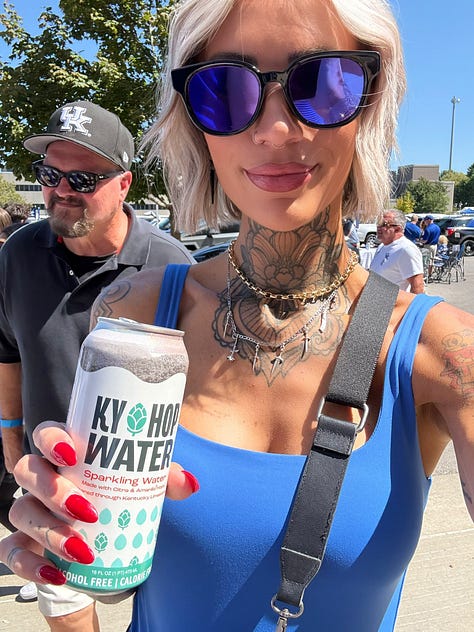
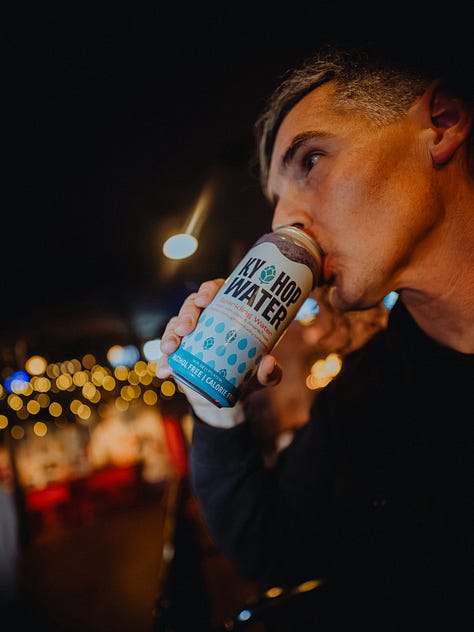
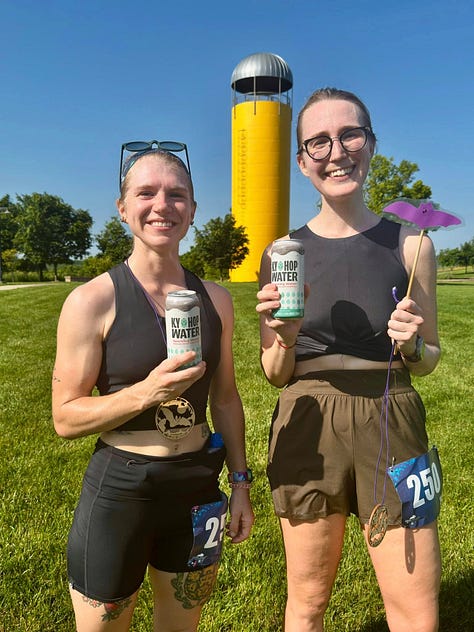
I think hyper-locality and sense of place is how we “win.” There are bigger brands with bigger budgets, better distribution, and more boots on the ground. I’m not going to outspend them. But I can out-Kentucky them.
Now, to be less esoteric and give you an answer. Louisville has two major music festivals. Bourbon & Beyond and Louder Than Life. I’d love to get to a point where we have the cash flow and distribution support to sponsor our way into having products sold there. That’s the kind of milestone that would mean something to me. It would put the brand in front of the right people, in the right city, at the right kind of occasion.
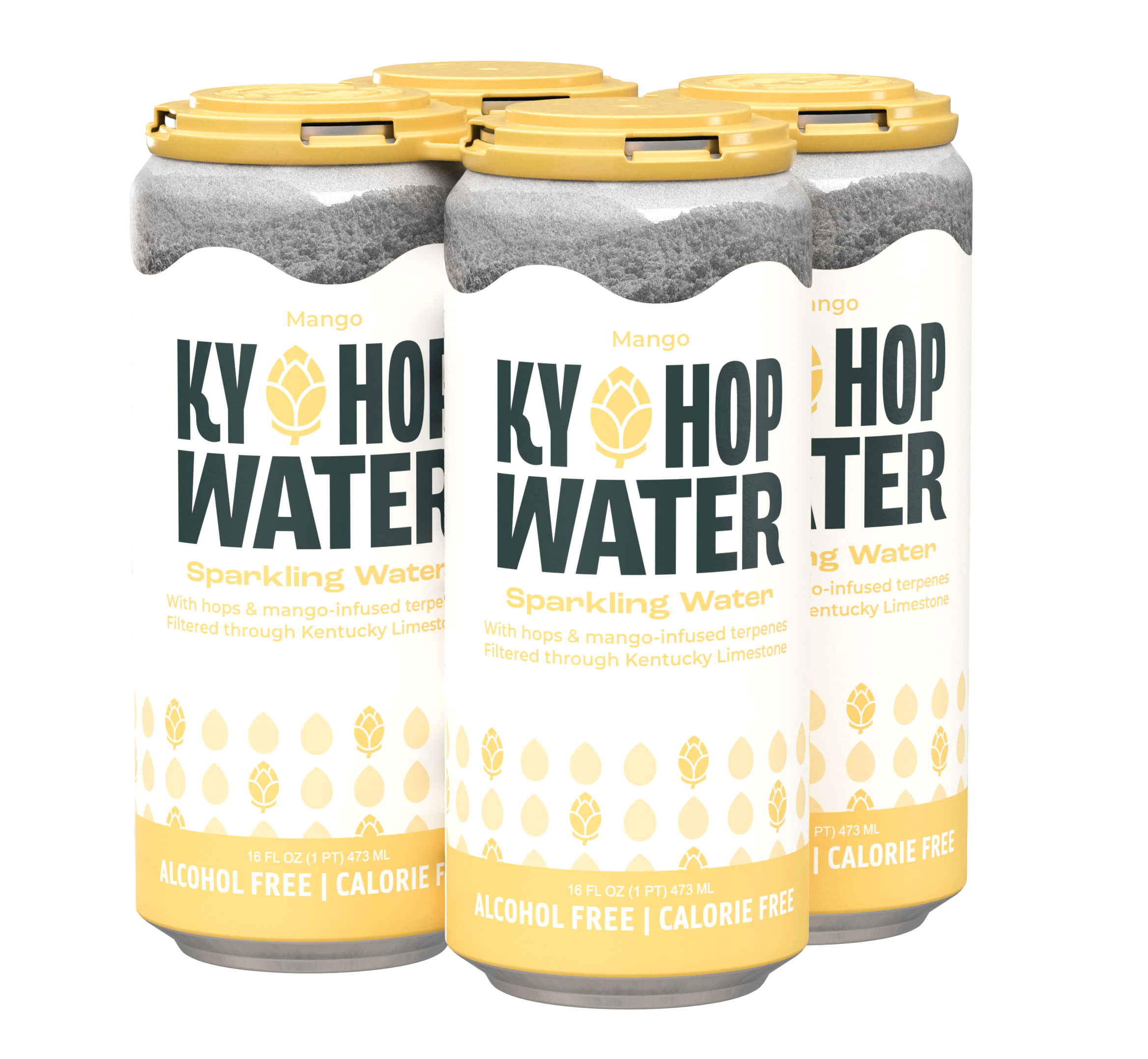
Happy to preview something here publicly for the first time. Mango Kentucky Hop Water and THC-Infused Mango Kentucky Hop Water are coming summer 2026.”
Anything you wish I had asked about that you’d like to share about you and the journey you’re on with Kentucky Hop Water?
“We’ve covered a lot of it but I think we could probably have another round or two just based on both social science and social media!
But, yes, we’ve talked a bit about Kentucky and Hops already but we haven’t talked about water much.
Kentucky Hop Water is made with…Kentucky water. I don’t think that’s a small thing. People all over the world already understand Kentucky because of our beverage culture and history (especially bourbon). And a big part of that bourbon story is our limestone-filtered water.
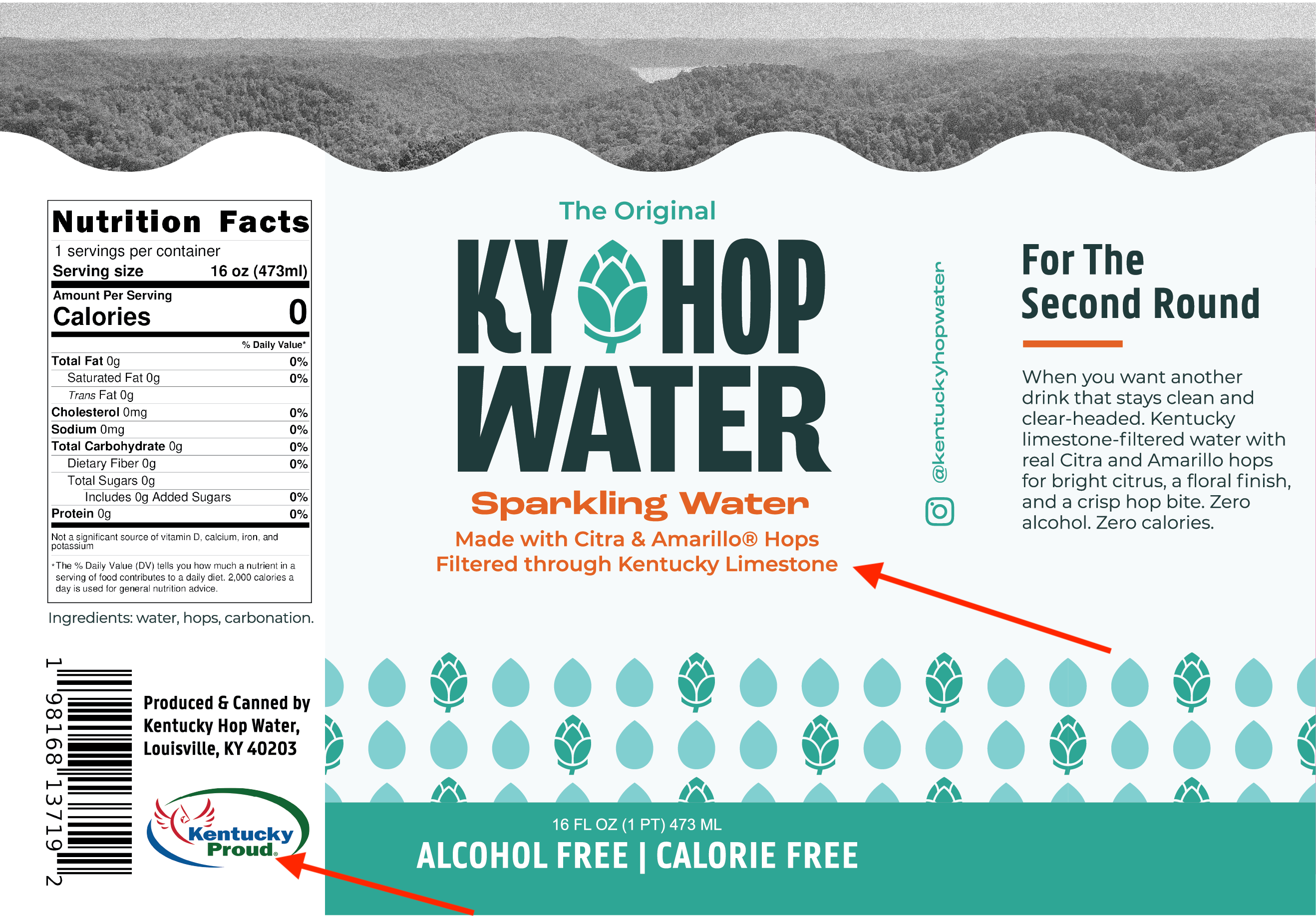
Kentucky Bourbon and Kentucky Hop Water are not the same thing, obviously. But we do share a place-based ingredient story. Kentucky’s water profile is part of why this state became so closely tied to bourbon. And I like the idea that Kentucky Hop Water can live in that broader beverage lineage.
“Kentucky” is not just a geographic label. It tells people something about the product before they even hold the can.”
What stood out most to me in this conversation is how Kentucky Hop Water threads the needle between so many different beverage categories. In some ways it’s an NA, in some ways it’s beer-adjacent, in some ways it’s a THC platform, and in some ways it’s a media and storytelling project built on Kentucky culture. That may sound messy on paper and begging for focus, but increasingly that combination of aims is what every beverage brand needs to succeed in today’s environment.
The categories are blurring, consumers are harder to pinpoint, and founders are being asked to wear more hats than ever before. Through all of that, Michael understands something that many brands still miss: people may pick up a beverage once because of novelty, but they come back because the brand stands for something they recognize and connect with.
Comments
Nothing yet. Say the first thing.
Sign in to join the conversation.