
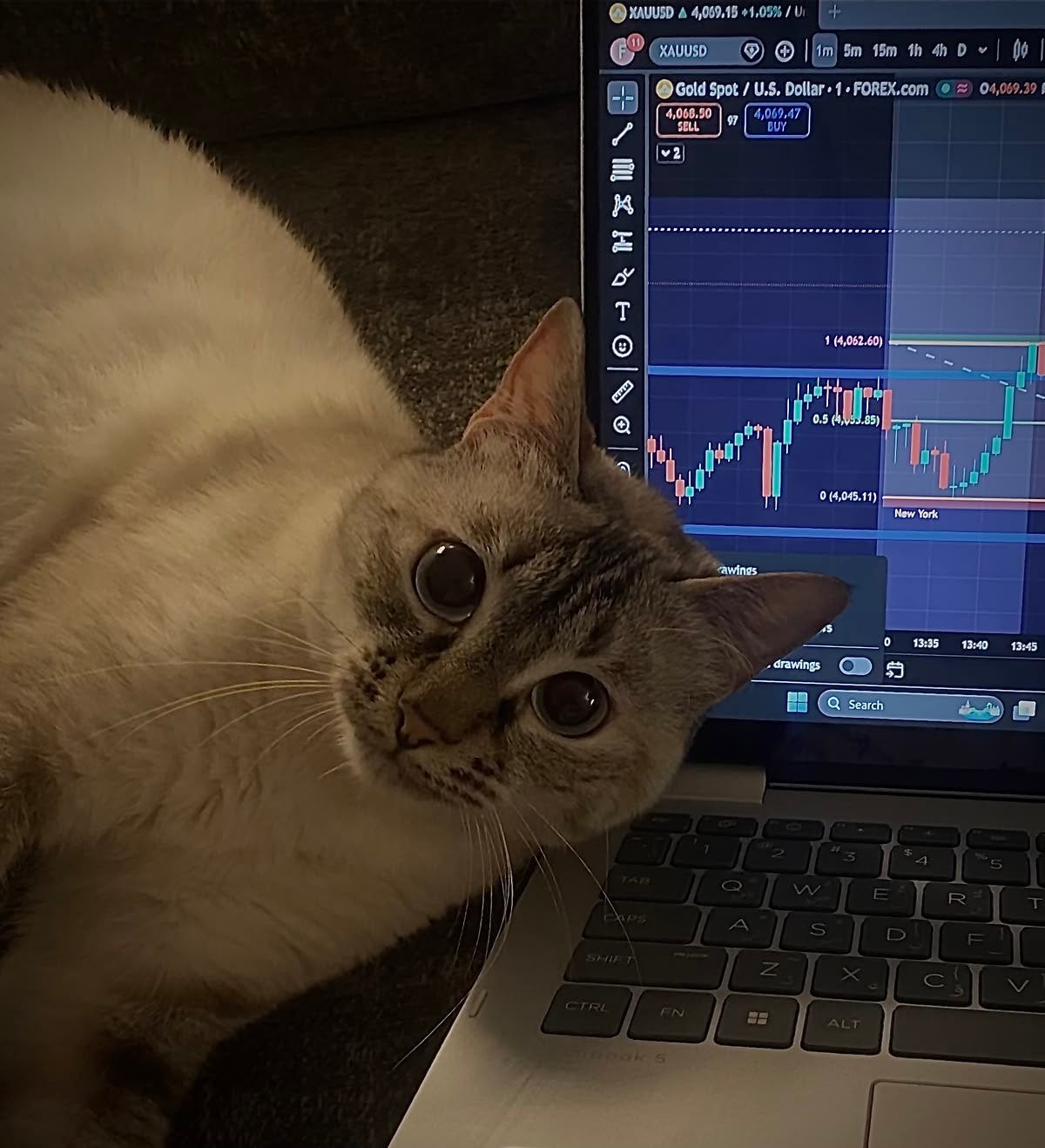
Up until now, we’ve looked at charts as if the candles move at the exact same pace all day long. But the market actually runs on a 24-hour global clock, divided into three big shifts: Tokyo, London, and New York.
Here is the ultimate golden rule: There is no single “best” time to trade. Different hours work for different people, and you have to find out what session works best for your schedule and your personality.
Think of the sessions like different vibes at a gym, each running during its own specific window:
The Tokyo Session (The Calm Hours) | 7:00 PM – 4:00 AM EST
The market is usually quiet, and prices tend to bounce slowly and steadily sideways. If you want a low-stress environment where you can practice reading the charts without things moving too fast, this evening slot might be your sweet spot.
The London Session (The Trend Starter) | 3:00 AM – 12:00 PM EST
Big international banks wake up, and the volume starts pumping. London is famous for creating sudden, fast moves. If you are a total early bird who likes catching a wave right as it starts, this is your time to shine.
The New York Session (The Main Event) | 8:00 AM – 5:00 PM EST
When Wall Street opens, billions of dollars flood the system in seconds. The candles get huge, and the moves are fast and explosive. If you thrive on excitement and want to get in and out of trades quickly during the day, New York is the arena.
The beautiful thing about trading is that you get to build a business that fits your life. A strategy that works perfectly in the quiet evening hours might fail in the crazy morning rush, and that’s completely okay.
Success isn’t about staring at your screen all day. It’s about testing out these different windows, adjusting them to your local time zone, and picking the one slot where you feel the most comfortable.
The Homework: The Vibe Check
Step 1: Check Your Schedule
Look at your daily routine. Are you a night owl who wants to look at charts calmly before bed, or a morning person who thrives on high energy?
Step 2: Watch the Clock
Open up your chart app and take a peek at the candles during two different times: once in the evening during Tokyo hours and once during the day during New York hours. Notice how the speed changes.
Step 3: Convert the Hours
Look at the EST times above and figure out what hours those are in your own local time zone so you know exactly when to log on.
Step 4: Post Your Answer
In the comments, tell us what fits you: “Based on my schedule, the [Tokyo / London / New York] session fits me best! In my local time zone, that means I’ll be looking at the charts between [Start Time] and [End Time].”
This Substack is reader-supported. To receive new posts and support my work, consider becoming a free or paid subscriber.
Comments
Nothing yet. Say the first thing.
Sign in to join the conversation.