
Eldest daughter.
Your parents’ first experiment.
The mini mother.
The girl who had to grow up fast.
The one who was raised to take care of everyone but herself.
A therapist without a degree.
A fixer.
Her siblings’ keeper.
“Eldest daughter syndrome” isn’t a real diagnosis; it’s a label we use to describe a pattern.
Emotional labor, adult responsibilities, and babysitting all tend to get handed to the oldest daughter. So even when there’s an older son, the oldest girl usually ends up being the one who steps into that parent-like role or is expected to.
A role that is often given, not chosen.
And in order to become her, the woman you keep seeing in your head, there’s some uncomfortable unpacking we have to do.
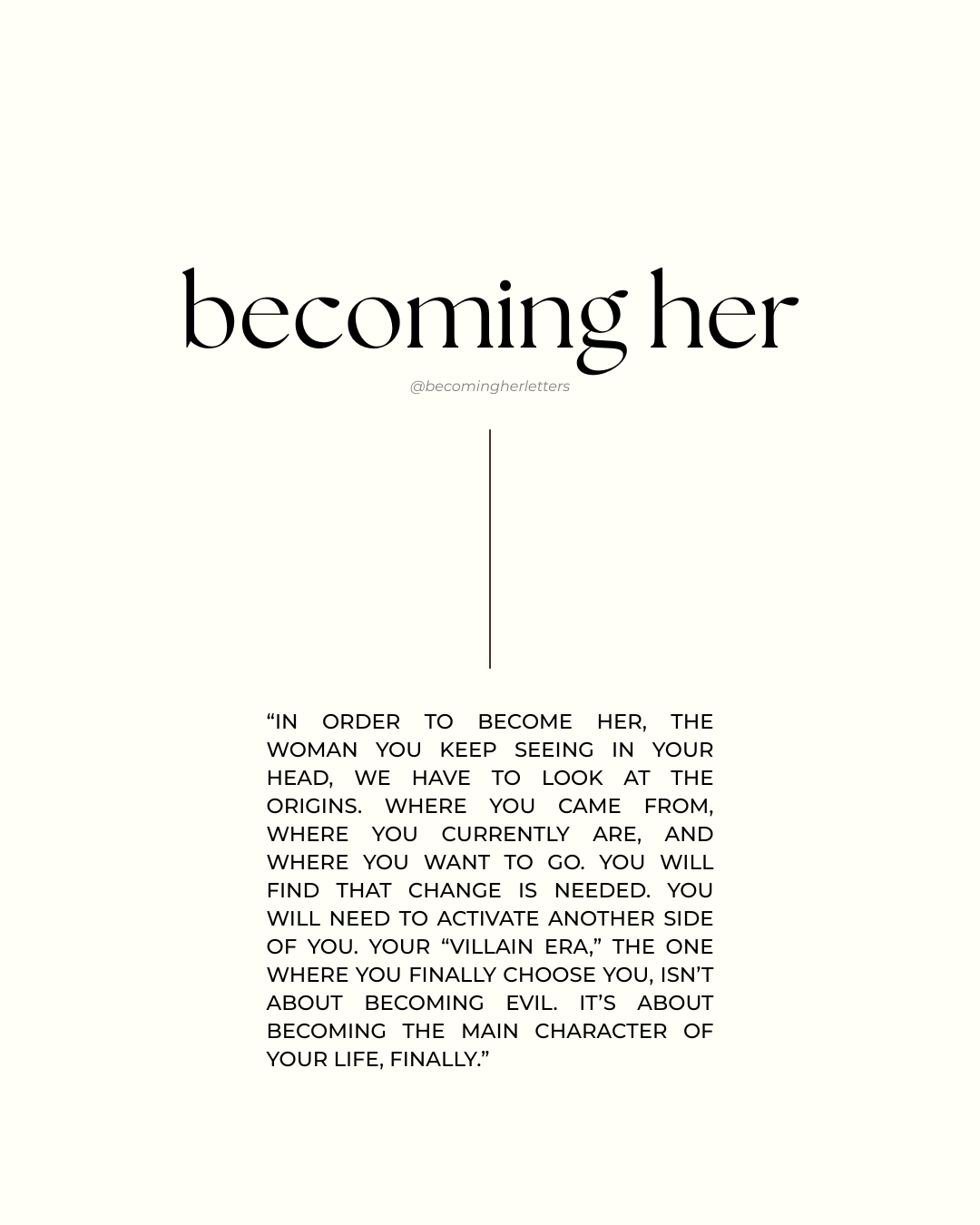
We have to look at the origins.
The dynamics.
The truth of what you were asked to carry.
This is not every eldest daughter’s story.
But for many of us, it’s close.
When You Realize Your Life Never Really Felt Like Yours
There’s a moment a lot of eldest daughters have.
An epiphany.
Sometimes it grows under the surface.
Sometimes it’s after an argument.
Sometimes it’s in therapy.
Sometimes it’s in your car in a random parking lot.
It’s that feeling of realizing:
Your life was never really your own.
You’ve spent years running in circles instead of being a person.
You might notice traits like:
Hyper-independence – believing you have to do everything yourself because no one else will.
Perfectionism – feeling like you can’t fail, can’t make mistakes, or can’t let anyone see you struggling.
Responsibility overload – always feeling responsible for everyone’s happiness, safety, and emotions.
Identity confusion – not knowing who you are outside of being “the responsible one” or “big sister.”
Parentification – being the one who stepped in as the second parent or third parent emotionally or practically, way before you were ready.
Internalized pressure – needing to be the example, the strong one, the one who “has it together.”
It might also show up as:
Overthinking everyone’s feelings before your own.
Expecting yourself to function like a 24/7 emergency room, always available to save everyone.
Feeling guilty any time you take a break, say no, or choose yourself.
Looking around your life and thinking, I’ve always been there for everyone… but where is my support now that I need it?
You might even feel like you’ve outgrown your environment.
Like you’re in a place where you no longer belong, but you don’t know what comes next.
Limbo.
Stuck.
Stagnant.
Existing in your body but not really living in it.
That’s usually the moment you realize:
Change is needed.
Your “villain era,” the one where you finally choose you, isn’t about becoming evil.
It’s about becoming the main character of your life, finally. More here.
The Script You Were Given
Eldest daughters in immigrant and similar households more than likely hear a script that sounds like:
Be the example.
Don’t talk back.
Be grateful.
Take care of your siblings.
Don’t bring shame on the family.
Get good grades, but also become a woman.
Cook. Clean. Laundry. Repeat.
Stay quiet. Stay out of the way.
Children are seen, not heard.
Teens are seen, not heard.
Women are to be seen, not heard.
Be independent, but not too much.
Figure it out, but don’t make too many decisions.
Don’t work too hard, but what we can provide will have to be enough.
But what if it isn’t?
What if the “enough” they imagined never fit you?
What if you worked hard for scholarships, but they didn’t cover everything?
What if you worked hard for a position, but it still doesn’t feel fulfilling?
What if you’re praised as “the one no one has to worry about,” but inside, you’re crumbling.
Who am I?
You are the example.
Others are looking up to you.
Yet the younger siblings get to live in their truth.
Jealous? No. Relieved, yes.
Because being first is hard.
As a first-gen Caribbean eldest daughter, the pressure to succeed was heavy.
I understood where it came from:
Parents who didn’t get certain opportunities.
Parents who wanted their version of “better” for me.
But in the process, I was never fully allowed to be me.
The control was stifling.
The expectations were restrictive.
The Caribbean saying “who don’t hear will feel” was taken too literal.
Because “do not listen” meant consequences.
And “do listen” meant consequences.
There are no guarantees when you don’t write the rules.
I always knew I was different.
Meant for more.
Never quite fitting in.
Growing up in a traditional household didn’t make it easier.
Bullying was something you “suck up,” not something to process.
Interests in writing, creativity, and mental health were not taken seriously.
Wanting to be a therapist and work with young women was not understood. And still isn’t.
I wanted to become the person I needed and never had.
That’s what a lot of eldest daughters do.
We become what we didn’t receive.
And sometimes it’s to our detriment.
But if aware, it can be channeled into a superpower.
How Eldest Daughter Syndrome Shows Up In Your Relationships
It doesn’t stop in childhood.
It follows you into adulthood and into your relationships.
In Romantic Relationships
Unequal emotional labor – you become the caretaker, therapist, planner, problem-solver.
Difficulty being vulnerable – you’re used to being the strong one, so asking for help feels wrong.
Attracting “projects” – you find yourself drawn to people who need fixing or saving.
Anxious attachment – fear of being abandoned, constantly needing reassurance, but also struggling to fully trust.
In Friendships and Family
People-pleasing – saying yes when you mean no, because you feel guilty.
Poor boundaries – feeling responsible for everyone, over-committing to showing up or doing things, then feeling resentful and drained (physically and/or mentally).
Struggle to receive – being uncomfortable when people show up for you or gift you things because you’re used to being the giver.
Resentment + guilt – being angry at how much you do, then feeling guilty for being angry.
You learn early:
Your value is what you do for others.
Not who you are.
And that is the lie we have to unlearn.
The Moment I Realized Something Had to Change
Three classes changed everything for me:
Intro to Psychology.
Philosophy.
Human Sexuality.
The mind, the body, the psyche.
Why do people operate the way they do?
Why do hurt people hurt people?
Why do parents try to live through their children?
Why is “wanting the best for you” sometimes secretly code for “be the version of you I’ve created in my mind”?
Small.
Contained.
Cinderella.
“Sometimes people want to keep you, but not fully experience you.”
As the eldest daughter, I realized leaving my hometown was the only option.
When I left, my life changed in ways I couldn’t have imagined.
I had to leave to change.
I had to leave to grow.
I had to leave to find out who I am.
And I’m not saying it was easy, or is easy.
But what was the alternative?
I felt like a butterfly in a jar.
Eventually, you will run out of air.
And to some, it will look like you think you’re “too good,”
Or like you abandoned everyone.
As adults, we can’t choose our parents or our origin story.
Some origin stories might even hold good and beautiful moments.
But sometimes that is not enough.
It’s a tricky thing walking into the unknown.
But for some of us, it’s the only option.
We have to be the change.
The one.
So again, as adults, we can’t choose our parents or our origin story.
But we can choose to:
Set boundaries.
Heal.
Learn where our patterns came from.
Our parents and caretakers were our first teachers.
But they didn’t know everything.
They only taught from their lived and learned experiences, their level of consciousness.
And in most cases, they were just boys and girls figuring it out for the first time.
It is truly generational.
The First Time I Felt Seen
I remember my first therapy session.
I was struggling to keep up in my classes. A campus group was handing out flyers for counseling resources. I took one, half out of curiosity, half out of desperation.
What started as learning how I process information turned into sessions of learning and unlearning, naming things I never had language for, and unlocking years of experiences and trauma I had minimized.
It’s wild to think I accidentally put myself in therapy in my early twenties.
Talk about divine timing.
My therapist quite literally saved my life.
She was the first person to say, “I’m sorry that happened to you.”
She acknowledged it.
Let me sit with it.
The only way out is through.
You have to feel it. You have to go through the messy phase.
But you will still be standing on the other side.
Because you deserve to be.
And if you’re still reading this, this essay found you as confirmation.
The time to change is now.
It is not the year to play small, and if you want a step-by-step blueprint, I talk more about how we are going to do this in another letter linked here.
It won’t happen overnight. But you, one, two, three years from now, will be so proud that you decided “enough.”
What Healing Looked Like For Me (And What It Can Look Like For You)
Disclaimer: Everyone’s situation is different. Please use discernment. Take what fits, leave what doesn’t.
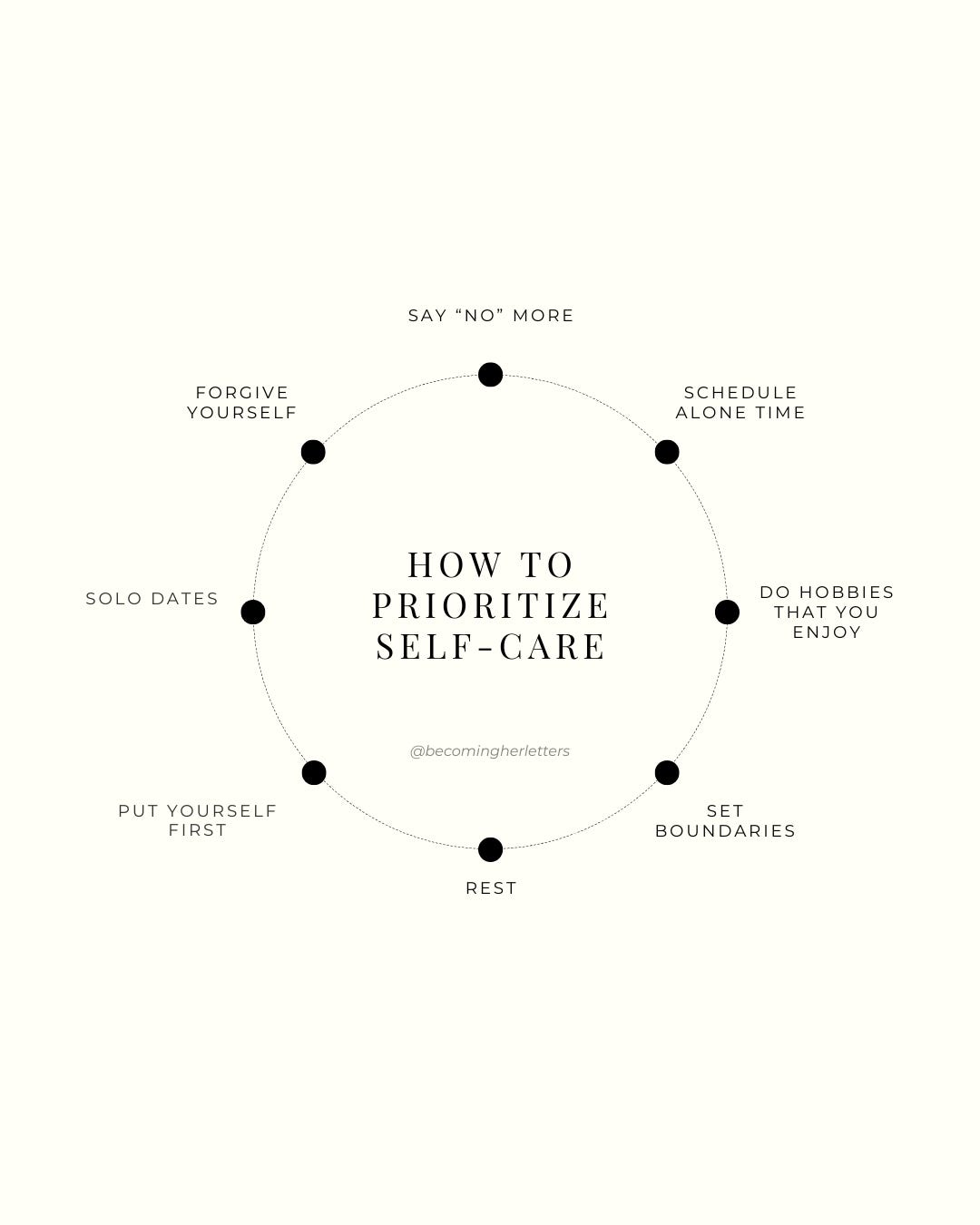
1. Prioritizing self-care (for real, not aesthetic)
Self-care got marketed as bubble baths and face masks, and those things are fine and also needed. But for eldest daughters, it’s usually much less glamorous and much more important.
For me, self-care looked like therapy, writing/journaling, spending time with friends who saw me, and taking myself on solo dates, movies, lunch, and bookstore trips.
For you, it might look like scheduling actual alone time, doing hobbies just because you enjoy them, and resting without “earning” it first.
You’re allowed to be a person, not just a provider.
2. Letting go of control and perfectionism
This might sound harsh, but:
Just because you can help doesn’t mean you should.
You are not responsible for managing everyone’s emotions, fixing everyone’s mistakes, or preventing every crisis.
Accept that some things are outside of your control for yourself and for the people you love.
People will mess up.
You will mess up.
That doesn’t mean you’ve failed.
3. Redefining worth and success
Your worth is not your grades, your job title, your relationship status, or how much you sacrifice for others.
You are enough separate from your achievements and accolades, or the lack of them.
Ask yourself:
What do I actually want?
What lights me up?
What can’t I stop thinking about?
Let your definition of success include peace. Joy. Alignment.
Not just productivity or being “busy”.
4. Practicing self-compassion
Be gentle with yourself.
No matter how much time has passed.
No matter how “late” it seems.
You can start over at any time.
Go back to school.
Divorced, remarried.
Start a family.
Change careers.
Move.
In your 20s, 30s, 40s, and beyond, it does not matter.
As long as you have breath, your narrative is not finished.
5. Building external support
If your only support system is inside the same family that exhausted you, you’re going to feel stuck.
Start small. Join clubs, groups, or classes where you can meet like-minded people. Follow and actually interact with people online who inspire you, not to gain free therapy but to be around better energy. Let yourself experience community.
It doesn’t have to be deep right away.
Sometimes, just being around people who see you as a person and not a role is healing.
6. Communicating differently and setting boundaries
You don’t always have to announce, “I am setting a boundary now.”
You can let your behavior change first.
Say “I need to think about that” or “let me get back to you on that” before agreeing to anything. (Take the time needed and then follow up)
Stop picking up the phone every single time.
Become less available for gossip, guilt trips, or manipulation.
Spend more time building your own life, work, friendships, creativity, and rest.
For me, it looked like not going to every family event just to keep the peace, saying no to requests that exhausted me mentally or physically, and allowing myself to disappoint people so I could stop disappointing myself.
It felt wrong at first.
It cost me connections.
It hurt.
It got lonely.
But in hindsight, it made no sense to sacrifice my mental health just to be in the room, especially when that room cost me my peace.
That’s where self-forgiveness comes in.
You were doing the best you could with what you knew.
Now you know more.
So you do better.
When You Start Setting Boundaries, Don’t Be Shocked By The Reaction
If you’ve started setting boundaries, don’t be surprised when your absence makes people pay attention.
Don’t be surprised when all eyes are suddenly on you, when people act confused by your new behavior, when the dynamic feels off or uncomfortable.
Don’t confuse this new attention with change.
The moment you pull back and stop reacting the same way to people and situations, an alarm goes off in their minds.
A pattern has been interrupted.
That’s usually when people do one of three things:
They test you to see if they can get away with the same behavior.
They get angry because they can’t control the storyline anymore.
They “change” just enough to pull you back in.
Most of the time, it’s the first two.
Stand firm in your decision to create space. You’ve lived this before. The storyline usually plays out the same way.
The truth is, unless they face themselves, people rarely change. They just get better at hiding who they are.
But not you.
The difference is, this time you’re choosing differently.
Stopping the loop.
Allow time to reveal who is worthy of having access to all of you.
Remember, the work, real work, deep work, takes time.
You don’t have to control the narrative.
You don’t have to have the last say.
You are worthy and deserving, even when you’re not performing.
Forgive others and yourself for you.
Because in reality, closure is nice to have, but not a need to have.
Change and growth are continuous.
But eventually, the tables will turn, and peace will find you.
For the Eldest Daughter Who Feels Like She Lost Her Spark
For the woman who feels like she lost her spark: you will get it back.
Not by becoming who you were,
but by letting a new you emerge: wiser, stronger, and unapologetic about choosing herself.
“The spark returns the moment you move in her direction.”
Start.
Take the chance.
Have the audacity.
You’re not done yet.
Keep going.
For Readers Who Want to Go Deeper
If this letter felt like someone finally put words to what you’ve been carrying as the eldest daughter, the Inner Circle is where we keep unpacking it, and where you get to slowly rebuild yourself in real time.
If you want to go deeper, consider joining the Inner Circle, where you’ll receive an extra 1–2 private letters a month with practical tips, light dives into the esoterics, book recommendations, and resources I’m finding along the way.
If you want to connect 1:1 to work through changes, whether that’s a creative decision, business direction, how to express or monetize your work, or a personal shift you’re navigating, you can apply for a clarity session here.
© 2026 Aminah Ojere · Becoming Her Letters. All rights reserved.
Comments
Nothing yet. Say the first thing.
Sign in to join the conversation.