
“Be sure to pick a business you enjoy. Do not go for the biggest buck, but go where you will be happiest, because if you are happy, you are successful. And do yourself a favor: get yourself involved in your community. Put something back. When you do well, do some good also. You will feel better about yourself. As my father used to say, do not do anything that would cost you a good night’s sleep! - Tom Murphy
Welcome to Issue 50 of Becoming Berkshire. In early 2023, I had the wild idea of documenting the entire history of Berkshire Hathaway. I run a fund myself, and I thought it would help me map out the blueprint as I attempt to build something of my own.
This has been one of the best and most educational experiences of my lifetime, and I have a deep sense of gratitude for everyone I have met along the way.
It truly is the journey, not the destination. Enough of this sentimentality; let’s get to it!
Thank you to all of my past and new subscribers. And a special thank you to those beautiful souls who have become paid subscribers. Your support means more than you know.
After spending almost three weeks researching how Tom Murphy and Dan Burke built Capital Cities, I published one of my most popular articles in a while. Really thankful to everyone who took the time to read it.
I figured I’d move on to the 1978 Blue Chip Stamps or Berkshire Hathaway letter, but, being the masochist I am, I figured I’d spend some time looking over the annual report that Buffett almost certainly read shortly before he sold the stock. Thus far in 1978, Buffett had sold American Express, Disney, and Capital Cities. Yet he had held on to Blue Chip Stamps, Berkshire Hathaway, and Buffalo News. Which is ironic because the latter were terrible businesses.
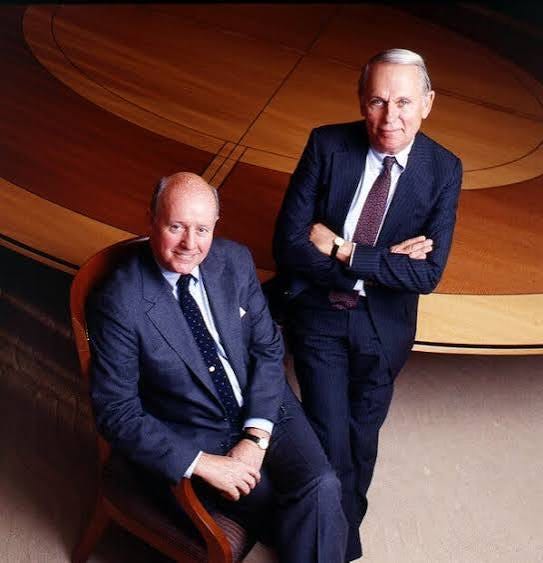
So Berkshire purchased 220,000 shares of Capital Cities for approximately $10.9 million in 1977, an average cost of about $49.60 per share. By year-end, the position had already appreciated to roughly $13.2 million, or about $60 per share. What’s strange is that Buffett subsequently decided to sell the stock, which he later labeled as “temporary insanity.” Buffett was terrible at holding onto great public companies at this time.
Anyhow, I wanted to take a deeper dive into the company’s annual report to see how the company performed at this moment in time. I love walking through annual reports, and I especially love doing so in the exact year (or close to it) when Buffett made his purchase. Analyzing the same 10-K that Buffett once looked at, at around possibly the same age (late 30s), just gets me pumped!

The 78 report is particularly interesting because it captures Cap Cities just one year after its acquisition of The Kansas City Star. The transaction supercharged its publishing division. Recall that under FCC rules, Cap Cities could acquire only five broadcast stations, so he began building a collection of publishing businesses instead.
Before I move on, I’d like to thank from The Oracle’s Classroom because he always seems to have exactly the stuff I’m looking for. This man is the GOAT of Berkshire Hathaway history. It’s people like him, , and who have been carrying this torch for quite some time. If you have not followed them, please do.
So many people have heard of Tom Murphy, especially those who have read Thorndike’s The Outsiders. They know his frugal mentality, decentralized management style, and that he mentored Buffett in a way. But how many of you have actually popped the hood and taken a look at the business? Not me. Well, at least not until yesterday, when I read the annual report for the first time.
There’s just something to be said about reading a company’s annual report. Buffett has said in the past that reading these reports really does compound, and he’s absolutely right. I’ve probably read over 100 annual reports in my lifetime. I’m good at it, but I’m not great. Still, you begin to develop a feel for management, the industry, and the economics of the business.
When it comes to broadcasting and television, I’ve read Disney, Netflix, Warner Bros., Roku, and several others. I’ve also studied Buffett’s investments in the Buffalo Evening News and The Washington Post. Buffett looked for newspapers with dominant local market positions, strong advertising franchises, loyal readership, pricing power, and high returns on tangible capital. Once you start seeing those patterns, they become much easier to recognize elsewhere.
And that’s the beauty of it. This information just stews. It compounds. It stays with you. No, you don’t retain everything, but when you pick up an annual report in an industry you’re already familiar with, you start making connections. You think, I’ve seen this before. Or, this management team is saying the same thing another great operator said. Or maybe, This doesn’t pass the smell test. It simply helps you digest the information better, which ultimately helps you analyze the business.
But it doesn’t happen overnight. It takes years. Buffett studied GEICO for decades before making Berkshire’s major investment because he wanted to understand the industry inside and out. I really think that’s the secret sauce to becoming a great investor: put in the time, study the industry, study the businesses, study the competitors, let the knowledge compound... and then strike.
The first thing you see in the letter is the creed that decentralization is the cornerstone of the company’s management philosophy. If the company you are researching has this on its first page in the 10-K, you may be onto something!
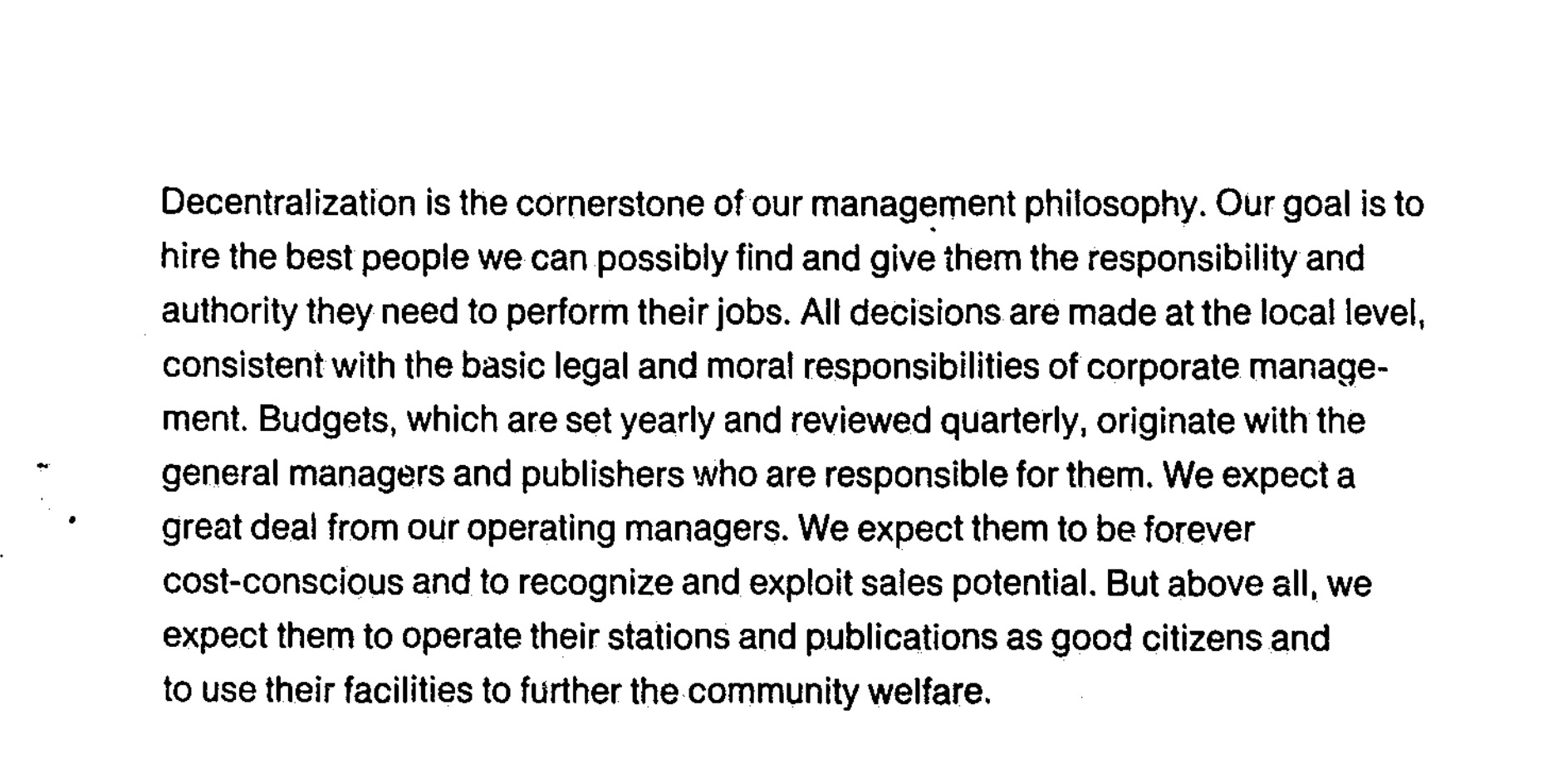
It is literally the first thing you see, which speaks volumes about what this company cherishes.
So after showing the operating earnings, the shareholder letter lists all the company's accomplishments, and boy, was this a banner year.
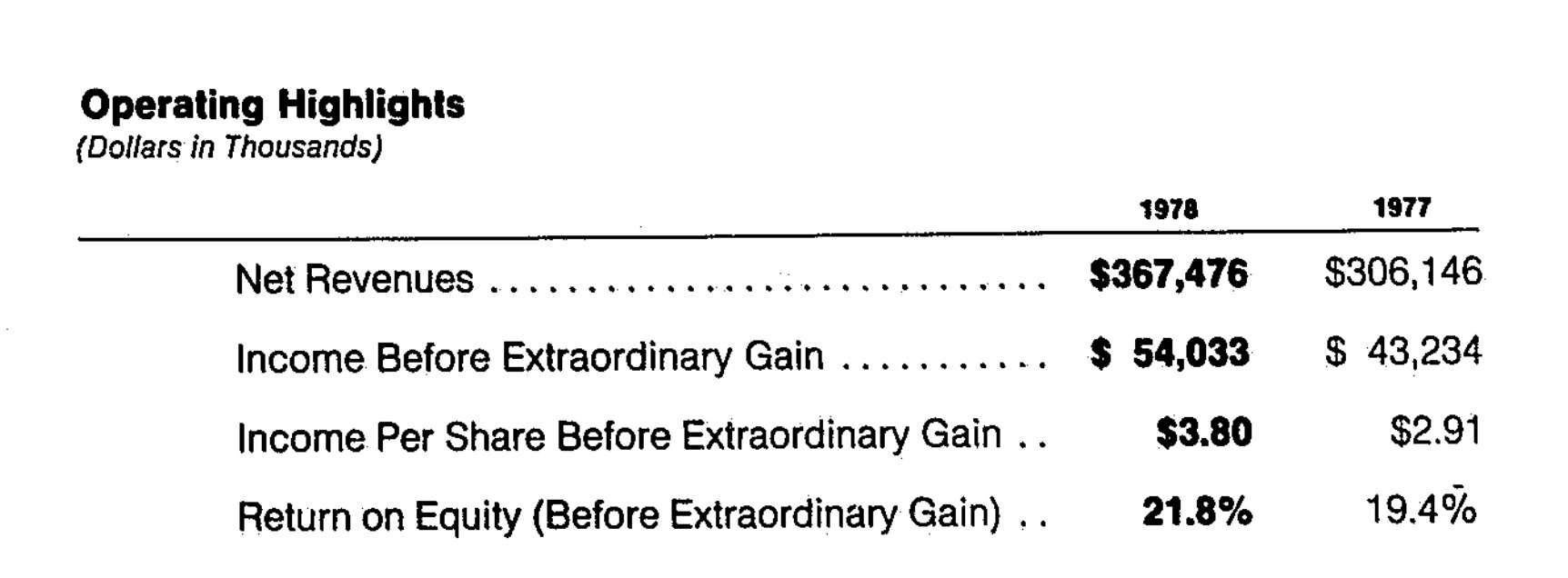
The company achieved record sales and earnings for the 24th consecutive year, really dating back to 1954, when the company started. Net revenue and income from operations increased 20% and 25%, respectively. Broadcast revenue increased 19%, while publishing revenue increased 21%.
And if you recall, the FCC had a limit on the number of TV stations any one company could own; it was five at this point. By this year, Cap Cities had pretty much reached that limit, so the only way it could continue growing through acquisitions was by expanding its publishing business.
By 1978, Capital Cities owned a number of newspapers, including The Kansas City Star, the Fort Worth Star-Telegram, and The Oakland Press, along with Fairchild Publications, which included Women's Wear Daily, Daily News Record, and American Metal Market. These weren’t household names by any stretch of the imagination.
Publishing Division
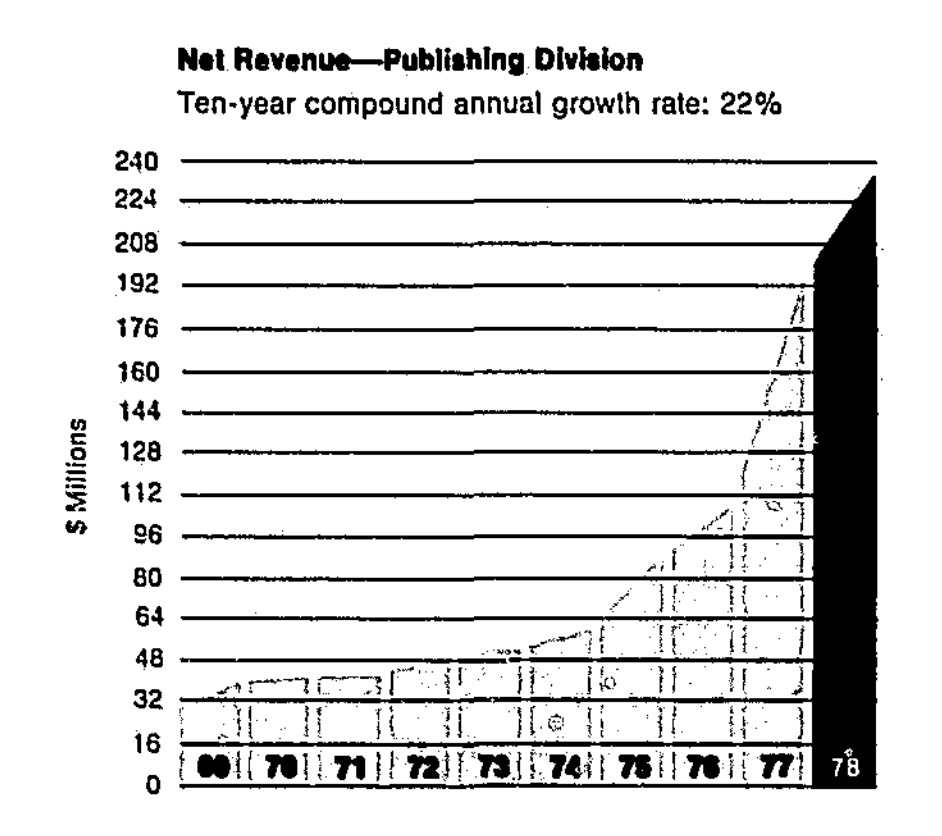
Cap Cities entered the publishing business in 1968 with the acquisition of Fairchild Publications. From there, revenue increased from $30.4 million to over $234 million, a ten-year compound annual growth rate of 22%.
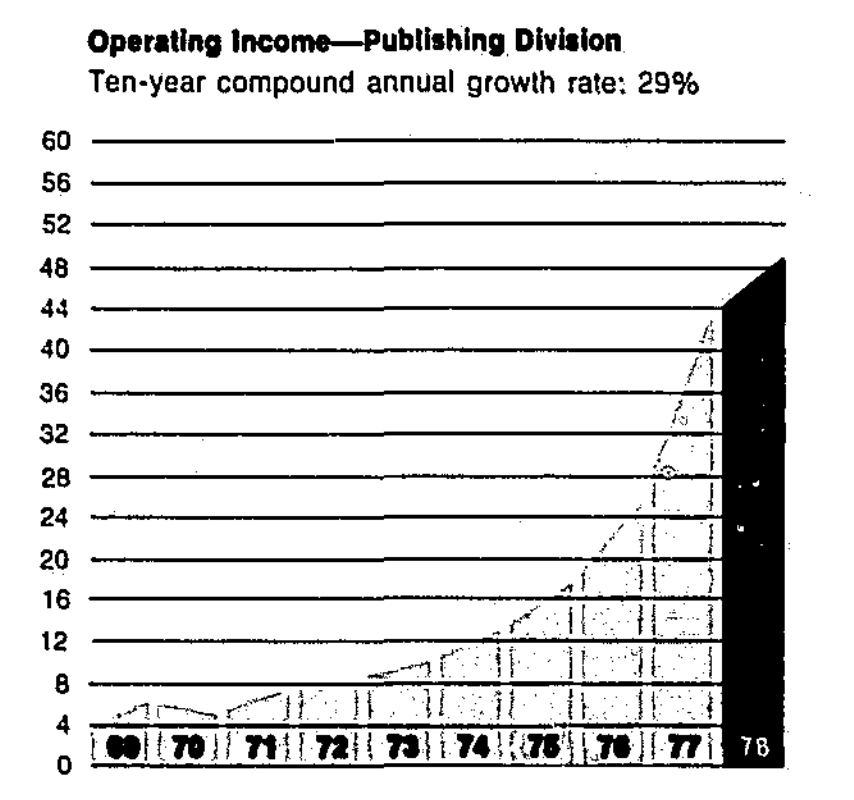
This is impressive, but it gets even better with operating income. Operating income compounded at 29%, growing from $3.9 million to $48.7 million.
And this wasn’t accomplished by just cutting costs. They invested where they needed to, implemented programs to expand and improve editorial, and purchased new, modern equipment. Thorndike has a great line in The Outsiders: "The company was careful, not cheap." I want to double-click on the word careful because I think that's what made Murphy and Burke so special. They understood what was necessary and what was unnecessary when it came to spending money. They were more than willing to eliminate limousine rides, executive perks, and all the other corporate fluff. But when it came to talent or the quality of the programming, they invested. They took money away from the frivolous things that didn't really matter and reallocated it to the things that did. So yes, they were frugal, but they weren't cheap. They were incredibly careful about how they allocated capital, not just at the corporate level through buybacks, dividends, acquisitions, and paying down debt, but within the business itself. They were constantly asking where each dollar would earn the highest return. I think that's a subtle distinction, but it's a very important one.
Lastly, they increased average daily circulation by 6%, which is a very difficult thing to do in the late 70s as competition and labor disputes made the industry very difficult.
Broadcasting
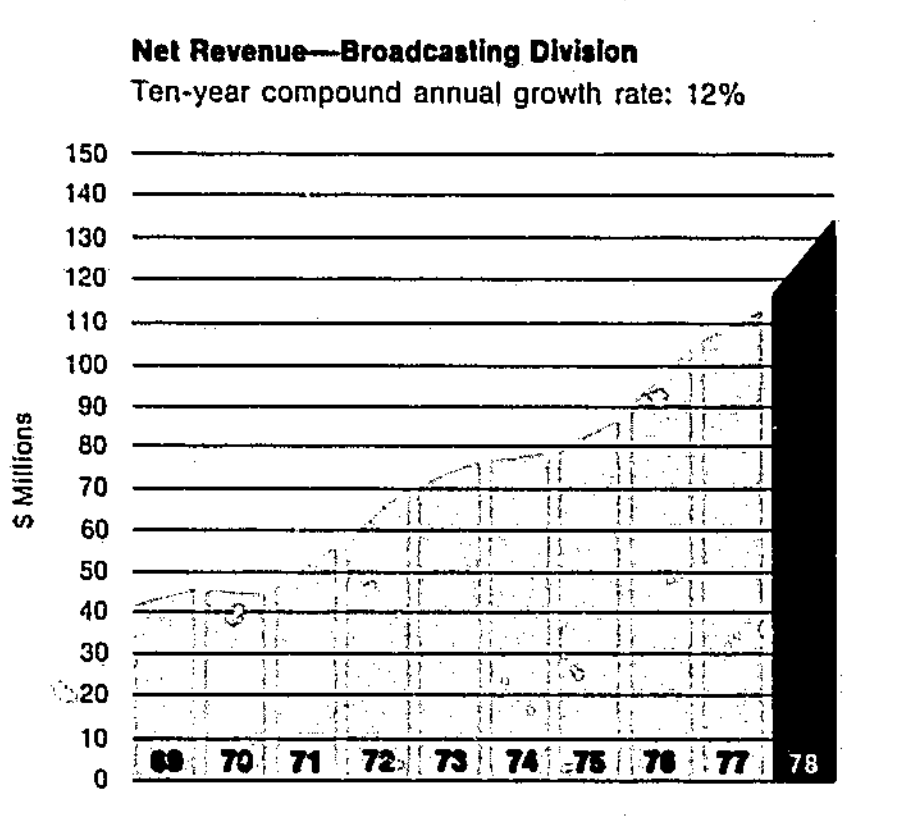
From 1977, operating income increased 23% to $70 million, while revenue increased 19% to $112.5 million.
Broadcasting truly was a wonderful business model. As Murphy put it:
“Given their relatively fixed cost structure, our stations translated a major portion of these increased revenues into additional operating income.”
This was also the beauty of social media and the larger tech companies. Each additional dollar of revenue didn’t require much additional capital. On the other hand, AI companies seem to be the exact opposite.
What I love about reading old annual reports is learning how companies adapted to changing technologies and consumer preferences. In the 1970s, FM radio stations were growing because the technology had improved and, therefore, so had sound quality. If you owned a radio station, you mostly sold ads on AM stations, which focused on news, sports, politics, and talk radio. But younger people wanted to listen to music on FM, and Cap Cities needed to evolve.
So they went out, improved the stations, and made sure the playlists were unique. It really shows how Murphy and his management team were willing to change with the times. Again, this shows that management was willing to invest in new technology if it made sense.
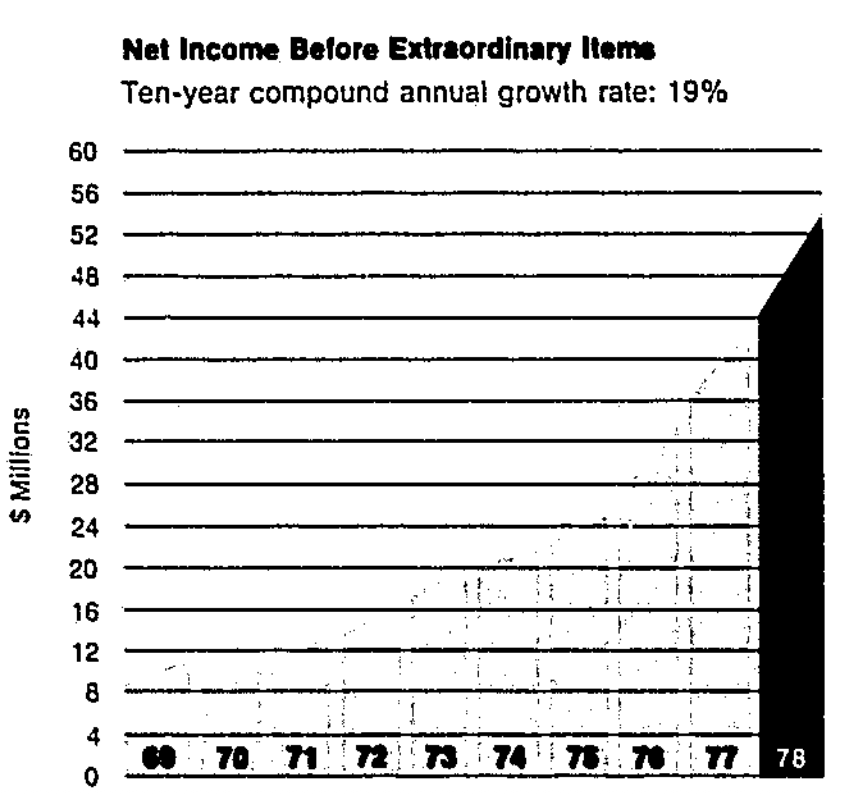
Financial Highlights
The Company then goes on to highlight how it's down financially over the last ten years.
Net Income of $54 million with a Compound annual growth rate (“CAGR”) of 19%.
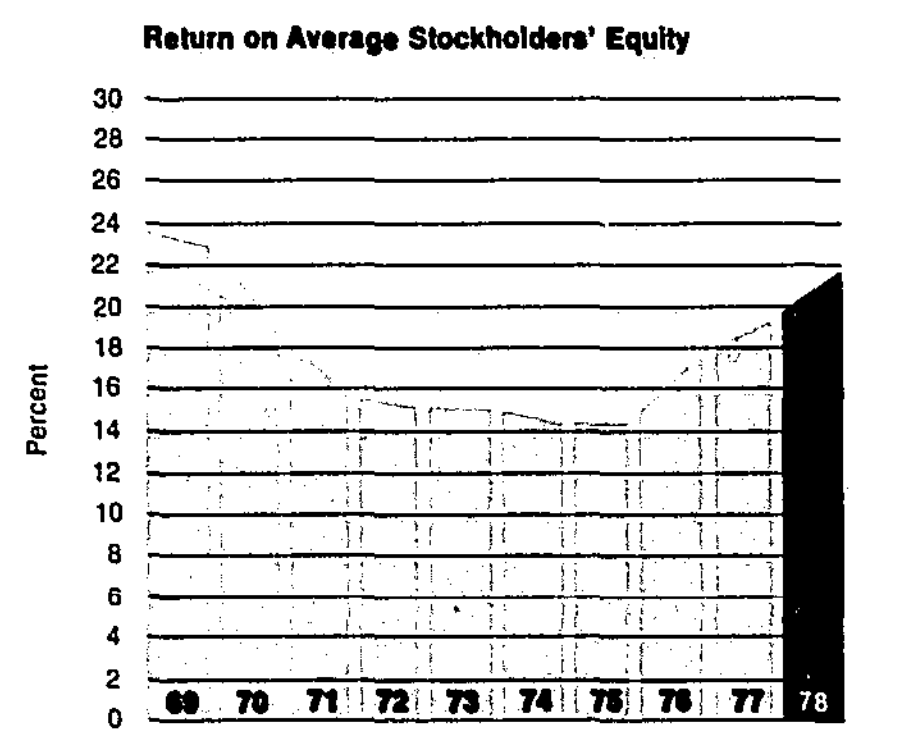
ROE working its way back to over 20%. Murphy talked about ROE being important because it shows how effectively capital is being employed. Buffett in his 1971 Berkshire shareholder’s letter said that "The primary test of managerial economic performance is the attainment of a high return on capital employed (without undue leverage) and not consistent gains in earnings per share."
He’s generally said that anything over 20% ROE is an exceptional business.
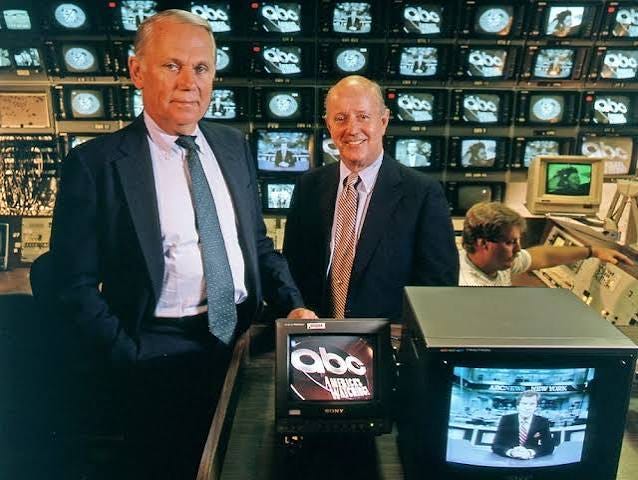
![L-R: Frederick Pierce (ABC), Leonard Goldenson (ABC), Thomas Murphy (CCC) [i.e. Capital Cities Communications] and Daniel](https://substackcdn.com/image/fetch/$s_!MDoY!,f_auto,q_auto:good,fl_progressive:steep/https%3A%2F%2Fsubstack-post-media.s3.amazonaws.com%2Fpublic%2Fimages%2F3319f47e-a756-4f62-8421-992e1056b462_544x367.jpeg "L-R: Frederick Pierce (ABC), Leonard Goldenson (ABC), Thomas Murphy (CCC) [i.e. Capital Cities Communications] and Daniel")
Income Statement
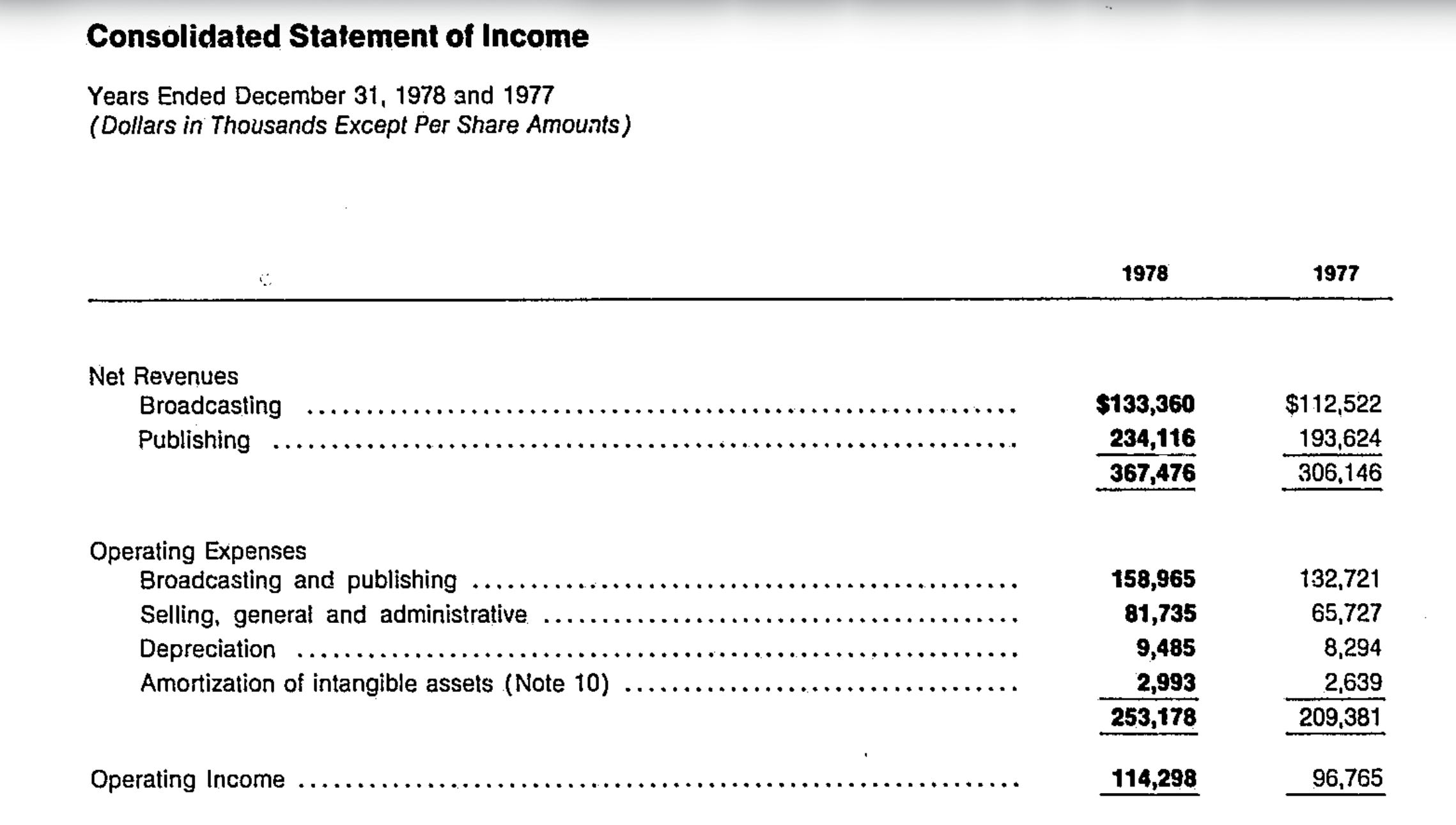
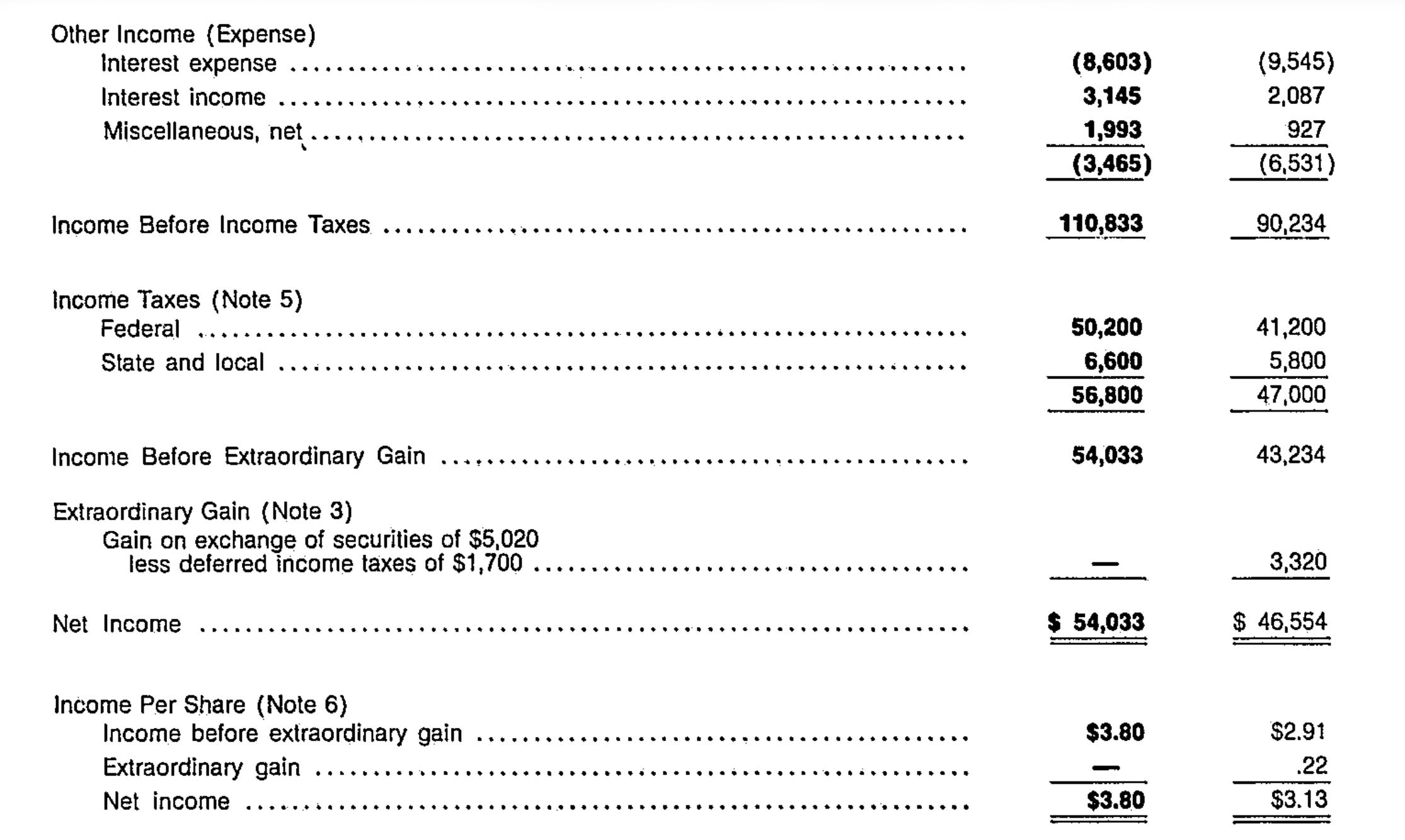
So revenue increased 20%, from $306 million to $367 million. This was a combination of organic and inorganic growth, as both the broadcasting and publishing businesses were performing well across the board. What I found very interesting was that more revenue came from publishing, at $234 million, versus $133 million from broadcasting. I tried looking at the last ten years of data, which was listed in the report, but they did not break out the revenue by segment.
However, if you take a look at operating income, broadcasting increased 23%, while publishing increased only 12%. I imagine this was likely due to the labor disputes the company mentioned earlier in the report. Also makes sense that broadcasting was a more profitable business given its economies of scale.
And lastly, income before extraordinary items increased 25% to $54 million. Funny enough, I looked around for the “extraordinary items,” but I guess this is just how Tom titled this section in every report.
On second thought, one last note caught my eye in the income statement. Earnings per share increased 31%, from $2.91 to $3.80, which was higher than the 25% increase in net income. This came from the share buybacks, which certainly would have caught Buffett’s fancy.
So you had revenue increase 20%, net income increase 25%, and EPS increase 31%, with a 21.8% ROE. Not too shabby, if you ask me! Just for context, I took a look at IBM that year, and it grew revenue by 16% and net income by 14% in 1978.
Change in Financial Position
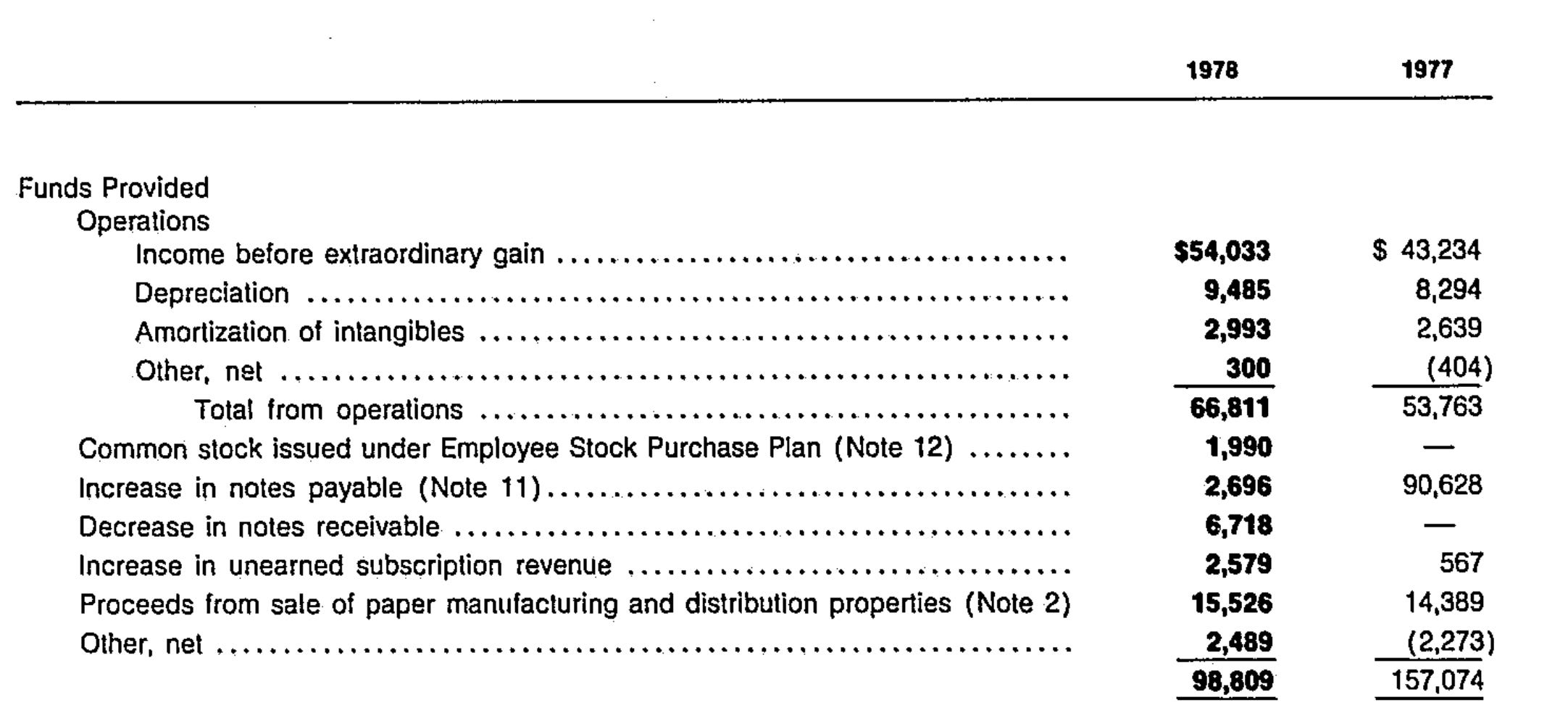
The Statement of Changes in Financial Position is pretty much the cash flow statement, with some variations. Cap Cities was printing cash at this point, generating over $66 million for the year.
In 1977, they borrowed $90.6 million to acquire The Kansas City Star, and I found it very interesting that the very next year they paid back nearly $27 million. It’s a simple strategy when you think about it: you borrow to acquire a business, back the loan with the cash flow the business generates, and continue to build it up. They never took on more than they could handle. I feel that’s the major issue when companies blow up.
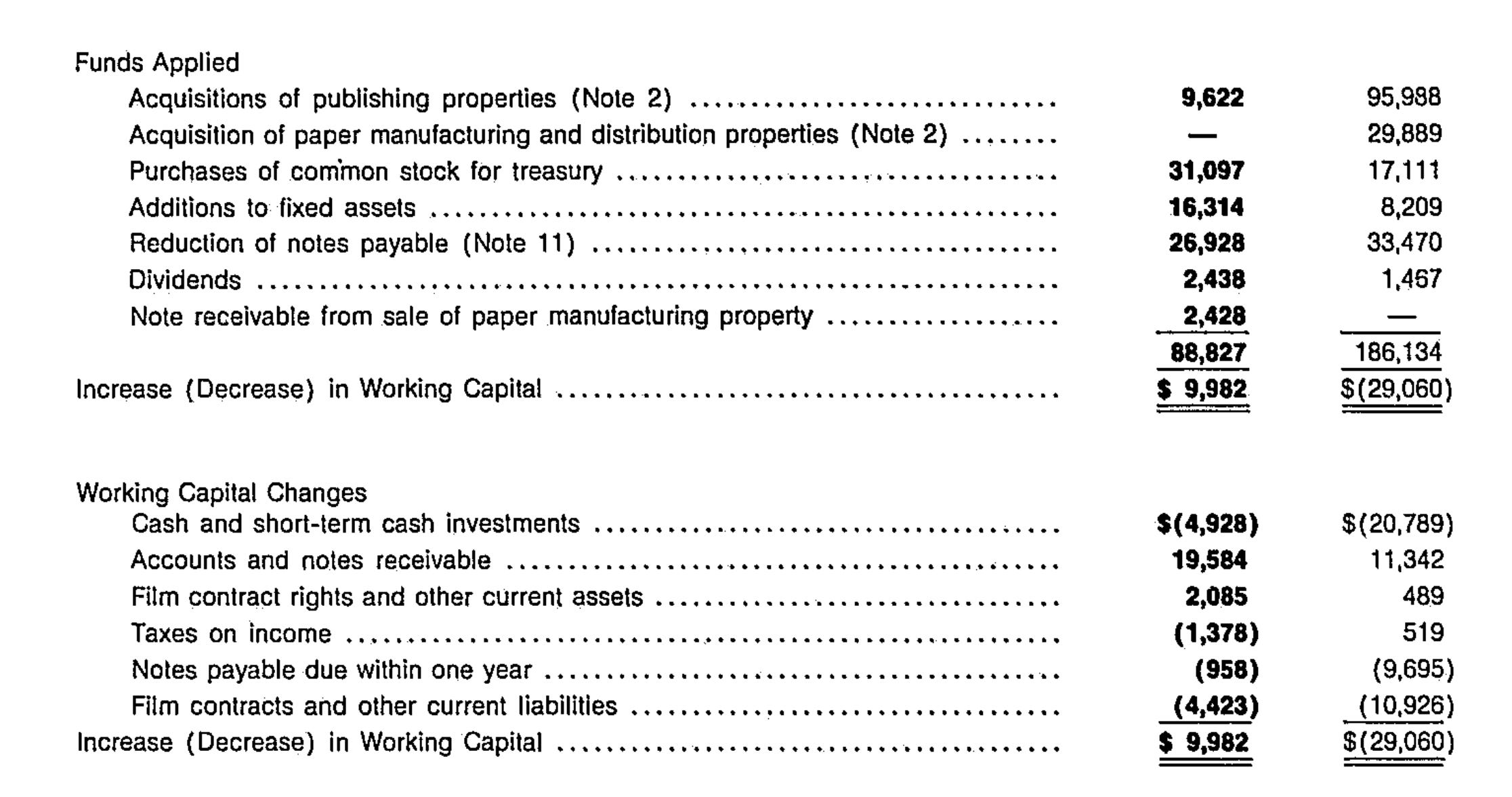
And the largest use of cash was share buybacks. When I first started looking at Cap Cities, you always heard how great Tom Murphy was at capital allocation, but I never really saw it in action until now. The company prioritized paying down debt and repurchasing stock unless there was an acquisition to be made.
In 1977, Cap Cities acquired The Kansas City Star Company for $95 million, which also included Graham Paper Company and Flambeau Paper Company. Then, in 1978, after digesting the acquisition, Murphy shifted gears. Instead of chasing another large deal, he used the company’s cash flow to strengthen the balance sheet and buy back stock. That’s capital allocation in action!
Balance Sheet
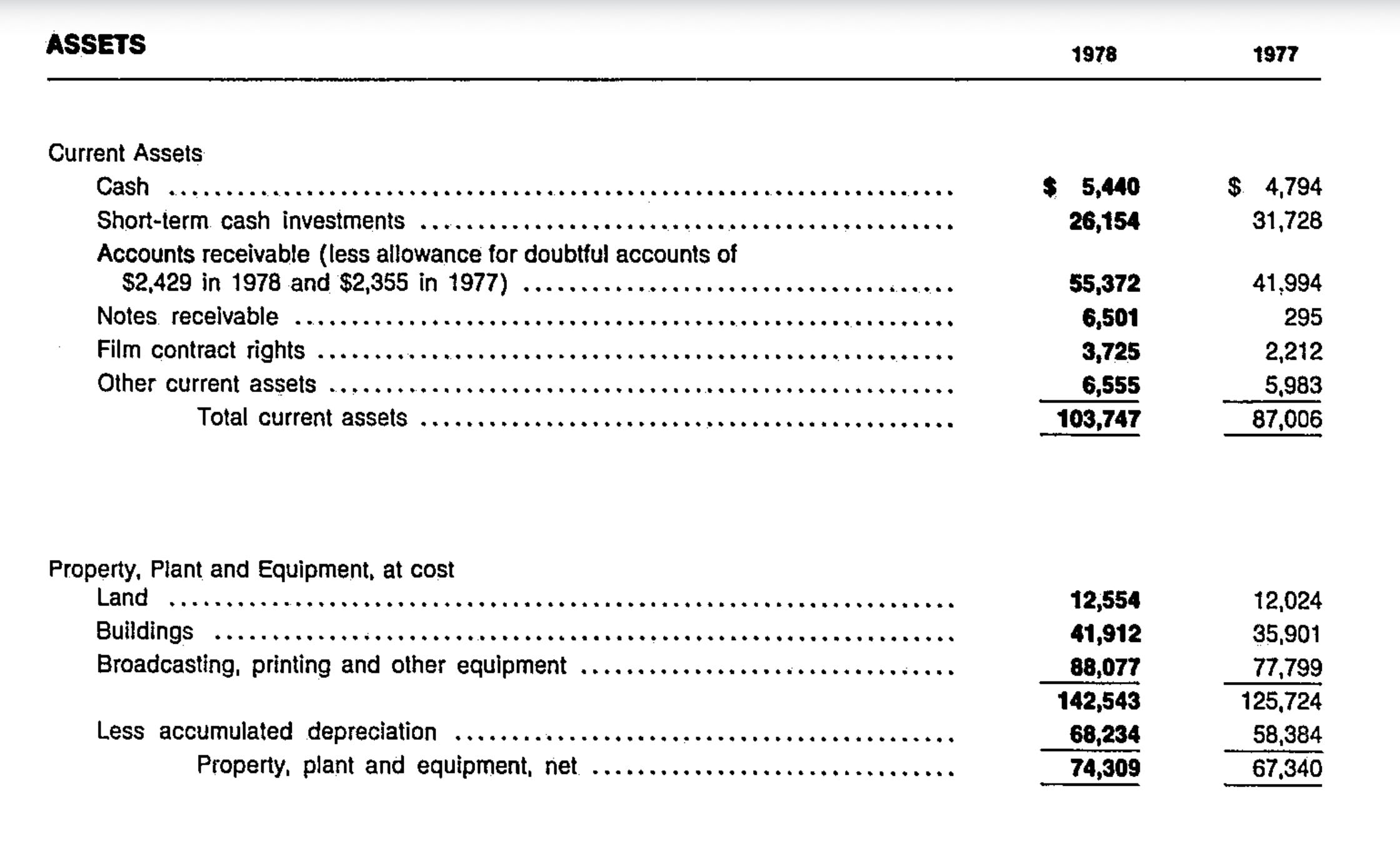
Intangible assets made up 55% of total assets. I immediately thought of Netflix, where the majority of the assets are also intangible. I'm guessing this was largely the goodwill and other intangible assets created through Murphy's acquisitions.
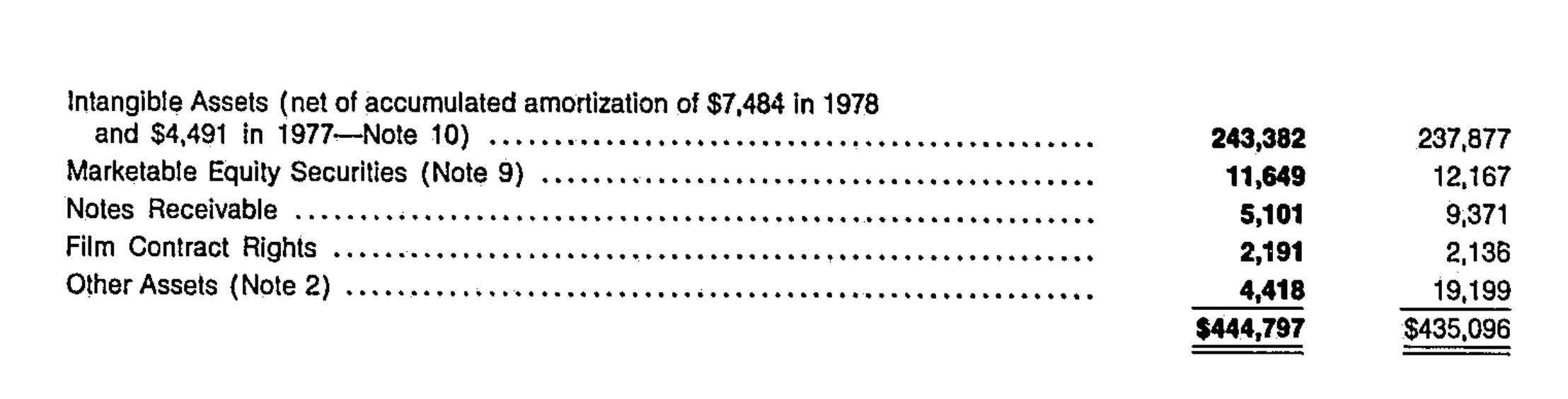
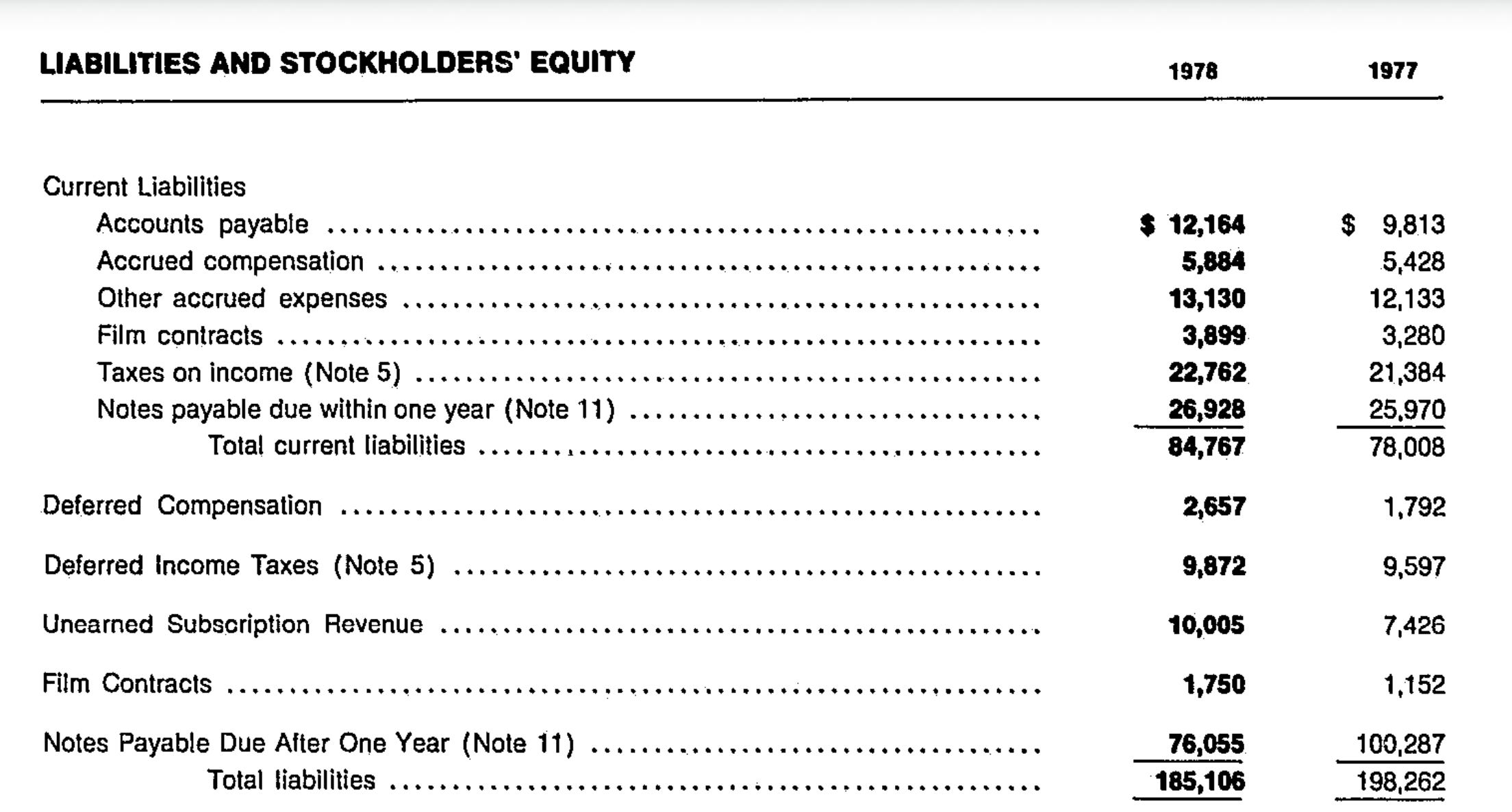
So 1977 was an acquisition year, and 1978 was rather quiet in that sense. As a result, they managed to reduce debt by 24% for the year. And while debt declined, shareholders’ equity increased. I mean, that’s exactly what you would hope to see from a company that had just made some rather large acquisitions. It’s about being able to pay back the debt while strengthening the balance sheet for the next acquisition. That’s Buffett’s playbook, more or less.
There was also the $10 million of “unearned subscription revenue,” which essentially was float. I love businesses where customers put cash up front long before they receive the product. That’s one of the things I love about Starbucks, with customers paying for gift cards and loading money onto the app well before they buy their coffee.
So overall, the company had $554 million in assets, generated $54 million in earnings, and earned a return on equity of 21.8%. Not too shabby.
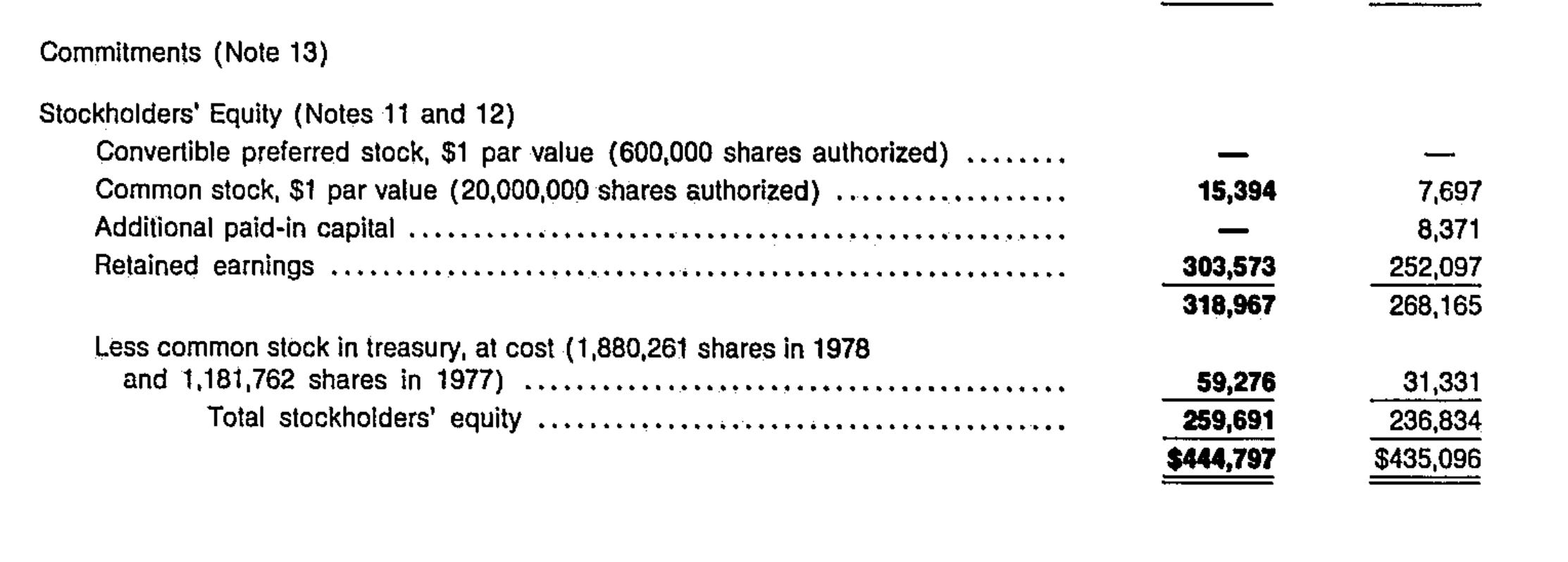
So overall, the company had $554 million in assets, generated $54 million in earnings, and earned a 21.8% return on equity. But more than the numbers, this annual report helped me understand why Buffett admired Tom Murphy so much.
Before reading it, I knew Murphy had a reputation as one of the greatest capital allocators of his generation. I knew about the decentralized management, the frugal culture, and the legendary acquisitions. What I hadn’t done was pop open the hood and actually look at the business.
Reading the report, you can see it everywhere. Broadcasting and publishing were both growing. The company generated tremendous cash flow. Murphy borrowed to acquire great businesses, paid down the debt quickly, repurchased stock when it made sense, and still invested in the operations. They weren’t cheap; they were careful. Money wasn’t spent where it didn’t matter, but it was invested aggressively where it produced the highest return.
That’s really my biggest takeaway from this report. Great investing isn’t just about finding great businesses. It’s about understanding them well enough that, when the opportunity finally comes along, you have the conviction to act. Buffett spent decades studying industries before making his biggest investments, and every annual report you read adds another piece to that puzzle.
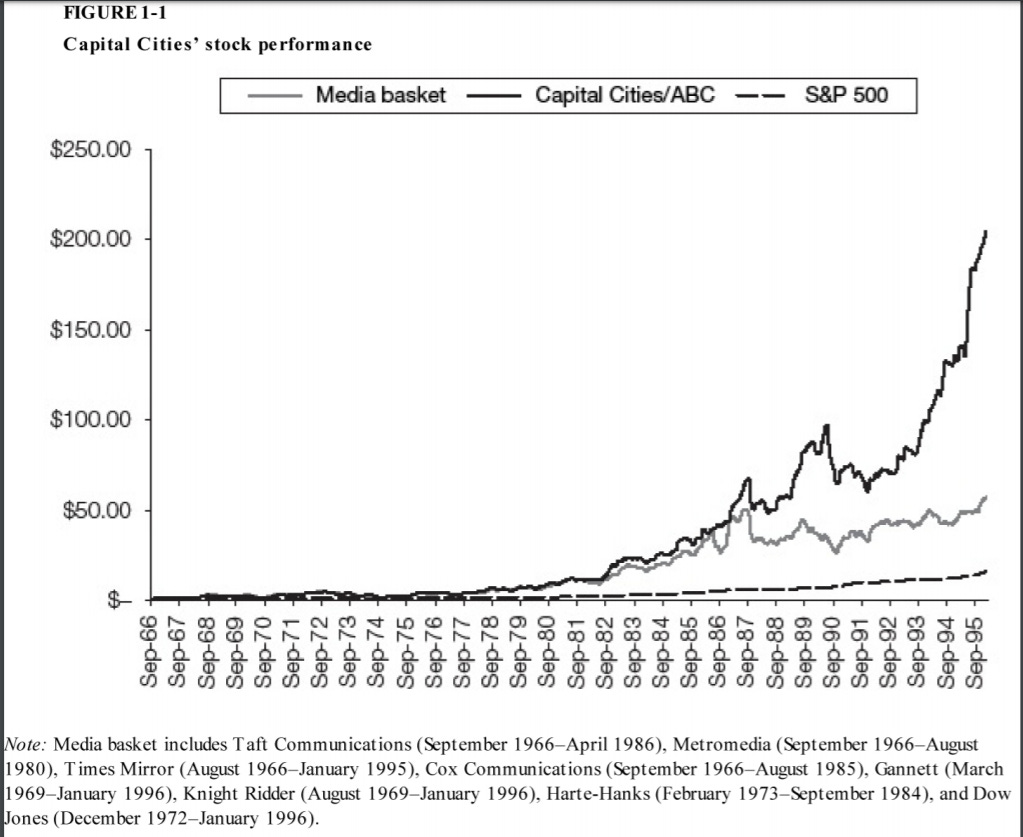
Looking back, it’s not hard to see why Buffett invested in Capital Cities. And after spending a few days with this annual report, it’s even easier to understand why he later called selling it “temporary insanity.”
As we move on from Cap Cities, I leave you with some parting words from Bob Iger
They were two of the most authentic people I’ve ever met, genuinely themselves at all times. No airs, no big egos that needed to be managed, no false sincerity. They comported themselves with the same honesty and forthrightness no matter who they were talking to. They were shrewd businesspeople, but it was more than that.
I learned from them that genuine decency and professional competitiveness weren’t mutually exclusive. In fact, true integrity — a sense of knowing who you are and being guided by your own clear sense of right and wrong — is a kind of secret weapon. They trusted in their own instincts, they treated people with respect, and over time the company came to represent the values they lived by.
— Bob Iger, Ride of a Lifetime
Comments
Nothing yet. Say the first thing.
Sign in to join the conversation.