
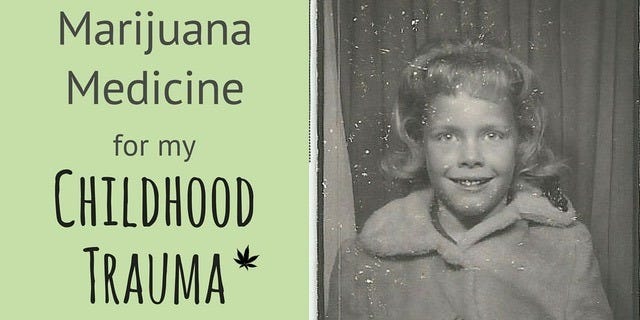
As a college freshman, newly out from under the thumb of my stern, authoritarian (and abusive) parents, I was introduced to cannabis.
Back then, of course, we called it marijuana. Or dope. Or weed. Or grass. I’m 70 now, and in my professional life these days, we prefer the cleaner, more clinical term: cannabis. Age, apparently, brings both perspective and improved vocabulary.
At first, it was social. A pass-the-joint kind of ritual. A circle of young people pretending to be more relaxed and profound than we actually were.
But it didn’t take me long to realize that cannabis was doing something for me that went far beyond fitting in.
When I was alone with it, it became a balm.
It softened the incessant anxiety, self-doubt, anger, and sadness that had haunted me for as long as I could remember. In those years, I woke up anxious, went to bed anxious, and spent most of the day with some form of emotional static running in the background.
Cannabis didn’t solve my life, but it eased the pressure of being inside it.
Long before “medical marijuana” was a respectable phrase, it had become my mood medicine.
I believe it was one of the reasons I was able to avoid the pharmaceutical parade of the era. Valium was common then. Later came the SSRI wave, Prozac and its cousins, rolling in during the late ’80s and beyond. Those medications have helped plenty of people, and I’m not interested in pretending otherwise. But today we also know something about the price they can exact: mental fog, suicidal ideation for some, and that eerie emotional flattening where the anxiety quiets down but so does your delight in being alive.
I escaped that.
Of course, my version of medicine came with its own set of inconveniences.
“Flying under the radar” had a character all its own, especially when it came to procuring my supply. I can still remember perched tensely in seedy living rooms or cramped kitchens with a scruffy supplier (I still hate the word dealer) while he weighed out my ounce on a decrepit balance scale that looked as if it had survived both a basement flood and a minor felony.
Other times, it was just a paper sack with a rolled up plastic baggie inside containing my precious “lid.”
Back then, you got what you got.
And mostly, you were just happy to have it.
The War on Drugs was a nasty American spectacle, but as a professional-looking white woman, I got by with only a few close calls. That is not lost on me. Even so, I was never deterred. Once I knew what cannabis could do for me, I was going to find it.
So up until about a dozen years ago, cannabis was the medicine that kept me emotionally steady.
And it rode with me through everything.
It came with me through college, into adulthood, and all the way through my career in television news. After graduating in journalism, I moved straight into broadcasting. During my senior year, I landed a plum spot as “Becky the Weather Girl” at a local station. It sounds adorable, and sometimes it was. It was also television, so naturally it involved hairspray, deadlines, and a lot of suave men explaining things with great confidence.
I never worked under the influence. Let me be crystal clear about that. Cannabis eased my anxiety, but it also made me less mentally sharp, and my job required the kind of quick, linear thinking I needed for forecasting weather or interviewing the mayor. But THC was most always in my system. Because cannabis is fat-soluble, traces can linger in the body for weeks, sometimes about a month with regular use. My rhythm was simple: I smoked at night, after work, to calm my nervous system and ease myself into deep sleep.
While my colleagues unwound with cocktails, I went home to commune with the plant.
And yes, I do mean commune.
Text within this block will maintain its original spacing when published
I'm interrupting here to make sure you know about my online Elevation Ceremonies. I offer these complimentary gatherings every month. Get details and register here.)
That may sound a bit lofty, but it is still the truest word I have. Alcohol blurred things. Cannabis, for me, softened them while somehow bringing me closer to myself.
Still, maintaining that relationship while working as a visible, professional woman in television news was a high-wire act. I had to learn how to stay supplied quietly, discreetly, and without getting too close to the grubbier corners of the transaction. In nearly every market where I worked, there was always a like-minded colleague, a producer, a photographer, another reporter – who knew a friend of a friend who could fill my “prescription.”
That hidden life ran deep.
In my first (and ill-fated) marriage, I had a busy, distracted spouse who knew absolutely nothing about my cannabis routines. It wasn’t until I was preparing to leave him that I finally told him. Which, in retrospect, tells you a lot about the marriage.
In those years, using cannabis carried a social and legal stain that seeped into everything. It shaped how I procured it, how I used it, who I told, and who I didn’t. Without quite realizing it, I had become very skilled at keeping my worlds apart.
For a long time, this way of managing my inner life worked.
Or at least it worked well enough.
Cannabis helped me manage my symptoms. It helped me sleep. It softened the emotional chaos. It gave me relief from the kind of inner weather that made everyday life feel heavier than it should have.
But eventually I had to admit something even harder: cannabis gave me relief, but it did not yet give me lasting peace.
The relief was real, but it was temporary. Once the high wore off, the difficult emotions would resurface. The anxiety returned. The internal commotion returned.
And after enough years, “temporary relief” started to feel like too small a victory.
I wanted more than symptom management.
I wanted healing.
So I did what earnest, suffering people do: I went looking.
For years, I explored therapy. One psychiatrist told me my brain was going to rot from cannabis use (a charmingly measured clinical opinion). But I did like talk therapy, mostly because it felt good to be heard, even if the listener was paid. But honestly, it did little for the incessant, unruly emotions I lived with, and even less to help me understand how deeply they were rooted in trauma.
In my search for answers, I also went back to school and studied clinical nutrition, eventually becoming a registered dietitian. I believed, reasonably enough, that if I could clean up the body, I might quiet the mind. And to a degree, that was true. Whole foods, supplements, and nutritional support can absolutely strengthen a person. They can brighten the skin, stabilize energy, improve digestion, reduce inflammation – and help you look like someone who has their life together.
But trauma, I learned, is not especially impressed by flaxseed.
Nutrition could support me. It could “pretty up the person,” as I sometimes say. But it did not reach the deeper wound. It did not touch the emotional pain living underneath the symptoms.
By the late 1990s, still longing for something more lasting, I turned toward spiritual disciplines. I practiced Shambhala meditation. I explored Kabbalah. I immersed myself in secular mindfulness. Each offered some version of peace through quiet sitting.
Quiet sitting and I were a poor match from the start.
I once thought my inability to sit in silence meant I was failing. I thought I lacked discipline. Or depth. Or spiritual maturity. But the truth was simpler and kinder than that: the relentless thoughts and difficult emotions tethered to my trauma made silence feel anything but peaceful. Sitting still did not bring serenity. It brought pounding thoughts, dissociation, and a closer encounter with pain I had no idea how to process.
Years later, when I began teaching, I discovered how many others shared my same struggle.
That was a revelation.
What I had judged in myself as a personal failure was actually a difficulty shared by countless others. Plenty of people can sit quietly and find beauty there. But many cannot… not at first, and not without support. And there is nothing defective about that.
And, it’s true: Hope springs eternal.
Somewhere deep inside, a still, small voice kept calling me forward. Maybe I was not bad at healing, it whispered. Maybe I simply had not yet found what could truly reach me.
As strange as it may sound, I believe cannabis, in its guise as a spirit plant, was part of what awakened that voice.
In 2014, I encountered the healing method that ended my search. Emotional Liberation® was created by GM Khalsa, a yoga therapist, life coach, and veteran Kundalini Yoga teacher whose life’s work led him to develop a method rooted in the therapeutic intelligence of emotion, Emotional Liberation®.
For the first time, something truly clicked.
Per this work, I began to understand that emotions are not random disturbances, inconvenient messes, or proof that something is wrong with us. They are part of an exquisitely accurate sensory system. They carry information. They help us recognize danger, understand the past, and access the peace and happiness we all say we want, even while organizing our lives around avoiding discomfort.
This method taught me how to do something I had never truly learned before: not just talk about my emotions, not just soothe them, not just survive them, but actually call them up, process and release them.
Through this work, I learned what emotions actually are and why they trouble us. With potent verbal prompting, supported by expressive body movement and very specific hand placements and breathwork, I learned how to access the invisible inner life that had been driving so much of my suffering. I learned how to turn inward, feel what was there, and work with emotional pain at its roots, including the trauma beneath it.
And this is where cannabis took on an entirely new role.
I began to see that the plant was not only helping me cope. It was helping me heal.
It simply needed the right container.
When I began working with Emotional Liberation® alongside the intentional, judicious use of cannabis, I discovered that the plant could act as a steady and powerful companion to the process. It helped bring buried feelings closer to the surface, deepened body awareness, and supported a steadier engagement with emotional material that had once felt too overwhelming or too defended to reach.
As I began guiding and teaching others, I saw that many of my students and clients found this combination supportive in much the same way.
GM himself was not an advocate for working with outside substances, and Emotional Liberation® as he taught it did not include them. But to his credit, he graciously acknowledged the effectiveness of what I was discovering and honored the healing path I was developing with cannabis (and as an aside, psilocybin microdosing).
What had long been, for me, a source of relief became something more conscious and more purposeful: a partner in healing.
The work was so profound, and so consistently effective, that I went on to complete a four-year course of study with GM, training extensively in the therapeutic process of working with emotion. I wanted not only to understand this method deeply, but to be able to offer it skillfully to others.
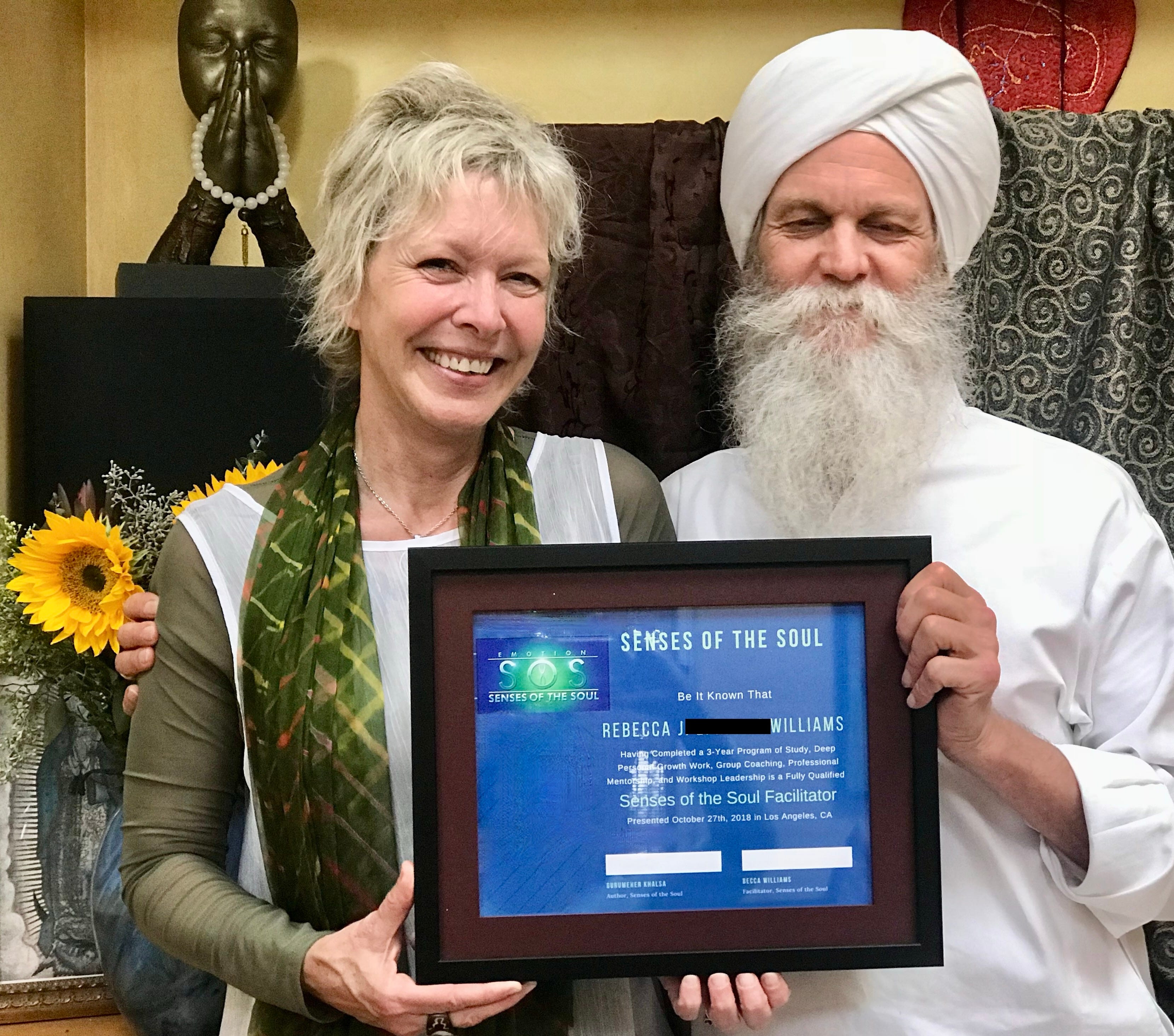
That decision changed the course of my life.
These days, when I guide others through this work, I bring all of it with me: the years of anxiety, the long reliance on cannabis for relief, the search through therapy, nutrition, meditation, and spiritual practice, and the eventual discovery that emotions are not the enemy. They are messengers. And when we learn how to work with them directly, they can lead us toward genuine healing.
Cannabis is not the only doorway into that work. But in my experience, it can be a potent one. Used with care, intention, and the right support, it can soften defenses, deepen awareness, and help us stay present long enough to meet what has been waiting inside us all along.
Ultimately, this work is about strengthening our connection to the deeply resourced self, the part of us that holds wisdom, resilience, and the capacity to heal.
Cannabis does not do the healing for me. But it helped me get close enough to myself for the healing to begin.
That is the heart of my Elevation Ceremony, a complimentary online gathering I offer each month: a guided opportunity to turn inward, move emotional energy, and reconnect with the part of yourself that already knows how to heal.
You are welcome to include cannabis in that experience if it supports you, and you are just as welcome to come without it. This work does not depend on cannabis; it depends on your willingness to show up, listen inwardly, and allow what is ready to move to move.
Join me here for details and registration
With love,
Becca
P.S. You may not need more insight nearly as much as you need a safe and skillful way to work with what your emotions have been trying to tell you. Bring whatever is knocking loudest on your head. Read more and register here.
Comments
Nothing yet. Say the first thing.
Sign in to join the conversation.