
Almost every love song you’ve ever heard is secretly an instruction, and it never changes: you cannot survive without the love of someone.
That idea did not start with me. But for me, it started with a book I read in 1976.
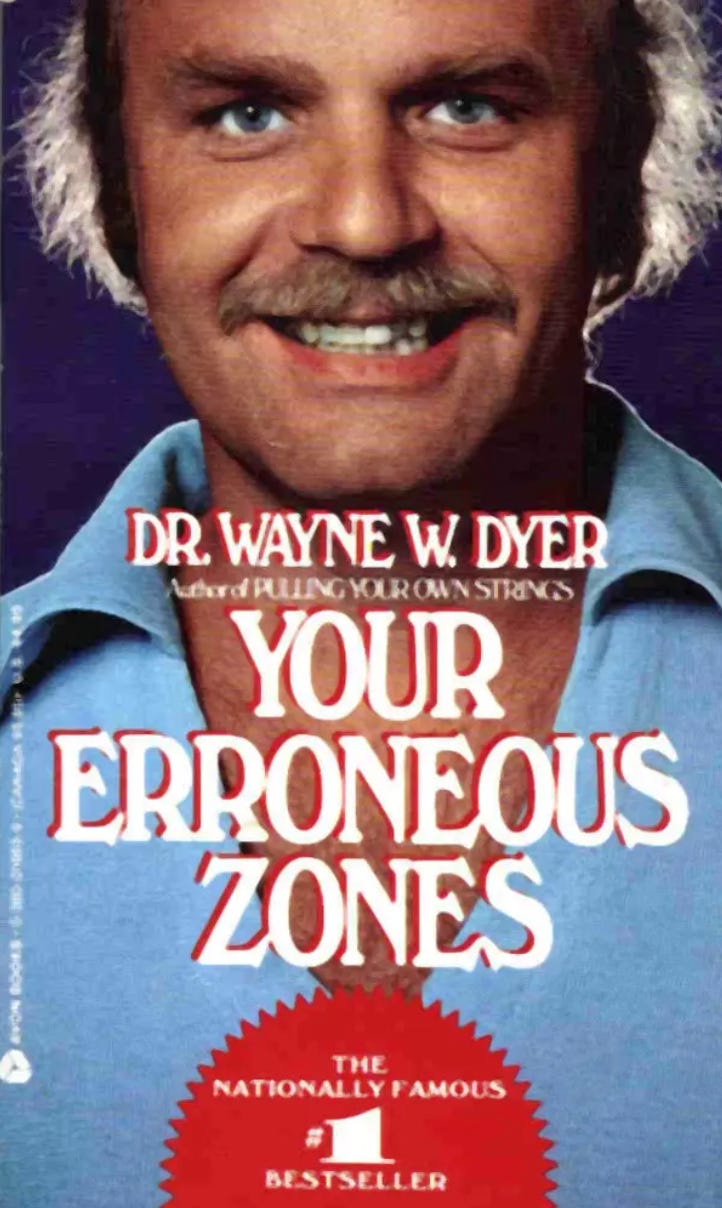
Back then I was a young college student who measured her worth almost entirely by whether someone wanted her. When a psychologist named Wayne Dyer published his first book, Your Erroneous Zones, it sold more than 35 million copies. He’s been gone since 2015, but his ideas are still loud in my head.
He called them the “profusion of cultural approval-seeking messages.” The songs are not only entertainment, he suggested, they’re lessons. And the lesson, repeated ten thousand times before you’re old enough to question it, is that you are not enough on your own.
I think about this constantly now, because I live surrounded by the proof of it.
These days I push my cart through a supermarket in Lagos, Portugal, cod fish on one side and pastéis de nata on the other, and the sound system pulls me straight back to college. American music plays all day long whether I’m there or in the hardware store, the gym, or the shops along the cobblestone streets, there’s almost always a love song, or a song of heartbreak.
The pining itself is ancient… troubadours sang it. Poets have been writing it for centuries. Every generation gets its own lovesick version that sounds like the first time anyone has ever felt this way.
In our lifetimes, Bill Withers swore the sun stops shining the moment she leaves. Nilsson couldn’t go on living if it was without her. The Hollies elevated love to life-giving oxygen. Country legend Dolly begged a stranger not to take her man because she could not compete.
The younger ones carry it forward, like Olivia Rodrigo driving past a lover’s old street unable to stop, or Gracie Abrams turning the too-late apology into an art form.
How far back does it go? Probably to the first human who picked up an instrument and tried to put the ache into sound. The message never changes: Without you, I am nothing. I cannot breathe or function or survive.
What makes it so powerful is that it never feels like conditioning. It feels like romance… the melodies are gorgeous and the longing sounds noble, even heroic. Dying of heartbreak gets the full orchestra, while being whole on your own gets… nothing! Nobody writes a number-one hit about being complete by yourself.
Sure, there are a few exceptions, just not many. Whitney Houston told us that learning to love yourself is the greatest love of all, and it topped the charts. Gospel has always known something the pop world doesn’t. And Sufi devotional music, kirtan, the deep spiritual traditions, they’ve always sung about inner wholeness, about belonging to something larger than one romantic attachment.
But that’s not what’s playing in the supermarket in Lagos (or anywhere else in the world), and it never has. The longing sells, so the longing gets repeated, from the first love song you hear as a child to the playlist you are inside of right now.
Dr. Wayne named what lives underneath all of it. The terror in those songs, he said, does not come from loving someone too much. It comes from not loving yourself enough. The gap you keep asking another person to fill was never theirs to fill.
To a young woman still making sense of a childhood that had offered very little love or belonging that felt like solid ground under feet that had never found any.
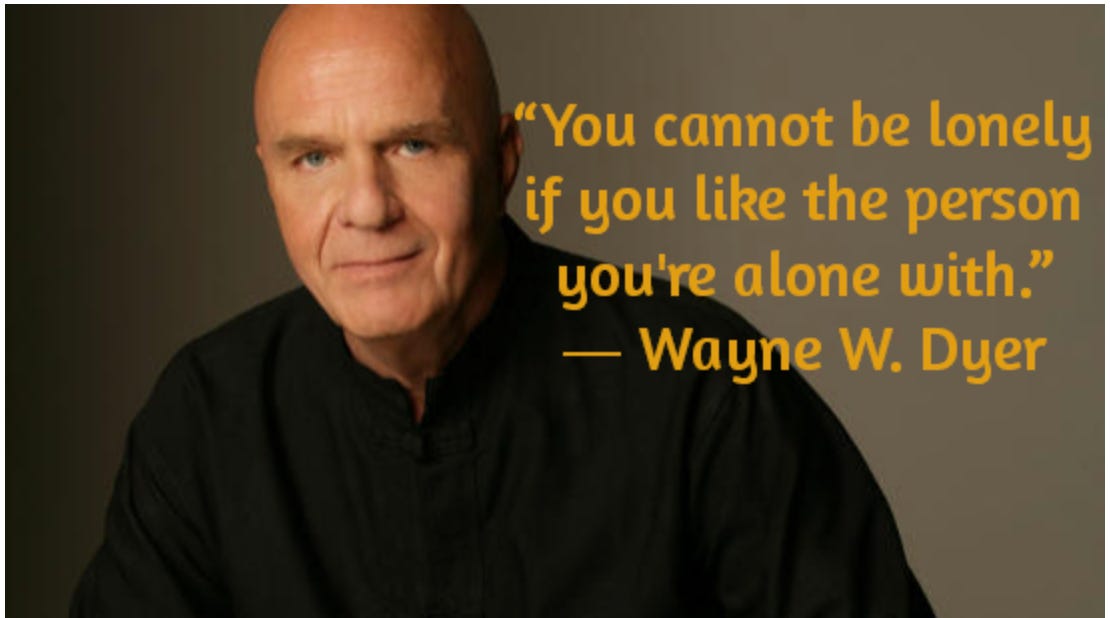
And then the line I have returned to a thousand times since: You cannot be lonely if you like the person you are alone with.
Read it again. It’s not a dismissal of love or closeness. It’s a reordering of where the love begins.
In the work I do now, this arrives as both relief and invitation. Our oldest stories whisper that we are defective, unworthy, unlovable and from inside that story, closeness turns frantic. We don’t reach for another person because we love them freely. We reach because, without them, we can’t stand to be alone with ourselves. That’s not love – that’s a survival strategy in love’s clothing.
The songs know it. They were never really about the other person at all. They’re about the unbearable hour of sitting with yourself before you have learned to like who is sitting there.
Fifty years on, the supermarket I'm rolling my cart through plays the same lesson it always has, just better produced. The real work, the kind no song will ever sell you is becoming the person you do not want to leave.
Come join my monthly Elevation Ceremony – it’s a free, live online gathering, a soft place to begin meeting the person you want to know better. My work does optionally include cannabis, if you’re up for that (many find it makes the process more effective and efficient and when you register you will get a couple of “how to” videos).
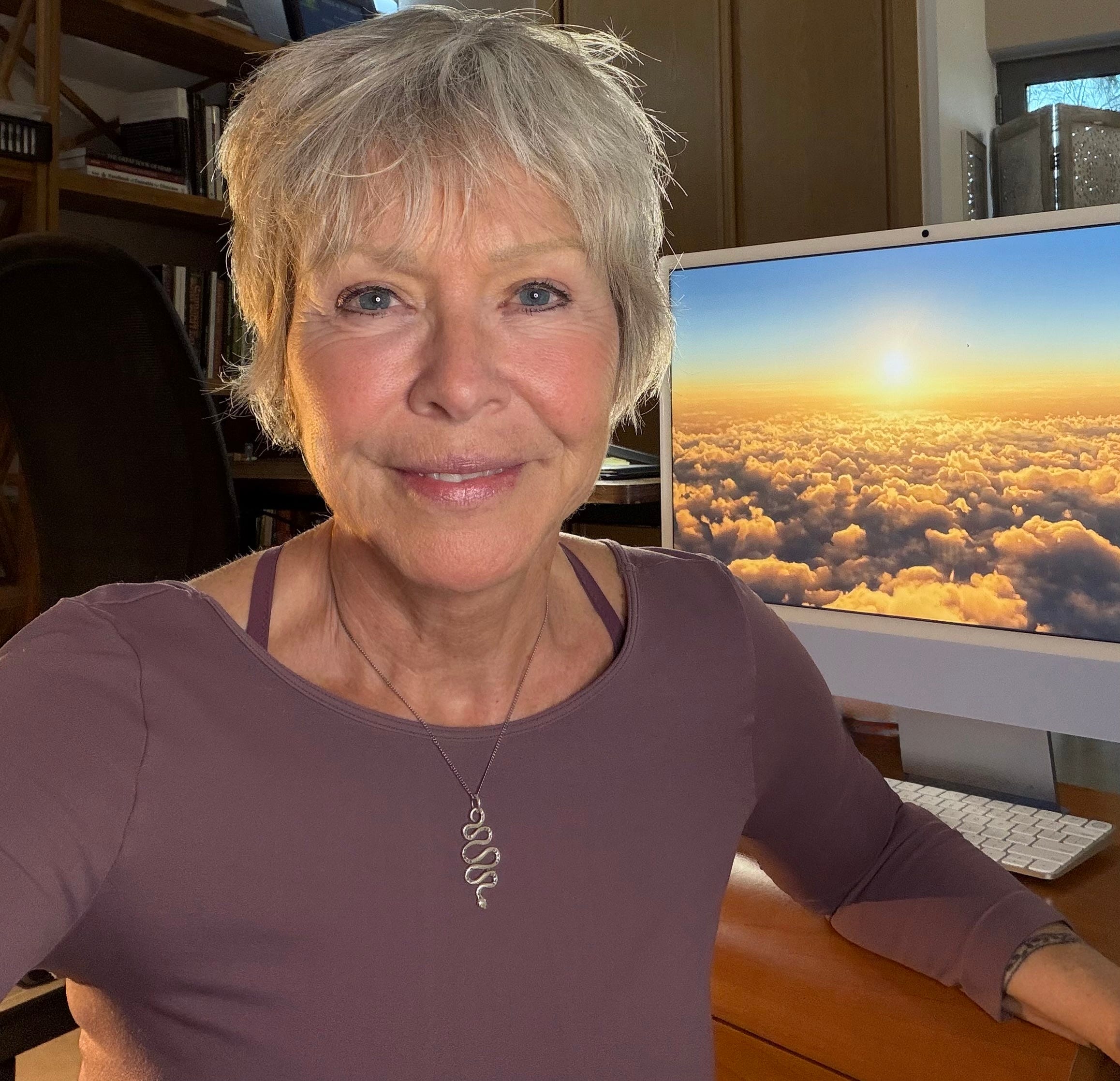
We have a growing community of people who join us regularly. You are warmly welcome to join us. I hope you will!
With Love, Becca
Thanks for reading Emotional Liberation with Becca Williams! This post is public so feel free to share it.
Comments
Nothing yet. Say the first thing.
Sign in to join the conversation.