
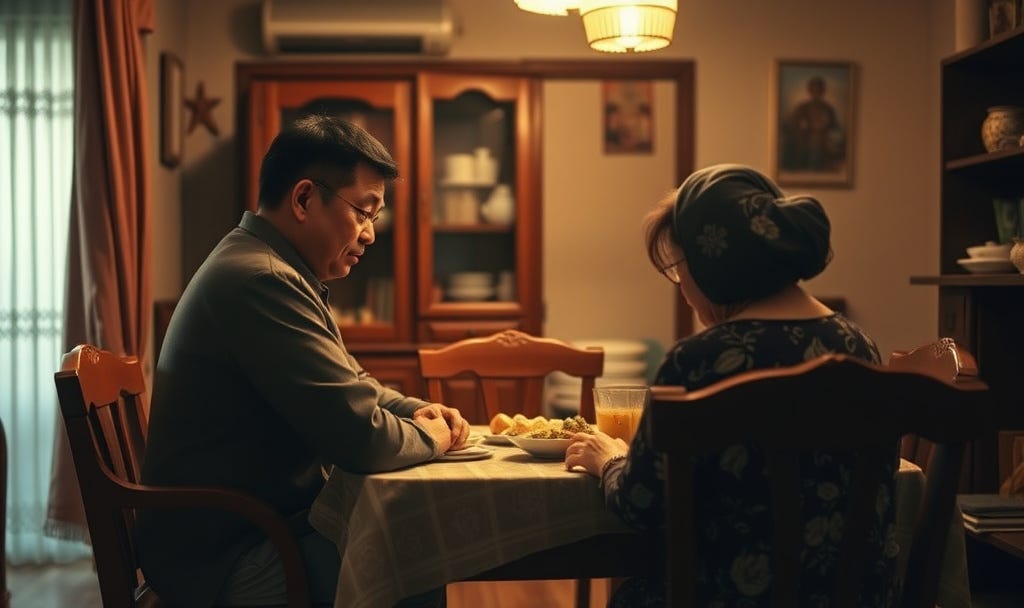
In many families, especially within collectivistic cultures, parental sacrifice is deeply valued. It signals love, responsibility, and commitment. Parents give their time, energy, and often their own needs for the sake of their children.
But there is a side of sacrifice that is rarely talked about within our culture: sometimes, it can cause harm.
In my work with therapists, I’ve noticed how difficult it can be to see this clearly—particularly within cultures we ourselves belong to. When sacrifice is normalised, even idealised, it becomes harder to question. This is especially true when parents are both highly devoted and highly demanding.
So how do we begin to understand when care supports development—and when it begins to constrain it?
Looking Beyond Good Intentions
A starting point is to look at intention. Many parents are genuinely caring, attentive, and deeply invested in their children’s well-being.
But intention alone is not enough.
We also need to ask: Who is this care really serving?
Is it primarily for the child’s safety and development?
Or is it, at least in part, regulating the parent’s own anxiety?
In reality, both can coexist. But the more care is driven—often unconsciously—by a parent’s need to manage their own fear, uncertainty, or distress, the more likely it is to become constraining for the child.
When Care Oversteps Development
Another important factor is the child’s developmental stage.
The way a parent relates to a 10-year-old is naturally different from how they relate to a 20-year-old. But when that difference becomes blurred—when the same level of involvement, control, or decision-making persists—care and overindulgence begin to merge.
At that point, the relationship can become enmeshed.
Boundaries are no longer clear. The child’s autonomy does not have space to develop.
When Expectations Become Emotional Pressure
In enmeshed relationships, something else often happens.
Parents may express expectations in ways that feel emotionally loaded:
“If you don’t do well, I lose face.”
“If you struggle, it means I have failed.”
“If you are unhappy, I suffer too.”
These messages may not be intended as pressure—but they are experienced as such.
Over time, they can create a sense that: the child’s life carries the emotional burden of the parent.
When this dynamic continues into adulthood, even well-meaning expressions of hope or expectation can feel like emotional coercion, especially if the relationship has long been shaped by guilt and blurred boundaries.
Why Communication Alone Is Not Enough
It is tempting to think the solution lies in better communication.
But with some parents—particularly those who carry high levels of anxiety—communication skills alone are not enough.
The difficulty often runs deeper:
unresolved grief
unprocessed trauma
a long-standing sense of insecurity
Without addressing these, attempts to “communicate better” may have limited impact.
Working With Adult Children
When working with adult children, one stance the therapist may take is, ‘Helping parents see the experience from the child’s perspective.’ (Yes, I may still see the adult children’s parents in front of them for a session or two.)
Often, simply helping parents see the experience from the child’s perspective already reduces some of the emotional burden the adult child carries.
From there, the therapeutic work focuses on something that takes time: we may call that individualisation if we use psychology term (which is essentially individualistic) to describe—the gradual development of a sense of self that is not defined by parental expectations.
Working With Parents
When working with parents, the direction is often different.
Simply telling parents to “let go” rarely works.
Because the issue is not a lack of love. It is that their way of loving may be too narrow, too rigid, or too tied to their own unmet needs.
In these cases, an important shift is helping parents reflect on what it means to care for themselves. Not as a separate task—but as part of caring for their family. Because many parents who struggle to let go were never fully cared for themselves.
A Different Way of Seeing
Parental sacrifice is not the problem in itself. But when care becomes the only way to love—and when it is shaped by anxiety, guilt, or unresolved history—it can limit rather than support development. Sometimes, the work is not about reducing care.
Sometimes, healing is not about loving less. It is about creating enough space within love for another person to become fully themselves.
Emotion in Context is a reader-supported publication. To receive new posts and support my work, consider becoming a free or paid subscriber.
Comments
Nothing yet. Say the first thing.
Sign in to join the conversation.