
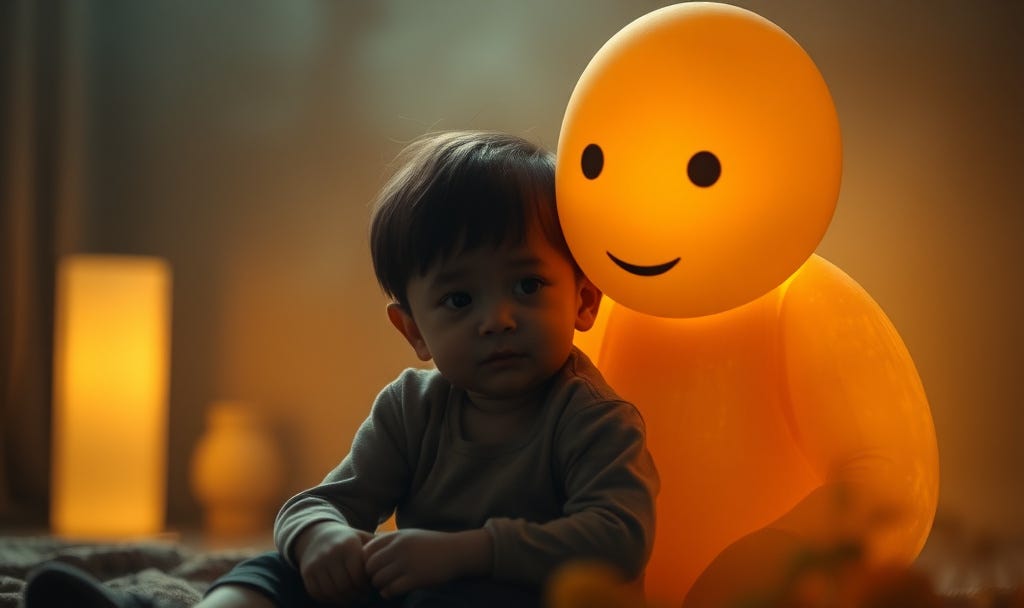
Jenny carries many wounds that even she herself does not fully understand.
From a young age, she was cared for by a domestic helper, while her parents were constantly travelling for business and only saw her about once a week. The helper was, in many ways, like Jenny’s mother—raising her single-handedly from infancy, feeding her, changing her diapers, caring for her through her earliest years, teaching her to speak, and tending to her daily routines. For a period of time, Jenny could even speak a little Tagalog. This helper cared for her until she was eight years old.
Then one day, the helper returned to her home country—and never came back.
Jenny remembers that day vividly. She cried and begged her not to leave, trying to push her luggage back into the house, clinging to her legs and screaming in distress. The helper left, heartbroken.
Later, her parents told Jenny that the helper had disappeared. She had debts and used her return home as a way to leave for good. Jenny would never be able to contact her again.
The first time Jenny experienced heartbreak was when she learned, through her parents, that the helper would not be coming back. She only knew that something inside her was missing, that her heart ached deeply, and that she would break down crying again and again.
“At that time, she was my mother,” Jenny says, still in tears when she recalls it.
She did not know that this was what it meant to feel abandoned.
“I thought she would come back…” Jenny said. For a period of time, whenever the door opened, she would think the helper had returned—only to be disappointed again and again.
“Then I realised… she had really just disappeared.”
A lack of safety
There was emotional distance between Jenny and her parents. On one hand, she knew they loved her—they would buy her anything she wanted. On the other hand, she could not connect with them emotionally. They did not have enough time for her, nor the sensitivity to understand her inner world.
After the helper left, Jenny not only cried but also had frequent nightmares and remained in a persistently low mood. With no adult guiding her, she never spoke about this experience to anyone.
Jenny developed a deep sense of insecurity. She often felt that others would leave her. She kept her distance from people and became accustomed to handling everything on her own. When she faced difficulties, felt wronged, or was hurt, she would not speak about it.
She never had the opportunity to learn how to recognise or express her emotions—to articulate her feelings, or to explain what had happened when she felt wronged.
By the time her parents stopped employing a helper, Jenny was already 12, entering adolescence. Her relationship with her parents had become that of familiar strangers.
On one hand, she knew they were her support. But she was not used to opening up to them. She often said,
“I’m afraid they wouldn’t be able to handle it. I don’t want them to worry.”
So when she was repeatedly sexually harassed by her physical education teacher in secondary school, she told no one at home.
Hallucinations and voices
For a 12-year-old to believe that her parents “couldn’t handle it” reflects a deeper fear of revealing her own vulnerability—especially feelings of shame.
“I had never seen anyone in my family express these kinds of emotions, nor had anyone ever asked me or guided me to talk about my inner experiences.”
A child in such an environment may come to feel that vulnerability is something that must not be touched, cannot be brought into the open, and is something frightening and unbearable.
At 14, Jenny became unwell. It began as depression, and at its worst, she experienced hallucinations and auditory disturbances. She was prescribed increasing amounts of medication.
When their only daughter fell ill, the family underwent a significant shift. Her parents became united in supporting and caring for her. They sought help from one private doctor and psychologist after another until they found someone suitable. She was transferred to an international school to avoid the stigma she had experienced after becoming unwell in a traditional school setting.
I met Jenny when she was 18. Reflecting on the years between 14 and 16, she described them as chaotic and extremely difficult.
“People often say I’m lucky—my parents are so supportive. But I couldn’t feel it.”
For a long time, I was the only person who knew she was gay.
The ‘earned secure attachment’ is possible
Yet, over time, things began to shift.
Her parents’ love was consistently present, even as her mental health fluctuated alongside her romantic relationships. We worked through many ups and downs together.
When she revisited those earlier years—when her parents were often absent—she was able to begin healing the wound of feeling “my parents didn’t really value me.” At the same time, she could also see that, despite their limitations, they were there. When she became ill, they immediately put aside their work without hesitation.
Holding onto these experiences of being cared for, she once said to me:
“My parents have changed so much for me. I’ve made things very hard for them. I need to get better.”
From that point on, Jenny gradually learned to care for herself more. For example, she no longer over-compromised in relationships out of fear of losing her partner. Her sense of self-worth began to grow.
As trust and intimacy developed in her relationships, Jenny eventually found the courage to come out to her parents.
Disclaimer: This story does not reflect any individual’s personal experience. It is a composite created by combining elements from multiple client cases.
Why I’m Sharing These Stories
These moments in therapy are so common — yet rarely written about in psychotherapy literature.
They’re the reason I started collecting and writing schema stories across cultures.
If this resonates with your clinical experience, I hope you’ll stay connected here as we continue exploring schemas, emotions, and cultural meaning-making together.
Comments
Nothing yet. Say the first thing.
Sign in to join the conversation.