
In the world of Beat history, too much is taken for granted. It is common to assume that something is true because Ginsberg said it in an interview or Kerouac wrote it in one of his novels, or to not question a popular biography because it is well-written and widely respected. When claims are repeated dozens of times, they tend to become unquestioned. But memories are unreliable and even the best biographers make mistakes, particularly when dealing with details that are minor parts of a long and eventful life. Fixing these errors and filling gaps in knowledge has been my primary interest in the Beat world for many years, and so I was delighted when Thomas Antonic approached me with the manuscript for his next book, which significantly changes how we look at the life of William S. Burroughs.
Of course, the biggest revelation is one that we decided to go public with back in mid-2025. That was the shocking fact that Burroughs married a Mexican woman in 1949 and kept it secret until his death. No one—not even his closest friends and most trusted confidantes—appears to have known about this marriage. Hence, the title of Antonic’s book is The Three Wives of Queer William S. Burroughs.
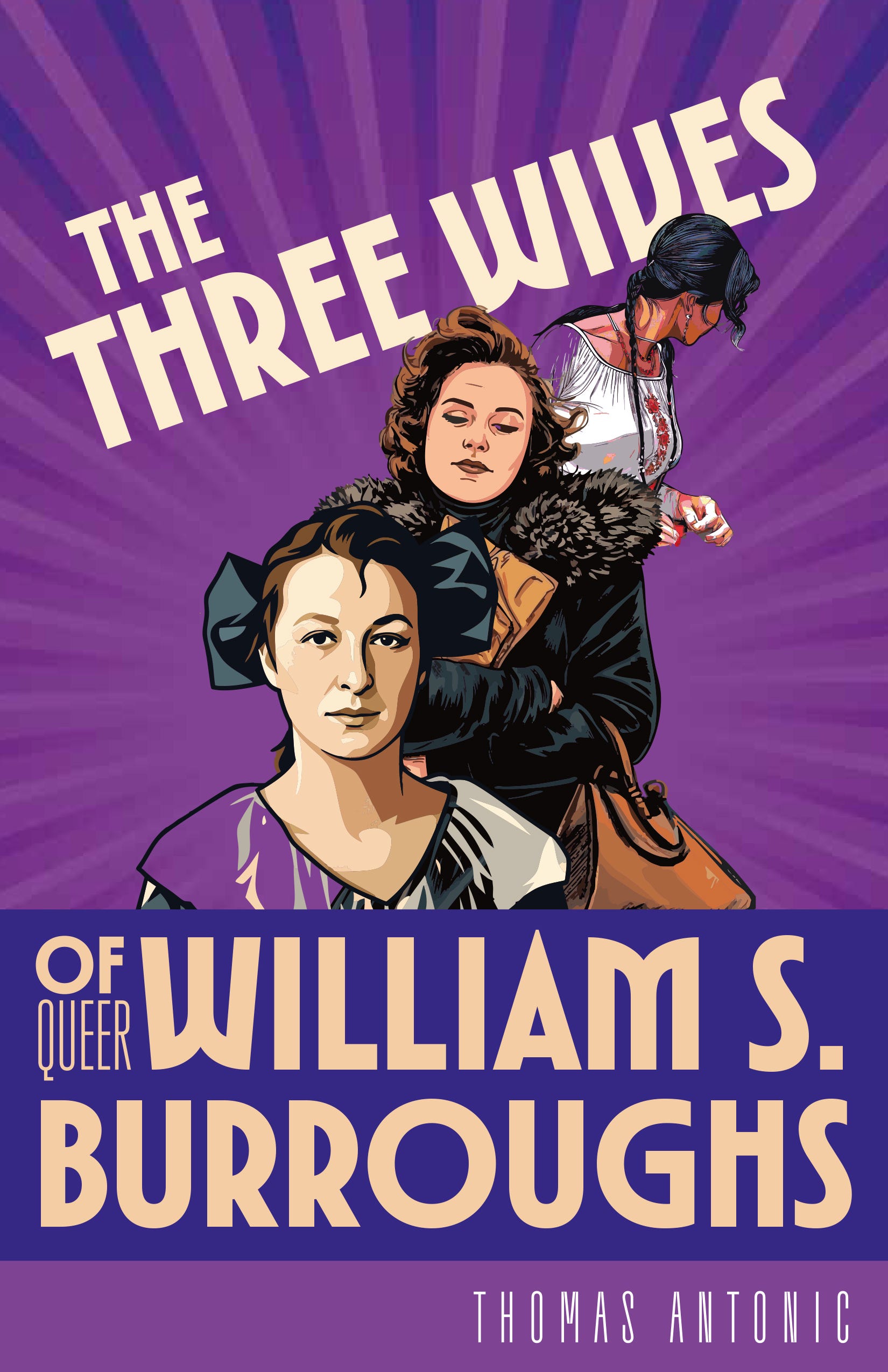
That alone would make this book essential reading but there is much more. There is so much more, in fact, that it is hard to summarise. Nor do I want to give away everything that is in it, for part of the joy of reading this book is that it continuously reveals surprising new information. This book takes you deep into the Weimar Republic, into the anti-fascist resistance movements of the 1930s and 40s, into various corners of Europe where artists and intellectuals hid from and defied the Nazis. We learn that Burroughs’ first wife, Ilse Herzfeld, was no “countess” as Kerouac claimed and biographers have sometimes repeated, but in fact an artist and writer. She mingled with Dadaists and knew Brion Gysin long before Burroughs did. We learn of her husband, a heroic and charismatic doctor who arguably helped introduce Dadaism to Germany, and whom she divorced only months before marrying Burroughs. There are curious connections to Wilhelm Reich and Tristan Tzara that make one wonder whether there is such a thing as coincidence, and we discover that Burroughs appeared as a character in a novel written long before he became part of the Beat Generation and was depicted as Old Bull Lee.
This is a procedural research book—a detective story of sorts—which carries the reader not biographically and chronologically through Burroughs’ life but rather from the smattering of mostly incorrect information that existed about these women prior to Antonic’s research via his exhaustive search across many countries to bring us this fascinating, detailed picture of women too often ignored or given footnote-status in books about the Beats. Although the bulk of the book focuses on Herzfeld and the vast web of connections between her and Burroughs that spread from Germany to Yugoslavia to Greece to the United States, there is also much to learn about Joan Vollmer. Antonic has scrutinised the supposed facts of her life that could be ascertained from previous publications to correct and expand the record. And then, of course, the truly mind-boggling discovery of the third wife, María Lucrecia Barquera.
The book teaches us to question everything, including seemingly authoritative sources, and its various characters remind us of the horrors of fascism, which can arise with astounding rapidity and oppress in myriad ways. It is also a reminder of how important it is to continue funding libraries and other physical archives of human knowledge even in this AI-obsessed digital era, for again and again Antonic comes upon astounding discoveries in these collections.
I was a huge fan of Antonic’s book Amongst Nazis: William S. Burroughs in Vienna 1936/37 and so I hoped one day to work with him on an essay or book, but I had no idea it would be one as significant as this. It is a long book but it repeatedly hooks you with new avenues of inquiry, uncovering surprising connections and details that rewrite and expand Burroughs’ biography. You may think you know everything about the author if you’ve read the very enjoyable and informative biographies by Miles and Morgan, but this book adds a huge amount more and picks apart many earlier claims. It will no doubt leave you wondering what else there is to learn about the Beat writers.
This book will appeal to those interested in Burroughs’ life and in the lives of women all too often left out of Beat history. It will also appeal to people interested not only in the facts that emerge but in the process of uncovering them. It is a tremendously important book and one of the most consequential contributions to the field of Beat Studies in recent years.
Obviously, I am biased as the editor and publisher, so I will now turn to the unquestioned Burroughs expert, Oliver Harris, who said:
Whatever you thought you knew about Burroughs’ life before he became a published writer, Thomas Antonic will make you think again.
And President of the Beat Studies Association, Kurt Hemmer:
This deep-dive examination of William S. Burroughs’s wives, their fascinating backgrounds, their wonderful and strange relatives and acquaintances, and their never-before-unearthed secrets, changes our understanding of the iconoclastic author.
You can read more praise from other esteemed Beat experts (as well as longer testimonies from Harris and Hemmer) here.
There is also a great interview with Antonic that Harris conducted for the European Beat Studies Network. This includes some of the photos included in the book.
You can buy The Three Wives of Queer William S. Burroughs on Bookshop or Amazon (in both print and Kindle editions). As always, bulk discounts and review copies are available. Pre-ordered copies have been sent out and have begun arriving. (If you live outside of the UK or US, it will take a little longer.)
For those who missed our last newsletter, you can read about Allen Ginsberg at 100 here.
Comments
Nothing yet. Say the first thing.
Sign in to join the conversation.